How Do DC Servo Motors Improve Synchronization Between AGV Drive Wheels?
Views: 0 Author: Site Editor Publish Time: 2026-08-13 Origin: Site
Automated Guided Vehicles (AGVs) have become an essential part of modern warehouses, manufacturing facilities, hospitals, and logistics centers. Their ability to transport materials autonomously depends heavily on precise drive wheel synchronization, which directly affects navigation accuracy, safety, efficiency, and overall operational reliability.
Among all drive technologies, DC servo motors have emerged as the preferred solution for AGV propulsion because they provide exceptional motion accuracy, closed-loop feedback, rapid response, and intelligent communication capabilities. Unlike conventional motors that rely on open-loop control, DC servo systems continuously monitor and correct motor performance in real time, ensuring that every drive wheel rotates exactly as commanded.
This article explains how DC servo motors improve synchronization between AGV drive wheels, the technologies involved, and why manufacturers increasingly choose servo-driven systems for next-generation mobile robots.
Why Drive Wheel Synchronization Matters in AGVs
An AGV normally operates using:
Differential drive
Dual-wheel drive
Four-wheel drive
Omnidirectional drive
Mecanum wheel drive
Regardless of the drive configuration, every wheel must rotate at the correct speed while maintaining accurate positional relationships with the others.
Poor synchronization may result in:
Vehicle drifting
Navigation errors
Uneven tire wear
Higher energy consumption
Reduced positioning accuracy
Mechanical vibration
Payload instability
Frequent corrective steering
Even small speed deviations between left and right drive wheels accumulate over long travel distances, causing the AGV to deviate from its intended path.
DC servo motors eliminate these problems through continuous closed-loop synchronization control.
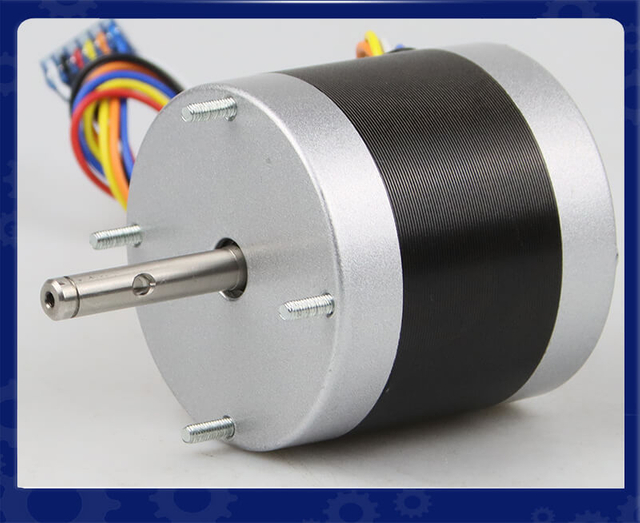
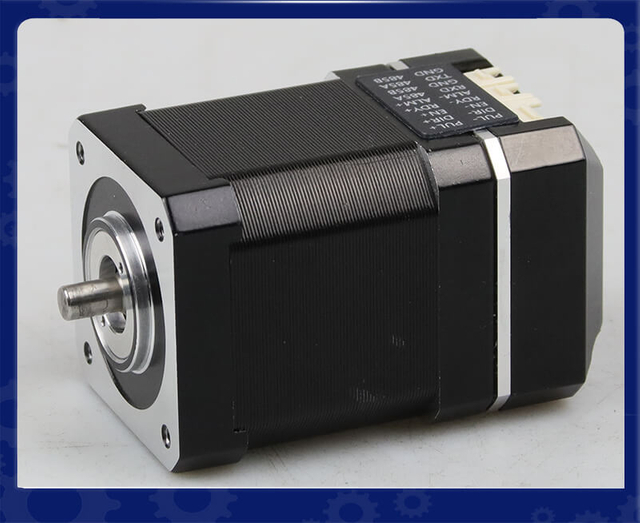
IDC60 Integrated BLDC Servo Motor — High-Efficiency, Compact, and Smart Closed-Loop Motion Control Solution
Product Overview:The IDC60 integrated BLDC servo motor from LeanMotor is a compact NEMA 24 solution combining motor, drive, and encoder in one unit. It provides precise closed-loop control, stable torque, and fast response. Its integrated design reduces wiring, saves space.
Key Technical Highlights
Integrated All-in-One Design Combines BLDC motor, servo drive, and encoder in a compact unit, reducing wiring complexity and improving installation efficiency.
High-Precision Closed-Loop Control Ensures accurate position, speed, and torque regulation with real-time feedback for stable and smooth motion performance.
Powerful Modular Customization (OEM/ODM) Supports flexible customization options, including voltage, torque, communication protocols, and encoder resolution to meet diverse application requirements.
High Efficiency & Compact Structure Delivers strong torque density with optimized thermal performance, making it ideal for space-limited automation and robotics systems.
Typical Applications
Pipeline Inspection Robots Provides stable low-speed torque and precise motion control for navigating narrow, curved, and complex pipeline environments.
Automated Guided Vehicles (AGVs) Ensures smooth acceleration, accurate positioning, and reliable operation in logistics and smart warehouse systems.
Robotic Automation Systems Ideal for robotic arms, grippers, and compact motion modules requiring high precision and fast response.
Smart Manufacturing Equipment Supports high-accuracy motion control in assembly lines, packaging machines, and precision industrial automation devices.
IDC60 Series Key Specifications for AGV Applications
Unlike conventional DC motors that typically operate without continuous position feedback, DC servo motors use closed-loop control to continuously monitor and adjust speed, position, and torque. This makes them particularly suitable for AGV drive systems where precise and coordinated wheel movement is essential.
A typical DC servo system combines:
High-performance DC servo motor
High-resolution encoder
Servo driver
DSP-based motion control
Real-time feedback control
The encoder continuously sends actual motor speed and position data to the controller. When a deviation occurs because of uneven loads, floor resistance, acceleration, or turning, the servo system automatically adjusts motor torque and speed.
For AGV applications, this provides faster response, higher positioning accuracy, smoother motion, and better synchronization between drive wheels than conventional open-loop motor solutions.
Such precision allows the controller to monitor wheel movement with extraordinary accuracy.
Benefits include:
Micron-level position control
Accurate wheel synchronization
Smooth trajectory tracking
Minimal cumulative positioning error
Encoder feedback forms the foundation of synchronized multi-axis motion.
Real-Time Speed Matching Between Left and Right Wheels
For differential-drive AGVs, maintaining the same speed between the left and right drive wheels is essential for accurate straight-line travel. Even a small speed difference can cause the vehicle to gradually deviate from its intended trajectory, increasing navigation errors and forcing the control system to make frequent corrections.
DC servo motors achieve real-time wheel speed matching through closed-loop feedback control. Each motor is equipped with an encoder that continuously measures actual rotational speed and position. The servo controller compares the feedback from both drive wheels with the commanded speed and immediately compensates for any deviation.
For example, when an AGV is commanded to travel straight at a constant speed, the controller continuously monitors:
Left wheel actual speed
Right wheel actual speed
Target wheel speed
Encoder position feedback
Motor torque and current
Vehicle motion status
If the right wheel encounters greater rolling resistance and begins to slow down, its encoder detects the speed reduction. The servo driver then increases the motor's torque output to compensate. At the same time, the left motor can be adjusted independently so that both wheels maintain the required speed relationship.
This process allows the AGV to maintain precise wheel-to-wheel synchronization even when wheel loads are unequal.
How Closed-Loop Speed Matching Works
The synchronization process can be simplified into four continuous steps:
1. Motion Command
The AGV controller sends a target velocity to both servo motors.
2. Encoder Feedback
Each encoder continuously reports the actual rotational speed and position of its motor.
3. Error Comparison
The servo controller calculates the difference between the commanded speed and actual speed, while the AGV motion controller can also compare the speed of the two drive wheels.
4. Real-Time Correction
The servo driver adjusts motor current and torque to minimize the speed error and maintain the required wheel-speed relationship.
This creates a continuous feedback loop:
Motion Command → Servo Control → Motor Rotation → Encoder Feedback → Error Detection → Torque Correction
Because this loop operates continuously, the system can compensate for disturbances much faster than an open-loop motor system.
Why Wheel Speed Matching Matters During AGV Operation
Accurate wheel synchronization is particularly important when an AGV travels long distances. If one wheel consistently rotates faster than the other, the vehicle will gradually turn instead of maintaining a straight trajectory.
Real-time servo control helps reduce:
Straight-line deviation
Positioning errors
Tire and wheel wear
Mechanical vibration
Navigation corrections
Energy losses
Payload instability
During acceleration and deceleration, synchronized servo control is equally important. Both drive motors can follow coordinated velocity profiles, preventing one wheel from accelerating significantly faster than the other.
Speed Matching During Turning
Wheel synchronization does not necessarily mean that both wheels must always rotate at exactly the same speed.
During differential steering, the inner wheel must rotate more slowly than the outer wheel. The AGV controller calculates the required velocity for each wheel based on the desired turning radius, vehicle geometry, and commanded linear/angular velocity.
For example:
Straight movement: Left wheel ≈ Right wheel speed
Left turn: Left wheel < Right wheel speed
Right turn: Right wheel < Left wheel speed
DC servo motors can accurately execute these different speed commands while maintaining the required relationship between the two wheels.
This provides smooth cornering, accurate trajectory tracking, and reduced tire scrubbing, which are especially important for AGVs operating in narrow warehouse aisles or around fixed equipment.
The primary advantage of a DC servo system is that it does not simply command a motor to rotate at a particular speed. It continuously measures actual performance and corrects deviations in real time.
When combined with high-resolution encoders, advanced servo algorithms, and communication interfaces such as CANopen or EtherCAT, DC servo motors can provide highly coordinated multi-wheel motion.
For AGV manufacturers, this means more accurate navigation, smoother driving performance, and more reliable operation under changing payload and floor conditions.
Torque Control Improves Synchronization Under Variable Loads
Warehouse floors are rarely perfectly uniform.
AGVs frequently encounter:
Floor joints
Small ramps
Uneven concrete
Payload shifts
Rolling resistance changes
These conditions create unequal loads on each drive wheel.
Traditional motors slow down when resistance increases.
Servo motors detect the increased torque demand immediately.
The driver increases motor current automatically while maintaining identical wheel speed.
This capability keeps both wheels synchronized regardless of changing operating conditions.
Fast Dynamic Response During Acceleration and Deceleration
AGVs constantly perform:
Start
Stop
Reverse
Turning
Obstacle avoidance
Precision docking
These rapid motion changes require extremely fast motor response.
Servo motors typically achieve:
High acceleration
Instant torque generation
Smooth deceleration
Minimal overshoot
The result is synchronized wheel movement throughout every motion profile.
Instead of one wheel lagging behind, both motors follow identical acceleration curves.
Electronic Gear Function Enhances Multi-Axis Coordination
Many advanced servo systems include an Electronic Gear function.
Electronic gearing allows one servo motor to follow another using programmable gear ratios.
Applications include:
Dual-wheel synchronization
Lift mechanisms
Conveyor synchronization
Multi-axis robotics
For AGVs, electronic gearing ensures both drive motors behave like mechanically connected shafts while retaining independent electronic control.
Benefits include:
Higher positioning accuracy
Reduced mechanical complexity
Easier parameter adjustment
Better system flexibility
Industrial Communication Enables Intelligent Synchronization
Modern AGVs rarely rely on analog signals.
Instead, servo motors communicate through industrial fieldbus networks such as:
CANopen
EtherCAT
Modbus RTU
Modbus TCP
EtherNet/IP
PROFINET
These communication protocols allow:
Real-time speed updates
Position synchronization
Distributed motion control
Centralized diagnostics
Parameter adjustment
The AGV controller coordinates every motor simultaneously through deterministic communication, significantly improving synchronization accuracy.
Modern integrated servo motors combine the motor, encoder, servo driver, and motion controller into a single compact unit. This integrated design shortens signal transmission paths, reduces electrical interference, and minimizes communication delays that can affect wheel synchronization.
Compared with traditional systems using separate components, integrated servo motors offer:
Reduced wiring complexity
Lower signal latency
Improved synchronization accuracy
Simpler installation and maintenance
Higher system reliability
For AGV and AMR applications, integrated servo motors enable faster feedback processing and more precise control of each drive wheel, resulting in smoother motion, improved navigation accuracy, and consistent performance under varying operating conditions. Their compact design also saves installation space while supporting advanced communication protocols such as CANopen and EtherCAT for real-time multi-axis coordination.
Smooth Turning Through Differential Speed Control
During cornering, the inner wheel and outer wheel rotate at different speeds.
Servo controllers calculate these speed differences precisely.
Instead of relying on mechanical steering components, differential-drive AGVs adjust motor speed electronically.
Servo motors execute these commands with exceptional precision, allowing:
Smooth cornering
Reduced tire wear
Accurate path following
Stable payload transportation
STO Function Improves Operational Safety
Many industrial servo motors support Safe Torque Off (STO).
STO immediately disables motor torque without removing system power.
Advantages include:
Emergency stopping
Safe maintenance
Reduced restart time
Compliance with functional safety standards
Improved operator protection
Even after STO activation, encoder feedback and communication remain available, enabling controlled system recovery.
Energy Efficiency Through Intelligent Servo Control
Servo motors consume power according to actual load demand.
Benefits include:
Reduced heat generation
Lower electricity consumption
Higher overall efficiency
Extended battery runtime
Longer motor lifespan
For battery-powered AGVs, energy efficiency directly increases operating time between charging cycles.
Highly synchronized servo-driven AGVs are widely used in:
Smart warehouses
Automated manufacturing
Medical logistics robots
Semiconductor production
Food processing facilities
Automotive assembly
E-commerce fulfillment centers
Airport logistics
Cold storage warehouses
Pharmaceutical manufacturing
Each application demands precise positioning, repeatable motion, and reliable multi-wheel coordination.
Key Advantages of DC Servo Motors for AGV Synchronization
Feature
Benefit
Closed-loop feedback
Continuous correction of speed and position errors
High-resolution encoder
Ultra-precise wheel positioning
Real-time torque control
Stable synchronization under changing loads
Fast dynamic response
Smooth acceleration and deceleration
Industrial communication
Coordinated multi-axis motion
Electronic gearing
Accurate dual-wheel synchronization
Integrated servo design
Reduced wiring and higher reliability
STO safety function
Enhanced operational safety
Energy-efficient control
Longer battery life and reduced operating costs
Conclusion
DC servo motors have become the cornerstone of modern AGV drive systems because they deliver the precise synchronization required for autonomous navigation, efficient material handling, and safe industrial operation. Through closed-loop feedback, high-resolution encoder technology, real-time torque regulation, and advanced industrial communication, servo-driven AGVs maintain accurate wheel coordination even under dynamic loads and challenging operating conditions.
As warehouses and factories continue adopting intelligent automation, the demand for high-performance integrated DC servo motor solutions will continue to grow. Their ability to synchronize drive wheels with exceptional accuracy not only improves navigation precision but also enhances energy efficiency, extends component lifespan, reduces maintenance, and increases overall system productivity. For manufacturers seeking reliable, scalable, and future-ready AGV platforms, DC servo motors remain the optimal choice for achieving superior drive wheel synchronization and long-term operational excellence.
FAQ:
1. How do DC servo motors synchronize AGV drive wheels?
DC servo motors use closed-loop feedback from encoders to continuously monitor wheel speed and position. The controller compares actual motion with target values and adjusts motor torque and speed in real time, keeping AGV drive wheels accurately synchronized.
2. Why is drive wheel synchronization important for AGVs?
Accurate wheel synchronization helps AGVs maintain straight-line accuracy, stable turning, precise positioning, and smooth motion. Poor synchronization can cause trajectory deviation, uneven wheel wear, vibration, and navigation errors.
3. How does an encoder improve AGV wheel synchronization?
An encoder continuously measures the motor's actual speed and position and sends feedback to the servo controller. The controller uses this information to correct motion errors and maintain the required relationship between the AGV's drive wheels.
4. Can DC servo motors compensate for different wheel loads?
Yes. When one AGV drive wheel experiences greater resistance or load, the servo system detects the resulting speed change through encoder feedback and adjusts motor current and torque to compensate, helping maintain synchronized motion.
5. Do both AGV drive wheels always need to rotate at the same speed?
No. During straight-line travel, the drive wheels generally operate at similar speeds. During differential steering, however, the inner wheel rotates more slowly than the outer wheel. DC servo control precisely manages these speed differences according to the required turning radius.
6. What communication protocols can be used with AGV DC servo motors?
Depending on the servo system, AGV applications can use industrial communication protocols such as CANopen, EtherCAT, Modbus RTU, Modbus TCP, PROFINET, and EtherNet/IP for real-time motion commands, feedback, and multi-axis coordination.
7. How do integrated servo motors reduce AGV synchronization errors?
Integrated servo motors combine the motor, encoder, driver, and control electronics into a compact unit. This can reduce wiring, signal transmission distance, and communication latency while simplifying system integration and improving coordinated wheel control.
8. Are DC servo motors suitable for AGVs carrying variable payloads?
Yes. Closed-loop servo control can compensate for changes in load and rolling resistance by adjusting motor torque and current. This helps AGVs maintain stable speed and accurate motion when payload conditions change.
9. Can DC servo motors improve AGV turning accuracy?
Yes. Servo motors provide precise independent speed control for each drive wheel. The controller can accurately establish the required speed difference between the inner and outer wheels, enabling smooth turning and more accurate trajectory tracking.
10. What should we consider when selecting DC servo motors for AGV drive systems?
Key factors include rated torque, peak torque, speed range, encoder resolution, communication interface, control accuracy, wheel diameter, gearbox requirements, duty cycle, battery voltage, environmental conditions, and safety functions such as STO. The motor should be selected according to the AGV's payload, speed, acceleration, and operating environment.