Home » News » How Do Integrated DC Servo Motors Handle Frequent Start-Stop Cycles in Greenhouse Climate Control Equipment?
How Do Integrated DC Servo Motors Handle Frequent Start-Stop Cycles in Greenhouse Climate Control Equipment?
Views: 0 Author: Site Editor Publish Time: 2026-10-28 Origin: Site
Integrated DC servo motors provide reliable motion control for greenhouse climate control equipment that requires frequent start-stop operation. By combining motor and drive electronics with encoder feedback in suitable configurations, these motors support precise positioning, controlled acceleration and deceleration, and responsive torque regulation. Common applications include automated ventilation windows, motorized shading screens, and airflow dampers. To achieve consistent performance, engineers should evaluate continuous and peak torque, duty cycle, thermal management, communication compatibility, and environmental protection. Before mass production, repeated-cycle testing under representative loads helps verify positioning accuracy, temperature stability, and mechanical durability, supporting dependable greenhouse automation and long-term equipment performance.
Modern greenhouse climate control systems require precise, responsive, and reliable motion control to maintain optimal growing conditions. From opening and closing ventilation windows to adjusting shading screens, operating air circulation dampers, and positioning automated irrigation components, greenhouse equipment frequently performs repetitive start-stop movements throughout the day. These operations demand motors that can deliver accurate positioning, rapid acceleration and deceleration, stable torque, and consistent performance under variable environmental conditions.
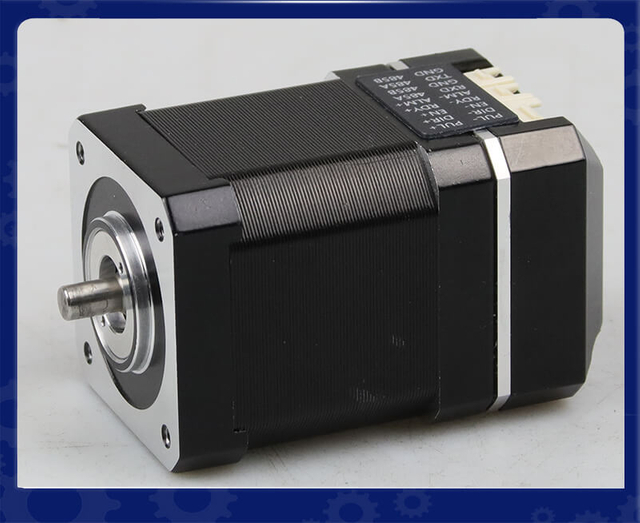
Integrated DC servo motors offer a practical solution for greenhouse automation because they combine a DC servo motor, drive electronics, and often an encoder within a compact assembly. By integrating these components, manufacturers can simplify system architecture, reduce external wiring, and improve motion coordination in equipment that operates repeatedly throughout the growing season.
However, handling frequent start-stop cycles involves more than simply starting and stopping a motor. The motor must manage acceleration, deceleration, load fluctuations, heat generation, positional accuracy, and mechanical stress while maintaining reliable operation. Understanding these factors helps greenhouse equipment manufacturers select the right integrated DC servo motor for demanding climate control applications.
1. Why Do Greenhouse Climate Control Systems Require Frequent Start-Stop Motor Operation?
Greenhouse climate control equipment continuously responds to changes in temperature, humidity, sunlight intensity, wind conditions, and crop requirements. Unlike applications that operate at a constant speed for extended periods, many greenhouse mechanisms move intermittently and must stop at specific positions.
For example, a greenhouse ventilation system may partially open its roof vents when internal temperatures rise above a predefined threshold. As conditions change, the controller may command the vents to move again, stop at an intermediate position, or close completely. Shading systems operate similarly, adjusting screen positions according to solar radiation and temperature.
These repetitive movements create several operational challenges.
1.1 Frequent Acceleration and Deceleration
Every start-stop cycle requires the motor to accelerate the connected mechanism and then decelerate it to a controlled stop. Rapid acceleration increases the torque required to overcome inertia, while abrupt deceleration can introduce mechanical shock into gears, couplings, shafts, and linkages.
A properly selected integrated DC servo motor can regulate acceleration and deceleration through configurable motion profiles. Instead of applying maximum torque immediately or stopping abruptly, the controller can increase or decrease motor speed in a controlled manner.
This approach helps reduce vibration, minimize transmission stress, and maintain smoother operation in greenhouse ventilation windows, movable screens, and automated louvers.
1.2 Variable Mechanical Loads
Greenhouse equipment rarely operates under perfectly constant loads. Ventilation windows may experience changing wind pressure, while shading screens can encounter different levels of friction as they move along their tracks. Dust, moisture, and mechanical wear can also increase resistance over time.
An integrated DC servo motor with appropriate feedback and current control can respond to changing loads by adjusting motor output within its operating limits. This helps maintain more consistent movement when mechanical resistance varies.
Nevertheless, the motor must be sized for the actual load, including starting torque, acceleration torque, friction, and external forces. Feedback control cannot compensate indefinitely for an undersized motor or a mechanically obstructed mechanism.
1.3 Accurate Intermediate Positioning
Many greenhouse climate control systems do not simply switch between fully open and fully closed positions. They require intermediate positions to regulate airflow, sunlight exposure, and heat accumulation.
For example, a ventilation window may need to remain open by 30% or 60%, depending on environmental conditions. A shading screen may move only a short distance to reduce excessive solar radiation without blocking all available light.
Closed-loop position control enables an integrated DC servo motor to compare commanded movement with measured position and correct deviations within the capabilities of the motor, encoder, controller, and mechanical transmission.
This capability is particularly valuable when greenhouse automation requires repeatable positioning rather than simple on-off movement.
2. How Do Integrated DC Servo Motors Manage Frequent Start-Stop Cycles?
The ability to perform repeated motion commands reliably depends on the interaction between the motor, drive electronics, feedback device, and control system.
An integrated DC servo motor typically combines the motor and drive in one assembly, with an encoder or another feedback mechanism included in many configurations. The integrated drive processes motion commands and regulates the motor according to the selected control mode.
2.1 Closed-Loop Feedback for Consistent Motion
In a closed-loop configuration, the controller receives position or speed feedback from an encoder and compares the measured value with the target command.
When a greenhouse ventilation actuator receives a positioning command, the drive controls the motor to move toward the requested position. If the actual position differs from the target, the control system adjusts motor output to reduce the error.
This feedback process supports repeatable motion during frequent start-stop operation.
For example, when a shading screen must move from 20% to 45% of its travel, the motor can follow the commanded movement and stop when the target position is reached within the system's achievable accuracy.
The resulting performance depends on several factors:
Encoder resolution: Determines the available feedback granularity.
Control-loop tuning: Influences responsiveness, overshoot, and settling time.
Mechanical backlash: Can cause positioning differences even when motor-shaft feedback is accurate.
Load variation: Affects the torque and control effort required to achieve the target.
Transmission design: Influences the relationship between motor rotation and the movement of the greenhouse mechanism.
For applications requiring reliable intermediate positioning, a properly configured closed-loop integrated DC servo motor generally offers greater motion supervision than an open-loop drive system that does not measure actual position.
2.2 Controlled Acceleration and Deceleration Profiles
Frequent starts and stops can create unnecessary stress when a motor accelerates and decelerates too aggressively.
Integrated servo drives can support configurable acceleration and deceleration parameters, depending on the product model. These settings determine how quickly the motor reaches the target speed and how rapidly it slows down before stopping.
A linear acceleration profile may be sufficient for straightforward ventilation mechanisms. More demanding applications may benefit from an S-curve profile, which gradually changes acceleration to reduce abrupt transitions in motion.
For greenhouse climate control equipment, these profiles can help:
Reduce mechanical shock during repeated movement.
Limit vibration in lightweight window frames and screen mechanisms.
Improve the stability of intermediate positioning.
Reduce stress on gears, couplings, and connecting components.
Support quieter movement when properly matched to the mechanism.
The appropriate profile depends on the equipment's inertia, travel distance, response requirements, and permissible mechanical forces. Excessively slow acceleration can reduce responsiveness, while excessively aggressive settings can increase peak torque demand and vibration.
The objective is to achieve a balance between fast response, controlled motion, and long-term mechanical reliability.
2.3 Rapid Torque Response Under Changing Loads
During a start-stop cycle, the motor must generate enough torque to accelerate the load, overcome friction, and counter external forces.
The calculation must account for the transmission ratio and efficiency when the load is connected through a gearbox or other mechanical transmission.
An integrated DC servo motor with suitable current control can adjust torque-producing current to meet changing motion demands, subject to its current limits, thermal capacity, and drive characteristics.
This is useful when greenhouse ventilation windows encounter changing wind loads or when screen mechanisms experience varying friction.
However, peak torque and continuous torque are not interchangeable. A motor may be capable of producing a high torque briefly during acceleration but may overheat if required to sustain that torque repeatedly without sufficient cooling.
For this reason, motor selection must consider the complete motion cycle rather than relying exclusively on the rated or peak torque value.
3. How Does Frequent Start-Stop Operation Affect Motor Temperature?
Thermal management is one of the most important considerations when selecting a motor for repetitive greenhouse automation.
Each start-stop cycle involves electrical and mechanical energy conversion. Copper losses in the motor windings, switching and conduction losses in the drive electronics, and mechanical losses in the transmission generate heat. Frequent acceleration can increase current demand, especially when the connected mechanism has significant inertia.
If heat accumulates faster than it can dissipate, the motor winding temperature and drive temperature may exceed their permitted limits.
3.1 Understanding the Relationship Between Duty Cycle and Heat Generation
A motor's duty cycle describes how it operates over time, including periods of movement, stopping, and rest.
For example, a greenhouse ventilation actuator might operate for several seconds, remain stationary for a short period, and then move again as environmental conditions change. Another system may execute hundreds of short positioning movements during a busy operating period.
This ratio is useful as an initial description, but it does not fully represent thermal stress during variable-speed servo operation. Current, torque, speed, ambient temperature, cooling conditions, and the duration of each motion segment also influence heating.
A motor that operates for only 30% of a cycle may still experience substantial thermal stress if it repeatedly accelerates a heavy load at high current.
Therefore, greenhouse equipment manufacturers should evaluate the RMS motor current or torque over the complete duty cycle, where the necessary motor data are available.
This method provides a more useful basis for evaluating copper heating than the average current alone, although a complete thermal assessment must also consider the motor's construction and cooling characteristics.
3.2 Selecting the Right Thermal Capacity
An integrated DC servo motor should be selected according to the actual load profile and environmental conditions.
Important parameters include:
Continuous rated torque: The torque the motor can deliver continuously under specified conditions.
Peak torque: The maximum permitted short-duration torque under the manufacturer's stated limits.
Rated current and peak current: The electrical limits governing continuous and transient operation.
Thermal protection: Available temperature monitoring, current limiting, or protective shutdown functions.
Ambient temperature: The temperature surrounding the motor and integrated drive.
Installation conditions: Mounting orientation, enclosure, airflow, and heat transfer through the mounting structure.
In greenhouse environments, motors may be installed inside compact enclosures or near equipment exposed to elevated temperatures. An integrated motor's compact construction can simplify installation, but the drive electronics and motor still need an adequate thermal path.
Where equipment operates in high ambient temperatures or performs frequent high-torque movements, manufacturers should verify derating requirements rather than assuming the rated performance remains available under all conditions.
3.3 Why Proper Sizing Is Better Than Oversizing Alone
Selecting a larger motor may provide additional torque capacity, but oversizing is not always the most efficient solution. A larger motor may increase cost, installation space, and system weight without addressing poor motion profiles or mechanical friction.
A more effective approach is to calculate the required torque and speed, estimate cycle-related heating, and then select an appropriate motor with sufficient operating margin.
For applications with frequent short movements, the most important sizing factors often include peak acceleration torque, RMS torque, maximum speed, and the ability to dissipate heat between cycles.
This method supports more reliable operation while avoiding unnecessary increases in system size and cost.
4. Which Greenhouse Climate Control Applications Benefit Most From Integrated DC Servo Motors?
Integrated DC servo motors are particularly useful in greenhouse equipment where repeated movement, intermediate positioning, and compact installation are important.
4.1 Automated Greenhouse Ventilation Windows
Roof vents and sidewall windows regulate air exchange, internal temperature, and humidity. Their positions may change repeatedly as environmental sensors detect changing conditions.
Integrated DC servo motors can support controlled opening and closing movements, repeatable positioning, and coordinated operation with greenhouse control software.
When properly configured, acceleration and deceleration settings can also reduce sudden loading on the mechanical window system.
However, wind loads can change rapidly. The actuator, gearbox, mounting structure, and control strategy must be designed for the expected forces, including any required holding or braking function.
4.2 Automatic Shading and Light-Control Systems
Shading screens help regulate solar radiation, reduce excessive heat gain, and maintain suitable light conditions for different crops.
These systems often perform short movements rather than continuous rotation. A screen may move a small distance, pause, and then move again when the controller receives updated environmental data.
An integrated DC servo motor can provide controlled movement and repeatable positioning, helping the screen reach intermediate opening levels.
The control system should also account for the mechanical characteristics of the screen, including fabric tension, rail friction, inertia, and the possibility of obstruction.
4.3 Greenhouse Air Circulation Dampers
Motorized dampers regulate airflow through ventilation channels and environmental control equipment.
Frequent repositioning may be required when temperature or humidity varies across different greenhouse zones.
Integrated DC servo motors can provide a compact motion solution with fewer external drive components. Closed-loop control can also help maintain a target damper position when the application requires more than simple open-close switching.
For dampers exposed to high airflow resistance, engineers should verify the torque required to initiate movement and maintain the desired position.
4.4 Automated Irrigation and Fertigation Equipment
Although irrigation pumps may run for extended periods, many irrigation systems also contain positioning mechanisms that operate intermittently.
Examples include motorized valves, dosing adjustment mechanisms, and movable components used in automated nutrient delivery equipment.
Integrated DC servo motors may be suitable when these mechanisms require repeatable positioning or coordinated movement.
However, the required motor type depends on the specific mechanism. Some valves are better served by geared actuators, while pumps may require motors designed for continuous rotation. Fluid compatibility, sealing, electrical protection, and the consequences of a positioning fault must be evaluated independently.
4.5 Automated Greenhouse Curtains and Movable Crop Supports
Some greenhouse systems use movable curtains, screens, or crop-handling mechanisms that repeatedly reposition equipment during daily operation.
These applications can benefit from controlled acceleration, reduced mechanical shock, and position feedback.
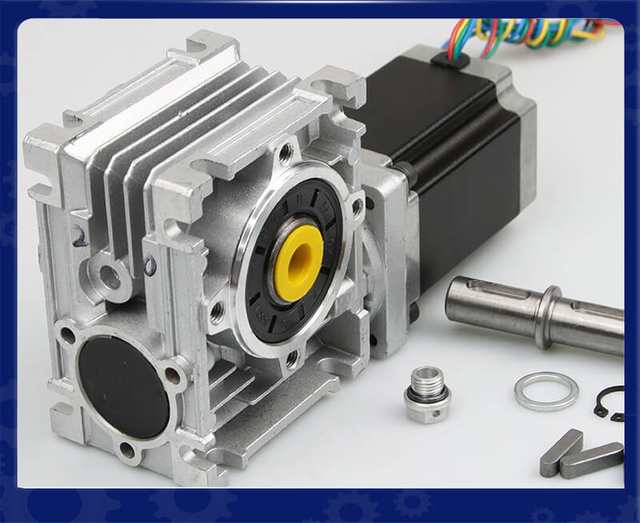
Where long travel distances or heavy loads are involved, the motor and transmission must be selected together. A suitable gearbox can increase output torque and reduce the motor speed required for a given linear movement, but gearbox efficiency, backlash, and reflected inertia must be included in the design.
5. How Do Integrated DC Servo Motors Improve System Integration and Wiring?
Traditional motor-control systems may use separate motors, servo drives, encoders, and associated signal cables. This arrangement can be appropriate for complex centralized systems, but it may increase installation effort in distributed greenhouse equipment.
An integrated DC servo motor combines key motion-control components into a single assembly, reducing the number of separate devices required at the actuator location.
5.1 Reduced External Wiring Complexity
When the drive and feedback electronics are integrated, the system may require fewer connections between the motor and external control equipment.
Depending on the model, the remaining connections may include power input, communication, digital inputs and outputs, and other control signals.
Reducing cable runs can simplify installation across greenhouse structures where actuators are distributed among roof sections, ventilation windows, and shading mechanisms.
However, integration does not eliminate all wiring requirements. Communication topology, grounding, electromagnetic compatibility, cable routing, and electrical protection still require proper engineering.
5.2 Flexible Communication With Greenhouse Controllers
Modern integrated DC servo motors may support different command interfaces, depending on the manufacturer and model. These can include pulse-and-direction signals, analog commands, digital I/O, or industrial communication protocols.
The appropriate interface depends on the greenhouse controller, system architecture, and required motion coordination.
For example, a basic ventilation actuator may receive discrete commands or position references from a local controller. A more advanced greenhouse automation system may coordinate multiple actuators through a network.
Before selecting a motor, engineers should confirm protocol compatibility, command resolution, response time, fault reporting, and the behavior of the actuator when communication is interrupted.
Communication compatibility is essential for reliable automation, but it should not be confused with the motor's ability to deliver the required torque or positioning accuracy.
5.3 Compact Installation in Distributed Equipment
Greenhouse structures often have limited installation space, especially around ventilation frames and screen mechanisms.
An integrated motor can reduce the space required for separate drive electronics and shorten the distance between the motor and its control components.
This can simplify mechanical packaging and maintenance access. Nevertheless, the complete assembly must still allow adequate heat dissipation, cable access, and protection against moisture, condensation, dust, and corrosive agricultural chemicals.
An integrated design is most effective when the motor, mounting arrangement, enclosure, and wiring are considered together from the beginning of the equipment design process.
6. What Environmental Protection Is Required in Greenhouse Applications?
Greenhouses create operating conditions that differ significantly from those found in conventional indoor industrial environments.
High humidity, condensation, irrigation spray, fertilizer residues, cleaning chemicals, and temperature fluctuations can affect motor housings, connectors, bearings, and electronic components.
Frequent start-stop operation adds another consideration: a motor may repeatedly cycle between active operation and standby while remaining exposed to the same environmental conditions.
6.1 Moisture and Condensation Protection
A motor installed near ventilation openings or irrigation equipment may be exposed to water droplets and high humidity.
Engineers should evaluate the motor's specified IP rating, connector protection, cable glands, and enclosure construction. The required protection level depends on the installation location and the type of water exposure.
An IP rating does not automatically guarantee resistance to condensation, fertilizer chemicals, or every cleaning method. These conditions must be assessed separately.
6.2 Temperature Fluctuations
Greenhouses may experience substantial temperature changes between day and night. Rapid temperature transitions can also encourage condensation inside inadequately protected equipment.
The selected integrated DC servo motor should operate within the manufacturer's specified ambient temperature range. Where temperature derating applies, the available torque and current limits should be checked under the expected operating conditions.
6.3 Corrosion and Chemical Exposure
Fertilizers, cleaning agents, and agricultural chemicals may damage unsuitable coatings, connectors, seals, or fasteners.
For long-term reliability, manufacturers should verify material compatibility and consider protective coatings or enclosures where necessary.
A suitable environmental design helps protect the electronics and mechanical components from deterioration, supporting consistent operation across repeated motion cycles.
7. How Can Engineers Optimize Start-Stop Performance Before Mass Production?
Optimizing start-stop performance before mass production is essential for ensuring that integrated DC servo motors deliver consistent positioning, stable torque, and reliable thermal performance in greenhouse climate control equipment. Applications such as automated ventilation windows, motorized shading screens, and airflow dampers often require hundreds or thousands of repeated movements under changing environmental and mechanical conditions.
To minimize potential failures and reduce long-term maintenance costs, we recommend validating the complete motor-and-mechanism assembly rather than evaluating the motor based solely on its rated specifications. A systematic testing process helps engineers identify excessive current consumption, overheating, positioning errors, mechanical vibration, and communication issues before the equipment enters mass production.
7.1 Define the Actual Operating Cycle and Load Requirements
The first step is to establish a realistic operating profile for the integrated DC servo motor. Greenhouse climate control equipment rarely operates at a constant speed or under an unchanged load. Instead, the motor may accelerate rapidly, move a short distance, stop at an intermediate position, and restart when environmental conditions change.
Engineers should define the key operating parameters before selecting or tuning the motor, including:
Required torque and speed: Determine the torque needed to overcome friction, accelerate the mechanism, and resist external forces.
Acceleration and deceleration time: Establish suitable movement profiles based on the required response time and mechanical limitations.
Start-stop frequency: Estimate the number of movement cycles per hour and per day.
Load inertia: Calculate the inertia of the motor, gearbox, couplings, and driven mechanism.
Positioning requirements: Define the allowable positioning error and settling time.
Environmental conditions: Consider ambient temperature, humidity, condensation, and potential exposure to dust or agricultural chemicals.
For example, a greenhouse roof ventilation actuator may operate under changing wind pressure. A motorized shading screen may encounter different friction levels as the screen moves along its guide rails. These variations influence the torque required during acceleration and steady movement.
By documenting the actual operating cycle, engineers can establish realistic performance targets and avoid selecting a motor that meets the basic speed requirement but cannot withstand repeated peak loads.
7.2 Optimize Acceleration and Deceleration Parameters
Acceleration and deceleration settings directly influence the dynamic performance of integrated DC servo motors. Excessively aggressive settings can increase peak current, generate mechanical shock, and cause vibration in connected structures. Conversely, overly conservative settings may prevent the equipment from responding quickly enough to changing greenhouse conditions.
Engineers should adjust motion profiles according to the load inertia, transmission characteristics, required travel time, and motor torque limits.
A practical optimization process includes the following steps:
Begin with conservative acceleration and deceleration settings recommended by the motor manufacturer.
Measure the motor's current consumption and actual movement time under representative loads.
Evaluate stopping accuracy, overshoot, vibration, and settling time.
Increase acceleration gradually if faster movement is required and sufficient torque and thermal margins remain.
Repeat the test under different load conditions to verify consistent performance.
Where supported by the integrated servo drive, S-curve acceleration and deceleration profiles can help smooth changes in acceleration and reduce abrupt mechanical transitions. This can be particularly useful for lightweight greenhouse windows, flexible shading screens, and mechanisms with noticeable backlash or compliance.
The objective is to achieve the shortest practical movement time without exceeding the motor's operating limits or introducing unnecessary mechanical stress.
7.3 Monitor Motor Current and Temperature During Repeated Cycling
Thermal validation is one of the most important stages of pre-production testing. Frequent start-stop movements can create significant heat because acceleration often requires higher torque and current than steady-state operation.
If the motor repeatedly operates at high current with insufficient cooling time, heat may accumulate in the windings and integrated drive electronics. This can lead to thermal protection activation, reduced available torque, or premature component degradation.
Engineers should monitor motor current, winding or housing temperature where appropriate, and drive temperature during repeated operation. Testing should continue long enough to assess whether temperatures stabilize under the intended duty cycle.
RMS current helps estimate winding heating when current-related copper losses dominate, although the complete thermal assessment must also account for cooling, ambient temperature, drive losses, and the motor's thermal characteristics.
For greenhouse equipment, testing should reproduce the expected combination of movement, stopping, and rest periods. A motor that performs well during a short demonstration may still overheat during continuous operation across an entire working day.
Thermal acceptance limits should be established using the manufacturer's specifications, including any derating requirements for high ambient temperatures or restricted airflow.
7.4 Validate Positioning Accuracy Under Different Load Conditions
Accurate positioning is essential when greenhouse climate control equipment must regulate ventilation openings or shading levels rather than simply switch between fully open and fully closed positions.
During pre-production testing, engineers should compare the commanded position with the actual position of the driven mechanism. Testing should cover multiple target positions, repeated approaches to the same position, and movement in both directions.
Several factors can influence the results:
Encoder resolution and feedback quality.
Servo control-loop tuning.
Gearbox backlash and transmission compliance.
External forces acting on the mechanism.
Mechanical alignment and mounting rigidity.
Load changes during acceleration and stopping.
For example, an encoder may indicate that the motor shaft has reached its target position, while gearbox backlash prevents the connected ventilation window from reaching precisely the same position every time.
To identify this type of issue, engineers should measure the actual output movement whenever possible rather than relying exclusively on motor feedback.
The test should also assess overshoot, settling time, and repeatability. If positioning performance is inconsistent, engineers should investigate mechanical transmission issues and control parameters before assuming that a higher-resolution encoder or a larger motor is necessary.
7.5 Perform Mechanical Durability and Cycle-Life Testing
Repeated start-stop movements place stress on bearings, gear teeth, couplings, mounting brackets, and other mechanical components. Even when the motor operates within its electrical limits, an unsuitable transmission or poorly aligned mechanism can experience excessive wear.
A cycle-life test should reproduce the intended movement frequency, load profile, and stopping behavior as closely as practical.
During testing, engineers should inspect for:
Abnormal vibration or noise.
Increasing backlash or positioning error.
Loose mounting hardware.
Gearbox wear or lubricant-related issues.
Changes in operating current.
Unexpected interruptions or protective faults.
Where the equipment is exposed to greenhouse conditions, additional validation may be necessary to assess the effects of humidity, condensation, temperature fluctuations, and agricultural contaminants.
The acceptance criteria should be defined before testing begins. These criteria may include a minimum number of completed cycles, allowable positioning deviation, maximum temperature, and acceptable levels of mechanical wear.
Accelerated testing can help identify weaknesses more quickly, but the results should not automatically be interpreted as a direct prediction of field service life unless the acceleration method and its relationship to real operating conditions have been validated.
7.6 Verify Communication, Fault Handling, and Power-Loss Behavior
Integrated DC servo motors often communicate with greenhouse controllers through pulse-and-direction signals, digital I/O, analog commands, or supported industrial communication protocols. Before mass production, engineers should confirm that the selected interface works reliably within the complete automation system.
Testing should cover normal motion commands as well as foreseeable abnormal conditions, including communication interruptions, invalid commands, encoder faults, overloads, and power loss.
For example, if communication is interrupted while a ventilation window is moving, the system should respond according to a predefined fault strategy. The appropriate response may depend on the mechanism, environmental conditions, and the consequences of uncontrolled movement.
Engineers should also verify whether the application requires a mechanical brake, self-locking transmission, counterbalance, or another holding solution. Stopping the motor electrically does not necessarily guarantee that an external load will remain stationary when power is removed.
Where a controlled stop or emergency-stop function is required, its implementation must be evaluated at the system level rather than assumed to be provided by the integrated motor alone.
7.7 Conduct Environmental Testing Under Representative Greenhouse Conditions
Greenhouse equipment may operate in warm, humid environments where condensation and water exposure are practical concerns. These conditions can affect connectors, circuit boards, seals, bearings, and external metal components.
Before mass production, engineers should confirm that the motor's environmental protection rating and operating temperature range match the intended installation.
Depending on the application, validation may include:
Operation at the expected minimum and maximum ambient temperatures.
Humidity and condensation assessments.
Verification of connector and cable-gland protection.
Inspection of corrosion resistance and material compatibility.
Functional testing after relevant environmental exposure.
An IP rating should not be treated as proof of resistance to every chemical, cleaning method, or condensation condition. The actual exposure and applicable manufacturer limitations must be considered.
After environmental testing, engineers should repeat key start-stop and positioning tests to determine whether the motor's performance has changed.
Before approving an integrated DC servo motor for mass production, manufacturers should establish measurable acceptance criteria that reflect the application's actual requirements.
Test item
Recommended evaluation
Purpose
Torque and speed
Verify performance under representative loads
Confirm adequate motion capability
Acceleration and deceleration
Measure movement time, current, and vibration
Optimize dynamic response
Thermal performance
Monitor temperature during repeated cycling
Prevent excessive heat accumulation
Positioning accuracy
Compare commanded and actual output positions
Verify repeatability
Cycle-life performance
Inspect operation and mechanical wear over repeated cycles
Assess durability
Communication reliability
Test commands, feedback, and fault reporting
Confirm control-system compatibility
Power-loss behavior
Verify load holding and stopping behavior
Reduce the risk of uncontrolled movement
Environmental resistance
Assess performance under specified conditions
Confirm suitability for greenhouse installation
By applying these criteria consistently, manufacturers can compare motor configurations, identify weaknesses, and verify that the selected integrated DC servo motor meets the requirements of the finished equipment.
Conclusion
Optimizing start-stop performance before mass production requires a systematic approach that combines motion-profile tuning, torque and thermal analysis, positioning validation, mechanical durability testing, and environmental verification. Rather than relying exclusively on rated power or peak torque, engineers should evaluate the integrated DC servo motor under the actual operating cycle and representative greenhouse loads.
For automated ventilation windows, shading screens, and airflow control mechanisms, this process helps identify potential overheating, excessive vibration, positioning errors, and communication faults before large-scale manufacturing begins.
By validating the motor, integrated drive, transmission, and control system as a complete assembly, we can improve operational consistency, reduce avoidable maintenance, and develop greenhouse climate control equipment capable of handling frequent start-stop cycles with greater reliability.
8. How Should We Select an Integrated DC Servo Motor for Frequent Start-Stop Cycles?
A systematic selection process helps ensure that the motor can meet the application's performance requirements throughout its expected service life.
Selection factor
What we should evaluate
Why it matters
Rated torque
Continuous load requirements
Determines sustained operating capability
Peak torque
Acceleration and transient load demand
Determines short-duration motion capability
Rated speed
Required output speed and travel time
Affects cycle duration and productivity
Encoder feedback
Resolution and feedback characteristics
Influences positioning and motion supervision
Thermal capacity
RMS torque, current, and ambient conditions
Helps prevent overheating
Integrated drive
Available control modes and current limits
Determines motion-control flexibility
Communication interface
Compatibility with the greenhouse controller
Supports reliable command exchange
Environmental protection
Moisture, dust, condensation, and chemicals
Helps protect the motor and electronics
Gearbox selection
Reduction ratio, efficiency, backlash, and output torque
Matches motor characteristics to the mechanism
Holding requirements
Brake, self-locking transmission, or counterbalance
Supports safe stationary operation
Cycle life
Expected operating frequency and maintenance conditions
Helps establish durability requirements
8.1 Match Motor Torque to the Complete Motion Profile
The motor should be sized for both acceleration and steady movement.
A motor that can maintain the required speed under a light load may still be unsuitable if the application requires high acceleration torque. Similarly, a motor that delivers sufficient peak torque may not have enough continuous thermal capacity for repeated cycles.
Engineers should calculate the complete motion profile and compare the resulting torque and speed requirements with the manufacturer's continuous and peak operating limits.
8.2 Select the Appropriate Feedback and Control Method
Applications requiring precise intermediate positions generally benefit from encoder-based closed-loop control.
However, feedback requirements should be determined by the actual positioning tolerance. Simple mechanisms may not require the same feedback resolution or control complexity as systems that need tightly coordinated movement across multiple actuators.
The selected drive should support the required command method, acceleration settings, stopping behavior, and fault-monitoring functions.
8.3 Consider Maintenance and Expected Service Life
Frequent start-stop operation can increase mechanical stress on bearings, gear teeth, couplings, and connected structures.
A motor's expected service life therefore depends on more than its electrical design. Mechanical loading, installation alignment, operating temperature, lubrication, contamination, and the quality of the connected mechanism all contribute to long-term reliability.
A properly sized integrated DC servo motor, combined with a suitable gearbox and controlled motion profile, can help reduce avoidable wear and maintenance requirements.
9. Common Mistakes When Using Integrated DC Servo Motors in Greenhouse Automation
Even a high-quality motor may perform poorly when the system is incorrectly designed or configured.
Mistake 1: Selecting a Motor Based Only on Rated Power
Rated power does not fully describe a motor's ability to accelerate a load repeatedly. Engineers must also evaluate torque-speed characteristics, peak current, inertia, and thermal capacity.
Mistake 2: Using Aggressive Acceleration Settings
Very short acceleration times can increase current demand and mechanical shock. Acceleration should be configured according to the load inertia and the motor's permitted operating limits.
Mistake 3: Ignoring Gearbox Backlash
Encoder feedback may accurately measure the motor shaft while the final mechanism experiences positioning error due to transmission backlash. The gearbox and mechanical linkage must be considered when determining achievable system accuracy.
Mistake 4: Overlooking Environmental Conditions
A motor suitable for a clean indoor installation may not be appropriate for an exposed greenhouse location. Moisture, condensation, chemical exposure, and ambient temperature should be verified before installation.
Mistake 5: Ignoring Holding Torque and Power-Loss Conditions
A motor that stops moving may not securely hold a ventilation window or suspended screen. Where an uncontrolled movement could cause equipment damage or create a hazard, the system needs an appropriate mechanical holding or braking solution.
Mistake 6: Failing to Validate the Actual Duty Cycle
A short demonstration may confirm that a motor can move the mechanism, but it does not establish long-term thermal suitability. Repetitive cycle testing is necessary when the application involves frequent starts, stops, and changes in load.
10. Can Integrated DC Servo Motors Improve Greenhouse Climate Control Efficiency?
Integrated DC servo motors can contribute to more efficient greenhouse automation by enabling controlled movement, repeatable positioning, and simplified system integration.
For example, ventilation windows can be adjusted to intermediate positions instead of moving unnecessarily between fully open and fully closed states. Shading screens can be positioned according to solar conditions, while motorized dampers can regulate airflow according to the requirements of individual zones.
These capabilities may help the greenhouse controller coordinate equipment more accurately with environmental measurements.
However, the overall energy savings depend on the complete system. Motor efficiency, gearbox losses, actuator sizing, control logic, sensor accuracy, and the thermal performance of the greenhouse all influence the final result.
Frequent start-stop operation does not automatically guarantee energy savings. Excessively aggressive movement, unnecessary repositioning, or repeated corrections caused by poorly configured control loops may increase energy consumption and mechanical wear.
A well-designed system should therefore minimize unnecessary movement while maintaining the responsiveness required for effective climate control.
The motor, drive, sensors, and supervisory controller should work together to achieve the required environmental conditions with an appropriate balance between accuracy, operating speed, and energy consumption.
Conclusion: Reliable Start-Stop Performance With Integrated DC Servo Motors
Integrated DC servo motors provide a practical motion-control solution for greenhouse climate control equipment that performs frequent start-stop cycles. Their combination of motor and drive electronics, together with encoder feedback in suitable configurations, supports controlled acceleration, repeatable positioning, and responsive operation under changing loads.
For greenhouse ventilation windows, shading screens, motorized dampers, and other automated mechanisms, reliable performance depends on more than the motor's rated power. Correct torque sizing, thermal management, feedback configuration, motion-profile optimization, environmental protection, and mechanical transmission design are all essential to long-term operation.
Before mass production, equipment manufacturers should validate the complete motion cycle under representative loads and environmental conditions. By matching the integrated DC servo motor to the actual application and verifying its performance through systematic testing, we can develop greenhouse climate control equipment that operates more consistently, reduces avoidable mechanical stress, and supports dependable automated environmental management.
Ultimately, the best integrated DC servo motor is not simply the one with the highest torque or fastest response. It is the motor that delivers the required motion accuracy, operating speed, and thermal performance throughout the intended duty cycle while meeting the mechanical and environmental demands of the greenhouse application
FAQ:
FAQ 1: How do integrated DC servo motors handle frequent start-stop cycles?
Integrated DC servo motors manage frequent start-stop cycles through closed-loop feedback, controlled acceleration and deceleration, and drive-level current regulation. Encoder feedback, when included, helps the controller monitor motor position or speed and adjust output accordingly. Correct motor sizing and thermal management are essential for maintaining reliable performance under repeated operating cycles.
FAQ 2: Why are integrated DC servo motors suitable for greenhouse climate control equipment?
Integrated DC servo motors are suitable for greenhouse climate control because they combine motor and drive components in a compact assembly and can support precise motion control. Depending on the configuration, they can operate ventilation windows, shading screens, and motorized dampers while reducing external wiring and supporting automated positioning.
FAQ 3: How does closed-loop control improve greenhouse ventilation positioning?
Closed-loop control compares the commanded motor position or speed with feedback from an encoder or other supported sensor. The drive adjusts motor output to reduce the difference between the target and actual movement. This helps greenhouse ventilation systems achieve repeatable intermediate positions, although overall accuracy also depends on gearbox backlash, mechanical alignment, and load conditions.
FAQ 4: Can integrated DC servo motors prevent overheating during frequent starts and stops?
Integrated DC servo motors cannot eliminate heat generation, but appropriate motor sizing, current regulation, thermal protection, and motion-profile optimization can help control temperature. Engineers should evaluate RMS current or torque, operating frequency, ambient temperature, cooling conditions, and rest intervals to confirm that the motor and integrated drive can handle the required duty cycle.
FAQ 5: How should engineers select the right integrated DC servo motor for greenhouse automation?
Engineers should evaluate continuous torque, peak torque, rated speed, acceleration requirements, load inertia, positioning accuracy, duty cycle, and environmental conditions. They should also confirm the gearbox specifications, communication interface, encoder configuration, and any required braking or load-holding functions. Testing the complete mechanism under representative operating conditions helps verify the selection.
FAQ 6: How do acceleration and deceleration settings affect servo motor service life?
Acceleration and deceleration settings influence peak torque, current demand, vibration, and mechanical stress. Excessively aggressive settings can increase wear on gearboxes, couplings, and connected greenhouse mechanisms. Properly configured motion profiles help balance response speed, stopping accuracy, and mechanical durability during repeated start-stop operation.
FAQ 7: Which greenhouse applications benefit from integrated DC servo motors?
Integrated DC servo motors can be used in automated greenhouse ventilation windows, shading screens, motorized airflow dampers, adjustable louvers, and selected irrigation or fertigation mechanisms. They are particularly useful when an application requires controlled movement, repeatable positioning, or compact drive integration. The appropriate motor and transmission depend on the load and operating cycle.
FAQ 8: What environmental protection should integrated DC servo motors have in greenhouses?
The required environmental protection depends on exposure to humidity, condensation, water spray, dust, temperature fluctuations, and agricultural chemicals. Engineers should verify the motor's IP rating, operating temperature range, connector protection, and material compatibility. An IP rating alone does not guarantee resistance to chemical exposure or internal condensation.
FAQ 9: How can manufacturers test integrated DC servo motors before mass production?
Manufacturers should perform repeated-cycle testing under representative loads and environmental conditions. Important measurements include motor current, temperature, positioning error, stopping consistency, vibration, and fault frequency. Long-duration testing can help identify thermal limitations, mechanical wear, and control issues before production approval.
FAQ 10: Do integrated DC servo motors reduce energy consumption in greenhouse climate control systems?
Integrated DC servo motors can contribute to efficient operation by enabling controlled movement and accurate positioning, potentially reducing unnecessary actuator travel. However, actual energy consumption depends on motor efficiency, gearbox losses, load characteristics, control logic, and operating frequency. Correct sizing and optimized motion profiles are necessary to achieve meaningful efficiency improvements