Home » News » How Do Integrated Servo Motors Improve Motion Control in Disinfection Robots?
How Do Integrated Servo Motors Improve Motion Control in Disinfection Robots?
Views: 0 Author: Site Editor Publish Time: 2026-06-30 Origin: Site
Introduction: The Role of Motion Control in Modern Disinfection Robots
With the rapid development of intelligent automation, disinfection robots have become an important solution for hospitals, laboratories, commercial buildings, factories, and public facilities that require efficient and reliable sterilization processes. These robots must perform complex tasks such as autonomous navigation, precise spraying, UV disinfection, and targeted cleaning while maintaining stable operation for long periods.
At the core of these advanced systems is the motion control technology that determines how accurately and efficiently the robot moves. A disinfection robot needs precise positioning, smooth movement, fast response, and reliable control to avoid missed areas and ensure complete coverage.
Traditional motor systems often require separate motors, drivers, controllers, and additional wiring, which increases system complexity and reduces installation efficiency. This is where integrated servo motors provide significant advantages. By combining the motor, driver, encoder, and control electronics into one compact unit, integrated servo motors offer a smarter and more efficient motion solution for modern disinfection robots.
What Are Integrated Servo Motors for Disinfection Robots?
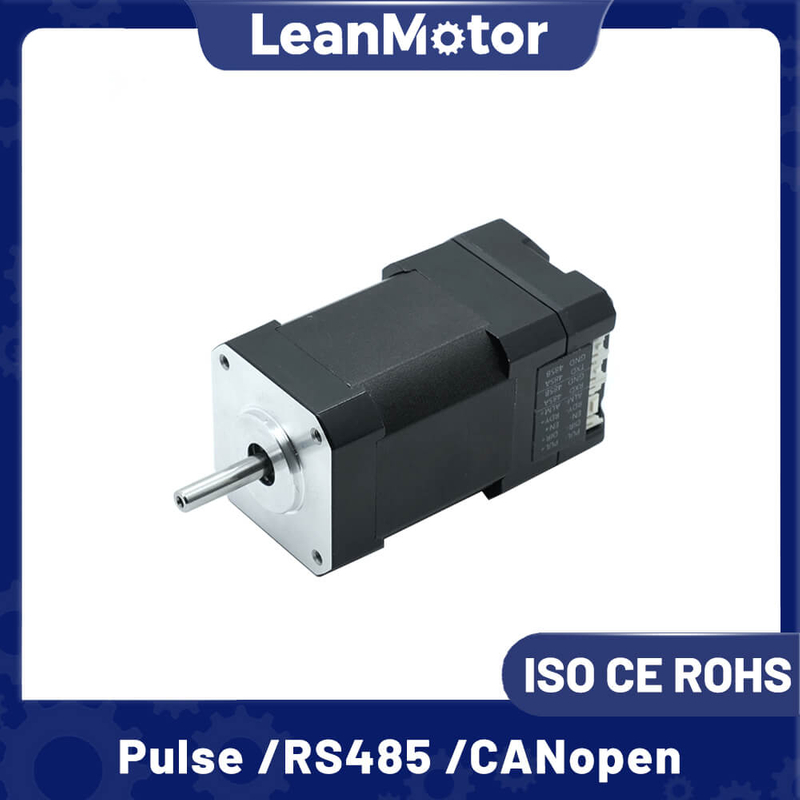
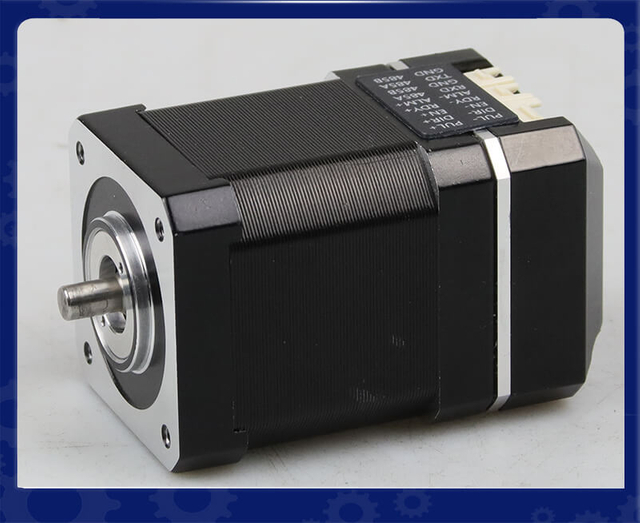
An integrated servo motor for disinfection robots is an advanced motion control solution that combines the functions of a servo motor, servo drive, encoder, and control electronics into a single compact unit. Unlike traditional motion systems that require separate motors, external drivers, and complicated wiring connections, integrated servo motors provide a simplified and highly efficient approach for controlling the movement of autonomous robotic platforms.
In a disinfection robot, the integrated servo motor is mainly responsible for controlling wheel movement, steering mechanisms, lifting modules, spraying systems, and other motion-related components. By providing accurate speed control, precise positioning, and real-time feedback, it enables the robot to move smoothly and perform sterilization tasks with higher efficiency and reliability.
Key Components of Integrated Servo Motors
An integrated servo motor typically includes several important components working together:
1. Servo Motor
The motor provides the driving force required for robot movement. It delivers stable torque output and supports precise motion control, allowing the disinfection robot to accelerate, decelerate, turn, and maintain constant speed during operation.
2. Built-in Servo Drive
The integrated servo drive processes control signals and adjusts motor performance in real time. It eliminates the need for an external driver, reducing system complexity and improving installation efficiency.
3. Encoder Feedback System
The encoder continuously monitors motor position, speed, and movement status. This feedback allows the control system to correct errors instantly and maintain accurate positioning.
4. Communication Interface
Many integrated servo motors support communication protocols such as CANopen, RS485, EtherCAT, and Modbus, enabling seamless connection with the robot’s main controller and navigation system.
How Integrated Servo Motors Work in Disinfection Robots
In a mobile disinfection robot, the control system sends movement commands based on navigation data collected from sensors such as:
LiDAR sensors
Cameras
Ultrasonic sensors
Navigation modules
The integrated servo motor receives these commands and converts electrical signals into precise mechanical movement.
During operation, the encoder provides continuous feedback about the actual motor position and speed. If the robot encounters changes such as different floor conditions, increased load, or movement resistance, the servo system automatically adjusts torque output to maintain stable operation.
This closed-loop motion control allows disinfection robots to achieve higher accuracy compared with traditional open-loop motor systems.
Why Integrated Servo Motors Are Suitable for Disinfection Robots
Compact Design for Space-Limited Robots
Disinfection robots require compact mechanical structures because they need space for:
Batteries
Sterilization equipment
Sensors
Control systems
Communication modules
By integrating multiple components into one unit, integrated servo motors reduce the size of the motion system and allow manufacturers to design smaller and more flexible robots.
High Precision Motion Control
Disinfection tasks require consistent movement paths to ensure complete area coverage. Integrated servo motors provide:
Accurate position control
Stable speed regulation
Low positioning error
Smooth direction changes
This helps robots follow programmed routes accurately and avoid missed disinfection areas.
Improved Dynamic Response
Disinfection robots often operate in complex environments where they need to react quickly to obstacles and navigation changes.
Integrated servo motors offer fast response performance through:
Real-time feedback control
High-speed signal processing
Direct motor-drive integration
This enables smoother movement adjustments and more reliable autonomous operation.
Reduced Wiring and Easier Installation
Traditional servo systems require multiple cables between:
Motor
Driver
Controller
Encoder
This increases installation difficulty and maintenance requirements.
Integrated servo motors reduce wiring complexity by combining these functions together, making the robot design cleaner, easier to assemble, and more reliable.
Applications of Integrated Servo Motors in Disinfection Robots
Integrated servo motors can be used in different types of disinfection robots, including:
Autonomous UV Disinfection Robots
UV robots require accurate positioning to maintain the correct distance between UV lamps and surfaces. Servo-controlled movement ensures stable operation and consistent sterilization performance.
Spray Disinfection Robots
For robots equipped with liquid spraying systems, precise motion control helps maintain uniform spraying speed and coverage.
Hospital Cleaning Robots
Hospitals require quiet, reliable, and accurate robotic systems. Integrated servo motors support smooth navigation through corridors, patient rooms, and public areas.
Industrial Disinfection Robots
Factories and clean manufacturing environments need robots capable of continuous operation. Integrated servo motors provide reliable performance for long working cycles.
Integrated Servo Motors vs Traditional Motor Solutions
Compared with traditional motor systems, integrated servo motors provide several advantages:
Feature
Traditional Motor System
Integrated Servo Motor
Structure
Separate motor and driver
Motor, driver, and feedback integrated
Installation
More wiring and components
Simple installation
Control method
External control required
Built-in closed-loop control
Precision
Depends on system design
High positioning accuracy
Maintenance
More components to check
Reduced system complexity
Robot design
Requires more space
Compact and flexible
Conclusion
Integrated servo motors are an essential motion control technology for modern disinfection robots. By combining the motor, drive, encoder, and control system into one compact solution, they provide higher accuracy, faster response, smoother movement, and improved reliability.
For robotic disinfection applications that require autonomous navigation and continuous operation, integrated servo motors offer an efficient way to achieve precise motion control while simplifying system design and improving overall robot performance.
How Integrated Servo Motors Enhance Motion Accuracy in Disinfection Robots
1. High-Precision Position Control for Autonomous Navigation
Disinfection robots rely on precise movement to ensure every target area receives sufficient sterilization coverage. Small positioning errors can result in missed zones, uneven disinfection, or inefficient operation.
The encoder continuously detects the motor position and sends feedback signals to the control system. If the actual movement differs from the target position, the servo system automatically adjusts output torque and speed.
This closed-loop operation allows disinfection robots to maintain stable movement even when carrying different loads or operating on different floor conditions.
Compared with open-loop stepper motor systems, integrated servo motors reduce positioning errors and provide more reliable performance for intelligent robotic platforms.
2. Smooth and Stable Movement Control
A disinfection robot must move smoothly to maintain consistent sterilization performance. Sudden acceleration, vibration, or unstable movement can affect spraying accuracy, UV exposure distance, and navigation reliability.
The built-in servo control algorithm continuously adjusts motor performance according to operating conditions. This allows the robot to move naturally around obstacles, make accurate turns, and maintain stable travel speed.
For indoor environments such as hospitals and laboratories, where quiet operation is important, integrated servo motors also help reduce mechanical noise and improve user experience.
3. Faster Response for Intelligent Robotic Applications
Modern disinfection robots require fast reaction capabilities. They must respond quickly to navigation commands, obstacle detection signals, and changes in operating conditions.
Because the driver and feedback system are integrated with the motor, communication efficiency is improved. The system does not need multiple external components to process motor commands, reducing response delays.
This allows disinfection robots to perform more accurate path adjustments and operate efficiently in complex environments.
4. Compact Design and Space Optimization
Space is a major consideration in robotic design. Traditional motion systems often require:
Separate servo drives
Additional control cabinets
Large wiring systems
Complex installation structures
These components increase robot size and manufacturing difficulty.
Integrated servo motors provide a compact alternative by combining multiple functions into one device. This allows engineers to design:
Smaller robotic platforms
Lightweight mobile robots
More flexible mechanical structures
Simplified electrical layouts
For autonomous disinfection robots, compact motor solutions create more available space for:
Larger batteries
More powerful sensors
Additional disinfection modules
Improved navigation systems
5. Improved Energy Efficiency for Long-Term Operation
Battery life is critical for mobile disinfection robots. A robot operating in hospitals or commercial buildings often needs several hours of continuous operation.
Integrated servo motors improve energy efficiency through intelligent power management.
Key advantages include:
Optimized current control
Reduced energy waste
Efficient torque output
Lower standby consumption
The servo system delivers only the required power based on movement conditions. During low-load operation, energy consumption can be reduced, extending operating time and improving overall system efficiency.
This is especially valuable for autonomous robots that must complete large-area disinfection tasks without frequent charging.
6. Better Reliability in Continuous Disinfection Operations
Disinfection robots are expected to operate repeatedly in demanding environments. Motor reliability directly affects maintenance costs and system availability.
Integrated servo motors improve reliability by reducing the number of external components.
Traditional systems may include multiple failure points:
Motor connection issues
Driver failures
Wiring problems
Communication faults
An integrated servo motor reduces these risks by combining key components into one protected system.
Many integrated servo motors also support industrial-grade protection features such as:
Overcurrent protection
Overvoltage protection
Overtemperature protection
Error monitoring functions
These features help ensure stable operation during long working cycles.
Integrated Servo Motors vs Traditional Motor Systems in Disinfection Robots
Feature
Traditional Motor System
Integrated Servo Motor
Structure
Separate motor and drive
Motor + drive integrated
Wiring
More cables required
Simplified wiring
Control accuracy
Depends on external system
High closed-loop precision
Installation
More complex
Easier installation
Space requirement
Larger
Compact design
Maintenance
More components
Reduced complexity
Response speed
Limited by communication chain
Faster response
For intelligent disinfection robots, integrated servo motors provide a more efficient and reliable motion control solution.
Applications of Integrated Servo Motors in Disinfection Robots
Integrated servo motors can be applied in various robotic systems, including:
Hospital Disinfection Robots
Hospitals require precise and reliable sterilization equipment. Integrated servo motors help robots navigate patient areas, corridors, and treatment rooms with accurate movement control.
UV Disinfection Robots
UV robots need stable positioning to maintain correct exposure distance and sterilization efficiency. Servo-controlled movement ensures accurate positioning.
Spraying Disinfection Robots
For robots equipped with liquid spraying systems, smooth movement helps maintain consistent spray coverage and improves chemical usage efficiency.
Industrial Cleaning and Sanitation Robots
Factories and warehouses benefit from autonomous robots that can operate continuously with minimal maintenance.
Why Choose Integrated Servo Motors for Next-Generation Disinfection Robots?
As disinfection robots become more intelligent and autonomous, their motion systems must deliver high precision, fast response, compact design, and reliable performance. Integrated servo motors meet these requirements by combining the motor, drive, and encoder into a single unit.
Higher Motion Accuracy
Integrated servo motors use closed-loop control to provide precise positioning and speed regulation. This allows disinfection robots to follow navigation paths accurately and achieve consistent sterilization coverage.
Compact and Space-Saving Design
By integrating multiple components into one device, these motors reduce wiring and installation space. The saved space can be used for larger batteries, sensors, or disinfection equipment.
Fast Response and Smooth Movement
Real-time feedback enables quick adjustments to speed and position. This helps robots move smoothly, avoid obstacles efficiently, and operate reliably in dynamic environments.
Improved Energy Efficiency
Integrated servo motors optimize power consumption by delivering only the required torque and speed. This extends battery life and supports longer operating times.
Simplified Installation and Maintenance
With fewer external components and cables, integrated servo motors reduce system complexity, shorten installation time, and lower maintenance requirements.
Summary
Integrated servo motors provide the precision, reliability, efficiency, and compact design needed for next-generation disinfection robots. They help improve navigation accuracy, reduce system complexity, and enhance overall robotic performance in healthcare, commercial, and industrial environments.
Conclusion: Integrated Servo Motors Enable Smarter Disinfection Robot Motion Control
Integrated servo motors significantly improve the motion performance of disinfection robots through precise positioning, smooth movement, fast response, compact structure, and energy-efficient operation.
By integrating motor, drive, and feedback technology into a single solution, these advanced motion components simplify robotic design while improving overall reliability.
As automation and intelligent robotics continue to expand, integrated servo motors will play an increasingly important role in creating efficient, accurate, and dependable disinfection robots for healthcare, industrial, and commercial applications.
FAQs:
1. What Are Integrated Servo Motors for Disinfection Robots?
Answer: Integrated servo motors for disinfection robots are compact motion control solutions that combine a servo motor, servo drive, encoder, and control electronics into one unit. They provide precise speed control, accurate positioning, and real-time feedback, helping disinfection robots achieve smooth and reliable autonomous movement.
2. How Do Integrated Servo Motors Improve Disinfection Robot Performance?
Answer: Integrated servo motors improve disinfection robot performance by providing high-precision motion control, faster response, and stable operation. The built-in feedback system allows the motor to automatically adjust movement errors, ensuring accurate navigation, consistent disinfection coverage, and efficient operation.
3. What Are the Advantages of Using Integrated Servo Motors in Disinfection Robots?
Answer: The main advantages include compact design, simplified wiring, improved accuracy, energy efficiency, and easier installation. By integrating the motor and driver together, these servo solutions reduce system complexity while improving the reliability and performance of robotic disinfection systems.
4. Why Are Integrated Servo Motors Suitable for Autonomous Disinfection Robots?
Answer: Integrated servo motors are suitable for autonomous disinfection robots because they support precise positioning, smooth movement, and intelligent control. They allow robots to navigate complex environments, respond quickly to changes, and maintain stable operation during long working cycles.
5. How Do Integrated Servo Motors Compare with Traditional Motor Systems in Disinfection Robots?
Answer: Compared with traditional motor systems, integrated servo motors provide a more compact and efficient solution by combining multiple components into one device. They require fewer cables, reduce installation complexity, improve motion accuracy, and offer better reliability for modern robotic applications.