Home » News » How Do Integrated Stepper Servo Motors Maintain Precise Synchronization Between Dual-Axis Lifting Platforms?
How Do Integrated Stepper Servo Motors Maintain Precise Synchronization Between Dual-Axis Lifting Platforms?
Views: 0 Author: Site Editor Publish Time: 2026-11-10 Origin: Site
Dual-axis lifting platforms are widely used in industrial automation, material handling systems, automated assembly lines, packaging machinery, lifting workstations, and precision positioning equipment. Unlike single-axis lifting mechanisms, dual-axis platforms must coordinate two separate lifting points to achieve stable, balanced, and synchronized vertical movement. Even a small difference in the movement of the two axes can cause platform tilting, uneven load distribution, mechanical stress, or positioning errors.
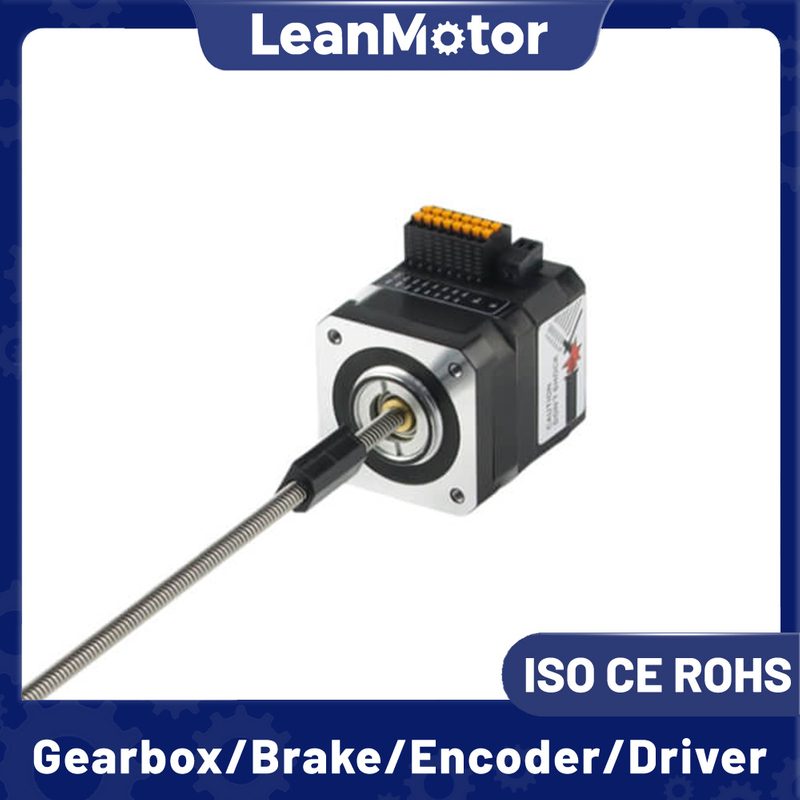
For equipment manufacturers and industrial automation integrators, selecting the right motion control solution is essential to achieving reliable dual-axis synchronization. Integrated stepper servo motors offer a practical solution by combining a stepper motor, encoder feedback, and drive electronics into a compact unit. This architecture helps simplify system integration while providing the position monitoring and control capabilities required for coordinated lifting operations.
But how do integrated stepper servo motors maintain synchronization between two independent lifting axes? More importantly, what should equipment manufacturers consider when sourcing these motors for dual-axis lifting platforms?
1. Why Is Precise Synchronization Important for Dual-Axis Lifting Platforms?
A dual-axis lifting platform typically uses two independent lifting mechanisms installed on opposite sides of the platform. Both axes must move at the same speed and maintain consistent positioning to ensure that the platform remains level throughout the lifting and lowering process. This is particularly important in industrial automation equipment, where uneven movement can affect positioning accuracy, load distribution, and overall machine stability.
When the two lifting axes become unsynchronized, even a small position difference can cause platform tilting, uneven mechanical loading, and additional stress on components such as ball screws, linear guide rails, bearings, and couplings. Over time, these issues may accelerate mechanical wear, reduce positioning repeatability, and increase equipment maintenance requirements.
For OEMs and industrial equipment manufacturers, precise synchronization is essential for several reasons:
Maintaining platform stability: Coordinated movement keeps both sides of the platform at consistent heights, reducing the risk of tilting during operation.
Ensuring uniform load distribution: Synchronized lifting helps prevent excessive loading on one side of the mechanical structure.
Improving positioning accuracy: Consistent movement allows the platform to reach the required working height more reliably.
Reducing mechanical wear: Minimizing position differences helps reduce unnecessary stress on screws, bearings, guide rails, and transmission components.
Supporting reliable automated operation: Accurate coordination is important for lifting platforms integrated into automated assembly, material handling, and packaging systems.
Therefore, selecting an appropriate closed-loop motor and multi-axis motion control solution is essential for maintaining synchronized movement. Integrated stepper servo motors, equipped with encoder feedback and integrated drive electronics, provide a practical option for monitoring individual axis movement and supporting coordinated dual-axis lifting control.
2. How Do Integrated Stepper Servo Motors Achieve Dual-Axis Synchronization?
Integrated stepper servo motors support synchronized movement through the combination of motor control, encoder feedback, and coordinated drive commands.
Unlike conventional open-loop stepper motors, which generally operate without direct confirmation of actual rotor position, integrated stepper servo motors use encoder feedback to monitor motor movement.
This allows the control system to identify differences between commanded movement and actual motor response.
2.1 Encoder Feedback for Real-Time Position Monitoring
Encoder feedback is one of the most important features in dual-axis lifting applications.
Each motor is equipped with an encoder that provides position information to its integrated drive. During operation, the drive monitors motor movement and compares the feedback with the commanded position.
If one lifting axis experiences increased resistance because of an uneven load or mechanical friction, its actual movement may differ from the expected movement.
The encoder feedback allows the motor drive to detect this difference and adjust motor operation according to its control strategy and configured parameters.
For dual-axis applications, both motors must provide reliable position feedback so that the motion controller can coordinate their operation.
When evaluating suppliers, equipment manufacturers should confirm:
Encoder type and resolution.
Position feedback accuracy.
Closed-loop control capability.
Communication interface compatibility.
Availability of position monitoring functions.
Support for coordinated multi-axis control.
It is important to distinguish between individual motor position control and complete dual-axis synchronization. Encoder feedback helps each motor monitor its own movement, while the overall synchronization strategy is normally implemented through the motion controller or an appropriately configured multi-axis control system.
2.2 Coordinated Position Commands for Both Lifting Axes
The motion controller plays a central role in maintaining synchronization.
In a typical dual-axis lifting system, the controller sends coordinated movement commands to both integrated stepper servo motors.
For example, when the platform needs to rise to a specified height, both motors receive corresponding position commands. Their movement profiles are configured to maintain consistent displacement throughout the lifting process.
The controller can coordinate important motion parameters, including:
Target position.
Acceleration and deceleration.
Operating speed.
Movement direction.
Starting and stopping conditions.
Position feedback monitoring.
When both axes follow compatible motion profiles, the platform can maintain a more consistent horizontal position.
For equipment manufacturers, it is important to select motors and drives that support the same control architecture and can communicate reliably with the selected motion controller.
2.3 Closed-Loop Correction When Lifting Loads Are Uneven
In practical industrial environments, the load on a dual-axis platform is not always perfectly balanced.
For example, a workpiece may be positioned closer to one side of the platform. This can increase the mechanical resistance experienced by one lifting axis.
If both motors are operated using identical commands without considering their actual operating conditions, differences in movement may develop.
Integrated stepper servo motors use encoder feedback to monitor their individual motion conditions. The drive can respond to position deviations within its configured control capability.
At the system level, the motion controller can also compare the feedback positions of both axes and apply suitable corrections when the control architecture supports this function.
This distinction is important for procurement decisions: a closed-loop motor does not automatically guarantee that two lifting axes remain synchronized. Reliable synchronization requires compatible motors, suitable control hardware, correctly configured software, and a mechanically appropriate lifting structure.
For equipment manufacturers, integrated stepper servo motors provide several practical advantages compared with conventional motor-and-drive configurations.
3.1 Compact Structure and Simplified Installation
Traditional stepper motor systems generally require separate motor drives and additional wiring between the motor and drive.
Integrated stepper servo motors combine the motor and drive electronics into one assembly, reducing the number of separately installed components.
For dual-axis lifting platforms, this can simplify:
Electrical cabinet planning.
Motor installation.
Drive mounting arrangements.
Motor-to-drive wiring.
Equipment assembly and maintenance.
A more integrated structure can also help equipment manufacturers develop compact lifting systems where installation space is limited.
However, the actual installation benefits depend on the motor dimensions, connector arrangement, cooling requirements, and mounting configuration.
3.2 Improved Positioning Reliability
Positioning consistency is particularly important when a dual-axis platform must repeatedly stop at different working heights.
Integrated stepper servo motors use encoder feedback to monitor motor position and support closed-loop operation.
Compared with conventional open-loop stepper systems, this provides additional information about actual motor movement and helps the control system respond to deviations.
For manufacturers, this is valuable in applications involving:
Repeated lifting and lowering.
Multi-height positioning.
Automated loading and unloading.
Precision assembly.
Synchronized worktable adjustment.
The achievable positioning accuracy depends on the complete mechanical and electrical system, including encoder resolution, transmission backlash, screw pitch, structural rigidity, and control settings.
3.3 Better Adaptability to Changing Load Conditions
Dual-axis lifting equipment frequently operates under changing loads.
For instance, a lifting workstation may handle different workpieces during different production cycles. The load distribution between the two sides may also change depending on workpiece placement.
An integrated stepper servo motor can monitor its operating position and respond to changing motor load conditions through its closed-loop control function.
When correctly selected and configured, this can improve motion consistency and reduce the risk of undetected position deviations associated with open-loop operation.
For manufacturers handling variable loads, motor selection should consider both the total platform weight and the possible load imbalance between the two lifting points.
3.4 Reduced System Wiring Complexity
Using integrated motors can reduce the amount of motor-to-drive wiring required in a dual-axis system.
This is particularly useful when two motors are installed at opposite ends of a lifting platform or when the available installation space is restricted.
Nevertheless, integrated stepper servo motors still require suitable power connections, control signals, communication wiring where applicable, and proper grounding.
Manufacturers should evaluate the complete wiring requirements rather than assuming that an integrated motor eliminates external electrical connections.
The synchronization performance of a dual-axis lifting platform depends on both motor capabilities and the overall mechanical and control system design. When selecting integrated stepper servo motors, manufacturers should focus on the following key factors:
4.1 Motor Torque and Load Capacity
The motor must provide sufficient torque to handle the platform's weight and maximum payload. Manufacturers should consider load distribution, lifting speed, transmission efficiency, and acceleration requirements to avoid motor overload and inconsistent movement between the two axes.
4.2 Encoder Feedback Accuracy
Encoder feedback allows integrated stepper servo motors to monitor actual motor position and detect movement deviations. Suitable encoder resolution and reliable feedback performance help improve positioning consistency and support coordinated operation between the two lifting axes.
4.3 Communication and Motion Control Compatibility
Both motors must work with a compatible motion controller to receive coordinated movement commands. Depending on the system design, pulse-and-direction signals, RS485, or CANopen may be used. Manufacturers should verify communication compatibility and multi-axis control capabilities before purchasing.
4.4 Mechanical Structure and Installation Accuracy
Motor performance alone cannot guarantee synchronization. Differences in screw pitch, coupling alignment, guide rail installation, and mechanical backlash can affect the movement of both axes. A rigid platform structure and properly aligned transmission components are essential for maintaining stable and consistent lifting performance.
5. How to Select Integrated Stepper Servo Motors for Dual-Axis Lifting Platforms
For OEMs, machine builders, and industrial automation integrators, motor procurement should begin with a clear understanding of the application.
The following selection considerations can help narrow down suitable motor configurations.
Selection factor
What manufacturers should evaluate
Rated torque
Whether the motor can handle the required lifting load
Peak torque
Whether sufficient torque is available during acceleration and demanding operating conditions
Rated speed
Whether the motor meets the required lifting speed
Encoder
Whether feedback resolution and performance meet positioning requirements
Integrated drive
Whether the drive supports the required control functions
Communication
Compatibility with the existing motion controller
Motor dimensions
Compatibility with available mounting space
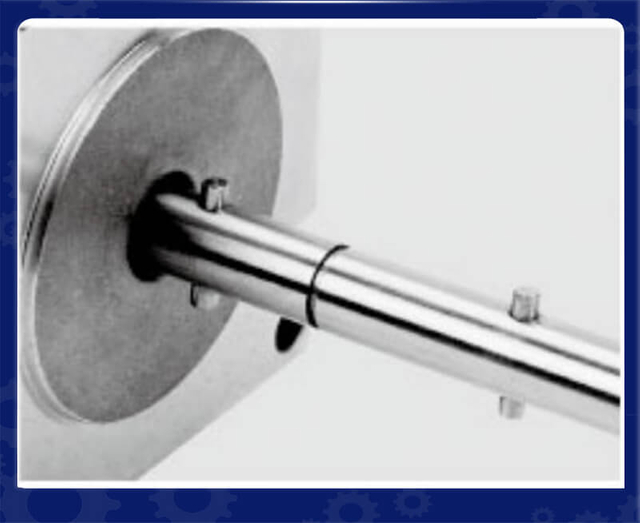
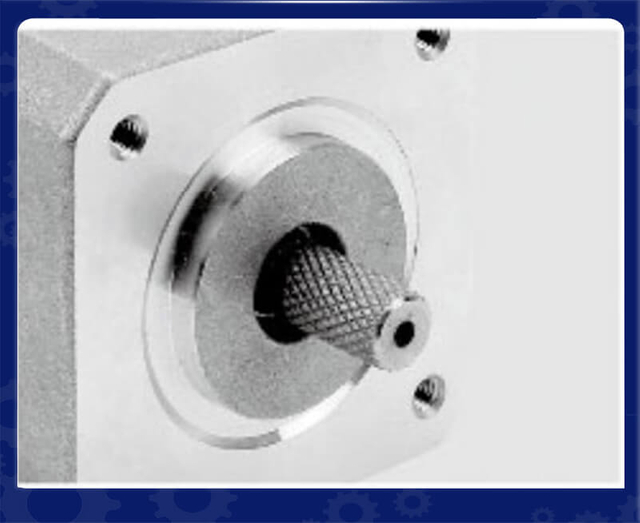
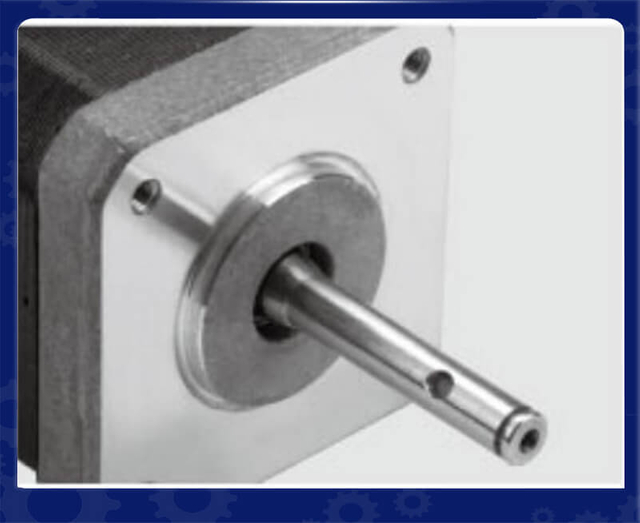
Shaft configuration
Compatibility with couplings and transmission components
Protection rating
Suitability for the actual installation environment
Operating temperature
Compatibility with the equipment's thermal conditions
Customization
Availability of suitable connectors, cables, shafts, and mounting options
5.1 Confirm the Motor Frame Size and Installation Dimensions
The motor frame size should match the mechanical structure of the lifting equipment.
A motor that provides sufficient torque may still be unsuitable if its mounting flange, shaft diameter, overall length, or connector position does not match the machine design.
Manufacturers should request detailed dimensional drawings before confirming a purchase.
For OEM projects involving limited installation space, integrated stepper servo motors with customized shaft and connector configurations may help simplify mechanical integration.
5.2 Evaluate Rated and Peak Torque Separately
Rated torque and peak torque serve different purposes.
Rated torque indicates the motor's continuous operating capability under specified conditions, while peak torque describes its ability to deliver higher torque for a limited period within the manufacturer's operating limits.
For lifting applications, manufacturers should not select motors based solely on peak torque.
The motor must be able to support the normal lifting load throughout the required operating cycle without exceeding its thermal and electrical limits.
5.3 Consider Braking and Power-Off Safety Requirements
One important consideration in vertical lifting applications is what happens when the power supply is interrupted.
A motor's holding torque should not automatically be treated as a certified load-holding safety mechanism.
Depending on the lifting mechanism and risk assessment, the equipment may require an independent mechanical brake, self-locking transmission, counterbalance mechanism, or another suitable load-retention solution.
When evaluating integrated stepper servo motors, manufacturers should confirm whether an optional holding brake is available and whether its specifications are appropriate for the intended application.
Safety-related load retention must be designed at the machine level, not assumed from the motor's closed-loop function.
6. What Should OEM Buyers Ask Integrated Stepper Servo Motor Manufacturers?
For industrial buyers, the quality of the motor supplier's technical support is just as important as the product specifications.
A supplier should be able to provide clear technical information and help verify whether the proposed motor configuration is suitable for the application.
Before placing an order, we recommend asking the following questions.
Can the motor support dual-axis synchronized operation?
Confirm the available control interfaces and whether the motor can work with the intended multi-axis controller.
What encoder options are available?
Request encoder type, resolution, feedback specifications, and relevant product documentation.
What are the rated and peak torque specifications?
Check the performance data at the required operating speed rather than comparing torque values without considering speed.
Does the integrated drive support the required communication protocol?
Confirm the exact protocol and supported functions for the selected model.
Can the manufacturer provide customized motor configurations?
Ask about flange dimensions, shaft modifications, connectors, cables, and brake options.
Are technical drawings and wiring diagrams available?
These documents are important for mechanical design, electrical integration, and production preparation.
Can the supplier support sample testing?
Testing motors under actual lifting loads is an effective way to evaluate performance before committing to larger production quantities.
What technical support is available after delivery?
Check whether the supplier can provide parameter configuration assistance, troubleshooting guidance, and replacement support.
For manufacturers purchasing motors for repeated OEM projects, these considerations can help reduce integration uncertainty and improve long-term supply consistency.
7. Typical Applications of Integrated Stepper Servo Motors in Dual-Axis Lifting Platforms
Integrated stepper servo motors are suitable for various industrial lifting applications that require coordinated movement, reliable positioning, and compact motor installation. Typical applications include:
7.1 Automated Assembly Workstations
In automated assembly lines, dual-axis lifting platforms adjust worktable heights to accommodate different assembly processes. Integrated stepper servo motors help coordinate both lifting points and maintain platform stability.
7.2 Industrial Material Handling Equipment
Material handling systems use dual-axis lifting mechanisms to move workpieces, containers, and production materials between different heights. Closed-loop motor control helps monitor lifting positions and maintain consistent movement.
7.3 Automated Packaging Machinery
In packaging equipment, lifting platforms are used to adjust product or container heights during automated processing. Synchronized motor operation helps maintain platform alignment and supports repeatable positioning.
7.4 Height-Adjustable Industrial Workstations
Industrial workstations often require flexible height adjustment for different production tasks. Dual-axis lifting systems driven by integrated stepper servo motors provide coordinated vertical movement and compact installation.
8. How Manufacturers Can Verify Dual-Axis Synchronization Before Mass Production
Technical specifications provide an initial basis for motor selection, but actual application testing is essential.
Before approving a motor configuration for mass production, equipment manufacturers should conduct a practical evaluation using the intended lifting mechanism.
A recommended verification process includes the following steps.
Step 1: Test unloaded movement
Operate both lifting axes without a working load. Check whether they start, move, and stop consistently.
Step 2: Test under the rated load
Install the expected working load and evaluate the platform's movement throughout the lifting range.
Step 3: Test uneven load distribution
Place the load at different positions on the platform to evaluate how the mechanical structure and control system respond to changing load conditions.
Step 4: Check position consistency
Compare the actual positions of both lifting axes at several points during the lifting and lowering process.
Step 5: Test repeated operating cycles
Run repeated lifting and lowering cycles to evaluate temperature rise, position consistency, alarms, and operating stability.
Step 6: Test power interruption and safety functions
Verify that the platform can be safely retained or stopped under the machine's specified power-loss conditions.
Step 7: Document the results
Record motor parameters, controller settings, mechanical configurations, and test results to establish a repeatable production standard.
This testing process helps OEMs identify potential problems before equipment delivery and provides a more reliable basis for supplier evaluation.
9. Why Work with an Experienced Integrated Stepper Servo Motor Manufacturer?
Choosing a motor supplier involves more than comparing catalog specifications.
For dual-axis lifting equipment, manufacturers often need assistance with motor sizing, encoder selection, drive configuration, communication compatibility, and mechanical installation.
An experienced integrated stepper servo motor manufacturer should be able to provide:
Detailed motor performance specifications.
Mechanical dimension drawings.
Encoder and drive information.
Wiring diagrams and communication documentation.
Configuration and parameter-setting support.
Sample testing for OEM applications.
Customization options for specific equipment requirements.
Consistent production quality and technical support.
For equipment manufacturers developing multiple machine models, working with a supplier capable of supporting product customization and repeatable production can also simplify future procurement.
Before finalizing a supplier, buyers should evaluate actual product documentation, sample performance, manufacturing capabilities, quality control procedures, and technical response capability.
10. Conclusion: Integrated Stepper Servo Motors Support Reliable Dual-Axis Lifting Control
Maintaining precise synchronization between two lifting axes requires more than operating two motors with identical commands. It requires coordinated motion control, reliable position feedback, compatible drive electronics, and a mechanically stable lifting structure.
Integrated stepper servo motors provide a practical solution for dual-axis lifting platforms by combining motor, drive, and encoder feedback in a compact assembly. Their closed-loop capabilities help monitor individual motor movement, while a suitable multi-axis controller coordinates the two lifting mechanisms and manages position deviations.
For OEMs and industrial automation manufacturers, the most important selection factors include rated torque, encoder specifications, communication compatibility, installation dimensions, operating conditions, and power-off safety requirements.
By evaluating these factors and conducting actual application testing before mass production, manufacturers can select a motor configuration that meets their lifting platform's performance requirements while supporting reliable equipment integration and long-term operation.
FAQS:
Q1: How do integrated stepper servo motors maintain synchronization between dual-axis lifting platforms?
Integrated stepper servo motors maintain synchronization through encoder feedback and coordinated motion control. Each motor monitors its actual position, while a multi-axis controller coordinates the movement of both lifting axes. This helps minimize position differences and maintain stable, synchronized vertical movement.
Q2: Why are integrated stepper servo motors suitable for dual-axis lifting platforms?
Integrated stepper servo motors combine the motor, encoder, and drive electronics into a compact unit. Their closed-loop control capability helps monitor motor position and detect movement deviations. They also simplify installation and reduce separate motor-to-drive wiring, making them suitable for compact industrial lifting equipment.
Q3: What role does encoder feedback play in dual-axis lifting synchronization?
Encoder feedback provides real-time information about each motor's actual movement and position. The motion controller can compare the feedback from both axes and identify position differences. When supported by the control system, corrective commands can be applied to improve synchronization accuracy.
Q4: Can two integrated stepper servo motors operate simultaneously in a lifting system?
Yes. Two integrated stepper servo motors can operate simultaneously when connected to a compatible motion controller. The controller sends coordinated movement commands to both motors, allowing them to perform synchronized lifting and lowering operations.
Q5: What factors affect the synchronization accuracy of a dual-axis lifting platform?
Synchronization accuracy depends on several factors, including motor torque, encoder feedback performance, motion controller compatibility, mechanical backlash, screw pitch consistency, and installation alignment. Proper motor selection and mechanical design are essential for achieving stable dual-axis movement.
Q6: Which communication protocols are commonly used for dual-axis integrated stepper servo motors?
Common control interfaces include pulse-and-direction signals, RS485, and CANopen. The appropriate interface depends on the integrated motor model and the motion controller used in the equipment. Manufacturers should verify protocol compatibility and multi-axis control functions before purchasing.
Q7: How do integrated stepper servo motors handle uneven loads on dual-axis lifting platforms?
Encoder feedback allows each motor to monitor its actual movement under changing load conditions. The motor drive can respond to position deviations within its control capabilities, while the motion controller can coordinate both axes when the system supports cross-axis correction. Proper motor sizing and mechanical load distribution are also important.
Q8: How should manufacturers select the right integrated stepper servo motor for a dual-axis lifting platform?
Manufacturers should evaluate the platform weight, maximum payload, load distribution, required lifting speed, rated torque, encoder specifications, and installation dimensions. Communication compatibility and power-off safety requirements should also be considered to ensure the selected motor meets the equipment's operating conditions.
Q9: Do dual-axis lifting platforms require integrated stepper servo motors with holding brakes?
Not every dual-axis lifting platform requires a motor with an integrated holding brake. However, vertical lifting applications must consider whether the platform needs additional protection against falling when power is interrupted. Depending on the mechanical design and safety requirements, a holding brake or independent load-retention mechanism may be necessary.
Q10: What industrial applications use integrated stepper servo motors for dual-axis lifting?
Integrated stepper servo motors can be used in automated assembly workstations, industrial material handling equipment, automated packaging machinery, height-adjustable workstations, and other lifting systems requiring coordinated vertical movement and repeatable positioning.