Home » News » Why Choose Integrated DC Servo Motors for Precision Spraying Equipment?
Why Choose Integrated DC Servo Motors for Precision Spraying Equipment?
Views: 0 Author: Site Editor Publish Time: 2026-10-29 Origin: Site
Integrated DC servo motors are an effective motion-control solution for precision spraying equipment that requires accurate positioning, repeatable movement, and automated operation. By combining a DC servo motor, drive electronics, and feedback capabilities in a compact assembly, they can simplify system integration and support precise control of robotic spray arms, adjustable nozzles, and compatible metering mechanisms. Key selection factors include continuous and peak torque, operating speed, encoder resolution, gearbox backlash, communication interfaces, and environmental protection. When integrated with suitable pumps, sensors, and control software, these motors can improve spraying consistency, support material-use optimization, and help manufacturers develop reliable automated spraying systems.
Precision spraying equipment plays a critical role in modern agriculture, industrial coating, chemical application, and automated fluid distribution. These systems must deliver consistent spray volumes, maintain accurate positioning, respond quickly to changing operating conditions, and minimize material waste. To achieve these objectives, manufacturers increasingly rely on integrated DC servo motors for precision spraying equipment because they combine motor drive technology, closed-loop control, and compact mechanical integration in a single unit.
Compared with conventional motor configurations, integrated DC servo motors can simplify machine architecture, improve motion control, and support more responsive automation. Their ability to regulate speed, torque, and position makes them suitable for applications such as robotic spray arms, variable-rate agricultural sprayers, automated paint systems, precision chemical dispensers, and mobile spraying platforms.
However, selecting the right servo motor requires more than comparing rated power or rotational speed. Engineers must consider the complete motion profile, feedback requirements, environmental conditions, control interfaces, and mechanical transmission. By understanding these factors, equipment manufacturers can develop spraying systems that achieve repeatable performance while reducing integration complexity and maintenance demands.
What Are Integrated DC Servo Motors for Precision Spraying Equipment?
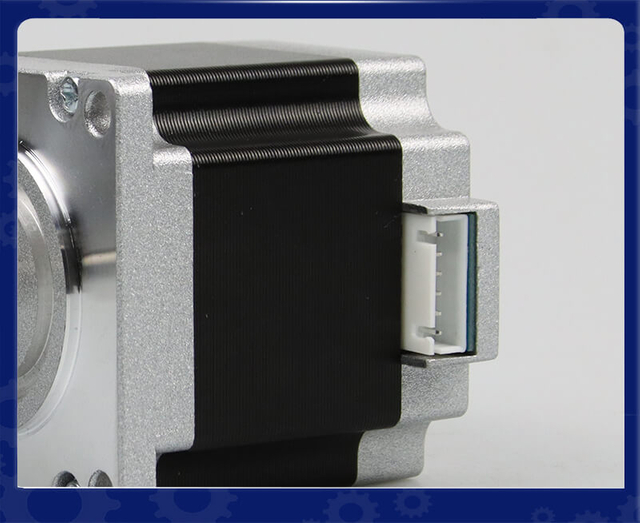
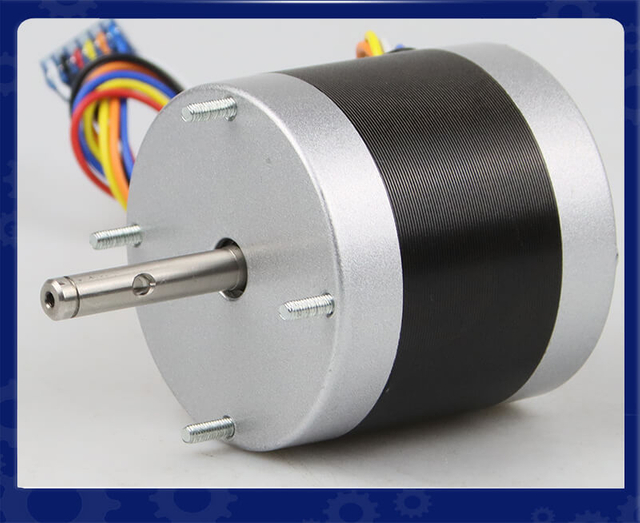
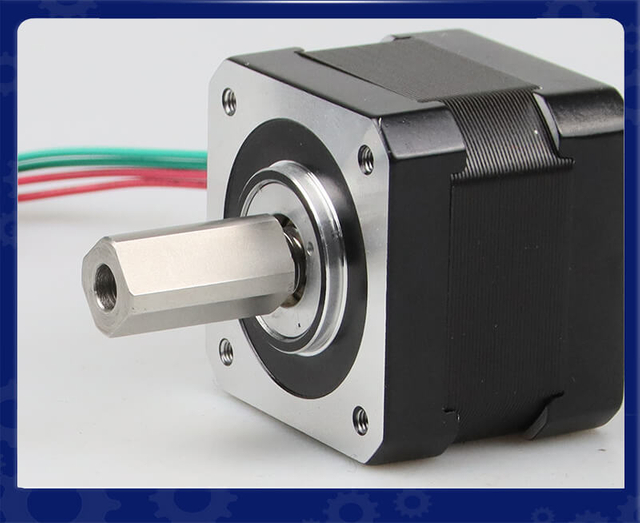
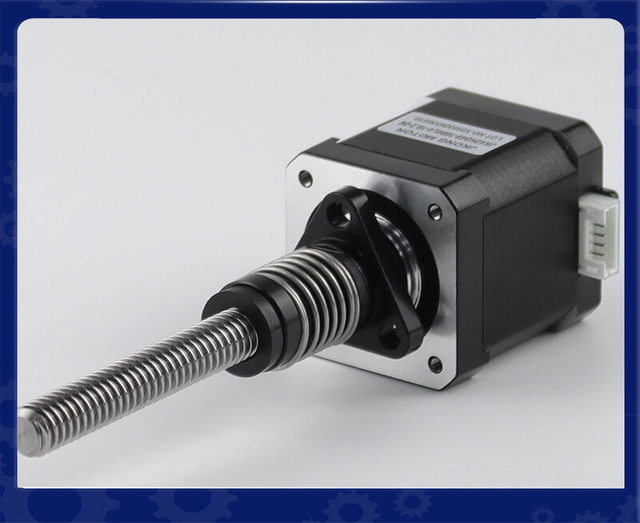
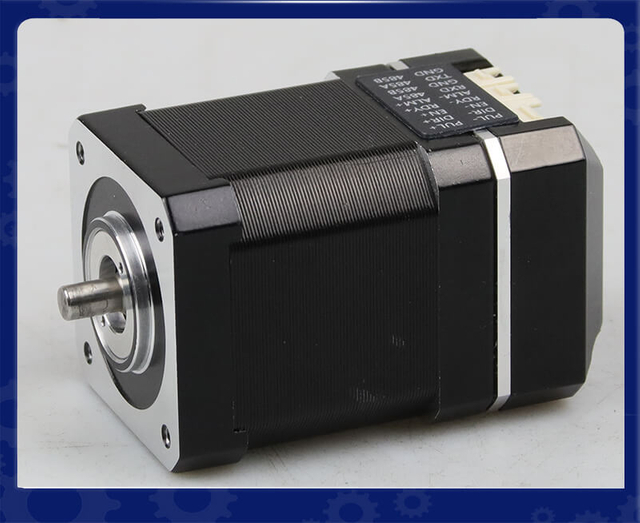
Anintegrated DC servo motor combines a DC motor, servo drive electronics, and typically a feedback device within a compact assembly. Depending on the model, the unit may also include a controller, communication interface, protective functions, or an optional gearbox.
This integrated architecture allows the motor to execute motion commands with fewer separate components than a conventional system consisting of an independent motor, external drive, and separate control hardware.
In precision spraying equipment, integrated DC servo motors can control several important mechanical functions:
Spray nozzle positioning: Moving nozzles or spray heads to predefined angles and positions.
Robotic arm movement: Controlling the coordinated motion of multi-axis spraying mechanisms.
Pump speed regulation: Adjusting the rotational speed of compatible pump assemblies to help regulate fluid delivery.
Boom and nozzle adjustment: Supporting automated changes in spraying height, orientation, or section position.
Valve actuation: Driving compatible mechanical valve mechanisms where controlled motorized movement is required.
Material handling: Positioning workpieces, containers, or spray platforms with repeatable motion.
The motor does not directly guarantee spray quality on its own. Final spraying performance depends on the interaction between the motion system, pump, valves, nozzle design, fluid characteristics, pressure regulation, and application software. Nevertheless, accurate servo motion provides a foundation for achieving consistent and repeatable spraying operations.
1. How Do Integrated DC Servo Motors Improve Spraying Accuracy?
Integrated DC servo motors improve spraying accuracy by providing precise position control, stable speed regulation, and real-time motion feedback. In precision spraying equipment, these capabilities help maintain consistent nozzle positioning, repeatable spray paths, and coordinated movement between mechanical components. When integrated with suitable pumps, flow sensors, pressure regulators, and control systems, servo motors can also support more consistent material application and reduce unnecessary spraying.
Closed-Loop Control for Precise Positioning
Unlike conventional open-loop motor systems, integrated DC servo motors typically use encoder feedback to monitor actual motor movement. The integrated drive compares the commanded position or speed with the feedback signal and adjusts motor operation to minimize the difference.
This closed-loop control is particularly useful for robotic spray arms, adjustable nozzle assemblies, and automated agricultural sprayers that must repeatedly reach specific positions. By monitoring movement, the system can detect positioning deviations and correct them within the limits of its control bandwidth, mechanical design, and feedback resolution.
Stable Speed Control for Consistent Spray Patterns
The movement speed of a spray mechanism directly affects application consistency. If a spray head moves too quickly or too slowly, the amount of material deposited over a given area may vary, assuming other spraying parameters remain unchanged.
Integrated DC servo motors support controlled acceleration, deceleration, and operating speed, helping spraying equipment maintain a more consistent movement profile. In automated coating applications, this can contribute to more uniform coverage. In agricultural spraying systems, it can help coordinate nozzle movement with equipment speed and programmed application strategies.
However, consistent motor speed alone does not guarantee uniform spray distribution. Nozzle characteristics, fluid pressure, flow rate, spray distance, and material properties must also be properly controlled.
Faster Response to Changing Operating Conditions
Precision spraying equipment often performs frequent start-stop movements, changes direction, or adjusts nozzle positions according to sensor inputs. Integrated DC servo motors can respond to updated motion commands by regulating motor current and movement through their drive and feedback systems.
This responsiveness helps robotic spraying equipment follow programmed trajectories and allows automated mechanisms to reposition spray heads with repeatable timing. When the motion controller coordinates servo movement with pump operation and nozzle activation, the system can improve synchronization between material delivery and target positioning.
Reduced Application Errors and Material Waste
Accurate positioning and repeatable motion can help spraying systems direct material toward the intended target instead of spraying outside the required area. This is especially valuable in precision agriculture, industrial painting, chemical dispensing, and automated surface treatment.
For example, an agricultural spraying system can use servo-driven mechanisms to adjust nozzle orientation or reposition a spray head according to predefined control commands. When combined with appropriate sensing and application-rate control, this approach can help reduce unnecessary chemical use and improve application consistency.
Key Factors That Determine Spraying Accuracy
To achieve the required performance, equipment manufacturers should evaluate several factors when selecting an integrated DC servo motor:
Positioning accuracy and repeatability: Determine whether the motor and mechanical transmission can meet the application's positioning tolerances.
Encoder resolution: Check whether the feedback device provides sufficient measurement resolution for the required motion.
Dynamic response: Evaluate acceleration, deceleration, settling time, and tracking error during frequent movements.
Gearbox backlash: Consider transmission clearance when the application requires precise output-shaft positioning or frequent direction changes.
Control-system compatibility: Confirm that the motor supports the required position, speed, or torque commands and interfaces with the machine controller.
System-level calibration: Validate nozzle positioning, spray distance, fluid pressure, and application rate under actual operating conditions.
In summary, integrated DC servo motors improve spraying accuracy by making mechanical movement more precise, repeatable, and responsive. When correctly selected and coordinated with fluid-delivery components and application sensors, they provide a reliable motion-control foundation for precision spraying equipment used in agriculture, industrial coating, and automated dispensing systems.
2. Why Is Closed-Loop Control Important for Precision Spraying Systems?
Precision spraying equipment frequently operates under changing conditions. Spray arms accelerate and decelerate, robotic mechanisms change direction, and mobile platforms experience variations in mechanical load.
Without appropriate feedback, an open-loop motor system may be unable to detect whether the commanded movement has been completed accurately. A closed-loop servo system can monitor its motion and respond to deviations within the limits of its feedback system and control bandwidth.
Integrated DC servo motors commonly use encoder feedback to measure rotor position or speed. The servo drive processes this information and adjusts motor current or voltage to achieve the requested operating condition.
This capability offers several benefits:
Position verification: The system can compare commanded and measured positions, helping detect tracking errors.
Speed regulation: Feedback supports more consistent rotational speed when mechanical loading changes.
Dynamic response: Properly configured servo systems can accelerate, decelerate, and reverse direction quickly.
Fault monitoring: Depending on the model, the drive may detect conditions such as following errors, overcurrent, or overtemperature.
Repeatable operating sequences: Programmable motion profiles can help spraying equipment reproduce established movement patterns.
For precision spraying applications, these functions are particularly valuable when a machine must repeat the same movement across hundreds or thousands of operating cycles.
When selecting a motor, engineers should verify the available feedback type, control modes, position and speed command interfaces, fault outputs, and supported communication protocols. Closed-loop capability is most effective when the motor, drive, mechanical transmission, and higher-level controller are configured as a coordinated system.
3. How Does an Integrated Servo Design Simplify Equipment Integration?
Traditional servo installations may require separate motor units, external drives, feedback cables, power connections, control wiring, and mounting arrangements. These components provide flexibility, but they also increase the number of interfaces that equipment designers must accommodate.
Integrated DC servo motors consolidate key motion-control components into one assembly, potentially reducing cabinet space, cable routing, and installation work.
For compact spraying machines, this architecture can be especially useful because the available installation area may be limited by reservoirs, pumps, piping, protective covers, and moving mechanical structures.
Integration can provide several practical advantages:
Reduced wiring complexity: Motor and drive integration can eliminate some connections between separate components.
Simplified installation: A combined assembly can reduce mechanical and electrical installation steps.
Compact machine layouts: Integrated electronics may reduce the space required for external drive equipment.
Faster commissioning: Pre-integrated components can simplify setup when the motor's interfaces and configuration tools match the machine requirements.
Reduced component coordination: Engineers can work with a more consolidated motion-control package.
However, integration does not eliminate every external requirement. The machine may still need a suitable power supply, emergency-stop architecture, safety-related hardware, a supervisory controller, communication cabling, and protective enclosures.
Designers must also consider heat dissipation, access for maintenance, connector orientation, and exposure to water or chemicals. If the motor is mounted directly on a moving spray arm, cable flexing and vibration should be evaluated during mechanical design.
4. Can Integrated DC Servo Motors Support Variable-Rate Spraying?
Variable-rate spraying adjusts material application according to changing operational requirements. In agriculture, this may involve changing the application rate according to crop conditions, field maps, or sensor information. In industrial applications, it may involve adjusting the movement of a spray head or coordinating material delivery with workpiece geometry.
Integrated DC servo motors can support variable-rate systems by controlling the motion of compatible pumps, mechanical metering devices, or positioning mechanisms.
For example, a servo-driven metering mechanism may adjust its operating speed in response to a command from the spraying controller. The controller can calculate the requested output using application parameters, sensor data, and machine speed.
Nevertheless, motor speed is not always equivalent to fluid flow rate. The relationship depends on the pump's displacement, operating pressure, fluid viscosity, leakage, and other system characteristics.
Where precise flow control is essential, engineers may need a flow sensor, pressure sensor, calibrated pump model, or another suitable feedback mechanism. The motor controller should then coordinate its motion commands with the fluid-control system.
A properly engineered variable-rate spraying system can help reduce unnecessary chemical consumption, improve application consistency, and respond more effectively to changing operating conditions.
The appropriate motor must provide sufficient torque and speed across the required operating range while meeting the application's acceleration, duty-cycle, and thermal requirements.
5. Why Are Torque and Speed Selection Critical?
Motor selection directly affects the responsiveness, reliability, and efficiency of precision spraying equipment.
A motor that delivers insufficient torque may struggle to accelerate a spray arm, overcome gearbox friction, or maintain the required motion under changing loads. Conversely, selecting an unnecessarily large motor can increase cost, weight, and power consumption.
Engineers should begin by defining the mechanical requirements of the application.
Continuous and Peak Torque
Continuous torque determines whether the motor can sustain the required load without exceeding its thermal limits.
Peak torque determines whether the motor can handle short-duration demands such as acceleration, deceleration, rapid repositioning, or temporary increases in mechanical resistance.
Both values should be evaluated against the actual motion profile. Peak torque capability must also be considered alongside its permitted duration and repetition frequency.
Operating Speed
The required speed depends on the mechanism's travel distance, movement time, transmission ratio, and operating sequence.
For a rotating spray head, the designer should calculate the speed needed to reach the target angle within the available time. For a linear mechanism, the required motor speed depends on the lead screw, belt drive, rack-and-pinion system, or other transmission used.
Acceleration and Deceleration
Frequent start-stop cycles can create significant dynamic torque requirements. The motor must accelerate the reflected inertia of the load while maintaining acceptable response and avoiding excessive current demand.
Where a gearbox is used, its ratio affects output speed, available output torque, inertia reflected to the motor, and positioning behavior.
Duty Cycle and Thermal Performance
A spraying system operating continuously for several hours has different requirements from a system that moves intermittently between spray positions.
Engineers should evaluate the root-mean-square torque over the operating cycle, peak current, ambient temperature, mounting conditions, and available cooling.
Selecting a motor based on rated power alone is insufficient. The complete torque-speed curve and thermal limits should be checked against the application's operating profile.
6. How Do Gearboxes Improve Servo Motor Performance in Spraying Equipment?
Some precision spraying mechanisms require high output torque at relatively low speeds. In these applications, an integrated DC servo motor with a gearbox may provide a more practical solution than a direct-drive motor.
A gearbox reduces output speed while increasing available output torque according to its transmission ratio and mechanical efficiency.
For example, a geared servo motor can drive a heavy spray arm, rotate a nozzle assembly, or position a mechanical adjustment mechanism that requires controlled low-speed movement.
Different gearbox designs offer different characteristics:
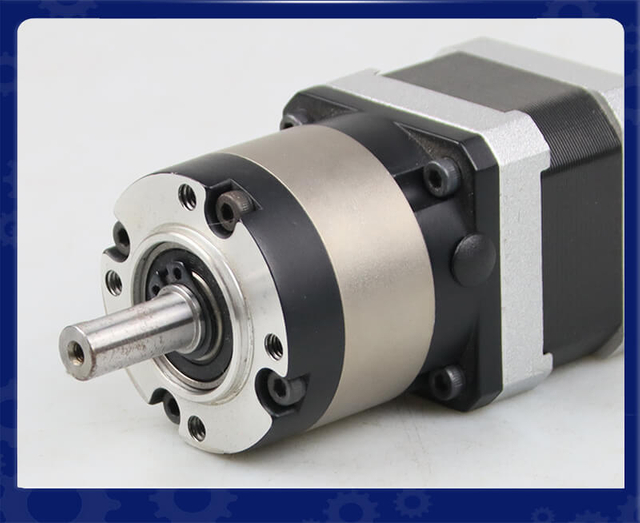
Planetary gearboxes: Often selected for compact installations requiring relatively high torque density and good mechanical efficiency.
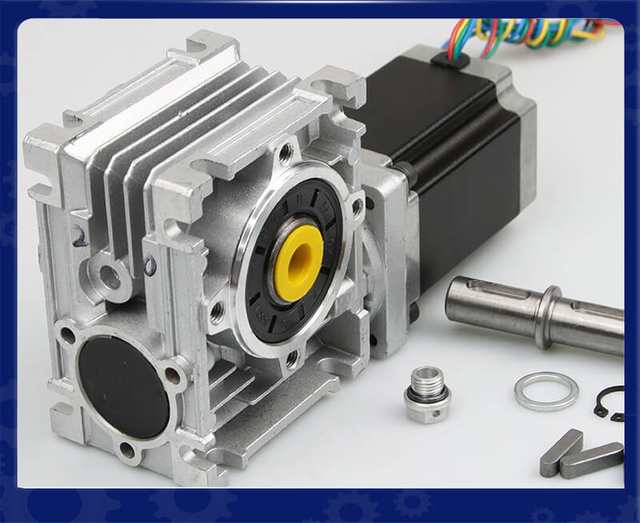
Worm gearboxes: Useful where substantial speed reduction and a compact right-angle transmission are required.
Other geared configurations: May be appropriate depending on mounting geometry, load characteristics, and cost requirements.
Gearbox selection should consider rated torque, permissible peak torque, backlash, efficiency, lubrication, operating temperature, and expected service life.
Backlash is particularly important in applications involving repeated directional changes. Excessive mechanical clearance can reduce the positioning accuracy of the output shaft even when the servo motor's encoder provides fine resolution.
Engineers should also distinguish between motor-shaft feedback and output-shaft positioning accuracy. An encoder mounted on the motor cannot necessarily measure every movement error introduced by gearbox clearance, shaft deflection, or structural compliance.
Where output accuracy is critical, a low-backlash transmission or additional load-side feedback may be necessary.
7. What Environmental Protection Is Required for Spraying Applications?
Precision spraying equipment often operates in environments containing water, cleaning agents, fertilizers, pesticides, solvents, dust, or airborne chemical residues. These conditions can damage motor electronics, connectors, bearings, and mechanical components if protection is inadequate.
When specifying integrated DC servo motors, engineers should evaluate the actual exposure conditions rather than relying on a general assumption that an industrial motor is suitable for wet environments.
Important considerations include:
Ingress protection: Select an appropriate IP rating based on exposure to dust, water jets, splashes, or other specified conditions. An IP rating does not automatically establish chemical resistance or suitability for every washdown process.
Chemical compatibility: Verify that seals, cables, connector materials, coatings, and housing surfaces are compatible with the chemicals used during spraying and cleaning.
Corrosion resistance: Agricultural and chemical-processing environments may require corrosion-resistant materials or additional protective measures.
Temperature management: Integrated drives generate heat. The mounting location, ambient temperature, airflow, and enclosure design can affect operating limits.
Vibration resistance: Mobile sprayers and robotic mechanisms may transmit vibration and shock to the motor assembly. Mounting hardware and connectors should be selected accordingly.
Cable and connector protection: Flexible cables must tolerate repeated motion where motors are mounted on articulated arms. Suitable strain relief and routing help reduce fatigue-related failures.
A suitable protection rating should be confirmed from the manufacturer's documentation for the complete assembly, including connectors and any required accessories. If the equipment requires frequent high-pressure washing or exposure to aggressive chemicals, additional validation may be necessary.
8. How Do Integrated DC Servo Motors Improve Automation and System Coordination?
Integrated DC servo motors improve automation and system coordination by combining precise motion control, real-time feedback, and flexible communication interfaces. In precision spraying equipment, these capabilities help coordinate spray-head positioning, pump operation, nozzle activation, and automated movement, improving process consistency and operational efficiency.
Precise Motion Control and Synchronization
Integrated DC servo motors use feedback to regulate position and speed, enabling spraying equipment to execute programmed movements with greater repeatability. When connected to a machine controller, they can coordinate spray-arm movement with nozzle activation and fluid delivery.
For example, a robotic spraying system can use servo motors to position spray heads along predefined paths while synchronizing movement with the spraying sequence. This helps maintain consistent motion and reduces unnecessary movements.
Flexible Communication and System Integration
Depending on the model, integrated DC servo motors support interfaces such as pulse-and-direction inputs, analog commands, digital I/O, or industrial communication protocols. These options allow equipment manufacturers to integrate motor control with PLCs, industrial computers, and automated monitoring systems.
A well-matched interface simplifies command transmission, status monitoring, and fault diagnosis while reducing unnecessary control-system complexity.
Improved Process Monitoring and Reliability
Many integrated servo drives provide diagnostic functions, including overcurrent protection, overtemperature monitoring, and position-error detection. These features help operators identify certain motion-control problems and simplify troubleshooting.
When combined with suitable sensors and control software, integrated DC servo motors can support automated adjustments based on machine speed, target position, or other process parameters.
In summary, integrated DC servo motors help precision spraying equipment achieve coordinated movement, repeatable motion sequences, and more efficient automation. Selecting a motor with compatible communication interfaces, appropriate feedback capabilities, and sufficient dynamic performance is essential for reliable system integration.
9. Which Applications Benefit Most from Integrated DC Servo Motors?
Integrated DC servo motors are particularly suitable for spraying applications that require controlled positioning, repeatable motion, compact installation, or frequent changes in operating conditions.
Agricultural Precision Spraying
Agricultural spraying systems may use servo-driven mechanisms to adjust nozzle orientation, reposition spray heads, or control compatible metering assemblies.
When coordinated with machine-speed data, crop sensors, and fluid-control components, these mechanisms can support more targeted application strategies.
The motor must tolerate the expected vibration, environmental exposure, duty cycle, and mechanical loading associated with field operation.
Robotic Spray Arms
Robotic spraying systems require controlled movement along defined trajectories. Integrated servo motors can operate individual axes, helping the robot position spray heads and repeat programmed movement sequences.
For demanding applications, engineers should assess torque margins, acceleration requirements, gearbox backlash, axis synchronization, and the effect of spray hoses on the robot's mechanical load.
Industrial Paint and Coating Systems
Automated painting and coating machines often require repeatable spray-head positioning and controlled travel speed.
Integrated DC servo motors can support movement along linear rails, rotating fixtures, and adjustable spray mechanisms. Consistent motion can help maintain process repeatability, although coating thickness and finish also depend on fluid delivery, atomization, distance, and environmental conditions.
Chemical Dispensing Equipment
Chemical spraying and dispensing systems may use servo motors to position delivery mechanisms or drive compatible metering devices.
Because fluid properties and operating pressures can vary considerably, engineers should validate the pump or metering mechanism independently rather than assuming a fixed relationship between motor rotation and delivered volume.
Automated Cleaning Systems
Industrial cleaning equipment may use servo-controlled mechanisms to move spray nozzles around workpieces or within automated cleaning chambers.
Environmental protection, chemical compatibility, and the ability to withstand repeated cleaning cycles are especially important in these applications.
Across these use cases, the most suitable motor is the one that matches the required motion, mechanical load, environmental conditions, and control architecture.
10. Integrated DC Servo Motors vs. Conventional Motor Systems
When evaluating motor technologies for precision spraying equipment, engineers should compare the complete motion-control solution rather than focusing only on the motor itself.
Evaluation factor
Integrated DC servo motor
Conventional motor with separate drive
Component integration
Combines key components in one assembly
Uses separate motor and drive components
Installation
May simplify mounting and wiring
May require additional wiring and cabinet space
Feedback control
Available when supported by the integrated servo system
Depends on the selected motor, drive, and feedback devices
System flexibility
Depends on built-in interfaces and configuration options
Can offer greater freedom to select individual components
Maintenance
Fewer separate components may simplify some service tasks
Individual components can often be replaced independently
Space requirements
Can reduce external drive requirements
May require additional installation space
Environmental suitability
Depends on motor and electronics protection
Depends on the protection of each component and the overall installation
Initial cost
Depends on integration level and performance
Depends on the combined cost of the motor, drive, feedback, and accessories
Integrated designs can reduce installation complexity, but they are not automatically superior for every application. Separate-drive systems may be preferable when a project requires specialized drive functionality, unusual power ratings, extensive customization, or a centralized cabinet architecture.
Equipment manufacturers should compare total system cost, commissioning time, maintenance requirements, expansion capability, and long-term component availability.
11. How to Select the Right Integrated DC Servo Motor for Precision Spraying Equipment
A structured selection process helps engineers avoid oversizing, insufficient torque, control incompatibility, and premature component failure.
Step 1: Define the Required Motion
Determine whether the application requires continuous rotation, indexed positioning, reciprocating movement, or coordinated multi-axis motion.
Record travel distance, movement time, acceleration, deceleration, dwell time, and the number of cycles per hour.
Step 2: Calculate the Mechanical Load
Estimate the moving mass, moment of inertia, friction, external forces, and transmission losses.
For rotating mechanisms, calculate the torque required to accelerate the load. For linear mechanisms, account for the force required to move the load and convert that force into motor torque using the transmission geometry.
Include an appropriate engineering margin based on the application's uncertainty and operating conditions.
Step 3: Establish the Torque-Speed Operating Point
Check that the selected motor can meet the required continuous torque, peak torque, maximum speed, and acceleration profile.
Verify the manufacturer's torque-speed data at the intended supply voltage and operating conditions.
Step 4: Select the Feedback and Control Method
Determine whether the application requires position control, speed control, torque control, or a combination of these modes.
Confirm encoder specifications, command inputs, communication protocols, configuration software, and fault-monitoring functions.
Step 5: Evaluate Gearbox Requirements
If the application requires low-speed, high-torque movement, calculate the appropriate gear ratio.
Check backlash, efficiency, permissible radial and axial loads, lubrication requirements, and expected gearbox life.
Step 6: Verify Electrical Compatibility
Confirm the supply voltage, continuous and peak current requirements, power consumption, electrical protection, and compatibility with the machine controller.
Ensure that the integrated drive can handle the application's acceleration profile without repeatedly triggering current or thermal protection.
Step 7: Check Environmental Requirements
Specify the necessary ingress protection, chemical resistance, temperature range, vibration tolerance, connector type, and cable arrangement.
Evaluate the actual operating and cleaning conditions, including exposure to pressurized water or aggressive chemicals.
Step 8: Validate the Complete System
Test the motor with the actual mechanical assembly, control software, pump or metering device, and representative operating conditions.
Measure positioning repeatability, speed stability, response time, temperature rise, vibration, and performance under maximum expected loading.
This validation process provides a more reliable basis for selection than comparing catalog specifications in isolation.
12. What Should Manufacturers Test Before Mass Production?
Before integrating an integrated DC servo motor into a production spraying machine, manufacturers should verify that the complete system meets its performance requirements.
Positioning repeatability testing should confirm that the mechanism reaches its target positions consistently across repeated cycles.
Dynamic response testing should evaluate acceleration, deceleration, direction changes, settling time, and tracking error.
Load testing should reproduce the expected continuous and peak mechanical loads.
Thermal testing should monitor motor and drive temperatures during representative operating cycles and at the expected ambient temperature.
Duty-cycle testing should reproduce the application's start-stop frequency and operating duration.
Environmental testing should evaluate the specified exposure to moisture, dust, vibration, cleaning agents, and other relevant conditions.
Control-system testing should verify communication, command execution, fault reporting, and recovery behavior.
Fluid-delivery validation should measure actual flow rate, pressure stability, or application volume where the motor controls a pump or metering mechanism.
Testing should use measurable acceptance criteria rather than subjective assessments. For example, manufacturers can define allowable positioning error, maximum settling time, temperature limits, and permitted variation in delivered fluid volume.
Where applicable, the validation plan should also address cable fatigue, connector retention, mechanical wear, and the repeatability of the complete spraying process.
13. How Can Integrated DC Servo Motors Help Reduce Operating Costs?
Integrated DC servo motors can help reduce the operating costs of precision spraying equipment by simplifying system integration, improving motion efficiency, reducing material waste, and supporting more predictable maintenance. By combining the motor, drive electronics, and feedback components into a compact assembly, these systems can reduce the number of separate components required for installation while providing the precise motion control needed for automated spraying operations.
For agricultural machinery, industrial coating systems, chemical dispensing equipment, and robotic spraying applications, lower operating costs depend on more than motor efficiency alone. Installation labor, energy consumption, downtime, maintenance requirements, and material utilization all contribute to the total cost of ownership. Selecting an appropriately configured integrated DC servo motor can help manufacturers optimize these factors throughout the equipment's service life.
Reduced Installation and Integration Costs
Traditional servo systems often require separate motors, external drives, feedback devices, and additional wiring. Integrating these components into one assembly can simplify electrical connections, reduce cabinet-space requirements, and streamline machine installation.
For OEMs and automation integrators, this architecture can reduce engineering effort during system design and commissioning, particularly in compact spraying equipment with multiple motion axes.
Fewer separate components and connections may also simplify troubleshooting. However, the actual savings depend on the motor's integration level, communication interfaces, installation requirements, and compatibility with the existing control architecture.
Improved Motion Efficiency and Energy Management
Integrated DC servo motors use feedback-based control to regulate motor operation according to commanded speed, position, or torque. When properly sized and configured, they can avoid some unnecessary motor movement and support more efficient operating sequences.
For example, an automated spraying system may only need to reposition a nozzle when a target location changes. A programmed servo motion profile can control acceleration, deceleration, and movement distance to reduce unnecessary travel.
Energy savings depend on the complete application, including motor sizing, drive efficiency, mechanical transmission losses, duty cycle, and the load profile. Engineers should evaluate actual power consumption under representative operating conditions rather than assuming that every integrated servo system will consume less energy than a conventional motor arrangement.
Reduced Material Waste Through More Consistent Spraying
Material consumption is a major operating expense in agricultural spraying, industrial painting, and chemical application. Inaccurate positioning, inconsistent movement, and poorly coordinated spraying sequences can contribute to overspray, uneven coverage, or repeated application.
Integrated DC servo motors help address these problems by providing controlled, repeatable movement of spray arms, nozzle assemblies, and compatible metering mechanisms.
In industrial coating systems, repeatable spray-head movement can help maintain consistent travel speed and distance from the workpiece. In agricultural equipment, servo-controlled positioning can support targeted application strategies when coordinated with appropriate sensors, nozzle controls, and machine-speed data.
The motor alone does not regulate every aspect of fluid delivery. Actual material savings depend on nozzle performance, fluid pressure, flow rate, spray pattern, application software, and calibration. Nevertheless, improved motion repeatability can provide an important foundation for reducing process variation and unnecessary material consumption.
Lower Maintenance and Troubleshooting Costs
A well-selected integrated DC servo motor can simplify maintenance by consolidating key motion-control components into a single assembly. Depending on the design, this may reduce the number of separate cables, connectors, and component interfaces that require inspection.
Many integrated servo systems also provide diagnostic functions, such as overcurrent protection, overtemperature monitoring, and position-error detection. These functions can help maintenance personnel identify certain operating problems more efficiently.
However, integration does not eliminate the need for preventive maintenance. Bearings, gearboxes, connectors, seals, and mechanical transmission components may still require inspection or replacement. In spraying environments, engineers must also consider moisture, dust, vibration, cleaning agents, and chemical exposure.
Selecting a motor with appropriate environmental protection, reliable feedback components, and suitable thermal characteristics can help reduce the risk of premature failure and unplanned downtime.
Improved Productivity and Reduced Downtime
Precision spraying equipment frequently operates through repetitive motion cycles, including acceleration, positioning, spraying, stopping, and repositioning. A servo motor with suitable dynamic performance can execute these movements accurately and respond to updated commands from the machine controller.
When the application requires frequent start-stop operation, the motor must provide sufficient peak torque and manage the resulting thermal load. Correctly matching the motor to the motion profile can help maintain stable operation and reduce the likelihood of faults caused by undersizing or inappropriate configuration.
Integrated drives may also provide fault signals that support faster troubleshooting. When combined with appropriate monitoring and maintenance procedures, these features can help reduce the time required to diagnose motion-control problems.
The resulting productivity benefits depend on the complete machine design, cycle-time requirements, mechanical reliability, and control-system performance.
Optimized Total Cost of Ownership
When comparing integrated DC servo motors with conventional motor systems, manufacturers should evaluate the total cost of ownership rather than focusing exclusively on the initial purchase price.
Important cost factors include:
Equipment purchase cost: Compare the complete motor, drive, feedback, cabling, and accessory requirements.
Installation and commissioning: Estimate the labor and engineering time needed to integrate and configure the system.
Energy consumption: Measure power usage under the expected operating cycle.
Maintenance expenses: Consider inspection intervals, replacement components, service accessibility, and expected operating life.
Material utilization: Track chemical, paint, or other spraying material consumption under comparable production conditions.
Downtime costs: Estimate the financial impact of equipment faults, maintenance interruptions, and production delays.
System flexibility: Assess whether the motor supports future changes to motion profiles, equipment layouts, or automation requirements.
A higher initial investment may be justified when an integrated servo solution reduces installation effort, improves repeatability, or lowers maintenance and material costs. Conversely, a simpler motor may remain the more economical option for applications that do not require closed-loop positioning or dynamic motion control.
How Manufacturers Can Verify Cost Savings
Before adopting an integrated DC servo motor across a production line, equipment manufacturers should establish measurable performance benchmarks.
A practical evaluation can compare the existing system with the proposed servo-controlled configuration under equivalent operating conditions. Relevant measurements include energy consumption per operating cycle, material used per treated unit, average cycle time, maintenance hours, and unplanned downtime.
Manufacturers should also test the motor under representative loads and duty cycles to verify that its torque, speed, thermal performance, and feedback control meet the application's requirements.
By comparing these results over a defined operating period, engineers can estimate whether the new configuration delivers meaningful financial benefits and calculate its potential payback period.
In summary, integrated DC servo motors can reduce operating costs by simplifying installation, supporting efficient motion control, improving spraying repeatability, and helping minimize maintenance-related interruptions. When selected according to the application's mechanical, electrical, and environmental requirements, they can contribute to lower total cost of ownership and more reliable long-term operation for precision spraying equipment.
14. Common Mistakes to Avoid When Selecting Servo Motors for Spraying Systems
Even a high-quality servo motor can deliver disappointing results if it is incorrectly specified or integrated.
Selecting by rated power alone: Power does not fully describe the motor's ability to handle acceleration, peak torque, or low-speed operation.
Ignoring gearbox backlash: Motor-shaft accuracy does not necessarily equal output-shaft accuracy.
Assuming motor speed directly determines fluid flow: Pump characteristics, pressure, fluid viscosity, and system leakage affect actual delivery.
Overlooking environmental exposure: A motor suitable for an indoor machine may not withstand agricultural chemicals, outdoor moisture, or frequent washdown.
Choosing incompatible control interfaces: The motor and drive must communicate correctly with the machine controller and support the required operating modes.
Ignoring thermal limits: Frequent acceleration and high peak current can create thermal stress even when the average mechanical load appears modest.
Neglecting mechanical resonance: Flexible structures, transmission components, and poorly configured control loops can cause vibration or unstable movement.
Treating ordinary servo control as a safety function: Emergency stopping and personnel protection require a properly designed safety system with appropriately rated components.
Avoiding these mistakes helps equipment manufacturers improve reliability, simplify commissioning, and reduce unexpected engineering changes during production.
Conclusion: Why Choose Integrated DC Servo Motors for Precision Spraying Equipment?
Integrated DC servo motors provide a compact, feedback-based motion-control solution for precision spraying equipment that requires accurate positioning, repeatable movement, responsive operation, and simplified integration. By combining key motor and drive components, these systems can reduce wiring complexity and support efficient machine layouts while providing the control capabilities needed for automated spraying mechanisms.
Their suitability depends on the specific application. Engineers should evaluate continuous and peak torque, operating speed, acceleration, feedback resolution, gearbox characteristics, control interfaces, environmental protection, and thermal performance before selecting a motor.
When coordinated with suitable pumps, valves, sensors, nozzles, and machine-control software, integrated DC servo motors can help manufacturers develop more consistent, flexible, and maintainable spraying systems.
For equipment manufacturers, OEMs, and automation integrators, the most effective approach is to select the motor according to the complete motion profile and validate its performance under realistic operating conditions. A properly matched integrated DC servo motor can provide a reliable foundation for precision spraying applications in agriculture, industrial coating, chemical dispensing, robotic automation, and automated cleaning.
FAQ 1: What Are Integrated DC Servo Motors for Precision Spraying Equipment?
Integrated DC servo motors combine a DC servo motor, drive electronics, and typically an encoder or other feedback device in a compact assembly. They provide controlled position, speed, and torque for spraying equipment, including robotic spray arms, adjustable nozzles, and automated dispensing mechanisms.
FAQ 2: How Do Integrated DC Servo Motors Improve Spraying Accuracy?
Integrated DC servo motors use closed-loop feedback to monitor motor movement and correct deviations from commanded positions or speeds. This helps improve positioning repeatability and motion consistency. Actual spraying accuracy also depends on nozzle design, fluid pressure, flow rate, spray distance, and system calibration.
FAQ 3: Why Are Integrated DC Servo Motors Suitable for Automated Spraying Systems?
Their compact design, programmable motion control, and feedback capabilities make them suitable for automated spraying systems. They can coordinate spray-head positioning, robotic movement, and compatible metering mechanisms while reducing the need for separate motor-drive components.
FAQ 4: Can Integrated DC Servo Motors Reduce Material Waste in Precision Spraying?
Yes. By improving positioning repeatability and controlling movement speed, integrated DC servo motors can help reduce overspray and unnecessary material application. Greater savings are possible when motor control is coordinated with appropriate sensors, flow regulation, and nozzle-control systems.
FAQ 5: How Do You Select the Right Integrated DC Servo Motor for Spraying Equipment?
Consider continuous and peak torque, operating speed, acceleration, positioning accuracy, feedback resolution, control interfaces, and environmental protection. If a gearbox is required, evaluate its ratio, efficiency, backlash, and permissible output loads. Validate the motor against the complete application's motion profile and duty cycle.
FAQ 6: Can Integrated DC Servo Motors Control Spray Pump Speed?
Yes, when the motor and pump are mechanically compatible and the drive supports the required control mode. Servo-controlled pump speed can help adjust fluid delivery, but actual flow also depends on pump characteristics, fluid viscosity, operating pressure, and system leakage. Flow sensors may be needed for precise regulation.
FAQ 7: Are Integrated DC Servo Motors Suitable for Agricultural Spraying Equipment?
Yes. They can control adjustable spray heads, robotic spraying mechanisms, and compatible metering systems in agricultural machinery. For outdoor applications, manufacturers should verify ingress protection, chemical compatibility, temperature limits, vibration resistance, and connector durability.
FAQ 8: What Control Interfaces Do Integrated DC Servo Motors Support?
Depending on the model, integrated DC servo motors may support pulse-and-direction inputs, analog commands, digital inputs and outputs, or industrial communication protocols. Compatibility with the machine's PLC or motion controller should be confirmed before purchase.
FAQ 9: How Do Integrated DC Servo Motors Reduce Maintenance and Operating Costs?
Integrated designs can reduce wiring complexity and the number of separate components. Diagnostic functions may also simplify troubleshooting. When properly selected and configured, these motors can support repeatable motion and reduce some process-related waste, helping lower total operating costs.
FAQ 10: What Should Manufacturers Test Before Using Integrated DC Servo Motors in Production?
Manufacturers should test positioning repeatability, speed stability, acceleration response, continuous and peak loading, temperature rise, duty-cycle performance, communication reliability, and environmental resistance. For spraying systems, they should also validate actual flow rate, pressure stability, and application consistency under representative operating conditions.