Views: 0 Author: Site Editor Publish Time: 2026-11-04 Origin: Site
Introduction
Surface Mount Technology (SMT) placement machines are essential pieces of equipment in modern electronics manufacturing. As PCB designs become increasingly compact and component densities continue to rise, manufacturers face growing demands for higher placement accuracy, faster production speeds, improved positioning stability, and reduced equipment downtime. To meet these requirements, motion control systems must deliver precise, repeatable, and reliable performance across multiple positioning axes.
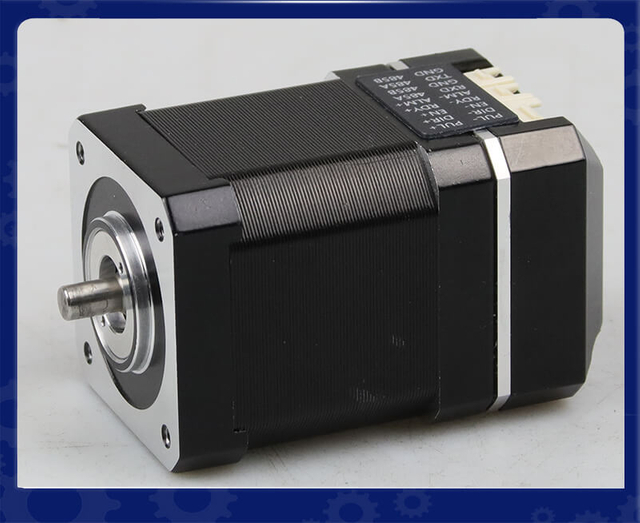
Among the available motion control solutions, micro integrated stepper servo motors are becoming an attractive option for selected SMT placement machine applications. By combining a stepper motor, encoder feedback, and an integrated drive within a compact assembly, these motors provide a practical balance between positioning accuracy, dynamic response, installation convenience, and system integration.
Unlike conventional open-loop stepper motors, integrated stepper servo motors use feedback to monitor motor movement and detect positioning deviations. This closed-loop control capability helps improve motion reliability, particularly in applications involving frequent acceleration, deceleration, short-distance positioning, and repetitive movements.
For SMT equipment manufacturers, choosing the right motion control solution is not simply about increasing motor speed. It is about achieving consistent component placement, minimizing positioning errors, simplifying machine architecture, and maintaining stable performance throughout continuous production.
In this article, we examine why SMT placement machines choose micro integrated stepper servo motors, how these motors improve machine performance, and which technical factors engineers should consider when selecting them.
1. High-Precision Component Positioning for SMT Placement Machines
Positioning accuracy is one of the most important performance indicators of an SMT placement machine. During PCB assembly, electronic components must be positioned accurately on designated solder pads. Even minor positioning deviations can result in component misalignment, soldering defects, or reduced product reliability.
Traditional open-loop stepper motors operate by receiving pulse commands without directly verifying whether the rotor has completed the commanded movement. Under excessive acceleration, sudden load changes, or insufficient torque, the motor may lose synchronization and experience missed steps.
Micro integrated stepper servo motors overcome this limitation through encoder-based closed-loop control.
The encoder continuously monitors rotor position and provides feedback to the integrated drive. The drive compares the actual motor position with the commanded position and adjusts motor operation when deviations occur.
This control mechanism provides several advantages:
Improved positioning consistency during repetitive movements.
Reduced risk of undetected step loss.
Better positioning reliability under changing mechanical loads.
More stable operation during frequent acceleration and deceleration.
Improved control over short-distance positioning movements.
For SMT placement heads, feeder mechanisms, PCB positioning modules, and auxiliary adjustment axes, these characteristics help support reliable and repeatable motion.
However, final placement accuracy also depends on the machine's mechanical structure, encoder resolution, transmission backlash, vibration characteristics, vision correction, and overall motion control architecture.
2. Compact Integrated Design Saves Installation Space
Space optimization is a major consideration in modern SMT placement machine design. As electronic components become smaller and PCB assembly requirements become more sophisticated, equipment manufacturers are developing increasingly compact machines with higher levels of functional integration. Within these machines, multiple motion control axes must operate within limited installation spaces while maintaining precise positioning and reliable movement. Traditional motion control configurations, which typically consist of separate stepper motors, external drivers, encoders, and additional connection cables, can increase equipment dimensions and complicate mechanical and electrical layouts.
Micro Integrated Stepper Servo Motors provide a space-saving solution by combining the stepper motor, encoder, and drive electronics into a single compact assembly. This integrated architecture eliminates the need for separately mounting an external driver for each motor, helping reduce component distribution and simplify the overall machine structure.
For SMT placement machine manufacturers, this compact design offers several practical advantages:
Reduced Installation Space: Integrating the motor and driver eliminates separate driver mounting requirements, making it easier to arrange multiple motion axes within compact machine structures.
Simplified Wiring Layout: The integrated configuration reduces external connections between the motor and driver, helping minimize cable routing complexity.
Higher Integration Density: Compact motor assemblies allow equipment designers to optimize the arrangement of placement heads, feeder mechanisms, and auxiliary positioning modules.
Simplified Mechanical Design: Fewer separately installed components can reduce mounting requirements and simplify machine assembly.
Improved System Standardization: Using integrated motor-drive units across different motion modules helps create a more modular and consistent machine architecture.
Convenient Maintenance: Integrated assemblies can simplify component replacement and reduce the time required to troubleshoot separate motor and driver connections.
For example, an SMT placement machine may require multiple independent motion axes to control X-axis and Y-axis positioning, Z-axis nozzle movement, and Theta-axis component rotation. When conventional motors and external drivers are used, each axis requires additional installation space for its corresponding drive electronics and wiring connections. By adopting Micro Integrated Stepper Servo Motors, equipment manufacturers can reduce the number of separately mounted components and create a more organized motion control layout.
Another important advantage is the potential for shorter electrical connection paths. Since the driver is installed directly within the motor assembly, the external motor-to-driver power and feedback connections are no longer required. This can simplify cable management and reduce certain wiring-related integration issues. However, power supply, communication, control signals, and grounding connections must still be properly designed according to the motor specifications.
In addition, the integrated architecture supports modular machine development. Equipment manufacturers can configure different motion modules using standardized motor-drive assemblies, making it easier to adapt machine designs to different PCB dimensions, component placement requirements, and production capacities.
For SMT placement machine manufacturers seeking to reduce equipment dimensions without sacrificing motion control functionality, micro integrated stepper servo motors offer an effective integration solution. Their compact structure, simplified installation, and reduced external wiring requirements help optimize machine layouts while supporting the development of more modular, space-efficient, and maintainable SMT equipment.
Nevertheless, engineers should also consider motor dimensions, mounting interfaces, connector positions, heat dissipation, and accessibility when selecting an integrated motor. Proper installation planning ensures that the space-saving benefits do not compromise thermal performance or long-term maintenance convenience.
ISC28 Integrated Stepper Servo Motor — High-Efficiency, Compact, and Smart Closed-Loop Motion Control Solution
Product Overview:The NEMA 11 LMISC28 Integrated Stepper Servo Motor combines a compact stepper motor, encoder feedback, and integrated driver into a single unit, providing an efficient motion control solution for precision automation equipment. Featuring a space-saving NEMA 11 frame design, this integrated motor simplifies system installation, reduces external wiring, and minimizes the need for separate drive components. Its closed-loop control technology monitors actual motor position, helping reduce missed steps and improve positioning reliability under varying operating conditions. Designed for applications requiring compact dimensions, accurate positioning, and responsive motion control, the LMISC28 offers a practical solution for equipment manufacturers seeking to optimize machine integration and motion performance.
Key Technical Highlights
NEMA 11 Compact Frame: Space-efficient design for equipment with limited installation space and high integration requirements.
Integrated Motor and Driver: Combines the stepper motor and drive electronics into one assembly, reducing external components and simplifying installation.
Encoder-Based Closed-Loop Control: Provides real-time position feedback to help detect positioning deviations and reduce the risk of missed steps.
Improved Positioning Reliability: Supports consistent and repeatable motion during frequent start-stop and positioning operations.
Simplified Wiring: Reduces external motor-to-driver connections and helps streamline electrical system configuration.
3D Printers: Extruder movement, precision positioning, and compact motion control modules.
LEANMOTOR Customized Service
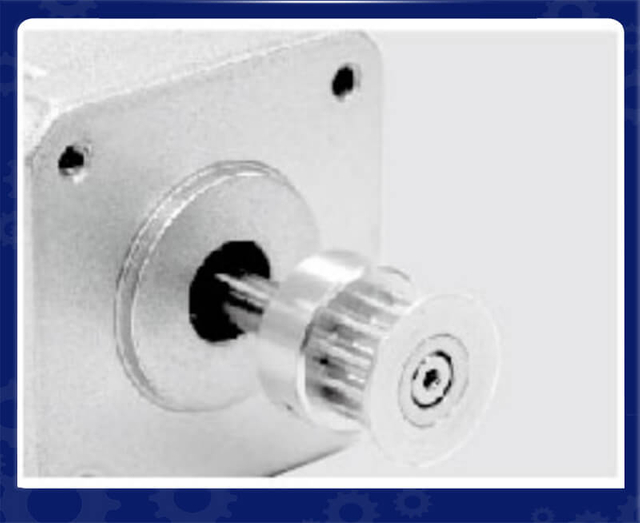
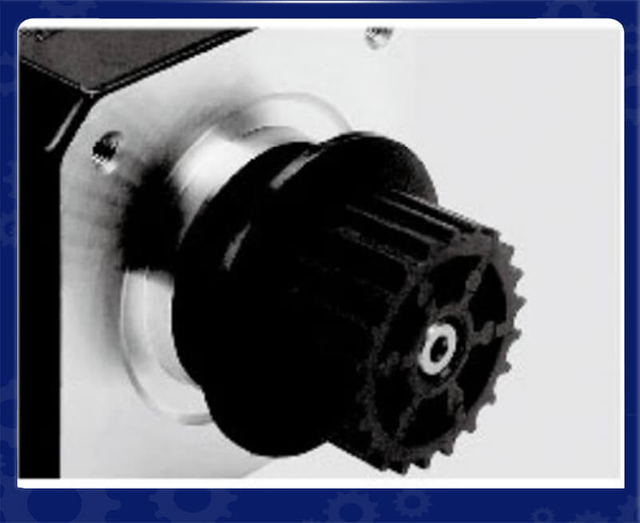
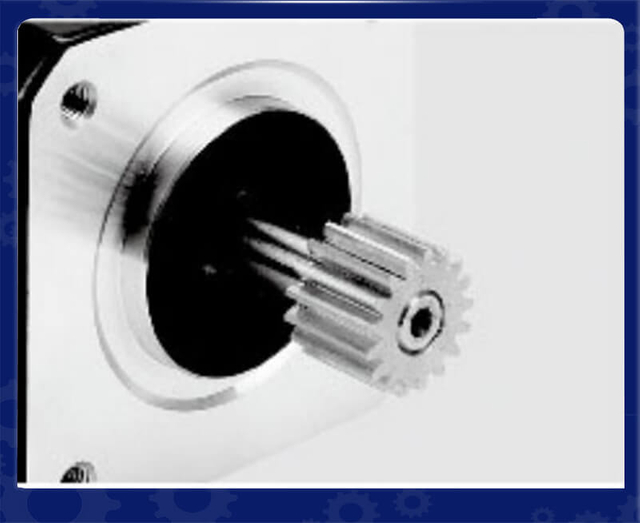
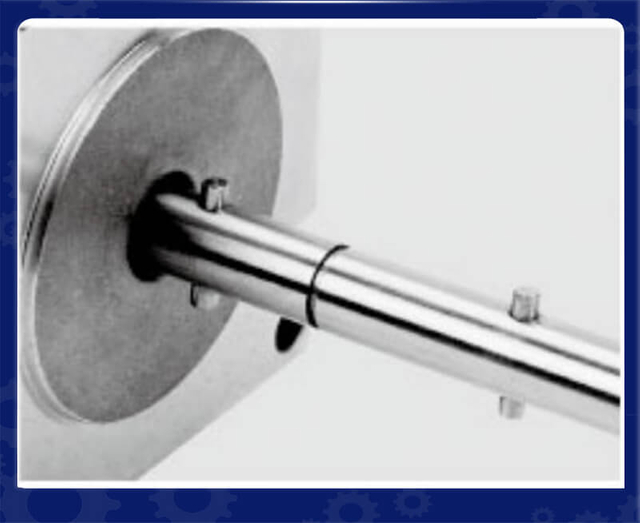
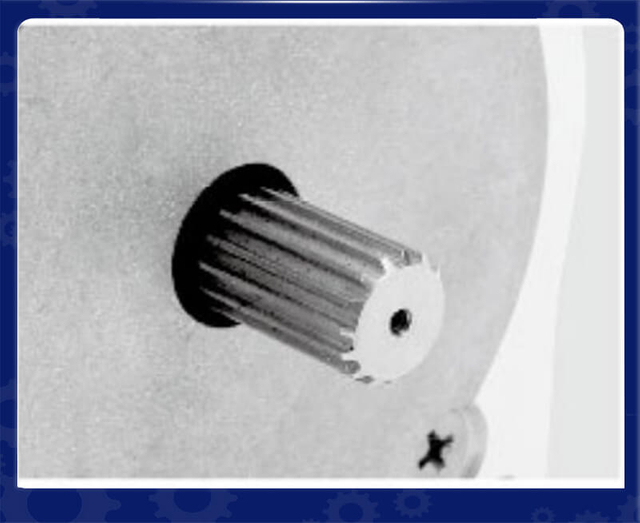
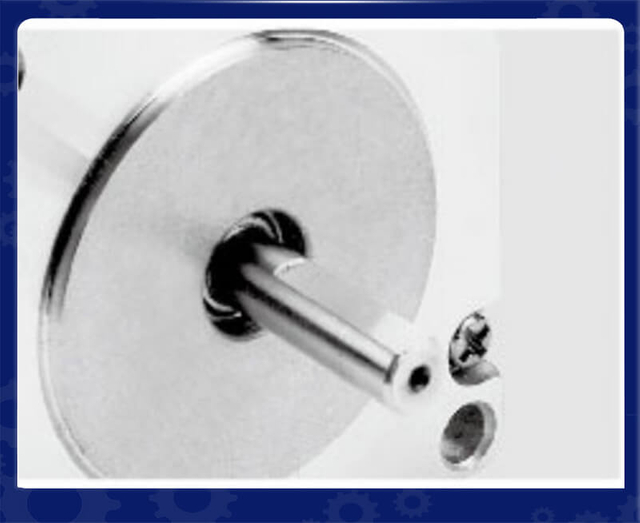
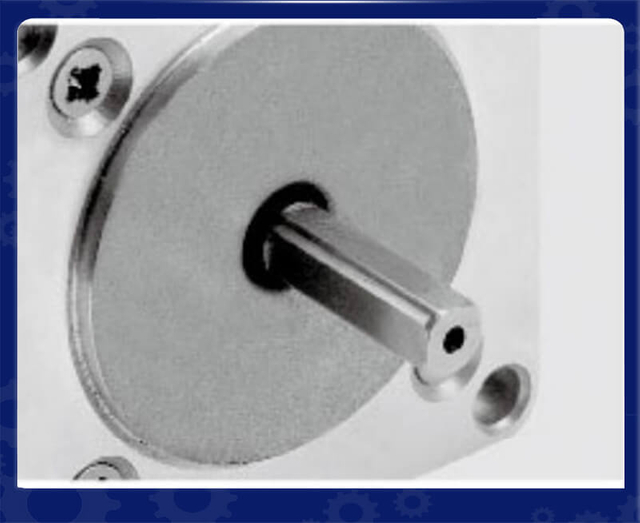
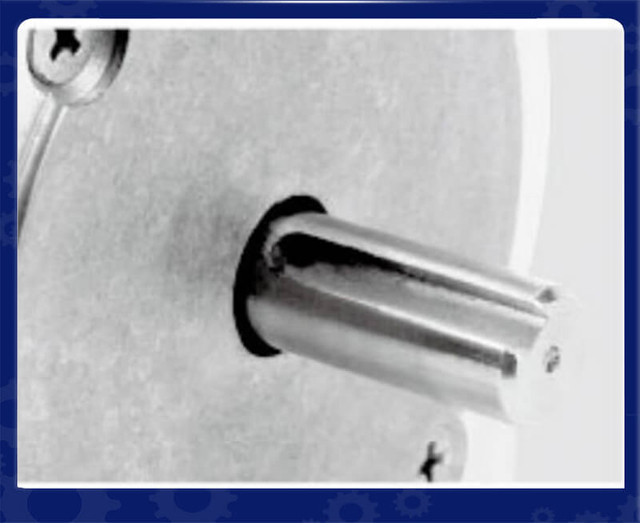
Customized Shaft Service
Metal Pulleys
Plastic Pulley
Gear
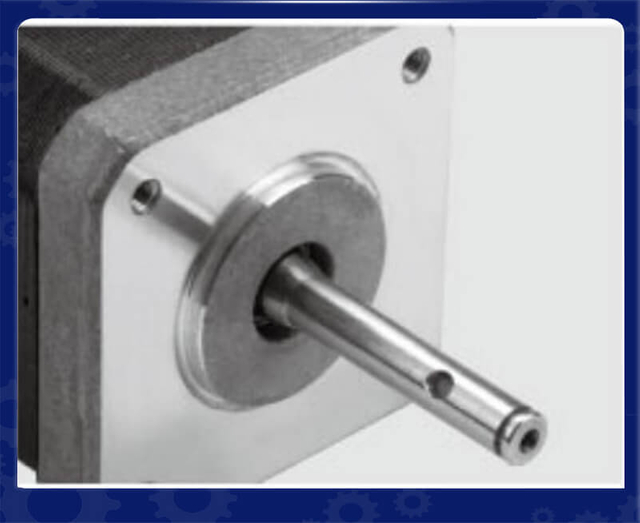
Shaft Pin
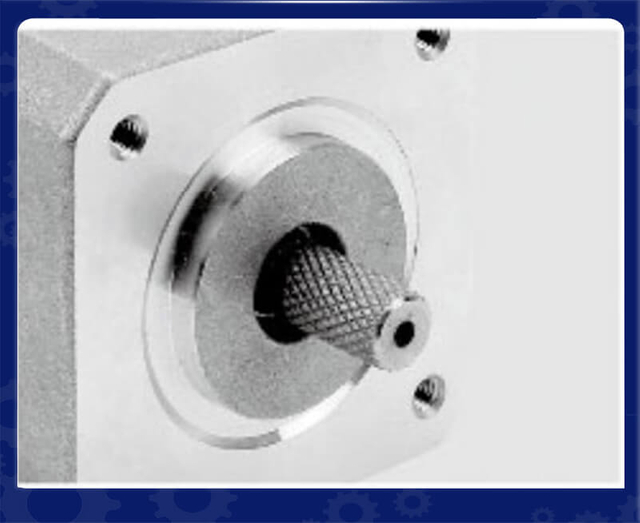
Threaded Shaft
Panel Mount
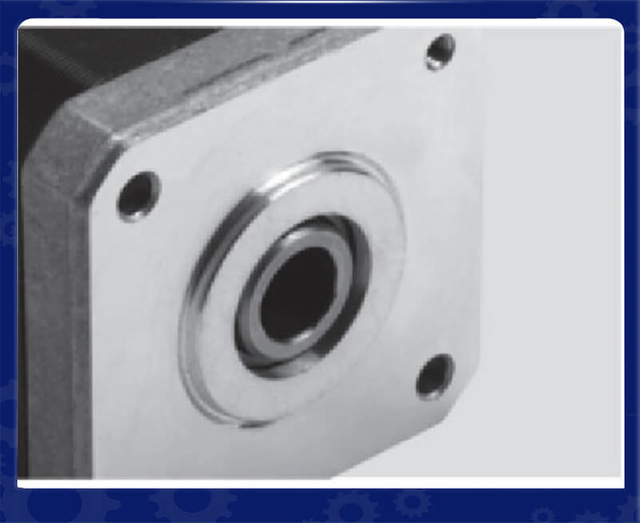
Hollow Shaft
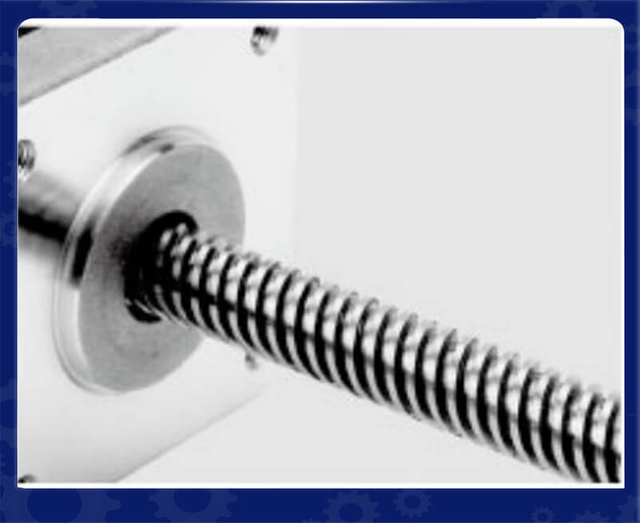
Lead Screw
Panel Mount
Single Flat
Dual Flat
Key Shaft
Customized Motor Service
Cables
Covers
Shaft
Lead Screw Rod
Encoders
Brakes
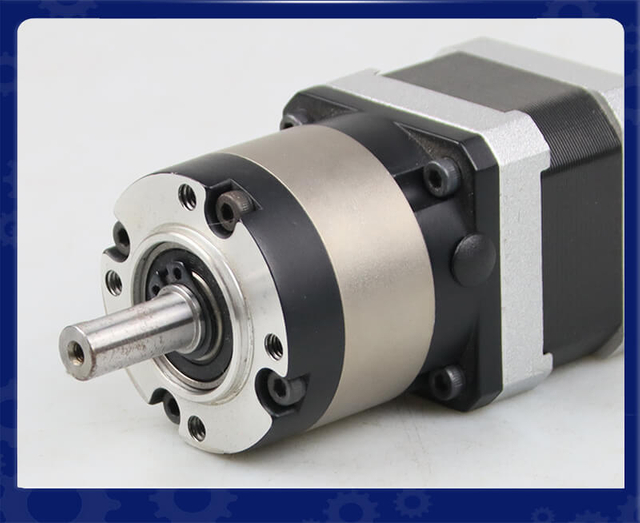
Gearboxes
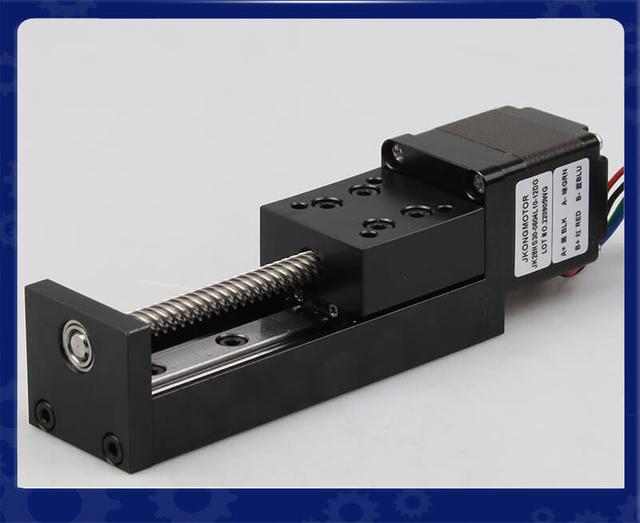
Linear Module
Integrated Drivers
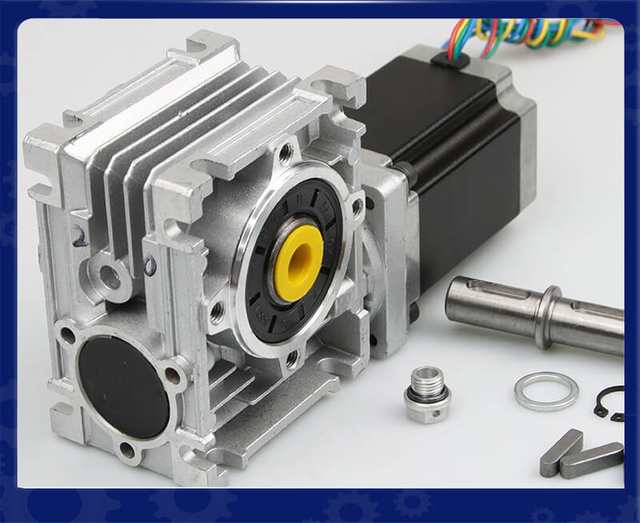
Worm Gearbox
3. Closed-Loop Control Reduces Missed Steps During High-Speed Operation
High-speed positioning is a critical requirement for modern SMT placement machines, where placement heads must repeatedly move between component feeders and designated PCB coordinates with high precision. During continuous production, frequent acceleration, deceleration, and rapid direction changes place considerable demands on motor torque and positioning stability. Under these dynamic operating conditions, conventional open-loop stepper motors may experience missed steps when the actual load exceeds the available torque or when acceleration parameters are improperly configured.
Micro Integrated Stepper Servo Motors address this challenge through encoder-based closed-loop control. Unlike traditional open-loop stepper motors, which execute pulse commands without directly verifying rotor position, integrated stepper servo motors continuously monitor actual motor movement through an encoder. The integrated driver compares the commanded position with the detected position and adjusts motor current or control output according to the feedback signal.
This closed-loop mechanism provides several advantages for SMT placement applications:
Reduced risk of missed steps: Real-time position feedback helps identify deviations between commanded and actual motor movement.
Improved positioning consistency: Feedback-based control helps maintain repeatable positioning during continuous high-speed operation.
Better load adaptability: The drive can respond to changing load conditions within its control limits.
More reliable acceleration and deceleration: Closed-loop regulation helps maintain stable motor operation during frequent start-stop cycles.
Abnormal operation detection: Position following errors and other configured faults can trigger alarms, allowing the machine controller to take corrective action.
For example, when an SMT placement head moves rapidly between two component pickup positions, sudden changes in mechanical resistance or excessive acceleration may affect motor synchronization. With encoder feedback, the integrated driver can detect positioning deviations and respond according to its control strategy, helping reduce the possibility of undetected positioning errors.
Another important advantage is improved operational reliability during repetitive production cycles. SMT placement machines often perform thousands of positioning movements over extended operating periods. By continuously monitoring rotor movement, micro integrated stepper servo motors provide an additional layer of motion control supervision, helping manufacturers maintain consistent machine performance and reduce positioning-related interruptions.
For SMT equipment manufacturers, closed-loop control is particularly valuable for high-frequency positioning axes that require both compact installation and reliable motion feedback. However, achieving optimal performance still requires appropriate motor torque selection, acceleration configuration, load inertia matching, and mechanical transmission design.
4. Improved Dynamic Response for Frequent Start-Stop Movements
SMT placement machines require fast and responsive motion control to maintain production efficiency.
During a typical placement cycle, the machine may perform multiple coordinated actions:
Move the placement head toward a component feeder.
Position the nozzle above the selected component.
Pick up the component using the vacuum system.
Move toward the designated PCB coordinate.
Adjust the component position and orientation.
Release the component onto the PCB.
Move to the next placement position.
These operations involve frequent acceleration, deceleration, and stopping.
A motor with insufficient dynamic performance may increase positioning time, generate excessive vibration, or cause inconsistent movement.
Micro integrated stepper servo motors provide closed-loop current and position control, depending on the selected product architecture. This allows the drive to regulate motor operation according to feedback and configured motion commands.
Their advantages can include:
Responsive acceleration and deceleration.
Stable operation during repetitive positioning cycles.
Better control of motor movement under changing loads.
Reduced risk of missed steps compared with open-loop operation.
More consistent motion performance across repeated operating cycles.
For machine designers, these characteristics can help optimize the balance between positioning speed and mechanical stability.
The actual improvement in cycle time depends on the motor's torque-speed characteristics, load inertia, transmission system, control bandwidth, and the capabilities of the machine controller.
5. Lower Wiring Complexity and Easier Electrical Integration
Electrical integration is another important consideration when designing SMT placement equipment.
A conventional stepper motor system generally requires a separate driver connected to the motor. Additional wiring may be needed for encoder feedback, motor control signals, and power distribution.
When multiple axes are installed within one machine, these connections can create complicated cable routing and increase the possibility of wiring errors.
Micro integrated stepper servo motors simplify this arrangement by incorporating the drive electronics into the motor assembly.
Depending on the model, available electrical interfaces may include:
Pulse and direction inputs.
Enable and alarm signals.
Encoder feedback connections within the integrated assembly.
Configurable digital inputs and outputs.
Communication interfaces for network-based control.
The specific interfaces vary by manufacturer and product series.
For SMT machine manufacturers, integrated motor solutions can reduce the effort required for electrical cabinet planning, cable management, and component installation.
However, engineers should verify the motor's control interface before selecting a model. Compatibility with the existing PLC, motion controller, communication network, and machine control software is essential.
6. Reduced Mechanical and Electrical System Complexity
A high-performance SMT placement machine requires close coordination between multiple motion axes.
Depending on the machine architecture, these axes may include:
X-axis and Y-axis placement head movement.
Z-axis nozzle lifting and lowering.
Theta-axis component rotation.
Feeder indexing mechanisms.
PCB positioning and conveyor adjustment.
Auxiliary inspection and alignment mechanisms.
Using separate motors and drivers for every axis can increase the number of system components and complicate equipment integration.
Integrated stepper servo motors help reduce this complexity by combining several essential motion components into one assembly.
For equipment manufacturers, this can provide advantages in:
System standardization: Engineers can develop standardized motion modules using compatible integrated motor models.
Simplified assembly: Fewer separately mounted components can reduce installation procedures.
Maintenance convenience: Integrated motor and drive assemblies can make component replacement and troubleshooting more straightforward.
Reduced wiring requirements: Combining the motor and driver reduces the need for certain external connections.
Space optimization: Compact motor assemblies can simplify the mechanical arrangement of multi-axis equipment.
These benefits are especially valuable for SMT machines with numerous positioning modules and limited installation space.
7. Stable Operation Improves SMT Production Reliability
Production stability is just as important as positioning speed in electronics manufacturing.
An SMT placement machine may operate continuously across multiple production shifts. Any unexpected motor malfunction or positioning error can interrupt the production process and affect overall equipment efficiency.
Micro integrated stepper servo motors can improve motion system reliability through encoder feedback and integrated protection functions.
Depending on the product specification, available protection features may include:
Overcurrent protection.
Overvoltage and undervoltage protection.
Overtemperature protection.
Position following error detection.
Motor stall or abnormal operation detection.
Alarm signal output.
These functions help equipment controllers identify abnormal operating conditions and respond according to the machine's safety and fault-management strategy.
For example, if a placement axis experiences an unexpected mechanical obstruction, the motor's feedback and protection functions may detect abnormal operation and generate an alarm.
This allows the machine controller to initiate an appropriate fault-handling procedure.
It is important to distinguish between motor protection and complete machine safety. Integrated motor protection cannot replace emergency stop circuits, mechanical safety devices, guarding, or properly designed machine-level safety systems.
8. Energy Efficiency and Thermal Performance
Energy efficiency and thermal management are important considerations when selecting motion control solutions for SMT placement machines. During continuous production, multiple motor axes may operate simultaneously, performing frequent acceleration, deceleration, positioning, and holding operations. These repetitive movements create varying power demands and generate heat within the motor and drive system. If thermal performance is not properly managed, excessive temperature rise may affect motor reliability, positioning stability, and the service life of electrical components.
Micro Integrated Stepper Servo Motors combine intelligent current regulation with compact drive integration to support efficient energy management and stable thermal performance. Unlike conventional open-loop stepper motor systems that may maintain relatively high holding current even when the motor is stationary, certain integrated stepper servo models can automatically adjust motor current according to operating conditions and configured control parameters. This helps reduce unnecessary power consumption during idle or low-load periods.
Several features contribute to their energy efficiency and thermal management:
Intelligent Current Regulation: The integrated driver adjusts motor current according to the required torque, helping avoid unnecessary electrical consumption under suitable operating conditions.
Reduced Holding Current: Configurable current reduction functions can lower motor current when the axis remains stationary, reducing heat generation during standby periods.
Optimized Drive Performance: Integrated electronic control helps regulate motor operation during acceleration, constant-speed movement, and deceleration.
Compact System Architecture: Combining the motor and driver reduces the need for separate drive installations and can simplify equipment layout and thermal management planning.
Improved Temperature Monitoring: Depending on the model, built-in temperature protection can detect excessive operating temperatures and trigger alarms or protective responses.
For SMT placement machines, thermal performance is particularly important for motors installed near precision mechanical components, optical inspection systems, and compact positioning modules. Excessive heat generated by a motor can potentially affect nearby components through thermal transfer, while temperature fluctuations may also influence mechanical dimensions and positioning consistency.
For example, an integrated stepper servo motor controlling an SMT placement head may experience repeated acceleration and deceleration during high-speed component handling. Appropriate current regulation helps match motor output to actual operating requirements, while effective heat dissipation helps maintain stable operating temperatures throughout extended production cycles.
To maximize energy efficiency and thermal reliability, SMT equipment manufacturers should evaluate rated current, peak current, holding current, motor temperature rise, heat dissipation conditions, and duty cycle when selecting an integrated stepper servo motor. Proper motor sizing is equally important. An undersized motor may operate under excessive current demand, while an unnecessarily oversized motor may increase system cost and potentially reduce overall efficiency.
By combining suitable motor specifications, intelligent current control, and effective thermal design, micro integrated stepper servo motors can help SMT placement machines achieve more efficient power utilization, reduced unnecessary heat generation, and reliable long-term operation.
9. How to Select the Right Micro Integrated Stepper Servo Motor for SMT Equipment
Selecting a suitable motor requires more than comparing rated power or frame dimensions. Engineers should evaluate the actual mechanical load, motion profile, positioning requirements, and electrical control architecture.
The following factors deserve particular attention.
9.1 Positioning Accuracy and Encoder Resolution
Encoder resolution determines how finely the motor's rotor position can be measured.
For applications involving precision component positioning, engineers should consider encoder resolution, feedback processing, control performance, and the relationship between motor rotation and linear displacement.
A high encoder resolution alone does not guarantee high machine positioning accuracy. Transmission backlash, screw pitch accuracy, coupling rigidity, and mechanical compliance must also be considered.
9.2 Rated Torque and Peak Torque
The selected motor must provide sufficient torque throughout the complete operating speed range.
Engineers should calculate the torque required for acceleration, constant-speed movement, deceleration, and holding.
For short-stroke positioning applications, peak torque and acceleration capability can be particularly important.
Selecting a motor based only on holding torque may result in insufficient dynamic performance.
9.3 Motor Speed and Acceleration
SMT placement machines often require high-frequency start-stop operation.
The motor should provide adequate torque at the intended operating speed while maintaining acceptable vibration and temperature characteristics.
Engineers should evaluate the complete torque-speed curve rather than relying exclusively on the motor's maximum rated speed.
9.4 Communication and Control Compatibility
The motor's control interface must match the machine's existing electrical architecture.
Before purchasing, engineers should confirm:
Pulse and direction compatibility.
Supported communication protocols.
Input and output signal specifications.
Operating voltage.
Parameter configuration methods.
Alarm and status feedback functions.
These details help prevent integration problems during equipment development.
9.5 Installation Dimensions and Mechanical Compatibility
Motor dimensions, mounting holes, shaft diameter, shaft length, and connector positions must match the mechanical design.
For compact SMT equipment, even small differences in motor dimensions can affect installation arrangements.
Engineers should also consider cable clearance, heat dissipation, vibration isolation, and accessibility for maintenance.
10. Integrated Stepper Servo Motors vs. Traditional Open-Loop Stepper Motors
Both motor types have applications in SMT equipment, but they offer different control capabilities.
Comparison Factor
Open-Loop Stepper Motor
Integrated Stepper Servo Motor
Position feedback
Typically no encoder feedback
Encoder feedback
Control method
Open-loop pulse control
Closed-loop feedback control
Missed-step detection
Generally unavailable
Available through feedback and configured fault monitoring
Wiring arrangement
Separate motor and driver
Integrated motor and drive
Installation complexity
Requires separate driver mounting
More compact assembly
Dynamic performance
Depends on motor and drive sizing
Benefits from feedback-based control
System integration
Requires separate component configuration
Simplified motor-drive integration
Fault monitoring
Depends on external monitoring
May include integrated alarm functions
Typical applications
Cost-sensitive positioning axes
Applications requiring feedback and compact integration
The choice depends on the positioning requirements, operating conditions, and total system cost.
For simple auxiliary mechanisms with predictable loads and moderate positioning requirements, conventional open-loop stepper motors may remain a cost-effective solution.
For positioning axes requiring improved motion reliability, compact installation, and encoder-based feedback, integrated stepper servo motors can offer greater flexibility.
The increasing complexity of electronic products places greater demands on PCB assembly equipment.
Smaller components, higher placement densities, and increasingly sophisticated production processes require motion systems that can deliver consistent positioning and reliable operation.
Micro integrated stepper servo motors address several important engineering challenges.
First, they improve positioning reliability. Encoder feedback allows the drive to monitor actual rotor movement instead of relying exclusively on commanded step pulses.
Second, they simplify machine integration. Combining the motor and drive reduces the number of separately installed components.
Third, they support compact machine designs. Their integrated architecture can reduce installation space and simplify wiring arrangements.
Fourth, they provide flexible motion control. Depending on the model, engineers can select suitable pulse-based or network-based control interfaces.
Finally, they support equipment standardization. Using integrated motor solutions across multiple machine modules can simplify electrical design, assembly, and maintenance.
These advantages make micro integrated stepper servo motors worth considering for selected SMT placement machine axes, particularly where compact dimensions, repetitive positioning, and feedback-based motion control are important.
Conclusion
As SMT placement machines continue to evolve toward higher precision, greater production efficiency, and more compact mechanical structures, the requirements for motion control systems are becoming increasingly demanding.
Micro integrated stepper servo motors combine stepper motor technology, encoder feedback, and integrated drive electronics to provide a compact and practical motion control solution.
Their closed-loop operation helps reduce the risk of undetected missed steps, while their integrated construction simplifies wiring, installation, and system configuration.
For SMT equipment manufacturers, these motors can provide an effective solution for placement head positioning, feeder indexing, PCB adjustment, and other precision motion applications, provided that their torque, speed, feedback performance, and control interfaces meet the specific application requirements.
When selecting an integrated stepper servo motor, engineers should evaluate the complete motion system rather than focusing on a single motor specification. Proper motor sizing, mechanical design, controller compatibility, and thermal management are essential for achieving stable long-term performance.
By selecting the appropriate micro integrated stepper servo motor, SMT machine manufacturers can develop more compact, reliable, and efficient motion control systems to meet the evolving demands of modern electronics manufacturing.
FAQ:
FAQ 1: Why do SMT placement machines use micro integrated stepper servo motors?
SMT placement machines use micro integrated stepper servo motors because they combine compact dimensions, encoder-based closed-loop control, and integrated drive electronics. These features help improve positioning reliability, reduce the risk of missed steps, simplify wiring, and save installation space. They are particularly suitable for compact positioning axes that require repetitive movements, accurate positioning, and reliable motion control.
FAQ 2: How do integrated stepper servo motors improve positioning accuracy in SMT placement machines?
Integrated stepper servo motors use encoder feedback to monitor actual rotor position and compare it with commanded movement. The integrated driver can detect positioning deviations and adjust motor operation according to its control strategy. This closed-loop mechanism helps improve positioning consistency and reduce errors caused by undetected missed steps. Actual placement accuracy also depends on mechanical transmission precision, backlash, encoder resolution, and machine calibration.
FAQ 3: What are the advantages of closed-loop control in SMT placement equipment?
Closed-loop control provides real-time position feedback, helping the motor maintain synchronization with commanded movements. Its main advantages include improved positioning reliability, missed-step detection, better load adaptability, and more consistent operation during frequent acceleration and deceleration. These capabilities are valuable for SMT placement heads and other motion axes operating under repetitive positioning conditions.
FAQ 4: How do micro integrated stepper servo motors save installation space in SMT machines?
Micro integrated stepper servo motors combine the motor, encoder, and driver electronics into one compact assembly. This eliminates the need for a separately mounted external driver for each motor, reducing component distribution and simplifying electrical cabinet planning. Their compact structure also helps equipment manufacturers optimize the arrangement of multiple motion axes within limited machine dimensions.
FAQ 5: Can integrated stepper servo motors handle high-speed start-stop movements in SMT placement machines?
Yes. Properly selected integrated stepper servo motors can support frequent start-stop movements, acceleration, deceleration, and repetitive positioning. Encoder feedback helps monitor actual motor movement, while the integrated drive regulates motor operation according to configured motion parameters. Engineers should evaluate torque-speed characteristics, load inertia, acceleration requirements, and thermal performance to ensure reliable high-speed operation.
FAQ 6: How do integrated stepper servo motors reduce wiring complexity?
Integrated stepper servo motors incorporate the drive electronics directly into the motor assembly, eliminating separate motor-to-driver power and feedback connections. This reduces external wiring requirements and simplifies equipment installation. Depending on the model, control connections may include pulse and direction signals, enable inputs, alarm outputs, or industrial communication interfaces.
FAQ 7: Are micro integrated stepper servo motors energy-efficient for SMT equipment?
Micro integrated stepper servo motors can improve energy management through electronic current regulation and, on supported models, automatic holding-current reduction. These functions help reduce unnecessary current consumption and heat generation under suitable operating conditions. Actual energy efficiency depends on motor design, drive electronics, load characteristics, operating speed, and control parameters.
FAQ 8: What factors should engineers consider when selecting integrated stepper servo motors for SMT placement machines?
Engineers should evaluate rated torque, peak torque, operating speed, encoder resolution, positioning requirements, motor dimensions, supply voltage, and control interface compatibility. Load inertia, acceleration and deceleration profiles, transmission backlash, duty cycle, and thermal management should also be considered. Proper motor selection ensures that the integrated servo system meets the machine's mechanical and operational requirements.
FAQ 9: What is the difference between an open-loop stepper motor and an integrated stepper servo motor?
An open-loop stepper motor generally operates according to pulse commands without encoder-based position verification. An integrated stepper servo motor combines a stepper motor, encoder, and driver to provide closed-loop feedback control. The latter can detect positioning deviations and provide improved motion monitoring. It also simplifies installation by integrating the motor and drive electronics into one assembly.
FAQ 10: Which SMT placement machine applications are suitable for micro integrated stepper servo motors?
Micro integrated stepper servo motors are suitable for various compact motion control applications in SMT equipment, including placement head positioning, feeder indexing, nozzle adjustment, component rotation mechanisms, and auxiliary positioning axes. They can also be used in PCB handling modules and inspection equipment when their torque, speed, positioning accuracy, and control interfaces meet the application requirements.