Introduction to Stepper Motors with Gearboxes
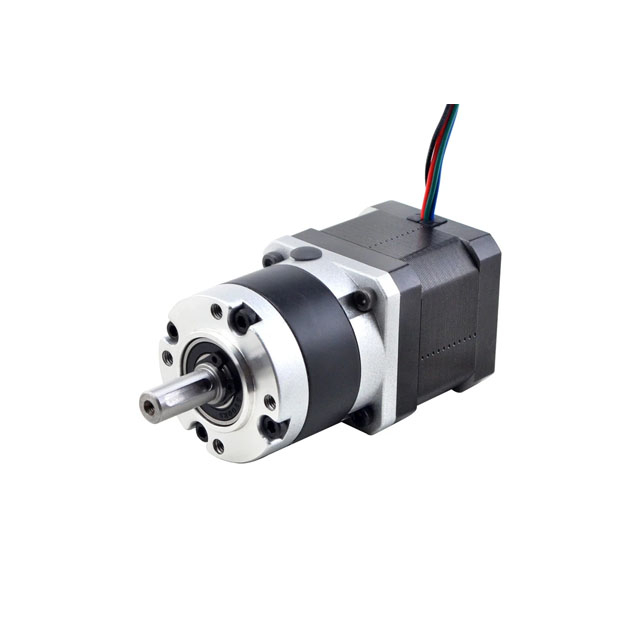
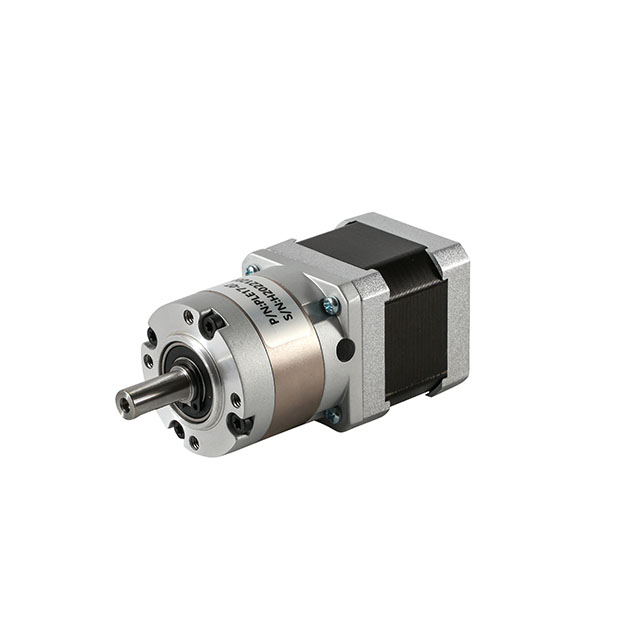
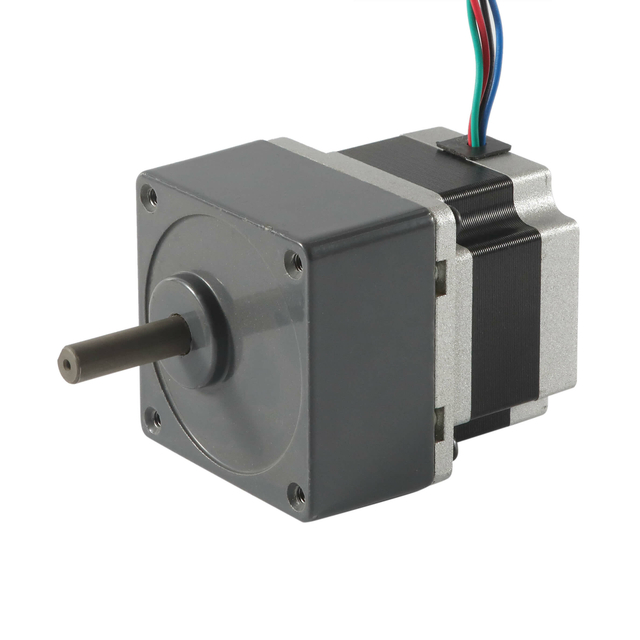
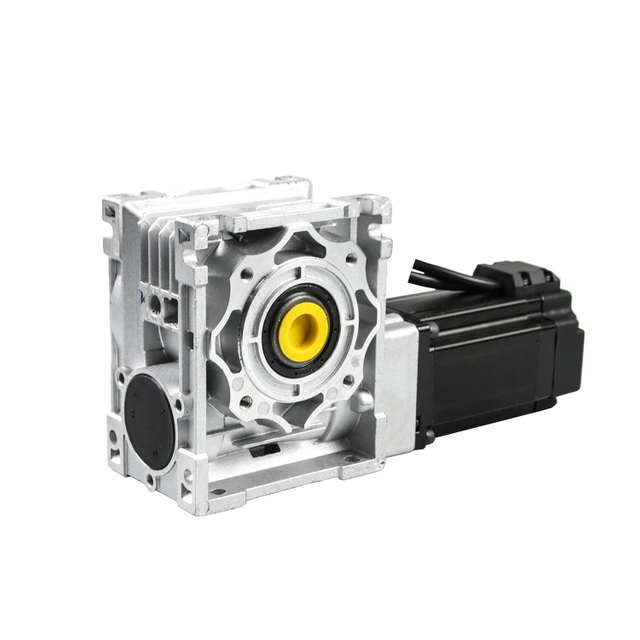
A stepper motor with gearbox is a precision-driven electromechanical solution designed to deliver high torque, controlled speed, and accurate positioning in compact systems. By integrating a gearbox—such as planetary, spur, or worm gear—directly with a stepper motor, we significantly enhance torque output while optimizing resolution and load-handling capability. This combination is widely used across industrial automation, medical devices, robotics, packaging machinery, CNC equipment, and semiconductor manufacturing, where precision and reliability are non-negotiable.
Selecting the right stepper motor gearbox assembly requires a deep understanding of torque requirements, backlash tolerance, efficiency trade-offs, load characteristics, and operating conditions. This guide provides a structured, technical, and application-focused approach to help engineers and OEMs make informed decisions.
Why Use a Stepper Motor with a Gearbox
A standalone stepper motor offers excellent open-loop positioning accuracy, but its torque drops rapidly at higher speeds. A gearbox compensates for this limitation by multiplying torque, reducing speed, and improving motion smoothness.
Key advantages include:
Increased output torque without increasing motor size
Improved low-speed stability and holding torque
Enhanced positioning resolution through gear reduction
Better load inertia matching
Reduced resonance and vibration
These benefits make geared stepper motors ideal for applications demanding compact size, precise motion control, and repeatable performance.
Understanding Torque Requirements
Accurately defining torque requirements is the foundation of selecting the correct stepper motor with gearbox. Insufficient torque leads to missed steps, vibration, and unstable motion, while excessive torque increases cost, size, and energy consumption. We focus on output-side torque, calculated under real operating conditions, to ensure consistent and reliable performance.
Types of Torque That Must Be Evaluated
When sizing a stepper motor gearbox system, several torque components must be considered together rather than in isolation:
Holding Torque: The maximum static torque the motor can maintain at standstill when energized. This value is often misunderstood and should never be used alone for system sizing.
Running (Dynamic) Torque: The usable torque available at operating speed. As speed increases, available motor torque decreases, making gearbox selection critical.
Load Torque: The torque required to overcome friction, gravity, belt or screw resistance, and external forces applied by the load.
Acceleration Torque: The additional torque required to accelerate load inertia to the target speed within the specified time.
Peak Torque: Short-duration torque required during startup, direction reversal, or shock loading.
The total required torque is the sum of load torque and acceleration torque, with a safety margin applied.
Calculating Output Torque Requirements
We calculate torque at the gearbox output shaft using the following approach:
Determine mechanical load torque
Add inertia-related acceleration torque
Apply a safety factor (typically 1.3–2.0×)
Account for gearbox efficiency losses
Required Motor Torque = (Total Output Torque ÷ Gear Ratio) ÷ Gearbox Efficiency
This ensures the motor operates within its optimal torque-speed range, avoiding thermal overload and step loss.
Impact of Gear Reduction on Torque
A gearbox multiplies torque while reducing speed. For example, a 10:1 gear ratio theoretically increases torque tenfold, but real-world output is reduced by gearbox efficiency. High-quality planetary gearboxes maintain 90–97% efficiency, preserving most of the torque gain.
Higher gear ratios are ideal for:
Lower gear ratios are better suited for:
Continuous vs Intermittent Torque Demand
Duty cycle directly affects torque selection. Continuous-duty applications require motors sized well below maximum ratings to prevent overheating, while intermittent-duty systems may tolerate higher peak torques for short durations.
We always evaluate:
Operating time per cycle
Load duration
Ambient temperature
Cooling conditions
This prevents long-term degradation and ensures stable torque output over the system's lifetime.
Why Proper Torque Sizing Matters
Correct torque sizing delivers:
Stable positioning accuracy
No missed steps
Reduced vibration and noise
Longer motor and gearbox lifespan
Improved system efficiency
By thoroughly analyzing torque requirements before selecting a stepper motor with gearbox, we ensure a motion solution that performs reliably under real-world conditions, not just theoretical ratings.
Gear Ratio Selection and Its Impact
The gear ratio defines how much speed is reduced and torque is amplified. Common ratios range from 3:1 to over 100:1, depending on gearbox type.
Low Gear Ratios (3:1–10:1)
Medium Gear Ratios (15:1–50:1)
Balanced torque and speed
Common in automation and robotics
Improved resolution and load control
High Gear Ratios (60:1–100:1+)
Very high torque output
Extremely low speed
Increased backlash and reduced efficiency
Ideal for lifting, indexing, and holding-heavy loads
Choosing the optimal ratio requires balancing speed, torque, resolution, and efficiency.
Backlash: Definition, Causes, and Control
Backlash is the angular play between meshing gear teeth when reversing direction. In precision motion systems, backlash directly affects repeatability, accuracy, and control stability.
Why Backlash Matters
Causes positioning errors during direction changes
Impacts closed-loop performance
Reduces repeatability in indexing applications
Backlash Levels by Gearbox Type
Planetary Gearbox: Low backlash (≤15 arc-min, precision versions ≤3 arc-min)
Spur Gearbox: Moderate backlash
Worm Gearbox: High backlash, but often self-locking
Backlash Reduction Strategies
Use precision planetary gearboxes
Select preloaded or anti-backlash designs
Employ closed-loop stepper systems
Optimize control algorithms for compensation
For applications such as medical equipment, semiconductor handling, and optical systems, low-backlash gearboxes are essential.
Efficiency Considerations
Gearbox efficiency determines how much input power is converted into usable output torque. Higher efficiency reduces heat generation, power consumption, and wear.
Typical Efficiency by Gearbox Type
While worm gearboxes offer compact design and self-locking behavior, their lower efficiency makes them less suitable for continuous-duty applications.
High-efficiency gearboxes are preferred in:
Stepper Motor Frame Size and Compatibility
Selecting the correct stepper motor frame size and ensuring mechanical compatibility are critical steps in designing a reliable and efficient stepper motor with gearbox system. Frame size directly influences torque capacity, physical dimensions, thermal performance, mounting compatibility, and gearbox options. A mismatch at this level often leads to installation challenges, performance limitations, or premature component failure.
Understanding Stepper Motor Frame Size Standards
Stepper motor frame sizes are defined by standardized mounting dimensions rather than power output. The most commonly used standards are NEMA frame sizes, which specify the motor faceplate dimensions and mounting hole patterns.
Common stepper motor frame sizes include:
NEMA 8 – Ultra-compact applications with limited space
NEMA 11 – Lightweight instruments and miniature automation
NEMA 14 – Compact positioning systems and small robotics
NEMA 17 – General-purpose automation and 3D printing
NEMA 23 – Industrial machinery and motion platforms
NEMA 34 – High-torque industrial and heavy-load systems
While the frame size defines the mounting interface, torque output varies depending on motor length, winding design, and magnetic structure.
Frame Size and Torque Capability Relationship
Larger frame sizes generally support:
Higher holding and dynamic torque
Increased thermal dissipation
Larger shaft diameters
Higher radial and axial load capacity
However, selecting the largest frame size is not always optimal. Proper sizing balances required output torque, available installation space, power consumption, and system cost.
Gearbox Compatibility Considerations
Not all gearboxes are compatible with every motor frame size. Compatibility must be evaluated across several mechanical parameters:
Input Shaft Diameter and Length: Must match the motor shaft precisely to avoid misalignment or backlash
Flange Interface: Motor pilot diameter and bolt circle must align with the gearbox housing
Gearbox Torque Rating: Must exceed the motor’s maximum output torque after reduction
Bearing Capacity: Gearbox bearings must support expected radial and axial loads
Precision planetary gearboxes are commonly paired with NEMA 17, NEMA 23, and NEMA 34 motors due to their high torque density and low backlash.
Shaft Design and Load Transmission
Shaft configuration plays a major role in compatibility and reliability. Common shaft options include:
Round shaft
D-cut shaft
Keyed shaft
Hollow shaft
Dual shaft
The selected shaft type must align with the coupling method and load transmission requirements. Improper shaft matching increases wear, vibration, and risk of mechanical failure.
Mounting Orientation and Space Constraints
Installation space often dictates frame size selection. Key factors include:
Compact frame sizes paired with high-ratio gearboxes can achieve high torque density while minimizing footprint.
Thermal Compatibility and Duty Cycle
Frame size also determines thermal performance. Larger motors dissipate heat more effectively, supporting higher continuous torque levels. For high-duty-cycle or elevated-temperature applications, selecting a frame size with sufficient thermal margin is essential.
Ensuring System-Level Compatibility
True compatibility extends beyond physical fit. We evaluate:
Motor driver current capability
Power supply voltage
Control resolution requirements
Encoder and feedback integration
Environmental sealing needs
By carefully matching stepper motor frame size with gearbox design and system constraints, we ensure a mechanically robust, thermally stable, and fully compatible motion solution that performs reliably throughout its service life.
Resolution and Positioning Accuracy
Gear reduction significantly improves angular resolution. A standard 1.8° stepper motor provides 200 steps per revolution. With a 20:1 gearbox, output resolution improves to 4000 steps per revolution, excluding microstepping.
Benefits include:
This is particularly valuable in dispensing systems, linear actuators, and precision indexing tables.
Load Characteristics and Inertia Matching
Inertia mismatch between motor and load can cause instability and missed steps. Gearboxes help by reflecting load inertia back to the motor, improving dynamic response.
We recommend:
Keeping reflected load inertia ≤10× motor inertia
Using higher gear ratios for heavy or high-inertia loads
Considering acceleration and deceleration profiles
Proper inertia matching extends system lifespan and improves motion quality.
Environmental and Application Factors
When selecting a stepper motor with gearbox, environmental conditions must not be overlooked.
Critical Considerations
Operating temperature range
Dust, moisture, or chemical exposure
Noise and vibration limits
Continuous vs intermittent duty cycle
For harsh environments, sealed gearboxes, corrosion-resistant materials, and high-temperature-rated motors are essential.
Planetary vs Spur vs Worm Gearbox Comparison
| Gearbox Type | Torque Density | Backlash | Efficiency | Typical Applications |
| Planetary | High | Low | High | Robotics, automation |
| Spur | Medium | Medium | Medium | General machinery |
| Worm | Very High | High | Low | Lifting, self-locking |
Planetary gearboxes remain the preferred choice for high-precision, high-efficiency stepper motor systems.
Customization and OEM Integration
Effective customization and OEM integration are critical for achieving optimal performance, reliability, and cost efficiency in stepper motor with gearbox solutions. Standard off-the-shelf configurations often fail to meet specific mechanical, electrical, or environmental requirements. By adopting a tailored design approach, we ensure seamless integration into the customer’s system architecture while maximizing functional value and long-term stability.
Mechanical Customization Options
Mechanical adaptability is often the first priority in OEM projects. We support extensive customization to ensure precise mechanical compatibility:
Custom Gear Ratios: Optimized for application-specific torque, speed, and resolution requirements
Low-Backlash or Preloaded Gear Designs: Essential for high-precision positioning and bidirectional accuracy
Shaft Customization: Including diameter, length, D-shaft, keyed shaft, hollow shaft, dual-shaft, or special profiles
Mounting Flange Modifications: Customized flange dimensions, pilot diameters, and bolt patterns for direct installation
Radial and Axial Load Optimization: Enhanced bearing structures to support higher external loads
These mechanical adaptations eliminate the need for additional couplings or adapters, reducing assembly complexity and tolerance stack-up.
Electrical and Control Integration
Electrical customization ensures the motor system aligns perfectly with the control electronics and power environment:
Winding Customization: Tailored voltage, current, and inductance to match specific drivers and power supplies
Integrated Encoders: Incremental or absolute encoders for closed-loop feedback and position verification
Integrated Brakes: Power-off holding brakes for vertical loads and safety-critical systems
Connector and Cable Options: Custom pinouts, cable lengths, and industrial-grade connectors
These integrations improve control precision, simplify wiring, and enhance system-level reliability.
Environmental and Application-Specific Design
For demanding operating environments, customization extends beyond basic mechanics and electronics:
Sealed Gearboxes: Improved protection against dust, moisture, and contaminants
Extended Temperature Ratings: Designs optimized for high- or low-temperature environments
Low-Noise and Low-Vibration Optimization: Precision gear finishing and bearing selection
Corrosion-Resistant Materials: Suitable for medical, food-processing, or chemical applications
Such enhancements ensure consistent performance in harsh or regulated environments.
OEM and ODM Development Support
OEM and ODM integration goes beyond component supply. We provide full-cycle engineering collaboration:
Application Analysis and Load Evaluation
Prototype Development and Validation
Design for Manufacturability (DFM)
Design for Reliability and Lifetime Testing
Batch Consistency and Long-Term Supply Assurance
This structured approach shortens development cycles, reduces risk, and ensures repeatable quality in mass production.
Benefits of Customized Stepper Motor Gearbox Solutions
A fully customized OEM solution delivers measurable advantages:
Optimized system performance
Reduced total cost of ownership
Simplified mechanical and electrical integration
Enhanced reliability and service life
Faster time to market
By focusing on Customization and OEM integration, we transform stepper motors with gearboxes from standard components into purpose-built motion solutions that align precisely with application requirements and commercial objectives.
FAQs: Stepper Motor with Gearbox
Product & Application FAQs
1.What is a stepper motor with gearbox?
A stepper motor with gearbox combines a stepper motor and a reduction gearbox to increase torque and improve low-speed control.
2.Why choose a stepper motor with gearbox instead of a standard stepper motor?
A gearbox provides higher output torque, finer positioning resolution, and better load handling.
3.Which gearbox types are used in stepper motor with gearbox assemblies?
Common options include planetary gearboxes and worm gearboxes, depending on torque and space requirements.
4.How does a gearbox affect stepper motor speed and torque?
The gearbox reduces speed while multiplying torque, making it ideal for high-load applications.
5.Is a stepper motor with gearbox suitable for low-speed precision applications?
Yes, it delivers smooth, accurate motion at low speeds with reduced vibration.
6.What gear ratios are available for stepper motor with gearbox solutions?
Typical gear ratios range from low to high reductions and can be selected based on application needs.
7.Does a gearbox increase positioning accuracy?
Yes, gear reduction improves resolution, allowing more precise positioning.
8.Can a stepper motor with gearbox reduce motor size requirements?
Yes, higher torque output allows the use of a smaller stepper motor.
9.Are stepper motors with gearboxes used in CNC machines?
Yes, they are commonly used in CNC, automation, and material handling systems.
10.What industries commonly use stepper motor with gearbox solutions?
Applications include industrial automation, robotics, packaging, medical devices, and laboratory equipment.
Factory, OEM & ODM Customization FAQs
11.Can a stepper motor manufacturer provide OEM stepper motor with gearbox solutions?
Yes, manufacturers offer OEM customization including motor selection, gearbox type, and gear ratio.
12.Are ODM services available for stepper motor with gearbox designs?
Yes, ODM projects can include mechanical, electrical, and performance optimization.
13.Can gear ratio and output shaft be customized for OEM applications?
Yes, both gear ratio and shaft design can be tailored to specific load and mounting requirements.
14.Can stepper motors with gearboxes be combined with closed-loop control?
Yes, encoders and drivers can be integrated to create closed-loop stepper motor with gearbox systems.
15.Do manufacturers support custom voltage and current ratings?
Yes, electrical parameters can be customized for OEM systems.
16.Can stepper motor with gearbox be designed for continuous-duty operation?
Yes, thermal design and gearbox materials can be optimized for long-term operation.
17.Is it possible to integrate a stepper motor with gearbox into compact assemblies?
Yes, manufacturers can design compact and space-efficient solutions.
18.Do stepper motor manufacturers provide testing for gearbox performance?
Yes, load, backlash, and lifespan testing are conducted to ensure reliability.
19.Can OEM customers request prototypes before mass production?
Yes, prototyping is available for design verification and testing.
20.How do I choose a reliable stepper motor manufacturer for gearbox solutions?
Select a manufacturer with strong engineering expertise, OEM/ODM experience, and proven quality control.
Conclusion
Selecting the right stepper motor with gearbox is a multi-dimensional engineering decision involving torque calculation, backlash control, efficiency optimization, gear ratio selection, and application-specific constraints. By carefully evaluating these parameters, we can design motion systems that deliver precision, reliability, and long-term performance across demanding industrial and commercial environments.
A well-matched geared stepper motor not only improves mechanical output but also enhances overall system efficiency, accuracy, and operational stability.