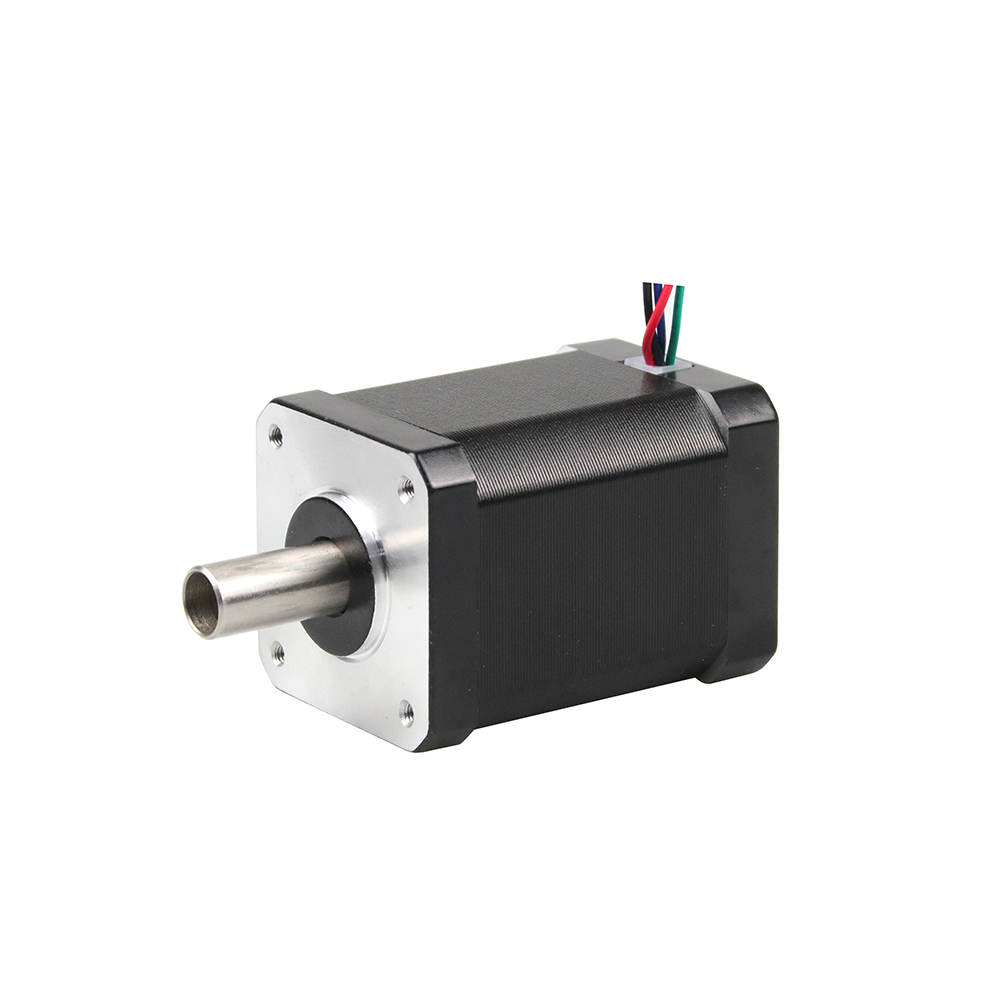
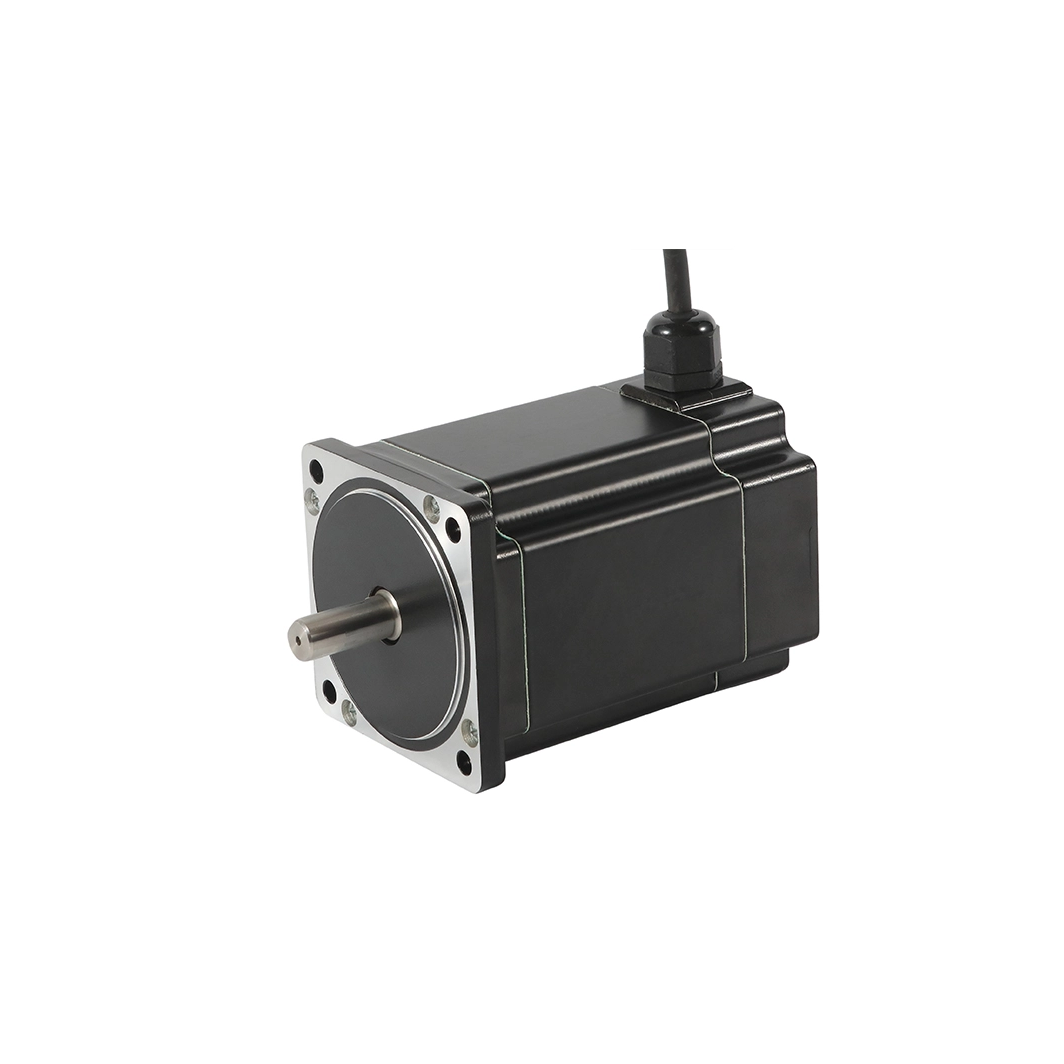
Introduction to Low-Speed Resonance in Stepper Motors
Low-speed resonance is one of the most critical and misunderstood performance challenges in stepper motor systems. We encounter it frequently in precision motion control applications where smooth motion, positional accuracy, and mechanical stability are non-negotiable. When a stepper motor operates at low rotational speeds, interactions between electromagnetic forces and mechanical inertia can create oscillations that degrade performance, generate noise, and cause step loss.
Understanding low-speed resonance in stepper motors is essential for engineers designing CNC machines, medical devices, robotics, semiconductor equipment, and automation systems. This article delivers a deep, engineering-focused analysis of the causes, effects, diagnostics, and mitigation strategies required to eliminate resonance and achieve optimal motion performance.
What Causes Low-Speed Resonance in Stepper Motors
Low-speed resonance in stepper motors is caused by a combination of electromagnetic excitation and mechanical system dynamics that reinforce each other at specific operating speeds. When these factors align, oscillations grow instead of being damped, leading to vibration, noise, and unstable motion. The primary causes are outlined below.
Discrete Stepping and Torque Ripple
Stepper motors rotate in discrete steps, not continuous motion. At low speeds, each step produces a sudden torque impulse. These repeated impulses create torque ripple, which excites mechanical oscillations. Because there is limited inertial smoothing at low RPM, the system cannot absorb these disturbances effectively.
Natural Frequency Matching (Resonance Condition)
Every motor–load system has a natural mechanical frequency determined by inertia, stiffness, and damping. Low-speed resonance occurs when the step frequency of the motor matches or approaches this natural frequency, causing oscillations to amplify rather than decay.
Low Mechanical Damping
Stepper motor systems typically have very little inherent damping. Components such as rigid shafts, metal couplings, and precision bearings store energy instead of dissipating it. Without sufficient damping, oscillations persist and grow when excited at resonant frequencies.
Rotor and Load Inertia Interaction
An improper inertia ratio between the motor rotor and the driven load increases susceptibility to resonance. High load inertia lowers the system’s natural frequency, making resonance more likely at low speeds where stepper motors commonly operate.
Detent Torque Effects
Stepper motors exhibit detent torque, a magnetic holding force present even when the motor is unpowered. At low speeds, detent torque interacts with drive torque, creating periodic disturbances that contribute to oscillatory behavior.
Abrupt Current Waveforms from the Drive
In full-step or half-step operation, current transitions are abrupt, generating non-sinusoidal magnetic fields. These sharp changes increase torque ripple and strongly excite mechanical resonance, especially at low rotational speeds.
Elasticity in Mechanical Components
Compliance in couplings, belts, leadscrews, and mounting structures introduces spring-like behavior into the system. This elasticity allows energy storage and release, reinforcing oscillations when driven at resonant frequencies.
Lack of Inertial Smoothing at Low Speeds
At higher speeds, rotational inertia naturally smooths torque variations. At low speeds, inertia is insufficient to damp step-induced disturbances, making resonance effects far more pronounced.
Summary
Low-speed resonance in stepper motors is caused by the interaction of discrete torque excitation, low damping, inertia mismatch, detent torque, and mechanical compliance, all triggered when the stepping frequency aligns with the system's natural frequency. Understanding these root causes is essential for designing stable, quiet, and precise motion control systems.
Electromagnetic Behavior at Low Speeds
At low RPM, stepper motors operate in a region where electromagnetic torque ripple is most pronounced. Each step introduces a torque impulse, and without sufficient damping, the rotor overshoots its intended position and oscillates before settling.
This phenomenon is especially noticeable in full-step and half-step modes, where current waveforms are abrupt. The magnetic field does not rotate smoothly, intensifying resonance effects and producing audible noise and mechanical chatter.
Mechanical System Dynamics and Resonance Amplification
The mechanical transmission system plays a decisive role in resonance severity. Components such as shafts, couplings, bearings, and linear guides introduce compliance and backlash. These elastic elements store and release energy, reinforcing oscillatory behavior.
Common mechanical contributors include:
Flexible couplings with low torsional stiffness
Long leadscrews with poor critical speed margins
Belt-driven systems with insufficient tension
Unsupported loads increasing reflected inertia
Even a well-sized motor can exhibit severe low-speed resonance if the mechanical system is improperly designed.
Symptoms and Performance Impacts
Low-speed resonance manifests in several measurable and observable ways:
Audible humming or grinding noise
Irregular motion or speed ripple
Increased vibration transmitted to the frame
Loss of positional accuracy
Intermittent step loss
Premature bearing and coupling wear
In high-precision applications, these symptoms compromise repeatability and surface finish, making resonance control a core design requirement.
Resonance Frequency Ranges in Stepper Motors
Each stepper motor system has one or more resonance bands, typically occurring between 1–15 revolutions per second, depending on motor size, load inertia, and mechanical stiffness.
Smaller NEMA motors tend to resonate at higher frequencies, while larger motors with heavier loads resonate at lower speeds. Identifying these resonance zones allows engineers to avoid or actively suppress them during operation.
Microstepping as a Primary Mitigation Strategy
Microstepping is one of the most effective and widely used methods for mitigating low-speed resonance in stepper motors. By subdividing each full step into many smaller, precisely controlled microsteps, microstepping transforms the motor's inherently discrete motion into a much smoother and more stable rotational movement. This significantly reduces vibration, noise, and oscillation at low speeds.
How Microstepping Works
In a traditional full-step or half-step mode, the motor windings are energized abruptly, producing sharp torque transitions. Microstepping, by contrast, drives the motor phases with sinusoidal or near-sinusoidal current waveforms, gradually shifting the magnetic field inside the motor.
Instead of jumping from one magnetic position to the next, the rotor follows a continuously rotating magnetic vector. This smooth excitation dramatically reduces the mechanical shock that triggers resonance.
Reduction of Torque Ripple
Low-speed resonance is strongly linked to torque ripple. Microstepping minimizes this ripple by distributing torque evenly across many smaller increments.
Key benefits include:
Reduced peak-to-peak torque variation
Lower excitation energy at resonant frequencies
Smoother rotor acceleration and deceleration
As torque ripple decreases, the mechanical system is far less likely to enter an oscillatory state.
Improved Low-Speed Smoothness
At low rotational speeds, stepper motors lack sufficient inertia to smooth out abrupt motion changes. Microstepping compensates for this by increasing angular resolution, allowing the motor to move in extremely fine increments.
This results in:
Stable motion at very low RPM
Elimination of cogging effects
Significantly quieter operation
For applications requiring slow, precise movement, microstepping is essential.
Resonance Frequency Suppression
By spreading excitation energy across a broader frequency range, microstepping prevents the motor from repeatedly exciting a single resonant frequency. This makes it much harder for oscillations to build and sustain.
Higher microstep resolutions (such as 8, 16, 32, or 64 microsteps per full step) are particularly effective at suppressing low-speed resonance bands.
Impact on Vibration and Acoustic Noise
One of the most noticeable improvements from microstepping is the reduction in audible noise and vibration. The smooth current transitions reduce mechanical shock and magnetic harmonics that typically produce humming or grinding sounds at low speeds.
This is especially important in:
Trade-Offs and Practical Considerations
While microstepping offers significant resonance reduction, it also introduces considerations that must be managed carefully:
Reduced incremental torque per microstep
Dependence on high-quality current regulation
Diminishing returns beyond certain microstep resolutions
To maximize effectiveness, microstepping should be paired with proper current tuning, suitable motor selection, and a rigid mechanical design.
Best Practices for Using Microstepping
To achieve optimal resonance mitigation, engineers should:
Use digital stepper drivers with true sine-wave current control
Select microstep resolutions appropriate to the application load
Avoid operating continuously at known resonance speeds
Combine microstepping with damping and motion profiling
Conclusion
Microstepping is a foundational strategy for controlling low-speed resonance in stepper motor systems. By smoothing torque delivery, reducing excitation energy, and improving motion resolution, it directly addresses the root causes of resonance. When implemented correctly, microstepping enables quieter, smoother, and more precise motion across a wide range of low-speed applications.
Current Control and Drive Electronics Optimization
Advanced stepper drivers provide dynamic current regulation, allowing engineers to fine-tune performance. Features that mitigate low-speed resonance include:
Adjustable current decay modes
Anti-resonance algorithms
Adaptive current shaping
Closed-loop feedback integration
By optimizing current waveforms, drivers minimize torque discontinuities and suppress oscillations before they grow.
Mechanical Damping Techniques
Mechanical damping is another powerful approach to resonance control. By dissipating vibrational energy, damping reduces oscillation amplitude and stabilizes motion.
Effective damping methods include:
Adding viscous dampers or inertia dampers
Increasing structural rigidity
Using stiffer couplings
Improving bearing preload
Shortening unsupported shaft lengths
While damping does not eliminate resonance, it significantly reduces its impact on system performance.
Load Inertia Matching for Resonance Reduction
Proper inertia matching between the motor and load is essential. Excessive reflected inertia lowers system natural frequency and widens resonance bands.
Best practices include:
Keeping load inertia below 10× motor rotor inertia
Selecting motors with higher torque-to-inertia ratios
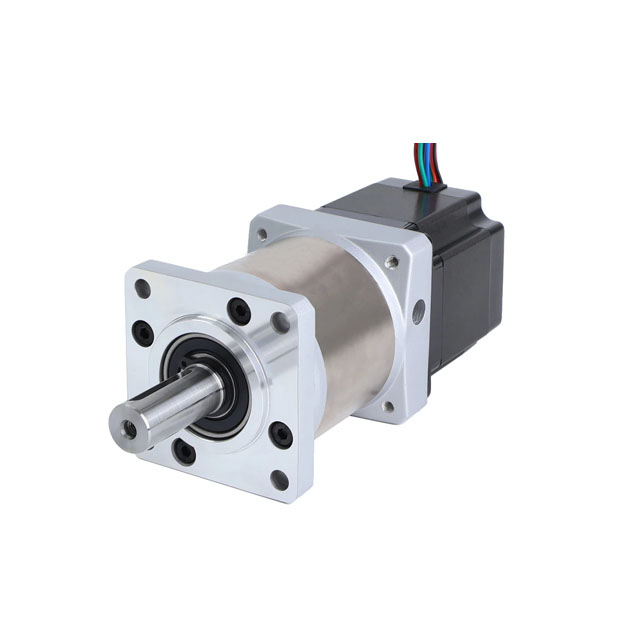
Using gearboxes to reduce reflected inertia
Avoiding oversized motors where unnecessary
Correct inertia matching improves both dynamic response and resonance stability.
Acceleration Profiles and Motion Planning
Motion profiles directly influence resonance excitation. Abrupt starts and stops inject energy into the system at resonant frequencies.
Engineers should implement:
S-curve acceleration and deceleration
Gradual ramping through resonance zones
Avoidance of constant-speed operation within resonance bands
Intelligent motion planning reduces the duration and intensity of resonance exposure.
Closed-Loop Stepper Systems and Resonance Control
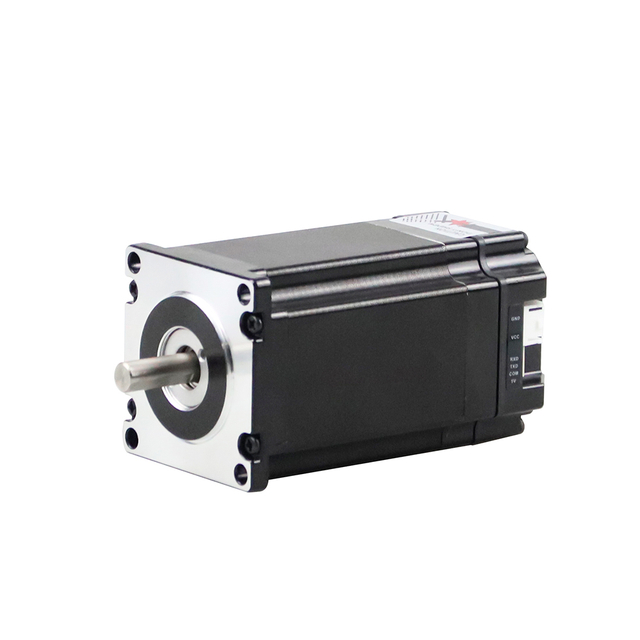
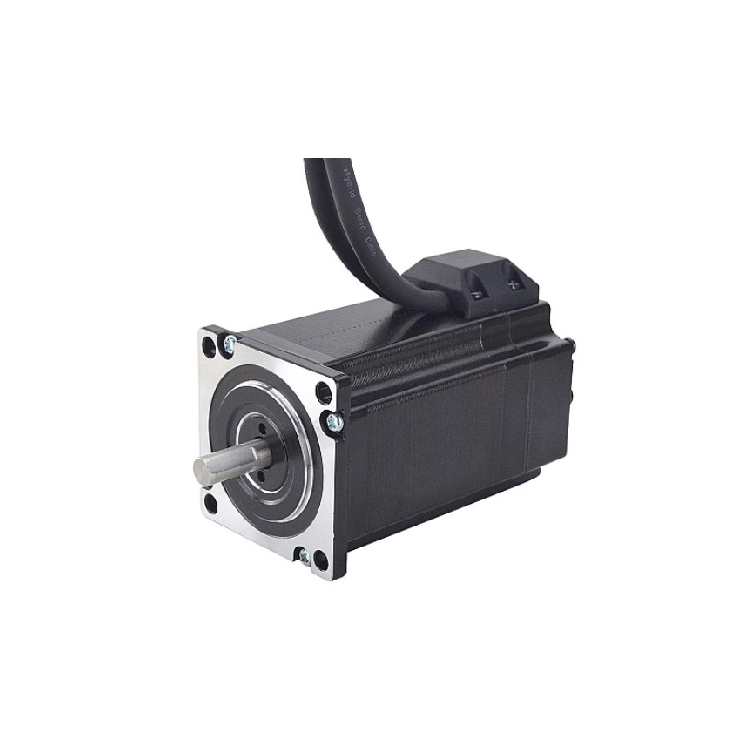
Closed-loop stepper motors integrate encoders and feedback control, allowing real-time correction of position errors. These systems actively counteract resonance-induced deviations.
Benefits include:
Automatic damping of oscillations
No step loss under resonance conditions
Higher usable torque at low speeds
Improved reliability in demanding applications
Closed-loop systems represent the most robust solution for resonance-sensitive designs.
Testing and Diagnosing Low-Speed Resonance
Accurate diagnosis is essential before implementing corrective measures. Effective testing techniques include:
Vibration analysis using accelerometers
Frequency sweep testing
Current waveform monitoring
Acoustic noise measurement
These methods allow engineers to identify resonance frequencies and validate mitigation strategies.
Design Best Practices for Resonance-Free Systems
To minimize low-speed resonance from the outset, we recommend the following design principles:
Select motors with low detent torque
Use high-resolution microstepping drivers
Design mechanically rigid structures
Match inertia carefully
Avoid operating continuously in resonance zones
A holistic approach ensures stable, quiet, and precise motion.
FAQs: Low-Speed Resonance in Stepper Motors
1. What is low-speed resonance in a stepper motor?
Low-speed resonance in a stepper motor is a vibration phenomenon caused by the interaction between the motor’s step frequency and the mechanical natural frequency, leading to noise, oscillation, and unstable motion.
2. Why do stepper motors experience resonance at low speeds?
Stepper motors experience resonance at low speeds due to torque ripple, step angle characteristics, and insufficient damping within the motor and load system.
3. How does low-speed resonance affect stepper motor performance?
Low-speed resonance can cause missed steps, position errors, increased vibration, audible noise, and reduced positioning accuracy in stepper motor applications.
4. Can a stepper motor manufacturer design motors to reduce resonance?
Yes, a professional stepper motor manufacturer can optimize motor structure, winding design, and magnetic circuits to reduce low-speed resonance.
5. How does microstepping help reduce stepper motor resonance?
Microstepping smooths current transitions in the stepper motor, reducing torque ripple and minimizing excitation of resonant frequencies.
6. What role does a stepper motor driver play in resonance control?
An advanced stepper motor driver with sinusoidal current control and anti-resonance algorithms significantly reduces low-speed vibration.
7. Are closed-loop stepper motors better for eliminating resonance?
Closed-loop stepper motors use encoder feedback to actively correct position errors, greatly reducing resonance-related instability.
8. Can integrated stepper motors help with low-speed resonance?
Integrated stepper motors combine motor, driver, and controller in one unit, allowing precise tuning and better resonance suppression.
9. How does load inertia influence stepper motor resonance?
Improper load inertia matching can amplify resonance in a stepper motor, making system-level tuning critical.
10. What mechanical solutions can reduce stepper motor vibration?
Adding dampers, flexible couplings, or optimizing mounting structures can mechanically reduce stepper motor resonance.
11. Does step angle affect low-speed resonance in stepper motors?
Yes, stepper motors with smaller step angles generally produce smoother motion and lower resonance at low speeds.
12. Can a stepper motor manufacturer customize motors for specific speed ranges?
A stepper motor manufacturer can customize torque curves, winding parameters, and rotor inertia to optimize performance at specific low-speed ranges.
13. How does current tuning affect stepper motor resonance?
Incorrect current settings can increase torque ripple; proper current tuning helps stabilize low-speed stepper motor operation.
14. Are hybrid stepper motors prone to low-speed resonance?
Hybrid stepper motors can experience resonance, but optimized designs and drivers greatly reduce this effect.
15. What industries are most affected by stepper motor resonance?
Industries such as industrial automation, medical devices, CNC machines, and robotics are especially sensitive to stepper motor resonance.
16. Can stepper motor resonance cause overheating?
Yes, prolonged vibration and torque instability can increase power loss and lead to stepper motor overheating.
17. How can a stepper motor manufacturer support resonance testing?
A capable stepper motor manufacturer can provide resonance testing, load simulation, and application-specific validation.
18. Is low-speed resonance a design flaw or a system issue?
Low-speed resonance is usually a system-level issue involving motor design, driver configuration, and mechanical load interaction.
19. Can resonance be eliminated without changing the stepper motor?
In many cases, resonance can be minimized by optimizing the driver, motion profile, and mechanical structure without replacing the motor.
20. How should customers choose a stepper motor manufacturer to avoid resonance issues?
Customers should select a stepper motor manufacturer with strong engineering support, customization capability, and application-level tuning expertise.
Conclusion
Low-speed resonance in stepper motors is a predictable and controllable phenomenon when approached with sound engineering principles. By understanding the electromagnetic and mechanical interactions that cause resonance, and by applying advanced drive technology, mechanical damping, and intelligent motion control, engineers can eliminate vibration, noise, and performance loss.
Mastering resonance control unlocks the full potential of stepper motor systems, enabling higher precision, longer service life, and superior application outcomes across industrial and scientific domains.