How To Choose The Right Integrated Servo Motor for A SCARA Robot?
Views: 0 Author: Site Editor Publish Time: 2026-07-07 Origin: Site
SCARA robots are widely used in high-speed industrial automation, including electronic assembly, packaging, dispensing, inspection, laboratory automation, and precision handling applications. As manufacturers continue to demand higher productivity, smaller machine footprints, and easier system integration, the selection of the right integrated servo motor for SCARA robots has become increasingly important.
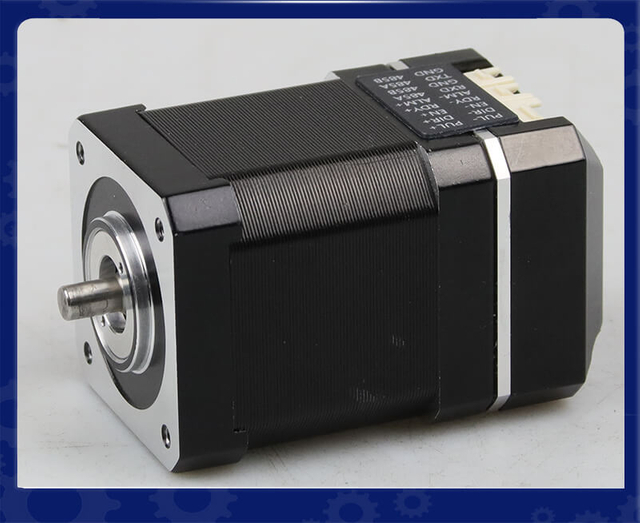
Unlike traditional servo systems that require separate motors, drives, and controllers connected through complex wiring, integrated servo motors combine the motor, driver, encoder, and communication interface into one compact unit. This design simplifies installation, reduces cabinet space, improves system reliability, and provides precise motion control for robotic applications.
However, choosing the correct integrated servo motor for a SCARA robot requires careful consideration of factors such as motor type, torque requirements, speed, control method, mechanical structure, and application environment. In practical SCARA robot designs, both integrated brushless DC servo motors and integrated stepper servo motors have their own advantages and are suitable for different operating conditions.
This guide explains how to select the right integrated servo motor for SCARA robots and how to choose between integrated BLDC servo motors and integrated stepper servo motors.
Understanding the Role of Integrated Servo Motors in SCARA Robots
A SCARA robot typically consists of multiple rotary joints and a vertical Z-axis mechanism. Each axis requires a motor system capable of delivering accurate positioning, stable operation, and fast response.
The integrated servo motor is responsible for:
Driving robotic joints with accurate motion control
Maintaining position accuracy during high-speed operation
Providing feedback through encoders
Controlling acceleration and deceleration smoothly
Communicating with the robot controller or PLC system
Traditional servo systems require:
Servo motor
External servo drive
Encoder cable
Power cable
Communication wiring
Control cabinet installation
An integrated servo motor combines these components into a single compact solution, significantly reducing wiring complexity and improving installation efficiency.
For SCARA robots, where multiple motors are installed in limited mechanical spaces, compact integrated servo solutions provide major advantages.
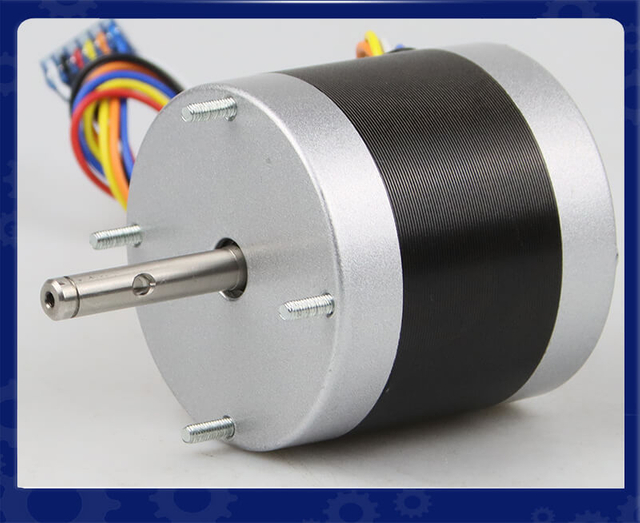
IDC60 Integrated BLDC Servo Motor — High-Efficiency, Compact, and Smart Closed-Loop Motion Control Solution
Product Overview:The IDC60 integrated BLDC servo motor from LeanMotor is a compact NEMA 24 solution combining motor, drive, and encoder in one unit. It provides precise closed-loop control, stable torque, and fast response. Its integrated design reduces wiring, saves space.
Key Technical Highlights
Integrated All-in-One Design Combines BLDC motor, servo drive, and encoder in a compact unit, reducing wiring complexity and improving installation efficiency.
High-Precision Closed-Loop Control Ensures accurate position, speed, and torque regulation with real-time feedback for stable and smooth motion performance.
Powerful Modular Customization (OEM/ODM) Supports flexible customization options, including voltage, torque, communication protocols, and encoder resolution to meet diverse application requirements.
High Efficiency & Compact Structure Delivers strong torque density with optimized thermal performance, making it ideal for space-limited automation and robotics systems.
Typical Applications
Pipeline Inspection Robots Provides stable low-speed torque and precise motion control for navigating narrow, curved, and complex pipeline environments.
Automated Guided Vehicles (AGVs) Ensures smooth acceleration, accurate positioning, and reliable operation in logistics and smart warehouse systems.
Robotic Automation Systems Ideal for robotic arms, grippers, and compact motion modules requiring high precision and fast response.
Smart Manufacturing Equipment Supports high-accuracy motion control in assembly lines, packaging machines, and precision industrial automation devices.
IDC60 Series Integrated Brushless Dc Motor Parameters
Key Factors When Choosing an Integrated Servo Motor for SCARA Robots
1. Determine the Required Torque and Load Capacity
The first step in selecting an integrated servo motor is calculating the required torque.
SCARA robot joints must overcome:
Arm weight
Payload weight
Acceleration force
Inertia from rotating components
External processing forces
The motor torque should be selected based on the maximum operating load rather than the average load.
Important parameters include:
Continuous torque:
The torque the motor can provide during normal operation.
Peak torque:
The maximum torque available during acceleration, emergency stops, or sudden load changes.
Rotor inertia:
The motor's ability to handle rapid speed changes.
For lightweight SCARA robots used in electronics assembly, smaller integrated servo motors may provide sufficient performance. For higher payload robots used in packaging or material handling, higher torque models are required.
Choosing Between Integrated BLDC Servo Motors and Integrated Stepper Servo Motors
When selecting an integrated servo motor for a SCARA robot, choosing between an integrated BLDC servo motor and an integrated stepper servo motor depends on the robot’s speed, accuracy, load requirements, and application environment.
Both solutions provide closed-loop control, combining the motor, driver, and encoder into one compact unit. However, their performance characteristics make them suitable for different SCARA robot applications.
Integrated BLDC Servo Motors for SCARA Robots
An integrated BLDC servo motor is ideal for SCARA robots that require high speed, smooth motion, and continuous operation.
With encoder feedback and advanced servo control, BLDC servo motors can automatically correct position errors and maintain stable performance during rapid acceleration and deceleration.
Main Advantages
High-speed performance: Suitable for fast pick-and-place, assembly, and packaging applications.
Smooth operation: Low vibration and excellent motion control improve robot accuracy.
High efficiency: Brushless design reduces heat generation and maintenance requirements.
Strong dynamic response: Handles frequent acceleration and direction changes effectively.
Typical Applications
Integrated BLDC servo motors are commonly used in:
High-speed SCARA robots
Electronic assembly equipment
Precision handling systems
Automated inspection machines
Industrial packaging robots
For applications requiring maximum productivity and fast cycle times, integrated BLDC servo motors are usually the preferred choice.
Integrated Stepper Servo Motors for SCARA Robots
An integrated stepper servo motor combines the advantages of stepper motor technology with closed-loop feedback control.
It is a cost-effective solution for SCARA robots that require accurate positioning but do not need extremely high speed.
Main Advantages
Accurate positioning: Encoder feedback prevents missed steps and improves reliability.
High low-speed torque: Suitable for vertical axes and small robotic mechanisms.
Compact and economical: Provides a simpler solution for cost-sensitive automation systems.
Easy control integration: Works well with pulse and direction control systems.
Typical Applications
Integrated stepper servo motors are suitable for:
Small SCARA robots
Laboratory automation equipment
Desktop robotic systems
Lightweight assembly machines
Educational robots
For applications where precision and cost efficiency are more important than maximum speed, integrated stepper servo motors are a practical choice.
Selecting the right motor for a SCARA robot is essential for achieving accurate positioning, fast cycle times, and reliable long-term operation. The motor must match the robot’s payload, speed, precision requirements, and working environment.
When choosing a motor for a SCARA robot, several key factors should be considered:
1. Evaluate Torque and Payload Requirements
The motor must provide enough torque to move the robot arm, payload, and mechanical components efficiently.
Important factors include:
Robot arm weight
Maximum payload
Acceleration and deceleration requirements
Joint inertia
Operating cycle frequency
For lightweight SCARA robots, an integrated stepper servo motor may provide sufficient torque and positioning accuracy. For larger industrial robots with higher payloads and faster movements, an integrated BLDC servo motor is usually more suitable.
2. Consider Speed and Motion Performance
SCARA robots are commonly used for high-speed automation tasks such as pick-and-place, assembly, and packaging.
If the application requires:
Short cycle times
Rapid acceleration
Continuous high-speed operation
Smooth multi-axis movement
an integrated BLDC servo motor is the better choice due to its higher speed capability and faster dynamic response.
For applications with moderate speed requirements, an integrated stepper servo motor can provide reliable performance with lower system cost.
3. Check Position Accuracy and Repeatability
Precision is a critical requirement for SCARA robots used in electronics assembly, dispensing, and inspection.
Motors with encoder feedback provide:
Real-time position monitoring
Error correction
Improved repeatability
Stable operation under changing loads
Both integrated BLDC servo motors and integrated stepper servo motors offer closed-loop control, but BLDC servo motors generally provide better performance in high-precision and high-speed applications.
4. Select the Appropriate Motor Size
The motor size should match the robot’s mechanical structure and available installation space.
Common motor sizes include:
NEMA 11: Small robotic mechanisms and lightweight applications
NEMA 17: Compact automation equipment
NEMA 23: Medium-size robotic systems
NEMA 24: Higher torque industrial applications
A properly sized motor helps achieve the best balance between torque, efficiency, and robot weight.
5. Consider Control and Communication Requirements
Modern SCARA robots require flexible communication between motors and controllers.
Common control options include:
Pulse and direction control
RS485 communication
CANopen communication
EtherCAT communication
For simple robotic systems, pulse control may be sufficient. For multi-axis industrial robots, network-based communication provides better synchronization and system management.
6. Analyze the Working Environment
The operating environment affects motor reliability and service life.
Consider:
Operating temperature
Dust and contamination levels
Continuous working hours
Vibration conditions
A reliable integrated servo motor with built-in drive electronics can reduce wiring complexity and improve system stability in industrial environments.
7. Choose Between Integrated BLDC Servo Motor and Integrated Stepper Servo Motor
Choose an Integrated BLDC Servo Motor When:
High speed is required
The robot operates continuously
High efficiency is important
Fast response and smooth motion are needed
The application involves higher payloads
Choose an Integrated Stepper Servo Motor When:
Cost efficiency is important
The robot operates at moderate speeds
Compact size is required
Accurate positioning is needed
The application has lower load requirements
Final
The right motor for a SCARA robot depends on the application requirements, including torque, speed, accuracy, motor size, and control system compatibility.
For high-performance industrial SCARA robots, integrated BLDC servo motors provide excellent speed, efficiency, and dynamic response. For compact and cost-effective robotic systems, integrated stepper servo motors offer accurate control and reliable operation.
By selecting the correct motor technology, manufacturers can improve SCARA robot performance, reduce maintenance requirements, and achieve more efficient automation.
Integrated BLDC Servo Motors for SCARA Robots
When to Choose an Integrated Brushless DC Servo Motor
An integrated BLDC servo motor is suitable for SCARA robots requiring:
High-speed operation
Smooth motion
High efficiency
Low vibration
Continuous operation
High dynamic response
BLDC servo motors use closed-loop control with encoder feedback. The controller continuously monitors motor position and speed, allowing accurate adjustment during operation.
This makes them ideal for demanding robotic applications where speed and precision are critical.
Advantages of Integrated BLDC Servo Motors
1. High Speed Performance
SCARA robots are often designed for rapid pick-and-place operations. Integrated BLDC servo motors can achieve high rotational speeds while maintaining stable control.
Typical applications include:
Semiconductor handling
PCB assembly
High-speed packaging
Sorting systems
2. Excellent Motion Smoothness
Because BLDC servo motors use feedback control, they can automatically compensate for position errors.
Benefits include:
Reduced vibration
Lower mechanical shock
Improved positioning accuracy
Better surface quality in processing applications
This is especially important for precision tasks such as dispensing, screw fastening, and inspection.
3. Higher Energy Efficiency
BLDC motors have no mechanical brushes, reducing friction losses and improving efficiency.
Advantages include:
Lower heat generation
Longer operating life
Reduced maintenance requirements
For SCARA robots operating continuously in factories, energy efficiency directly affects operating costs.
Applications Suitable for Integrated BLDC Servo Motors
Integrated BLDC servo motors are commonly used in:
High-speed SCARA robots
Robotic assembly systems
Precision handling equipment
Automated inspection machines
Laboratory robots
Medical automation equipment
Integrated Stepper Servo Motors for SCARA Robots
When to Choose an Integrated Stepper Servo Motor
An integrated stepper servo motor combines the advantages of traditional stepper motors and closed-loop servo technology.
It is suitable for SCARA robot applications requiring:
Cost-effective motion control
Accurate positioning
Moderate speed operation
Compact design
Simple control systems
Unlike open-loop stepper motors, integrated stepper servo motors include encoder feedback, which allows the system to detect and correct positioning errors.
Advantages of Integrated Stepper Servo Motors
1. Accurate Position Control Without Complex Systems
Traditional stepper motors operate without feedback, which may cause missed steps under overload conditions.
Integrated stepper servo motors solve this problem by adding encoder feedback.
The system can:
Monitor actual position
Detect overload conditions
Correct motion errors
Maintain positioning accuracy
2. High Holding Torque
Stepper servo motors provide strong torque at low speeds.
This makes them suitable for:
Vertical Z-axis movement
Small SCARA robots
Lightweight robotic arms
Precision positioning mechanisms
3. Lower System Cost
Compared with high-performance servo systems, integrated stepper servo motors provide a more economical solution.
They are suitable for applications where:
Extremely high speed is unnecessary
Payload requirements are moderate
Cost efficiency is important
Applications Suitable for Integrated Stepper Servo Motors
Integrated stepper servo motors are commonly used in:
Desktop SCARA robots
Educational robots
Laboratory automation
Small assembly machines
Vision inspection equipment
Low-to-medium speed handling systems
Integrated BLDC Servo Motor vs Integrated Stepper Servo Motor for SCARA Robots
Feature
Integrated BLDC Servo Motor
Integrated Stepper Servo Motor
Speed
Very high
Medium
Precision
Excellent
Excellent with encoder feedback
Efficiency
Higher
Moderate to high
Cost
Higher
Lower
Torque at low speed
Moderate
High
Dynamic response
Excellent
Good
Heat generation
Lower
Higher under heavy load
Best application
High-speed industrial SCARA robots
Compact and cost-sensitive robots
2. Consider Communication and Control Requirements
Modern SCARA robots require flexible communication systems.
When selecting an integrated servo motor, consider:
Pulse and direction control
RS485 communication
CANopen communication
EtherCAT compatibility
Modbus communication
For simple automation equipment, pulse control may be sufficient.
For advanced industrial robotic systems, network communication such as CANopen or EtherCAT provides:
Multi-axis synchronization
Real-time control
Easier system expansion
Better diagnostics
3. Evaluate Motor Size and Mechanical Integration
Space is often limited inside SCARA robot joints.
Integrated servo motors provide advantages because they reduce external wiring and eliminate separate drives.
Important selection factors include:
Motor diameter
Motor length
Mounting dimensions
Shaft configuration
Weight
Common integrated servo motor sizes include:
NEMA 11
NEMA 17
NEMA 23
NEMA 24
Smaller motors are suitable for compact SCARA robots, while larger frame sizes provide higher torque for industrial applications.
4. Consider Encoder Resolution and Position Accuracy
For precision SCARA applications, such as electronic component assembly, encoder resolution is a critical factor.
5. Analyze Working Environment Requirements
Industrial environments may expose motors to:
Dust
Vibration
Temperature changes
Continuous operation
When selecting an integrated servo motor, consider:
Protection rating
Cooling method
Operating temperature range
Long-term reliability
For factory automation, a robust integrated servo motor helps reduce downtime and maintenance costs.
How to Select the Right Integrated Servo Motor for Different SCARA Robot Applications
High-Speed Pick-and-Place SCARA Robots
Recommended solution:
Integrated BLDC servo motors
Reasons:
High acceleration capability
Fast response
Smooth operation
High efficiency
Precision Assembly SCARA Robots
Recommended solution:
Integrated BLDC servo motors or high-resolution stepper servo motors
Reasons:
Accurate positioning
Stable movement
Low vibration
Small Desktop SCARA Robots
Recommended solution:
Integrated stepper servo motors
Reasons:
Compact size
Lower cost
Sufficient accuracy
Simple control architecture
Packaging and Material Handling SCARA Robots
Recommended solution:
High-torque integrated BLDC servo motors
Reasons:
Larger payload capacity
Continuous operation capability
Better dynamic performance
Why Integrated Servo Motors Are Becoming Popular in SCARA Robot Design
The increasing adoption of integrated servo motors in SCARA robots is driven by several advantages:
Simplified system architecture
Motor, drive, and feedback components are integrated into one unit.
Reduced wiring complexity
Less wiring improves reliability and reduces installation time.
Compact machine design
Smaller control cabinets and robotic structures become possible.
Improved maintenance efficiency
Integrated systems simplify troubleshooting and replacement.
Better motion performance
Closed-loop control ensures accurate and stable operation.
Conclusion: Selecting the Best Integrated Servo Motor for Your SCARA Robot
Choosing the right integrated servo motor for a SCARA robot depends on application requirements, including speed, torque, precision, payload, cost, and control architecture.
For high-speed industrial SCARA robots, integrated BLDC servo motors are usually the preferred choice because they provide excellent efficiency, dynamic response, and smooth operation.
For compact, cost-sensitive, and moderate-speed SCARA robots, integrated stepper servo motors offer an effective solution with accurate closed-loop control and strong low-speed torque.
By evaluating the robot structure, motion requirements, and operating environment, manufacturers can select the most suitable integrated servo motor solution to achieve reliable, efficient, and precise robotic automation.
FAQs
1. What type of motor is commonly used in SCARA robots?
SCARA robots commonly use servo motors because they require high positioning accuracy, fast response, and stable motion control. In modern robotic applications, integrated servo motors, including integrated BLDC servo motors and integrated stepper servo motors, are increasingly used because they combine the motor, driver, and encoder into a compact unit, reducing wiring complexity and improving system reliability.
2. How do I choose between an integrated BLDC servo motor and an integrated stepper servo motor for a SCARA robot?
The choice depends on the robot’s speed, payload, precision, and application requirements.
An integrated BLDC servo motor is suitable for high-speed SCARA robots that require smooth motion, high efficiency, fast acceleration, and continuous operation.
An integrated stepper servo motor is a cost-effective solution for compact SCARA robots or applications requiring accurate positioning with moderate speed and load requirements.
3. What factors should be considered when selecting an integrated servo motor for a SCARA robot?
The main factors include:
Required torque and payload capacity
Operating speed and acceleration
Positioning accuracy and repeatability
Motor size and installation space
Communication method
Working environment
Selecting a motor based on these factors ensures reliable performance and optimized robotic motion.
4. Why are integrated servo motors suitable for SCARA robots?
Integrated servo motors are ideal for SCARA robots because they combine multiple components into one compact design, including the motor, driver, and encoder.
Their advantages include:
Reduced wiring and installation time
Smaller control cabinet requirements
Improved system reliability
Easier maintenance
Precise closed-loop motion control
These benefits make integrated servo motors especially suitable for compact and high-performance automation systems.
5. What size integrated servo motor is suitable for a SCARA robot?
The suitable motor size depends on the robot structure, payload, and torque requirements. Common sizes include NEMA 11, NEMA 17, NEMA 23, and NEMA 24.
Small SCARA robots and lightweight applications usually require smaller motors, while industrial SCARA robots with higher payloads typically need larger motors with higher torque output.