How Does An Integrated Servo Motor Work in Hospital Delivery Robots?
Views: 0 Author: Site Editor Publish Time: 2026-04-08 Origin: Site
Hospital delivery robots are rapidly transforming modern healthcare environments by enabling autonomous transportation of medications, medical supplies, laboratory samples, and meals. At the core of these robots lies one of the most critical technologies: the Integrated Servo Motor. This compact, intelligent motion solution enables hospital robots to operate with precision, safety, efficiency, and reliability in complex healthcare environments.
In this article, we explore in detail how an integrated servo motor works in hospital delivery robots, its key components, operational mechanisms, advantages, and why it is essential for next-generation medical automation systems.
What Is an Integrated Servo Motor?
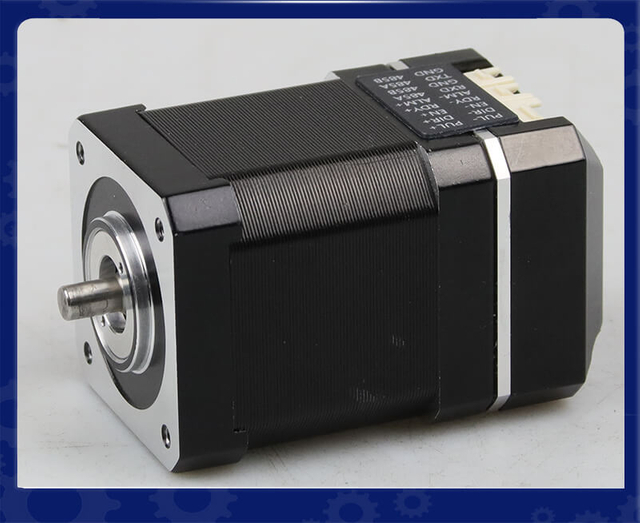
An Integrated Servo Motor is a compact motion control device that combines multiple components into a single unit, including:
Servo motor
Servo drive
Encoder
Controller
Communication interface
Safety protection features
Unlike traditional motion systems that require separate components and complex wiring, integrated servo motors provide all-in-one motion control solutions designed for compact robotic applications such as hospital delivery robots.
Core Components of an Integrated Servo Motor
Component
Function
Servo Motor
Provides rotational or linear movement
Encoder
Measures position, speed, and direction
Servo Drive
Controls motor speed and torque
Controller
Executes motion commands
Communication Interface
Enables robot system integration
Protection Circuit
Prevents overheating and overload
This integration significantly improves performance, reliability, and ease of deployment in hospital robotics.
Integrated servo motors support advanced communication protocols:
EtherCAT
CANopen
Modbus
RS485
Ethernet/IP
This enables:
Real-time monitoring
Remote diagnostics
Predictive maintenance
Hospital administrators benefit from:
Improved system management
Reduced downtime
Increased operational efficiency
Safety Features in Integrated Servo Motors
Hospital environments demand high safety standards. Integrated servo motors include:
Overload protection
Overheat protection
Short circuit protection
Emergency stop support
These features ensure:
Patient safety
Equipment protection
Continuous operation
Future Trends of Integrated Servo Motors in Hospital Delivery Robots
As healthcare facilities continue to adopt automation, hospital delivery robots are becoming more intelligent, compact, and efficient. At the center of this evolution, integrated servo motors are advancing rapidly to meet the growing demands of modern hospital environments. Future developments will focus on precision, intelligence, energy efficiency, and seamless connectivity, enabling hospital delivery robots to perform more complex tasks with greater reliability.
Below are the key future trends of integrated servo motors in hospital delivery robots shaping the next generation of healthcare automation.
1. AI-Driven Intelligent Motion Control
One of the most significant trends is the integration of Artificial Intelligence (AI) into integrated servo motor systems. AI-enabled servo motors will allow hospital delivery robots to adapt dynamically to changing environments.
Future AI-powered integrated servo motors will provide:
Self-learning motion optimization
Adaptive speed control based on environment
Obstacle-aware movement adjustment
Automatic performance tuning
For example, when navigating crowded hospital corridors, AI-enabled integrated servo motors can automatically adjust acceleration and deceleration for smoother movement. This ensures safe interaction with patients and medical staff, while also improving delivery efficiency.
AI-based control also enables predictive motion planning, allowing robots to move more intelligently and reduce unnecessary energy consumption.
2. Higher Precision and Ultra-Smooth Motion Performance
Hospital delivery robots must operate in sensitive healthcare environments. Future integrated servo motors will offer:
Higher encoder resolution
Improved motion algorithms
Advanced vibration suppression
Ultra-smooth acceleration profiles
These enhancements allow robots to transport delicate medical supplies, including:
Blood samples
Vaccines
Laboratory specimens
Pharmaceutical products
With improved motion precision, hospital delivery robots can dock accurately at charging stations, medicine cabinets, and patient rooms, enhancing workflow automation.
3. Compact and Lightweight Integrated Designs
Space optimization remains a major priority in hospital robotics. Future integrated servo motors will feature:
Smaller form factors
Higher power density
Lightweight construction
Modular integrated architecture
These compact designs allow manufacturers to build smaller, more flexible hospital delivery robots capable of navigating:
Narrow corridors
Elevators
Patient wards
Surgical areas
Smaller integrated servo motors also reduce wiring complexity, improving system reliability and maintenance efficiency.
4. Enhanced Energy Efficiency for Longer Battery Life
Hospital delivery robots typically operate 24 hours a day, requiring energy-efficient components. Future integrated servo motors will incorporate:
Advanced energy-saving algorithms
Low-power electronics
Regenerative braking technology
High-efficiency motor designs
These improvements provide:
Longer battery life
Reduced charging frequency
Lower operational costs
Improved robot uptime
Energy-efficient integrated servo motors are especially important for large hospitals where robots must travel long distances continuously.
5. Advanced Communication and IoT Connectivity
Future integrated servo motors will support Industrial Internet of Things (IIoT) and smart hospital infrastructure. These features include:
Real-time performance monitoring
Cloud-based diagnostics
Remote firmware updates
Predictive maintenance alerts
Communication protocols expected to become standard include:
EtherCAT
CANopen
Ethernet/IP
Modbus TCP
Wireless communication options
This connectivity enables hospital administrators to monitor robot fleets remotely, ensuring optimal performance and minimizing downtime.
6. Integrated Safety Features for Healthcare Environments
Safety is critical in hospitals. Future integrated servo motors will incorporate advanced safety technologies, such as:
Safe torque off (STO)
Collision detection
Emergency stop integration
Overload protection
Temperature monitoring
These safety features ensure:
Patient protection
Staff safety
Equipment reliability
Integrated safety systems also help hospital delivery robots comply with medical automation safety standards.
7. Multi-Axis Synchronization and Coordinated Motion
This enables robots to perform advanced tasks such as:
Opening automatic doors
Handling medical trays
Loading and unloading supplies
Docking with hospital equipment
These capabilities will expand the role of hospital delivery robots beyond simple transportation.
8. Smart Predictive Maintenance Capabilities
Future integrated servo motors will include built-in diagnostics and predictive maintenance features. These systems will monitor:
Motor temperature
Vibration levels
Torque performance
Operating cycles
By analyzing this data, integrated servo motors can:
Predict potential failures
Alert maintenance teams
Schedule service automatically
Predictive maintenance reduces:
Unexpected downtime
Maintenance costs
Operational disruptions
This is particularly valuable for hospitals that rely heavily on continuous robotic operations.
9. Customizable Integrated Servo Motor Solutions
Hospital delivery robots vary widely in design and functionality. Future integrated servo motors will offer:
Custom voltage options
Flexible mounting designs
Integrated braking systems
Custom communication interfaces
These customization options allow robot manufacturers to optimize performance for specific hospital environments.
10. Improved Durability and Reliability
Hospital robots operate continuously in demanding conditions. Future integrated servo motors will feature:
Improved thermal management
Enhanced sealing and protection
Longer operational lifespan
Reduced maintenance requirements
These improvements ensure stable and reliable performance in healthcare applications.
Conclusion
The future of integrated servo motors in hospital delivery robots is driven by intelligence, efficiency, and precision. With advancements in AI control, compact design, IoT connectivity, and predictive maintenance, integrated servo motors will enable hospital delivery robots to become more autonomous, reliable, and capable.
As hospitals continue embracing automation and smart healthcare technologies, integrated servo motors will remain core components powering the next generation of intelligent hospital delivery robots, improving efficiency, safety, and overall patient care.
Why Choose Professional Integrated Servo Motor Manufacturers
Selecting a professional integrated servo motor manufacturer is a critical decision for companies developing hospital delivery robots and other advanced automation systems. High-quality integrated servo motors directly influence robot performance, operational stability, precision, and long-term reliability. Professional manufacturers provide engineering expertise, advanced technology, and comprehensive support that ensure optimal results for demanding healthcare environments.
Below are the key reasons why choosing a professional integrated servo motor manufacturer is essential.
Advanced Engineering and Technical Expertise
Professional integrated servo motor manufacturers possess deep engineering knowledge and years of industry experience. Their teams understand the specific requirements of hospital delivery robots, including:
High precision motion control
Smooth acceleration and deceleration
Quiet operation for hospital environments
Reliable 24/7 performance
With this expertise, professional manufacturers design optimized servo solutions that enhance robot performance while maintaining operational safety and efficiency.
Professional engineering teams also provide:
Motion control optimization
Load analysis
Thermal management design
Performance tuning
These technical capabilities ensure superior servo motor performance in real-world healthcare applications.
High-Quality Components and Manufacturing Standards
Professional manufacturers use premium-grade materials and advanced manufacturing processes to ensure consistent product quality. High-quality integrated servo motors typically include:
High-resolution encoders
Precision bearings
Efficient magnetic materials
Durable housing structures
These components improve:
Accuracy
Reliability
Lifespan
Operational stability
Professional manufacturers also follow strict quality control procedures, including:
Performance testing
Environmental testing
Durability testing
Safety verification
This ensures that integrated servo motors operate reliably in hospital environments where performance consistency is critical.
Customization Capabilities for Hospital Delivery Robots
Every hospital delivery robot has for Hospital Delivery Robots
Every hospital delivery robot has unique requirements. Professional integrated servo motor manufacturers provide customized solutions tailored to specific applications.
Customization options often include:
Custom voltage ranges
Specialized mounting configurations
Integrated braking systems
Communication protocol customization
Shaft and connector customization
This flexibility allows robot manufacturers to optimize system integration, improving both performance and efficiency.
Customization also supports:
Compact robot design
Improved navigation performance
Reduced wiring complexity
Simplified installation
Professional manufacturers ensure that integrated servo motors perfectly match hospital robot specifications.
Advanced Communication and Integration Support
Hospital delivery robots rely on real-time communication and control systems. Professional integrated servo motor manufacturers support multiple industrial communication protocols, including:
EtherCAT
CANopen
Modbus
RS485
Ethernet/IP
These communication options allow:
Seamless robot integration
Real-time performance monitoring
Remote diagnostics
Smart hospital connectivity
Professional manufacturers also provide software tools and integration assistance, helping developers accelerate system development.
Reliable Safety Features for Healthcare Applications
Safety is a top priority in hospital environments. Professional integrated servo motor manufacturers incorporate advanced safety features, such as:
Overcurrent protection
Overvoltage protection
Overtemperature protection
Emergency stop support
Safe torque off (STO)
These safety features ensure:
Patient safety
Staff protection
Equipment reliability
Professional manufacturers also ensure compliance with industrial and medical automation standards, making their solutions suitable for healthcare applications.
Compact integrated servo motors enable hospital delivery robots to:
Navigate narrow corridors
Operate in elevators
Move efficiently in crowded environments
Energy-efficient motors also extend battery life, improving overall robot productivity.
Comprehensive Technical Support and Service
Professional manufacturers provide full technical support throughout the product lifecycle. This includes:
Pre-sales technical consultation
Application engineering support
Installation guidance
Troubleshooting assistance
Firmware updates
Reliable support ensures:
Faster development cycles
Reduced technical risks
Improved product reliability
Professional manufacturers often provide global technical support, which is especially important for international robot manufacturers.
Long-Term Reliability and Product Consistency
Hospital delivery robots must operate continuously and reliably. Professional integrated servo motor manufacturers ensure:
Consistent product quality
Long operational lifespan
Stable performance across production batches
This reliability reduces:
Maintenance costs
Unexpected downtime
Replacement frequency
Long-term reliability is particularly important for hospital automation systems where interruptions can impact medical operations.
Scalability for Future Robot Development
Professional integrated servo motor manufacturers offer scalable solutions for expanding robot capabilities. These include:
Multi-axis motion systems
Higher torque motor options
Modular integrated designs
Future upgrade compatibility
Scalability allows robot manufacturers to:
Expand product lines
Improve robot performance
Adapt to new hospital requirements
This flexibility supports future innovation in hospital delivery robotics.
Faster Development and Time-to-Market
Working with professional integrated servo motor manufacturers accelerates robot development timelines. Their expertise and ready-to-integrate solutions reduce:
Engineering complexity
Testing time
Integration challenges
This enables:
Faster product launch
Reduced development costs
Improved competitiveness
Professional manufacturers help robot developers bring advanced hospital delivery robots to market faster.
Summary
Choosing a professional integrated servo motor manufacturer provides significant advantages for hospital delivery robot development. From advanced engineering expertise and high-quality components to customization capabilities and reliable technical support, professional manufacturers ensure optimal robot performance and long-term reliability.
As hospital automation continues to grow, partnering with a professional integrated servo motor manufacturer becomes essential for building efficient, intelligent, and reliable hospital delivery robots that meet the demands of modern healthcare environments.
Conclusion: Integrated Servo Motors Power the Future of Hospital Automation
Integrated servo motors play a critical role in hospital delivery robots, enabling:
Precise navigation
Smooth motion
Reliable operation
Intelligent automation
As hospitals continue adopting automation technologies, integrated servo motors will become essential components for efficient, safe, and intelligent healthcare logistics.
With compact design, advanced control, and high performance, integrated servo motors are driving the future of hospital delivery robotics and smart healthcare automation.