How To Choose Geared BLDC Motors for Collaborative Robots?
Views: 0 Author: Site Editor Publish Time: 2026-06-04 Origin: Site
Geared BLDC motors are essential for collaborative robots because they provide high torque, precise motion control, compact integration, and energy-efficient performance. Selecting the right motor requires careful evaluation of torque, gear ratio, backlash, encoder resolution, efficiency, speed, and long-term reliability to ensure optimal cobot performance.
Collaborative robots (cobots) have transformed modern automation by enabling safe and efficient interaction between humans and machines. Unlike traditional industrial robots, cobots operate in dynamic environments where precision, reliability, compactness, and safety are essential. At the heart of every collaborative robot is its motion control system, and the Geared BLDC Motor plays a critical role in delivering the torque, speed, efficiency, and positioning accuracy required for advanced robotic applications.
Selecting the right geared brushless DC motor is not simply a matter of matching voltage and torque specifications. A properly selected motor directly influences robot performance, payload capacity, energy efficiency, service life, and operational safety. This guide provides a comprehensive framework for choosing the optimal geared BLDC motor for collaborative robot systems.
Understanding the Role of Geared BLDC Motors in Collaborative Robots
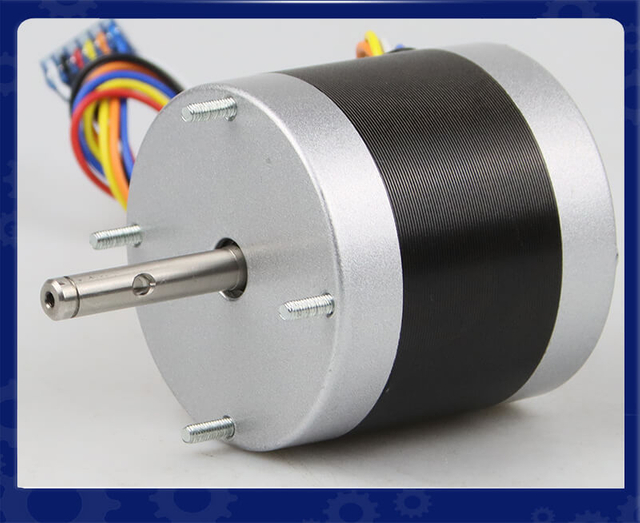
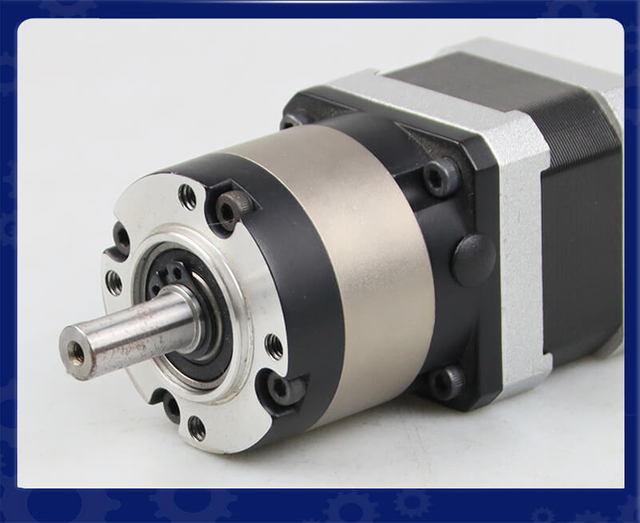
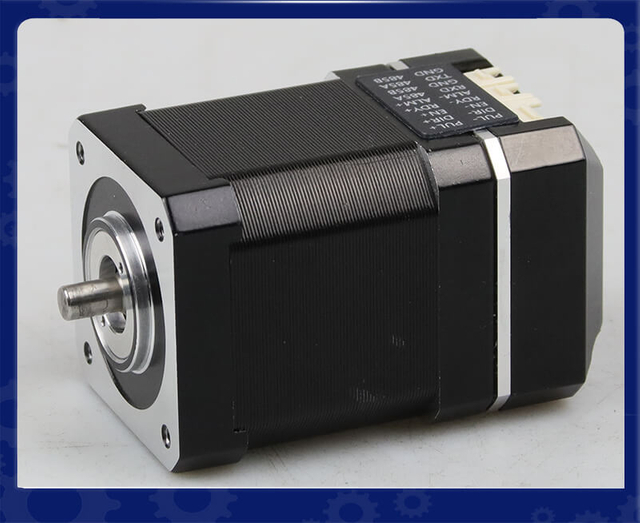
A Geared BLDC Motor combines a brushless DC motor with a precision gearbox to provide enhanced torque output while maintaining compact dimensions. This combination offers significant advantages for collaborative robots:
High torque density
Precise speed control
Low maintenance requirements
Reduced energy consumption
Smooth and quiet operation
Extended operational lifespan
Compact mechanical design
In cobot joints, geared BLDC motors convert electrical energy into controlled mechanical movement, enabling robotic arms to perform delicate assembly, inspection, packaging, medical assistance, and material handling tasks.
Determine the Required Torque for Each Robot Joint
Torque is one of the most critical parameters when selecting a geared BLDC motor.
Collaborative robots typically contain multiple joints, each experiencing different load requirements. Shoulder joints generally require higher torque because they support the weight of the entire robotic arm and payload. Wrist joints often prioritize speed and precision over maximum torque.
However, practical motor sizing should account for:
Dynamic loads
Shock loads
Safety margins
Future payload upgrades
Many engineers select geared BLDC motors with a torque reserve of 20%–50% above calculated requirements to ensure stable performance under varying conditions.
Select the Optimal Gear Ratio
The gearbox determines how motor speed is converted into usable output torque.
A higher gear ratio:
Increases torque
Reduces output speed
Improves load handling
A lower gear ratio:
Increases speed
Improves responsiveness
Enhances motion smoothness
Common collaborative robot applications utilize gear ratios ranging from:
Application
Typical Gear Ratio
End Effector Joints
5:1 – 20:1
Wrist Joints
10:1 – 30:1
Elbow Joints
20:1 – 80:1
Shoulder Joints
50:1 – 150:1
Selecting an excessively high gear ratio can introduce:
Increased backlash
Reduced efficiency
Slower response times
Therefore, achieving the right balance between torque multiplication and motion responsiveness is essential.
Brushless motors inherently offer higher efficiency than brushed alternatives due to the absence of mechanical brushes and commutators.
Premium geared BLDC motors commonly achieve:
Motor efficiency above 85%
System efficiency exceeding 75% after gearbox integration
When evaluating efficiency, consider both:
Motor efficiency
Gearbox efficiency
Planetary gearboxes often provide higher efficiency than worm gear systems, making them particularly suitable for collaborative robotics.
Analyze Speed Requirements
Speed is a key factor when selecting a geared BLDC motor for collaborative robots. The motor and gearbox must provide the right balance between speed, torque, and positioning accuracy.
Define the Required Joint Speed
Different robot joints have different speed demands:
Shoulder and elbow joints: Moderate speed, higher torque
Wrist joints: Faster movement, lower torque
End effectors: Speed depends on task requirements
Match Speed to the Application
Application
Speed Priority
Pick-and-Place Robots
High
Packaging Automation
High
Assembly Robots
Medium
Inspection Systems
Medium
Medical Robotics
Low to Medium
Laboratory Automation
Low
Consider Gear Ratio Effects
The gearbox directly impacts output speed:
Higher gear ratios = Lower speed, higher torque
Lower gear ratios = Higher speed, lower torque
Selecting the proper gear ratio ensures smooth robot motion without sacrificing performance.
Evaluate Acceleration and Cycle Time
For high-productivity applications, consider:
Required acceleration
Deceleration capability
Target cycle times
Motion responsiveness
Fast acceleration improves throughput but may require higher motor torque.
Balance Speed and Precision
Excessive speed can reduce positioning accuracy and increase vibration. Collaborative robots typically perform best when speed is optimized alongside:
Accuracy
Repeatability
Safety
Motion smoothness
Key Selection Checklist
✓ Maximum joint speed
✓ Required acceleration
✓ Gear ratio suitability
✓ Cycle time targets
✓ Positioning accuracy requirements
✓ Payload-related speed limitations
A properly selected geared BLDC motor should deliver the required speed while maintaining stable, precise, and efficient robot operation.
Prioritize Compact Size and Weight
Collaborative robots are designed to be lightweight and space-efficient.
Every gram added to a robotic arm increases inertia and affects overall performance.
High torque-density motors are especially valuable because they deliver substantial power without increasing robot size.
Choose the Right Gearbox Technology
The gearbox is a critical component in a geared BLDC motor system because it directly affects torque output, positioning accuracy, efficiency, noise levels, and service life. For collaborative robots, selecting the appropriate gearbox technology can significantly improve overall motion performance and reliability.
Planetary Gearboxes
Planetary gearboxes are among the most widely used gearbox types in collaborative robots due to their excellent balance of performance, efficiency, and compactness.
Key Advantages:
High torque density in a compact package
Excellent load distribution across multiple gears
High transmission efficiency, typically above 90%
Low backlash options available
Long operational lifespan
Suitable for continuous-duty applications
Best Applications:
Collaborative robot shoulder joints
Elbow joints
Material handling robots
Industrial automation systems
Planetary gearboxes are often the preferred choice when a robot requires high torque output, smooth operation, and reliable long-term performance.
Harmonic Drive Gearboxes
Harmonic drive gearboxes are known for delivering exceptional positioning accuracy and near-zero backlash, making them ideal for high-precision robotic systems.
Key Advantages:
Extremely low backlash
High reduction ratios in a compact design
Excellent repeatability
Lightweight construction
High positioning precision
Best Applications:
Precision assembly robots
Medical robotics
Semiconductor manufacturing equipment
Inspection and testing systems
Although harmonic drives typically cost more than planetary gearboxes, they provide unmatched accuracy for applications where precision is the highest priority.
Spur Gearboxes
Spur gearboxes utilize simple gear arrangements and are often selected for cost-sensitive applications.
Key Advantages:
Simple mechanical design
Lower manufacturing cost
Easy maintenance
Good efficiency under moderate loads
Limitations:
Higher backlash compared to planetary or harmonic drives
Increased noise during operation
Lower torque density
Best Applications:
Entry-level automation equipment
Educational robots
Light-duty service robots
Spur gearboxes are generally less common in advanced collaborative robots where precision and smooth motion are critical.
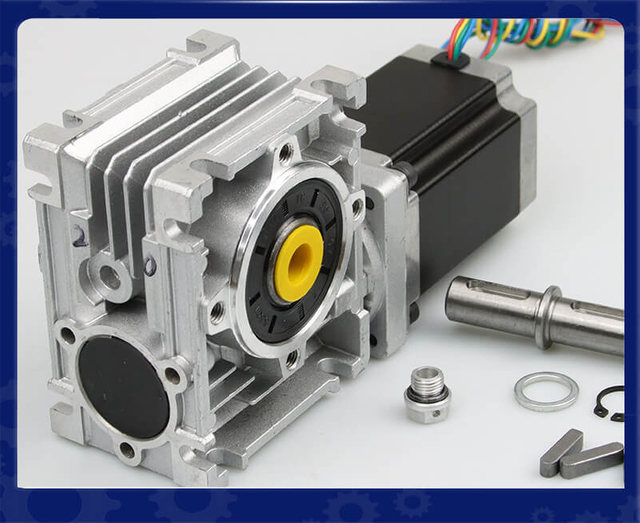
Worm Gearboxes
Worm gearboxes provide high gear reductions and inherent self-locking characteristics in certain configurations.
Key Advantages:
High reduction ratios
Compact layout
Potential self-locking capability
Good shock-load resistance
Limitations:
Lower efficiency compared to planetary gearboxes
Higher heat generation
Increased wear over time
Best Applications:
Position-holding mechanisms
Vertical lifting systems
Specialized robotic axes requiring load retention
For collaborative robots focused on energy efficiency and dynamic motion, worm gearboxes are generally used only in specific applications.
Cycloidal Gearboxes
Cycloidal gearboxes are designed for high-torque applications and offer excellent durability under demanding operating conditions.
Key Advantages:
Very high torque capacity
Exceptional shock-load resistance
Long service life
Low backlash designs available
Best Applications:
Heavy-payload collaborative robots
Industrial robotic arms
High-duty-cycle automation systems
Cycloidal gearboxes are particularly effective in applications where robustness and durability are more important than minimizing size and weight.
Comparing Common Gearbox Technologies
Gearbox Type
Precision
Efficiency
Torque Density
Backlash
Cost
Planetary
High
High
High
Low
Moderate
Harmonic Drive
Very High
Moderate
High
Extremely Low
High
Spur
Moderate
High
Moderate
Higher
Low
Worm
Moderate
Lower
High
Moderate
Moderate
Cycloidal
High
High
Very High
Low
High
How to Select the Best Gearbox for a Collaborative Robot
When choosing a gearbox technology, engineers should evaluate:
Required output torque
Desired positioning accuracy
Allowable backlash
Joint size constraints
Payload requirements
Duty cycle and operating hours
Noise limitations
Budget considerations
For most collaborative robot joints, planetary gearboxes offer the best balance of efficiency, durability, cost, and performance. When ultra-high precision and near-zero backlash are required, harmonic drive gearboxes are often the preferred solution. Heavy-duty robotic applications may benefit from cycloidal gearboxes, while spur and worm gearboxes are typically reserved for specialized or cost-sensitive designs.
Selecting the appropriate gearbox technology ensures that the geared BLDC motor delivers the torque, precision, responsiveness, and reliability necessary for advanced collaborative robotic systems.
Assess Noise and Vibration Characteristics
Collaborative robots frequently operate near human workers.
Low-noise operation improves:
Workplace comfort
User acceptance
Medical environment suitability
Laboratory performance
Factors affecting noise include:
Gear quality
Gearbox design
Bearing quality
Motor commutation algorithms
High-quality geared BLDC motors often produce significantly lower acoustic emissions than conventional motor systems.
Low vibration characteristics also improve:
Motion smoothness
Sensor accuracy
Precision positioning
Verify Thermal Performance
Heat management is critical for robotic reliability.
Excessive temperatures can cause:
Reduced motor lifespan
Encoder errors
Gearbox wear
Electronic failures
Evaluate:
Continuous torque rating
Peak torque rating
Operating temperature range
Thermal resistance
Cooling capabilities
Robotic applications involving continuous operation should prioritize motors designed for long-term thermal stability.
Consider Communication and Control Compatibility
Modern collaborative robots rely on sophisticated control architectures.
The selected geared BLDC motor should integrate seamlessly with existing controllers and industrial networks.
Popular communication interfaces include:
CANopen
EtherCAT
Modbus
RS485
Ethernet/IP
Pulse and Direction
Integrated motor solutions often simplify system design by combining:
Motor
Encoder
Driver
Communication interface
Into a single compact package.
Evaluate Reliability and Service Life
Collaborative robots frequently operate around the clock.
Motor reliability directly affects:
Production uptime
Maintenance costs
Return on investment
Key indicators of reliability include:
Bearing Quality
Premium bearings improve:
Load capacity
Rotational stability
Service life
Gear Material
High-strength steel gears provide:
Superior wear resistance
Improved torque handling
Extended operational life
Protection Ratings
Consider environmental conditions.
Common ratings include:
IP40
IP54
IP65
IP67
Higher protection levels improve resistance to dust, moisture, and contaminants.
Match the Motor to the Collaborative Robot Application
Different applications require different motor characteristics.
Application
Priority
Electronics Assembly
Precision
Medical Robotics
Accuracy & Safety
Service Robots
Quiet Operation
Packaging Automation
Speed
Inspection Systems
Repeatability
Laboratory Automation
Low Noise
Material Handling
High Torque
Understanding application priorities helps optimize motor selection and avoid overengineering.
Key Selection Checklist for Geared BLDC Motors in Cobots
Before finalizing a motor choice, verify the following:
✓ Required torque capacity
✓ Appropriate gear ratio
✓ Low backlash gearbox
✓ High-resolution encoder
✓ Compact dimensions
✓ Lightweight construction
✓ High efficiency
✓ Thermal stability
✓ Low noise operation
✓ Communication compatibility
✓ Long service life
✓ Adequate environmental protection
✓ Reliable manufacturer support
Conclusion
Choosing the right Geared BLDC Motor for Collaborative Robots requires a comprehensive evaluation of torque, gear ratio, precision, efficiency, thermal performance, gearbox design, and communication compatibility. A properly matched motor system enhances robotic accuracy, increases payload capability, improves safety, reduces maintenance requirements, and extends operational lifespan.
By carefully analyzing application demands and selecting a high-quality geared BLDC motor with the appropriate gearbox and feedback system, collaborative robot manufacturers can achieve superior motion control performance, greater productivity, and long-term reliability in modern automation environments.
FAQs
1. Why are geared BLDC motors commonly used in collaborative robots?
LeanMotor Answer: Geared BLDC motors combine the efficiency and reliability of brushless motor technology with the torque multiplication of a gearbox. This allows collaborative robots to achieve precise motion control, high torque output, compact joint designs, and long service life while maintaining energy efficiency.
2. What torque factors should be considered when selecting a geared BLDC motor for a cobot?
LeanMotor Answer: Engineers should evaluate payload weight, arm length, joint position, acceleration requirements, and duty cycle. The motor should provide sufficient continuous torque and reserve capacity to handle dynamic loads without overheating or losing positioning accuracy.
3. How does gearbox ratio affect collaborative robot performance?
LeanMotor Answer: A higher gear ratio increases output torque but reduces speed, while a lower ratio provides faster movement with less torque multiplication. Selecting the appropriate ratio helps balance precision, responsiveness, and payload capability.
4. Which gearbox type is best for collaborative robots?
LeanMotor Answer: Planetary gearboxes are often preferred because they offer high efficiency, compact size, low backlash, and excellent torque density. For ultra-precision applications, harmonic gearboxes may be selected due to their near-zero backlash characteristics.
5. Why is low backlash important in collaborative robot joints?
LeanMotor Answer: Low backlash improves positioning accuracy, repeatability, and motion smoothness. This is especially important for assembly, inspection, laboratory automation, and medical robotic applications where precise movements are required.
6. How important is encoder resolution when choosing a geared BLDC motor?
LeanMotor Answer: High-resolution encoders provide more accurate position feedback, enabling better motion control and repeatability. They help collaborative robots maintain precise trajectories and improve overall system performance.
7. What role does motor efficiency play in collaborative robot applications?
LeanMotor Answer: High-efficiency motors consume less energy, generate less heat, and reduce operating costs. Improved efficiency also contributes to longer service life and more reliable operation during continuous-duty applications.
8. How can engineers balance speed and torque requirements?
LeanMotor Answer: The optimal balance is achieved by matching motor speed, gear ratio, and application requirements. Fast robotic movements require lower reduction ratios, while high-load applications typically benefit from higher reduction ratios that increase available torque.
9. Why are compact and lightweight geared BLDC motors preferred in cobots?
LeanMotor Answer: Compact motors reduce joint weight and inertia, allowing faster acceleration, improved energy efficiency, and safer human-robot interaction. Lightweight designs also help maximize payload capacity.
10. What should be evaluated to ensure long-term reliability?
LeanMotor Answer: Engineers should assess bearing quality, gearbox durability, thermal performance, protection ratings, encoder reliability, and manufacturer support. High-quality geared BLDC motors can deliver consistent performance over thousands of operating hours.