How Do Servo Motors Improve Stability in Pipeline Inspection Robots?
Views: 0 Author: Site Editor Publish Time: 2026-07-02 Origin: Site
Introduction: The Critical Role of Stability in Pipeline Inspection
Pipeline inspection robots operate in some of the most demanding industrial environments. From narrow oil pipelines to complex underground utility networks, these robots must maintain precise motion control, balance, and positional accuracy while navigating unpredictable internal conditions.
We focus on how servo motors significantly enhance stability, enabling inspection robots to deliver accurate data, reduce operational risks, and maintain continuous performance even under extreme conditions. The integration of servo-driven systems has become a cornerstone in modern robotic pipeline inspection technology.
Integrated Servo Technology for Stable Pipeline Inspection Robots
Pipeline inspection robots operate in highly constrained environments, where maintaining motion stability is critical. Narrow pipe diameters, curved structures, and uneven internal surfaces often introduce vibration, torque fluctuations, and positioning errors.
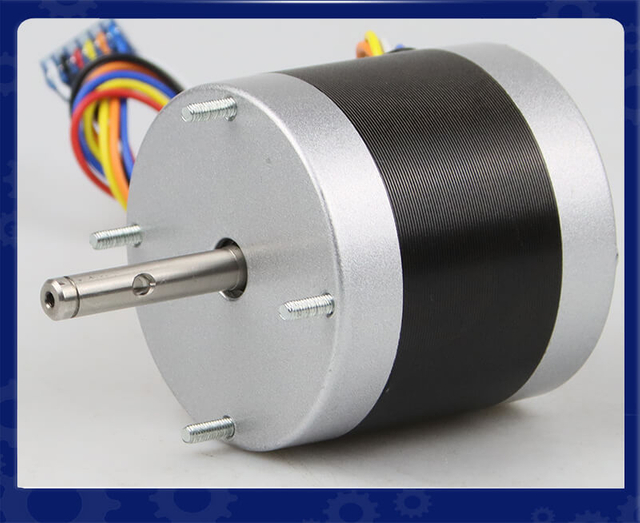
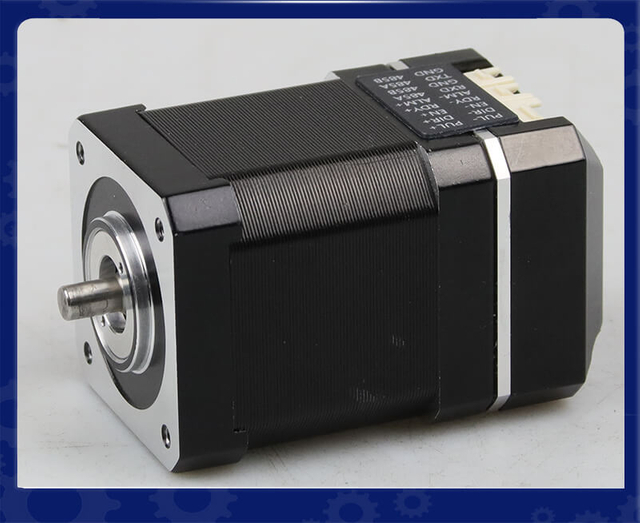
To address these challenges, compact and high-precision motion systems such as the IDC60 integrated brushless DC servo motor are increasingly used in modern inspection robot designs.
The IDC60 integrates the motor, servo drive, and encoder into a single compact unit, enabling a fully closed-loop control system. This design significantly improves motion stability by ensuring real-time feedback and instant correction of speed and position deviations.
With its high torque density and precise speed control, the IDC60 helps inspection robots maintain smooth and consistent movement even in long-distance or complex pipeline environments. Its integrated architecture also reduces wiring complexity, improving reliability in confined robotic structures.
IDC60 Integrated BLDC Servo Motor — High-Efficiency, Compact, and Smart Closed-Loop Motion Control Solution
Product Overview:The IDC60 integrated BLDC servo motor from LeanMotor is a compact NEMA 24 solution combining motor, drive, and encoder in one unit. It provides precise closed-loop control, stable torque, and fast response. Its integrated design reduces wiring, saves space.
Key Technical Highlights
Integrated All-in-One Design Combines BLDC motor, servo drive, and encoder in a compact unit, reducing wiring complexity and improving installation efficiency.
High-Precision Closed-Loop Control Ensures accurate position, speed, and torque regulation with real-time feedback for stable and smooth motion performance.
Powerful Modular Customization (OEM/ODM) Supports flexible customization options, including voltage, torque, communication protocols, and encoder resolution to meet diverse application requirements.
High Efficiency & Compact Structure Delivers strong torque density with optimized thermal performance, making it ideal for space-limited automation and robotics systems.
Typical Applications
Pipeline Inspection Robots Provides stable low-speed torque and precise motion control for navigating narrow, curved, and complex pipeline environments.
Automated Guided Vehicles (AGVs) Ensures smooth acceleration, accurate positioning, and reliable operation in logistics and smart warehouse systems.
Robotic Automation Systems Ideal for robotic arms, grippers, and compact motion modules requiring high precision and fast response.
Smart Manufacturing Equipment Supports high-accuracy motion control in assembly lines, packaging machines, and precision industrial automation devices.
IDC60 Series Integrated Brushless Dc Motor Parameters
Before exploring servo motor contributions, we must understand the core stability challenges faced by pipeline inspection robots:
1. Confined and Variable Pipeline Geometry
Pipelines often include:
Tight bends and elbows
Diameter transitions
Weld seams and internal roughness
These variations introduce continuous disturbances in robot movement.
2. Slippery and Uneven Internal Surfaces
Depending on transported materials, internal pipe walls may be:
Oily or corrosive
Coated with sediments
Structurally uneven
This leads to inconsistent traction and vibration.
3. Long-Distance Operation Requirements
Inspection robots must travel:
Hundreds of meters or more
Without external intervention
While maintaining sensor accuracy
4. High-Precision Data Collection Demands
Modern inspection systems rely on:
Ultrasonic sensors
Visual imaging modules
Laser profiling systems
Even slight instability can distort data integrity.
Why Servo Motors Are Essential for Stability
Servo motors are essential for stability in modern automation systems, robotic equipment, and precision machinery because they provide accurate motion control, fast response, and continuous feedback adjustment. Unlike traditional motors that operate mainly based on power input, servo motors use a closed-loop control system to monitor and correct movement in real time.
In applications such as pipeline inspection robots, industrial robots, CNC machines, and automated equipment, stability directly affects performance, accuracy, and reliability. Servo motors help maintain smooth operation even when external conditions change, ensuring that the system can achieve consistent and precise movement.
1. Closed-Loop Feedback Ensures Precise Position Control
The most important reason servo motors improve stability is their closed-loop feedback mechanism. A servo system uses encoders or sensors to continuously detect the motor’s actual position, speed, and movement status.
When the system detects any difference between the desired position and the actual position, the servo drive immediately adjusts the motor output. This real-time correction prevents:
Position errors
Motion deviation
Unexpected vibration
Loss of accuracy
For robots operating in complex environments, this ability allows stable and reliable movement even when facing external interference.
2. Precise Torque Control Improves Mechanical Stability
Servo motors provide highly accurate torque control, which is critical for maintaining stable operation.
In robotic applications, the required force may change constantly due to:
Different loads
Surface friction variations
Mechanical resistance
Changing working conditions
Servo motors can automatically adjust torque output according to real-time requirements. This helps prevent problems such as:
Motor overload
Wheel slipping
Sudden movement changes
Insufficient driving force
As a result, equipment can maintain stable motion and improved operational efficiency.
3. Smooth Acceleration and Deceleration Reduce Vibration
Unstable acceleration or sudden stops can create mechanical vibration, affecting both equipment lifespan and operating accuracy.
Servo motors support advanced motion control features, including:
Smooth acceleration curves
Controlled deceleration
Speed adjustment optimization
This enables machines to start, stop, and change direction smoothly, reducing mechanical shock and improving overall stability.
For precision applications like inspection robots and automation systems, reduced vibration also helps improve sensor accuracy and data quality.
4. Fast Response to External Disturbances
Industrial environments often involve unpredictable conditions. Servo motors can quickly respond to external changes because of their high dynamic performance.
For example, when a robot encounters:
Uneven surfaces
Sudden resistance
Load changes
Directional deviation
The servo system can detect the change and adjust output immediately.
This fast response capability allows equipment to maintain stable operation without requiring manual correction.
5. Multi-Axis Synchronization Improves System Stability
Many advanced machines rely on multiple motors working together. Servo motors provide accurate synchronization between different motion axes.
This is especially important for:
Robotic arms
Automated production lines
Pipeline inspection robots
Precision positioning systems
Synchronized motion prevents uneven movement and improves overall system coordination.
6. High Positioning Accuracy Supports Reliable Operation
Servo motors are widely used in applications where precise positioning is required. Encoder feedback allows servo systems to achieve excellent repeatability and accuracy.
Stable positioning helps ensure:
Consistent production quality
Accurate inspection results
Reliable robotic movement
Reduced operational errors
For automated equipment, this precision directly improves productivity and reduces maintenance requirements.
7. Intelligent Control Enhances Long-Term Stability
Modern servo motors can be integrated with advanced control systems, allowing intelligent monitoring and optimization.
Features such as:
Real-time performance feedback
Automatic adjustment
Fault detection
Energy optimization
help maintain stable operation over long working periods.
This makes servo motors an ideal solution for industries requiring high reliability, precision, and continuous operation.
Final
Servo motors are essential for stability because they combine precise feedback control, accurate torque management, smooth motion performance, and fast response capabilities. By continuously adjusting operation according to real-time conditions, servo motors help machines achieve higher accuracy, better reliability, and longer service life.
For applications such as pipeline inspection robots, servo motors provide the stable and precise motion control required to operate effectively in challenging environments.
Closed-Loop Feedback Control for Real-Time Stability
A closed-loop feedback control system is one of the key technologies that enables servo motors to achieve high stability and precision. Unlike open-loop motor systems that execute commands without checking actual movement results, servo motors continuously monitor operating conditions and automatically correct any errors during operation.
This real-time adjustment capability allows equipment such as pipeline inspection robots, industrial robots, CNC machines, and automated systems to maintain accurate movement even in complex and changing environments.
How Closed-Loop Feedback Control Works
A servo motor system typically consists of:
Servo motor
Servo drive
Encoder or feedback sensor
Controller
The working process includes three main steps:
Command Input The controller sends a target command, such as a required position, speed, or torque.
Real-Time Feedback Detection The encoder continuously measures the actual motor status, including:
Rotation angle
Position
Speed
Direction
Automatic Error Correction The servo drive compares the actual movement with the target value. If a difference is detected, the system immediately adjusts motor output to eliminate the deviation.
This continuous adjustment creates a stable and accurate motion process.
Maintaining Stable Position Accuracy
In precision applications, even small positioning errors can affect system performance. Closed-loop servo control prevents these errors by constantly correcting motor movement.
For example, in a pipeline inspection robot, the robot must maintain a stable path while moving through long and complex pipelines. External factors such as friction changes, uneven surfaces, or obstacles may cause movement deviation.
With closed-loop feedback control, the servo motor can:
Detect position changes instantly
Compensate for movement errors
Maintain accurate travel distance
Keep inspection sensors correctly aligned
This ensures reliable inspection results and improves overall system performance.
Real-Time Compensation Against External Disturbances
Industrial environments often include unpredictable conditions that can affect motor stability.
Common disturbances include:
Sudden load changes
Mechanical resistance
Surface friction variation
Vibration and impact forces
A closed-loop servo system continuously analyzes these changes and adjusts output accordingly.
For example, when a pipeline inspection robot encounters a rough internal pipe surface, the servo motor can increase or decrease torque automatically to maintain smooth movement.
This adaptive response helps prevent:
Speed fluctuation
Position loss
Unstable operation
Improving Motion Smoothness and Reducing Vibration
Stable movement requires more than accurate positioning—it also requires smooth operation.
Closed-loop feedback allows servo motors to precisely control:
Acceleration
Deceleration
Rotation speed
Torque output
By optimizing motion changes, the system reduces sudden mechanical impacts and vibration.
Benefits include:
Improved sensor accuracy
Reduced mechanical wear
Longer equipment lifespan
More reliable operation
For robots carrying cameras, ultrasonic sensors, or laser inspection systems, vibration reduction is especially important because it directly affects data quality.
Enhanced Stability Through Precise Torque Control
Torque stability is another major advantage of closed-loop servo control.
Traditional motors may provide inconsistent torque when the load changes. Servo motors continuously monitor the required force and adjust output to match operating conditions.
This allows:
Better traction control
More stable movement under variable loads
Improved climbing capability
Reduced risk of motor overload
In robotic applications, precise torque regulation helps maintain balance and prevents sudden movement failures.
Supporting Multi-Axis Synchronization
Many advanced machines require multiple motors to operate together. Closed-loop servo control allows different servo motors to communicate and synchronize accurately.
For pipeline inspection robots, multiple motors may control:
Drive wheels
Steering mechanisms
Robotic joints
Inspection modules
The feedback system ensures each motor operates at the correct position and speed, creating coordinated and stable movement.
Why Closed-Loop Servo Control Is Important for Pipeline Inspection Robots
Pipeline inspection environments are often difficult to predict. Robots may need to travel through:
Long underground pipelines
Narrow passages
Curved sections
Uneven internal surfaces
Without accurate feedback control, the robot may experience:
Direction deviation
Inconsistent speed
Sensor positioning errors
Reduced inspection accuracy
Closed-loop servo motors solve these challenges by providing continuous monitoring and automatic adjustment.
As a result, pipeline inspection robots can achieve:
Higher navigation stability
More accurate inspection data
Improved operational reliability
Longer continuous working capability
Final
Closed-loop feedback control is the foundation of servo motor stability. By continuously monitoring real-time movement information and making automatic corrections, servo motors maintain precise positioning, smooth motion, and reliable performance.
For applications such as pipeline inspection robots, this technology ensures stable operation in challenging environments, allowing robots to move accurately, collect dependable inspection data, and improve overall system efficiency.
Torque Precision Enhances Traction Control
Pipeline environments often require robots to climb, rotate, or stabilize against gravity and friction variations.
Servo motors deliver precisely regulated torque, which directly improves:
1. Climbing Capability
Robots can maintain grip on vertical or inclined pipe sections without slipping.
2. Load Adaptation
When additional inspection modules are attached, servo systems automatically adjust torque output.
3. Slip Prevention
Torque adjustments ensure wheel or track systems do not lose traction on oily surfaces.
This precise torque management significantly improves overall mechanical stability.
Vibration Reduction and Motion Smoothness
Uncontrolled vibration is a major problem in pipeline inspection, especially for high-resolution imaging systems.
Servo motors minimize vibration through:
Smooth PWM Control
Instead of abrupt power changes, servo drives regulate energy input gradually.
Acceleration Profiling
We program servo systems with controlled acceleration curves:
S-curve motion
Linear ramping
Deceleration smoothing
Mechanical Resonance Suppression
Servo feedback systems detect oscillations and automatically counteract them.
Resulting Benefits
Clearer imaging results
More accurate sensor readings
Reduced wear on mechanical components
High Responsiveness in Dynamic Pipeline Environments
Pipeline inspection robots often encounter sudden changes such as:
Debris accumulation
Weld protrusions
Internal bends or junctions
Servo motors react within milliseconds to maintain balance.
Adaptive Motion Control
We utilize servo-driven algorithms that:
Detect resistance changes instantly
Adjust speed dynamically
Rebalance torque distribution across wheels or tracks
This ensures uninterrupted movement even in unpredictable pipeline conditions.
Improved Multi-Axis Coordination for Stability
Advanced pipeline inspection robots use multiple motors for:
Drive wheels
Steering modules
Sensor positioning systems
Servo motors allow synchronized multi-axis control, ensuring all motion components work in harmony.
Key Stability Improvements
Reduced directional drift
Synchronized wheel rotation
Coordinated steering adjustments
This coordination is essential for long-distance inspection accuracy.
Positioning Accuracy for Reliable Data Acquisition
Servo motors achieve extremely high positioning accuracy through encoder feedback systems.
Why This Matters
In pipeline inspection:
A few millimeters of error can distort mapping data
Stable performance is not only mechanical—it is also thermal and electrical.
Servo motors contribute to system stability by:
Reducing unnecessary energy consumption
Minimizing heat generation through efficient control
Preventing overheating during long inspections
Lower thermal fluctuation improves:
Motor lifespan
Electronic reliability
Consistency of motion control
Integration with Intelligent Control Systems
Modern pipeline inspection robots are increasingly AI-driven. Servo motors integrate seamlessly with:
Machine vision systems
Autonomous navigation algorithms
Predictive maintenance modules
Smart Stability Adjustments
The system can:
Predict instability before it occurs
Adjust torque distribution in advance
Optimize route and speed dynamically
This creates a fully adaptive inspection platform.
Real-World Performance Benefits
By integrating servo motors, we achieve measurable improvements:
Higher inspection accuracy through stable movement
Reduced failure rates in complex pipeline environments
Extended operational range without manual intervention
Improved sensor reliability under motion stress
Enhanced safety in hazardous inspection zones
Conclusion: Servo Motors as the Foundation of Stable Pipeline Robotics
Servo motors are not simply motion components—they are the core stability engine of pipeline inspection robots. Through closed-loop feedback, precise torque control, vibration suppression, and intelligent coordination, they ensure consistent performance in environments where mechanical instability is unavoidable.
We continue to rely on servo-driven architectures to push the boundaries of pipeline robotics, enabling safer, more accurate, and more efficient inspection systems across industrial applications.
FAQ:
1. How do servo motors improve stability in pipeline inspection robots?
Answer:
Servo motors provide precise closed-loop control, allowing robots to maintain stable movement even in uneven, curved, or narrow pipeline environments. This reduces vibration and improves inspection accuracy.
2. Why are servo motors preferred over traditional motors in pipeline inspection systems?
Answer:
Unlike open-loop motors, servo systems continuously adjust position and torque based on feedback, ensuring smoother motion and better adaptability in complex pipeline conditions.
3. How do servo motors help reduce vibration during pipeline inspection?
Answer:
Servo motors dynamically correct speed and torque fluctuations in real time, which minimizes mechanical vibration and ensures consistent sensor readings.
4. Can servo motors operate in small-diameter or curved pipelines?
Answer:
Yes. High-precision servo control allows inspection robots to navigate tight bends and small diameters while maintaining traction and stability.
5. Do servo motors improve inspection accuracy?
Answer:
Yes. By stabilizing movement and enabling precise positioning, servo motors help cameras and sensors capture clearer and more reliable inspection data.
6. How do servo motors handle uneven pipeline surfaces?
Answer:
Servo systems automatically adjust torque output to compensate for surface irregularities, preventing slippage and maintaining consistent contact.
7. What role does feedback control play in stability?
Answer:
Feedback systems (encoders or sensors) continuously monitor motion and correct deviations instantly, ensuring the robot remains stable inside the pipeline.
8. Are servo motors energy efficient in pipeline inspection robots?
Answer:
Yes. Servo motors optimize power output based on load demand, reducing unnecessary energy consumption during inspection tasks.
9. How do servo motors improve robot maneuverability in pipelines?
Answer:
They provide precise speed and direction control, allowing robots to smoothly transition through bends, joints, and branching sections.
10. What maintenance advantages do servo motors offer in pipeline inspection robots?
Answer:
Their controlled operation reduces mechanical stress, leading to less wear and tear and longer system lifespan with lower maintenance needs.