The Rising Demand for High-Speed Delta Robot Performance
In modern automated production environments, high-speed delta robots have become essential for applications such as packaging, pick-and-place operations, electronics assembly, and food processing. These robots are engineered for ultra-fast cycle times, precision positioning, and continuous operation, making motor selection a critical factor in achieving optimal performance.
We recognize that the integration of motion components plays a decisive role in system efficiency. This is why integrated servo motors have emerged as the preferred solution for delta robot manufacturers seeking speed, precision, compactness, and reliability in one unified package.
What Are Integrated Servo Motors?
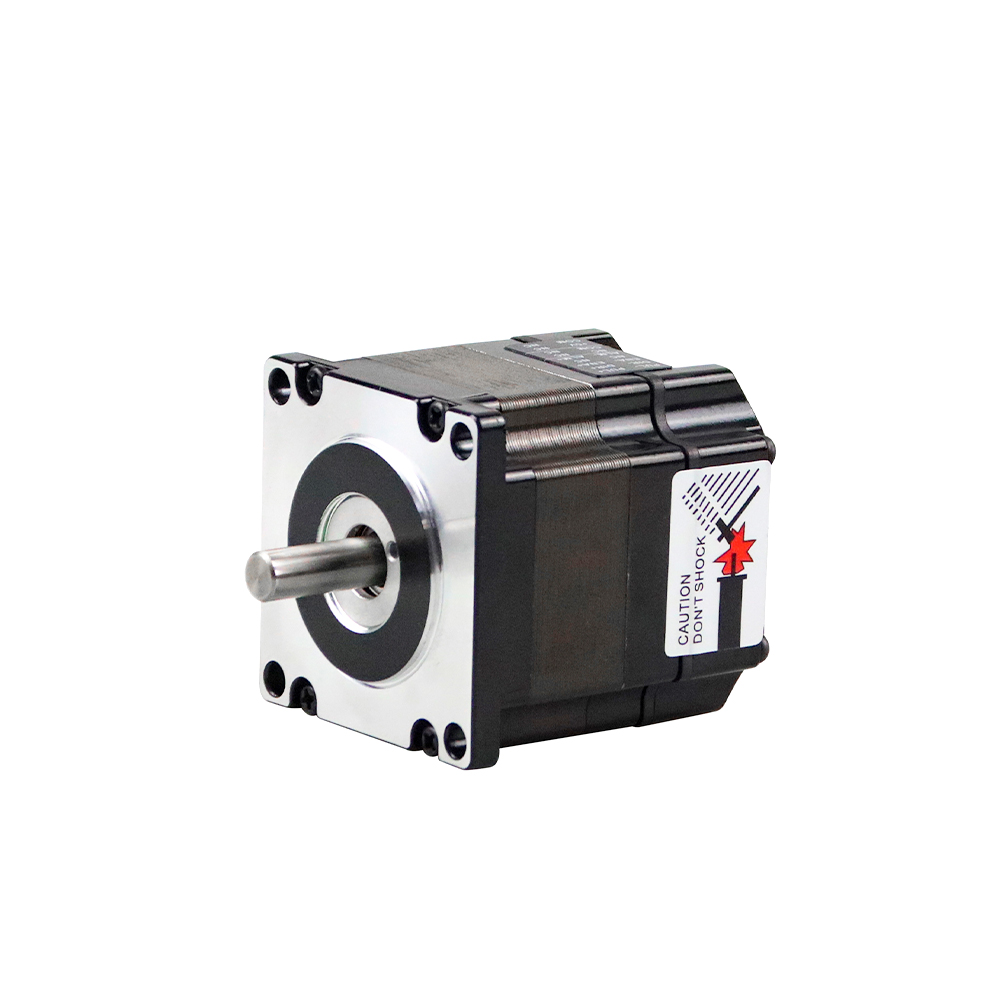
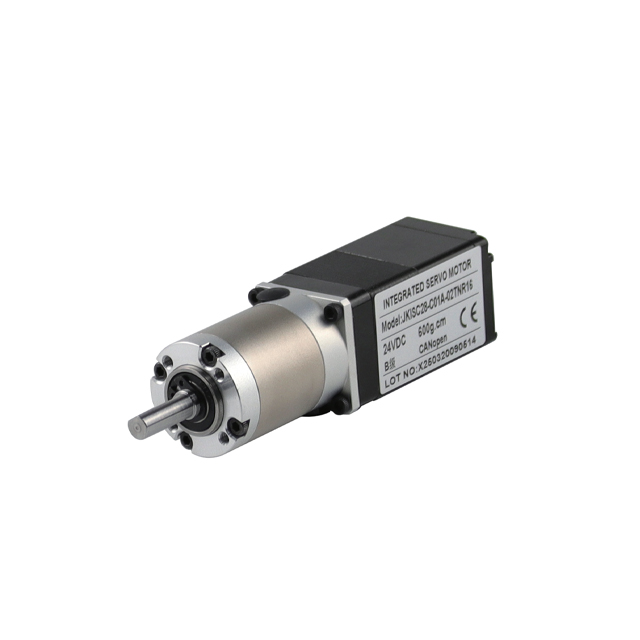
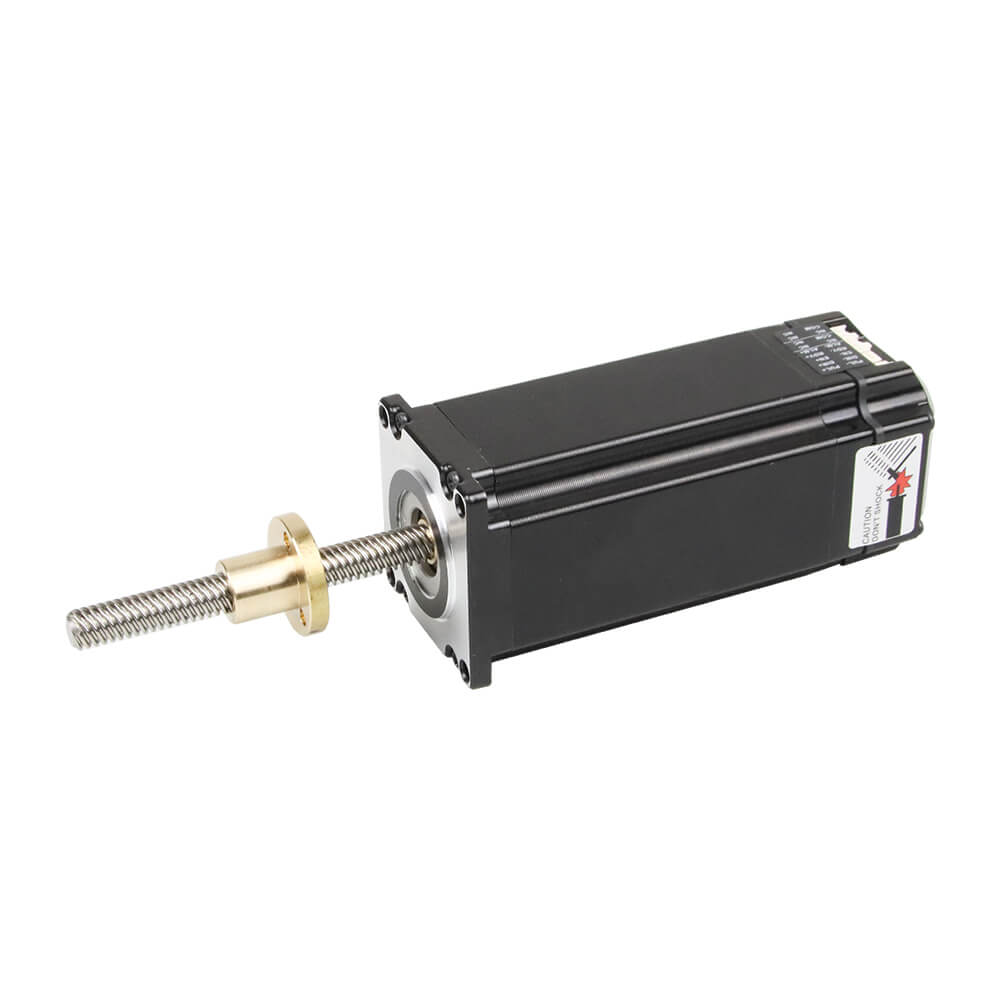
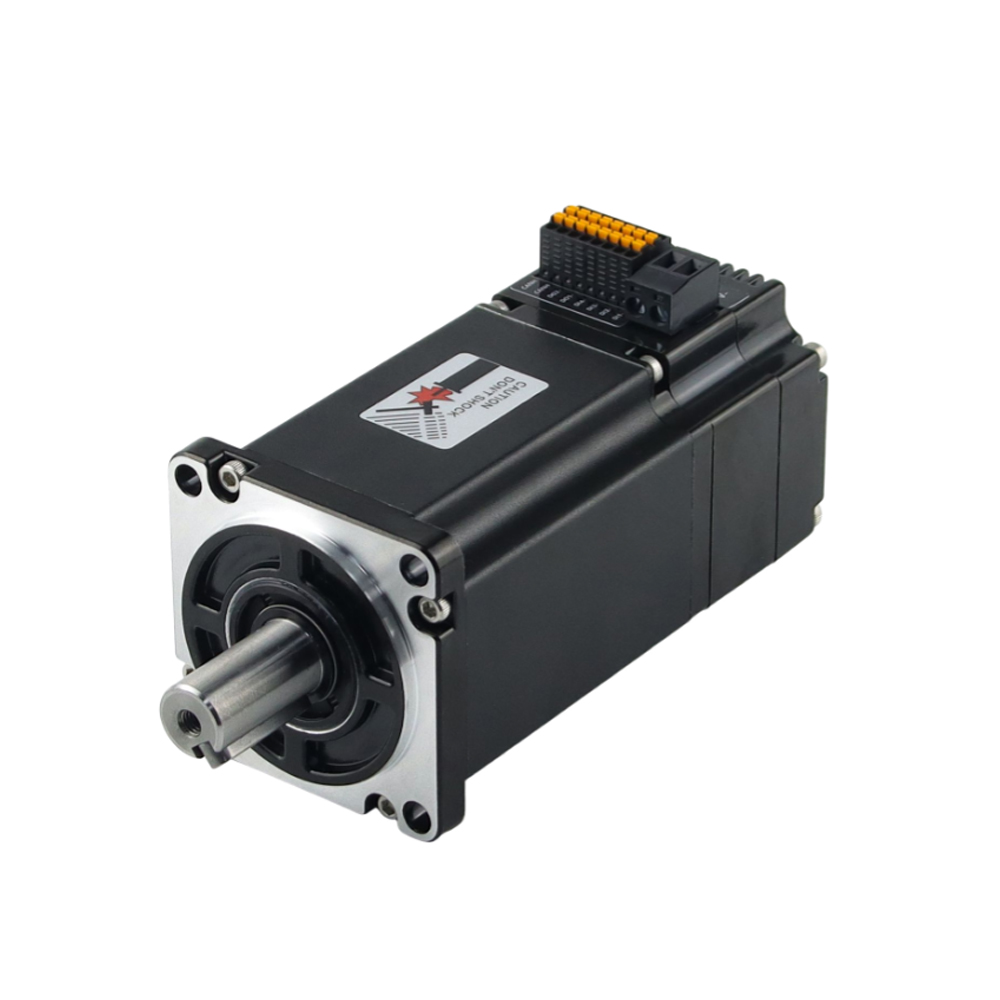
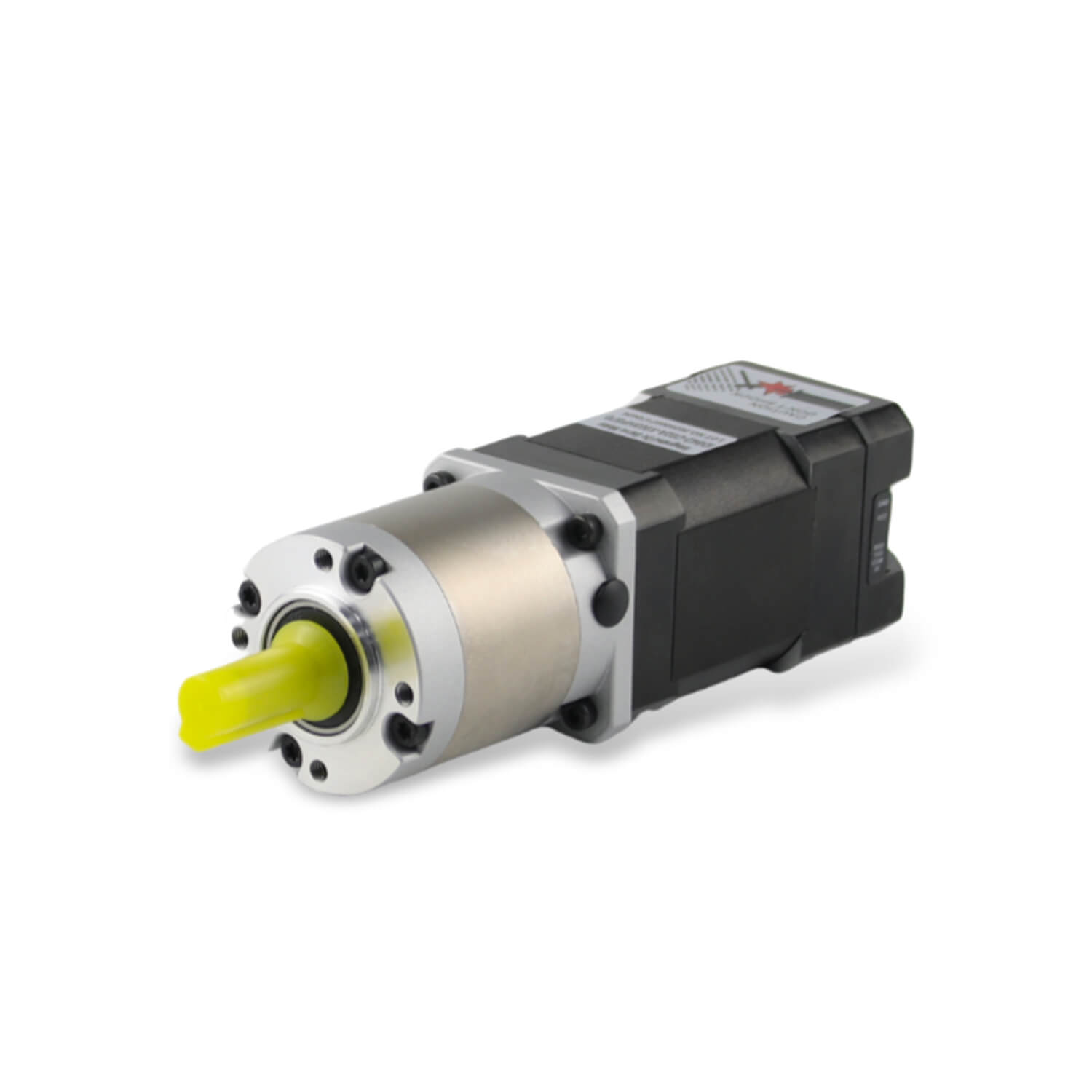
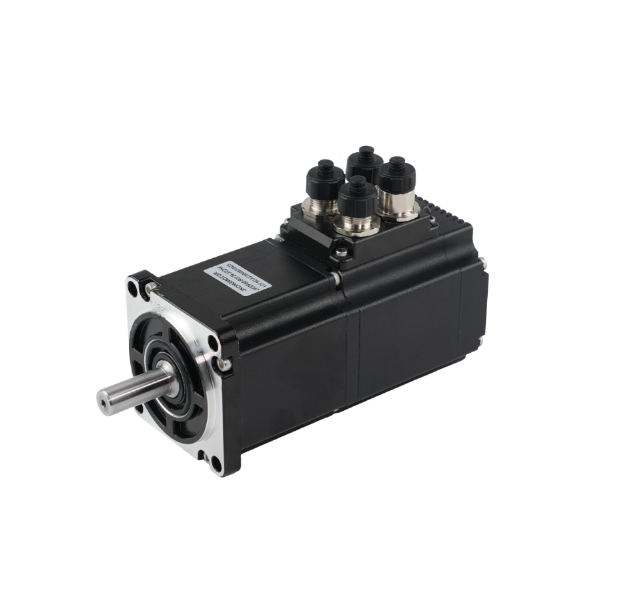
Integrated servo motors combine the servo motor, drive, encoder, and control electronics into a single compact unit. Unlike traditional systems that require separate components and complex wiring, these motors offer a plug-and-play architecture designed for streamlined installation and superior performance.
By consolidating critical elements, we eliminate unnecessary interfaces, reduce latency, and significantly enhance motion control responsiveness—key requirements for high-speed delta robot applications.
Compact Design for Lightweight Delta Robot Structures
In high-speed delta robot systems, structural efficiency directly determines performance limits. We prioritize compact design and weight reduction to ensure that every component contributes to faster motion, higher precision, and improved energy efficiency. Integrated servo motors play a critical role in achieving this by combining multiple functional elements into a single, space-saving unit.
By eliminating the need for separate drives, external controllers, and excessive cabling, we significantly reduce the overall footprint and mass of the motion system. This compact integration allows delta robots to maintain low inertia across moving axes, which is essential for achieving rapid acceleration and deceleration during high-speed pick-and-place operations.
A lighter robot structure translates into several performance advantages:
Higher dynamic responsiveness, enabling faster cycle times
Reduced mechanical stress on joints and linkages
Improved energy efficiency due to lower load requirements
Enhanced stability at high operating speeds
We also optimize motor housing and internal component layout to ensure maximum power density without increasing size. This enables designers to integrate powerful motion control solutions into space-constrained robotic architectures without compromising performance.
Furthermore, the compact nature of integrated servo motors supports streamlined mechanical design, allowing for shorter arm lengths, reduced mounting complexity, and better overall system balance. This is especially important in delta robots, where symmetry and weight distribution directly impact precision and repeatability.
By adopting integrated servo solutions, we enable manufacturers to build lighter, faster, and more efficient delta robots, ensuring optimal performance in applications where every millisecond and every gram matter.
Enhanced Precision and Motion Control Accuracy
High-Resolution Feedback Systems
For high-speed delta robots, achieving micron-level positioning accuracy is essential. Integrated servo motors feature high-resolution encoders and sensors that continuously monitor motor position and speed. This real-time feedback allows the control system to detect even the smallest deviations and make instant adjustments, ensuring consistent precision across every motion cycle.
Closed-Loop Control for Error Correction
Integrated servo motors operate within a closed-loop control system, which constantly compares the commanded position to the actual position. Any discrepancy triggers immediate corrections, reducing overshoot, vibration, and positioning errors. This dynamic error correction enables delta robots to maintain unparalleled repeatability, even at high speeds or under varying payloads.
Optimized Multi-Axis Synchronization
High-speed delta robots rely on the coordinated movement of multiple arms. Integrated servo motors allow precise multi-axis synchronization, ensuring that all robot limbs move in perfect harmony. This is particularly critical for applications requiring simultaneous pick-and-place operations or complex trajectory execution, where even a minor misalignment can compromise throughput and product quality.
Minimized Mechanical Backlash and Signal Interference
By consolidating the motor, drive, and encoder into a single integrated unit, we eliminate external connections and mechanical interfaces that can introduce backlash or signal noise. This reduces latency and increases responsiveness, allowing the robot to execute rapid movements with smooth, stable trajectories and maintain precision across repeated cycles.
Application-Specific Motion Profiles
Integrated servo motors support customized motion profiles tailored to specific tasks, such as high-speed sorting, delicate handling, or rapid packaging operations. These profiles optimize acceleration, deceleration, and trajectory curves, enabling delta robots to achieve high-speed efficiency without sacrificing accuracy or control.
Conclusion
With high-resolution feedback, closed-loop error correction, multi-axis synchronization, and minimized mechanical interference, integrated servo motors provide enhanced precision and motion control accuracy for delta robots. This ensures consistent performance, superior repeatability, and maximum productivity in demanding industrial applications.
Reduced Wiring Complexity and Faster Installation
Traditional servo systems require extensive cabling between the motor, drive, and controller. This not only increases installation time but also introduces potential points of failure.
With integrated servo motors, we simplify the entire setup:
Single-cable or minimal wiring configurations
Elimination of drive-to-motor connections
Reduced electromagnetic interference (EMI)
This streamlined approach leads to faster deployment, lower installation costs, and improved system reliability, which are critical in high-throughput manufacturing environments.
Superior Dynamic Response for High-Speed Operations
Delta robots operate at extremely high speeds, often performing hundreds of pick-and-place cycles per minute. To support such performance, motors must deliver instant torque response and rapid acceleration.
Integrated servo motors excel in this area by offering:
We ensure that the robot responds immediately to control commands, maintaining synchronization and efficiency even under demanding workloads.
Improved Energy Efficiency and Thermal Management
Energy efficiency is a key concern in modern industrial systems. Integrated servo motors are designed to optimize power consumption while maintaining peak performance.
Key advantages include:
Efficient power conversion within the integrated drive
Reduced energy losses from external connections
Advanced thermal management for continuous operation
We enhance system longevity by minimizing heat generation and ensuring stable operation during high-speed, long-duration cycles.
Reliability and Reduced Maintenance Requirements
In high-speed delta robot systems, downtime is costly. Integrated servo motors improve reliability by reducing the number of components and connections that can fail.
We deliver:
Fewer mechanical and electrical interfaces
Sealed, robust motor designs
Lower risk of wiring faults or connection issues
This results in reduced maintenance requirements and longer operational lifespan, ensuring consistent productivity in demanding environments.
Seamless Integration with Advanced Control Systems
Modern delta robots often require integration with PLC systems, industrial networks, and smart manufacturing platforms. Integrated servo motors support a wide range of communication protocols, enabling seamless connectivity.
We support:
EtherCAT, CANopen, Modbus, and other industrial protocols
Real-time data exchange for precise control
Easy integration into Industry 4.0 ecosystems
This allows manufacturers to build intelligent, adaptive automation systems capable of meeting evolving production demands.
Optimized Performance for Pick-and-Place Applications
High-speed delta robots are widely used in pick-and-place operations, where speed, accuracy, and repeatability are critical.
Integrated servo motors enhance these applications by providing:
Smooth motion profiles for delicate handling
High-speed synchronization across multiple axes
Consistent performance under varying loads
We ensure that every movement is executed with precision and efficiency, maximizing throughput while maintaining product quality.
Scalability and Customization for OEM Solutions
In the competitive landscape of industrial automation, OEM manufacturers require motion solutions that are not only high-performing but also highly scalable and customizable. We design integrated servo motors with flexibility at their core, enabling seamless adaptation across a wide range of delta robot configurations and application requirements.
Scalability begins with a modular product architecture. Our integrated servo systems are available in multiple frame sizes, torque ranges, and voltage classes, allowing OEMs to select the optimal configuration for different payloads, speeds, and working envelopes. This ensures that whether the application involves ultra-lightweight pick-and-place tasks or heavier, high-speed operations, the motor solution can be precisely matched to performance demands.
Customization is equally critical for differentiation in the OEM market. We support extensive application-specific customization, including:
Custom torque and speed profiles tailored to unique motion cycles
Encoder options for varying levels of positioning accuracy and feedback resolution
Communication protocols such as EtherCAT, CANopen, or Modbus for seamless system integration
Mechanical adaptations, including shaft design, mounting interfaces, and connector orientation
Integrated safety features to meet industry-specific compliance requirements
We also provide the flexibility to integrate specialized control algorithms that optimize motion performance for specific delta robot applications. This allows OEMs to achieve smoother trajectories, reduced vibration, and enhanced synchronization across multiple axes, even at extremely high speeds.
Another key advantage is the ability to support rapid prototyping and fast time-to-market. With integrated servo motors, we reduce the complexity of system design and validation, enabling OEMs to accelerate development cycles and respond quickly to changing market demands.
In addition, our solutions are engineered for global scalability, supporting standardized designs that can be deployed across different regions while meeting local compliance and operational standards. This is essential for OEMs expanding into international markets.
By combining flexible design, deep customization capabilities, and scalable architecture, we empower OEM manufacturers to build high-performance, application-specific delta robot systems that stand out in both functionality and reliability.
Future-Proof Technology for Advanced Robotics
Integration with Industry 4.0 Systems
Modern delta robots are increasingly expected to operate within smart factories that leverage Industry 4.0 technologies. Integrated servo motors are designed to seamlessly communicate with industrial networks, providing real-time data for predictive maintenance, performance optimization, and adaptive control. By supporting protocols such as EtherCAT, CANopen, and Modbus, these motors enable full integration with PLCs, SCADA systems, and AI-driven automation platforms, ensuring that robotic systems remain compatible with evolving factory architectures.
Advanced Motion Control Algorithms
High-speed delta robots demand precision, speed, and responsiveness under dynamic conditions. Integrated servo motors incorporate advanced motion control algorithms that optimize trajectory planning, acceleration profiles, and synchronization across multiple axes. These intelligent control features allow robots to perform complex pick-and-place tasks with minimal overshoot or vibration, even as production requirements evolve, making the system adaptable to future applications and higher performance standards.
AI-Ready and Smart Diagnostics
Future-ready robotics require components that can adapt, self-monitor, and predict failures before they occur. Integrated servo motors include smart diagnostic capabilities, such as temperature monitoring, torque analysis, and vibration detection. Combined with AI-powered analytics, these features allow manufacturers to optimize operational efficiency, extend motor lifespan, and reduce unplanned downtime, providing a proactive approach to maintenance and system reliability.
Modular and Upgradeable Design
Technology evolves rapidly, and delta robot systems must remain upgradeable without major redesigns. Integrated servo motors offer modular designs, enabling manufacturers to upgrade firmware, replace components, or expand functionality without affecting the core mechanical structure. This future-proof approach ensures that robots remain scalable, adaptable, and competitive over years of operation, accommodating new automation trends and higher-performance requirements.
Enhanced Energy Efficiency and Sustainability
Sustainable manufacturing is a key consideration in advanced robotics. Integrated servo motors are engineered for optimized power consumption, reduced heat generation, and efficient torque delivery, supporting eco-friendly operations without compromising speed or precision. By combining energy efficiency with cutting-edge technology, these motors help factories meet environmental standards while preparing for future energy-conscious automation systems.
Summary
Integrated servo motors provide future-proof technology for high-speed delta robots by combining smart connectivity, advanced motion control, AI diagnostics, modular architecture, and energy efficiency. This ensures that robotic systems remain adaptable, high-performing, and sustainable in the evolving landscape of industrial automation.
Conclusion: The Ultimate Motor Solution for High-Speed Delta Robots
Integrated servo motors represent the ideal solution for high-speed delta robot applications, combining compact design, precision control, high dynamic performance, and simplified integration into a single, powerful unit.
By adopting integrated servo technology, we enable manufacturers to achieve:
Higher operational speeds
Greater positioning accuracy
Reduced system complexity
Improved reliability and efficiency
For industries demanding maximum performance and productivity, Integrated servo motors provide a clear competitive advantage, making them the cornerstone of next-generation delta robot systems.