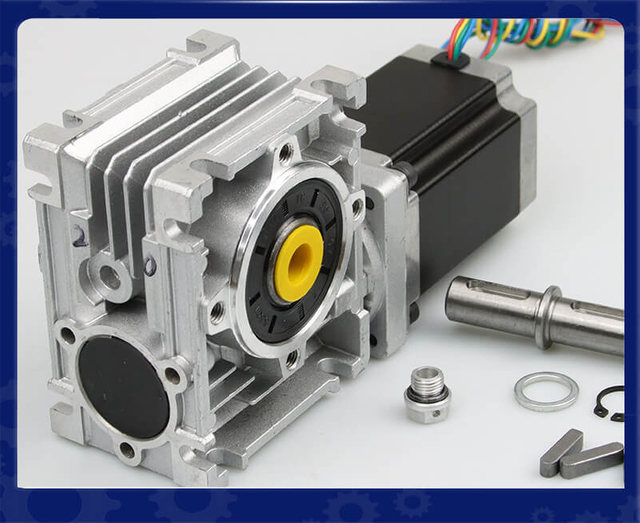
Why Are Energy-Efficient BLDC Motors Essential for 24/7 RGV Operation?
Views: 0 Author: Site Editor Publish Time: 2026-07-16 Origin: Site
Introduction: The Growing Demand for Reliable and Energy-Efficient RGV Drive Systems
Rail Guided Vehicles (RGVs) have become an essential automation solution for modern factories, warehouses, logistics centers, and intelligent manufacturing facilities. These automated transport systems operate continuously to move materials, pallets, containers, and production components between different workstations. As industries move toward 24/7 automated operations, the requirements for RGV performance, reliability, and energy efficiency continue to increase.
At the core of every RGV system is the drive motor, which directly affects transportation efficiency, operating stability, maintenance requirements, and overall energy consumption. Traditional motor solutions may struggle to meet the demands of continuous operation due to higher power losses, frequent maintenance requirements, and limited thermal management capabilities.
Energy-efficient brushless DC motors (BLDC motors) have become a preferred choice for modern RGV applications because they provide high efficiency, long service life, precise motion control, and excellent reliability during nonstop operation. By combining advanced electromagnetic design, electronic commutation, and intelligent control technology, BLDC motors help RGV systems achieve stable performance while reducing energy costs and maintenance downtime.
The Role of BLDC Motors in 24/7 RGV Operation
A Rail Guided Vehicle (RGV) relies on a precise and reliable drive system to perform repetitive transportation tasks with high accuracy. Unlike manually operated vehicles, RGVs often run continuously throughout the day, requiring motors that can withstand thousands of operating cycles without performance degradation.
The BLDC motor serves as the primary power source responsible for:
Driving the RGV along the rail track
Maintaining accurate speed control
Providing smooth acceleration and deceleration
Handling frequent start-stop movements
Supporting high-load transportation requirements
For continuous automation environments, motor efficiency is not only related to electricity consumption but also affects heat generation, component lifespan, and system reliability.
An inefficient motor can create excessive heat, increase energy waste, accelerate mechanical wear, and reduce the availability of the entire RGV system. In contrast, high-efficiency BLDC motors provide optimized power conversion and stable operation for long-duration industrial applications.
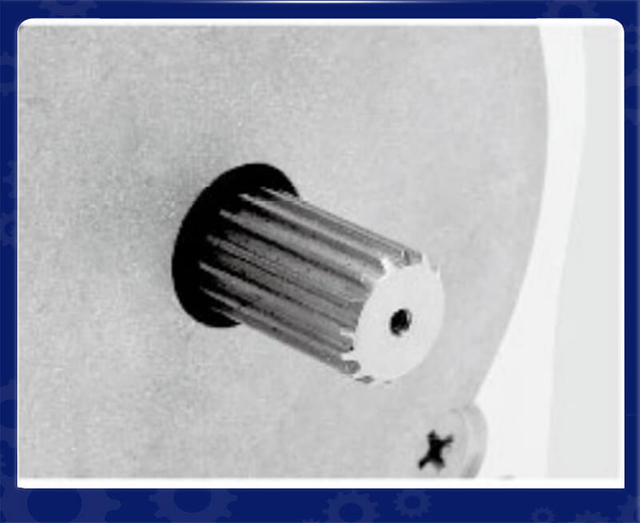
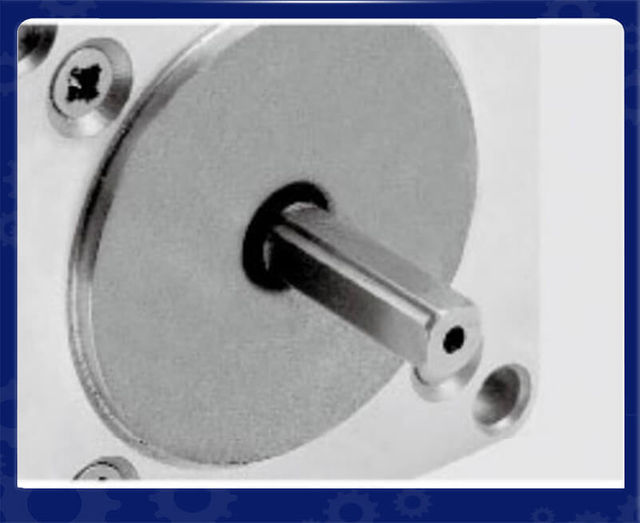
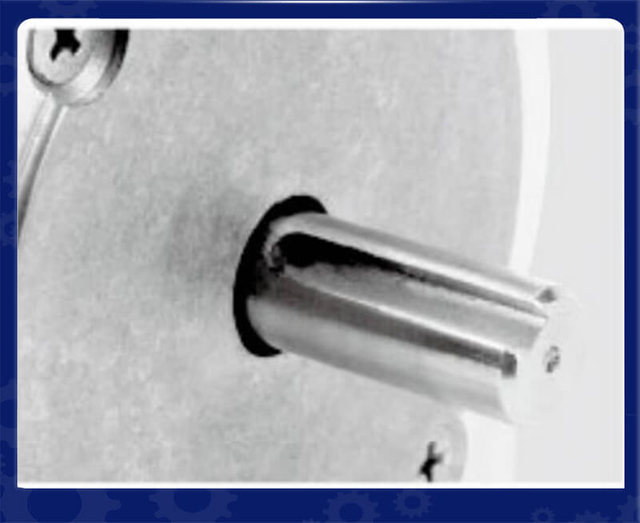
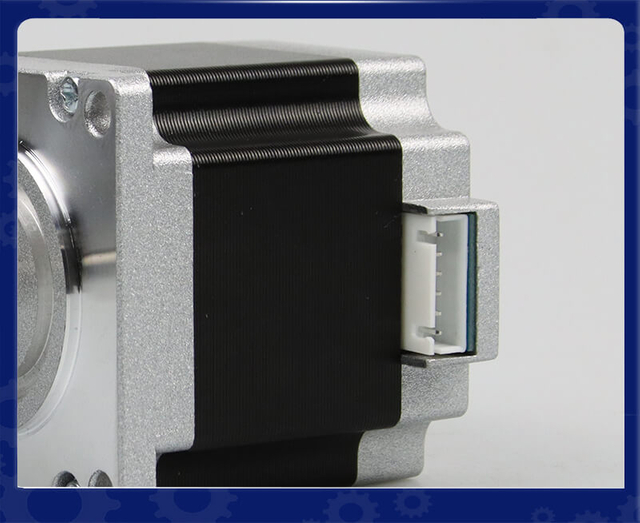
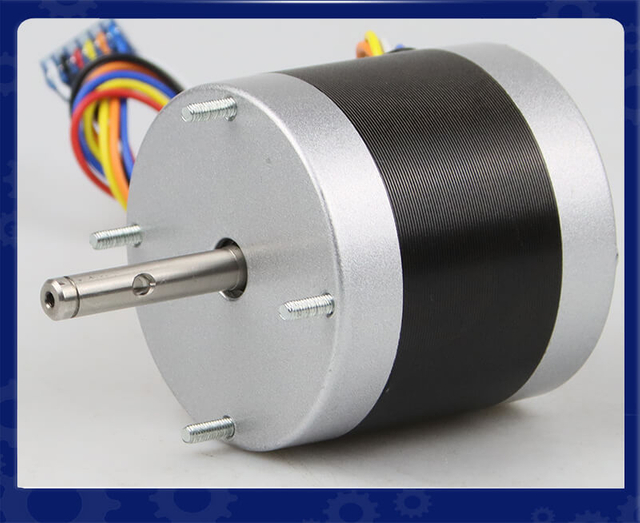
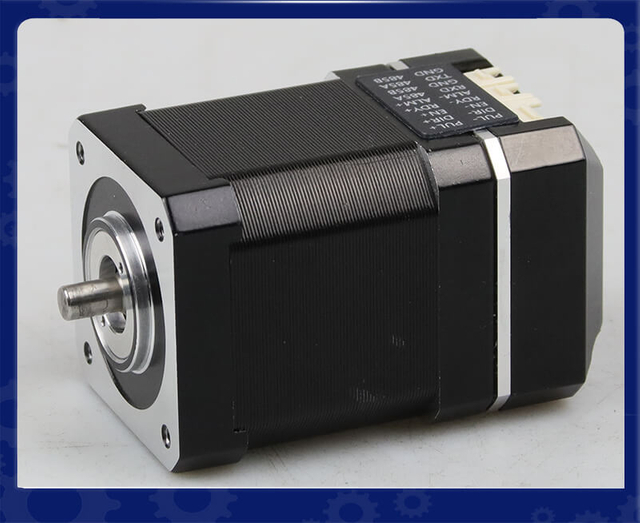
60BLS01 BLDC Motor — Compact, Intelligent, and Reliable Brushless Motor Drive System
Product Overview:The NEMA24 BF60BLS Brushless DC Motor is a compact, high-efficiency motor designed for precision motion applications. Featuring reliable performance, low noise operation, and excellent speed control, it provides stable power output for automation equipment, robotics, medical devices, and other space-constrained systems requiring efficient and durable motion solutions.
Key Technical Highlights
Compact NEMA 24 Frame Size: Provides a space-saving design while delivering reliable torque output for compact automation and motion systems.
High Efficiency Brushless Design: Ensures low energy consumption, reduced heat generation, and longer service life compared with traditional brushed motors.
Low Noise & Smooth Operation: Optimized electromagnetic design enables stable rotation and quiet performance for precision applications.
Excellent Speed Control Capability: Supports accurate speed regulation and responsive dynamic performance for various motion requirements.
Durable & Maintenance-Free Operation: The brushless structure eliminates brush wear, improving reliability and reducing maintenance needs.
Wide Application Flexibility: Suitable for robotics, automation equipment, medical devices, and other compact motion control systems.
Typical Applications
Robotics and Automation Equipment – Provides precise and stable driving power for robotic mechanisms and automated systems.
Medical Devices – Suitable for compact medical instruments requiring quiet, reliable, and maintenance-free operation.
Laboratory and Testing Equipment – Delivers smooth speed control and consistent performance for precision motion applications.
3D Printers and CNC Equipment – Supports efficient and stable movement in compact manufacturing systems.
BF60BLS Series Integrated Brushless Dc Motor Parameters
Why Energy Efficiency Matters for Continuous RGV Applications
1. Lower Energy Consumption During 24/7 Operation
One of the biggest advantages of energy-efficient BLDC motors is their ability to reduce electricity consumption during continuous operation.
RGVs used in automated warehouses or production lines may operate:
16 to 24 hours per day
Hundreds of days per year
Thousands of motion cycles annually
Even small improvements in motor efficiency can create significant energy savings over the entire operating lifetime.
Traditional brushed DC motors and some conventional drive systems experience energy losses caused by:
Brush friction
Mechanical commutation losses
Increased electrical resistance
Heat generation
BLDC motors eliminate mechanical brushes and use electronic commutation, allowing electrical energy to be converted into mechanical power more efficiently.
Higher motor efficiency means:
Reduced electricity costs
Lower operating expenses
Improved sustainability
Reduced carbon emissions
For large-scale logistics facilities operating dozens or hundreds of RGVs, the energy savings can become a major competitive advantage.
2. Superior Thermal Management for Long-Term Operation
Heat is one of the biggest challenges in continuous motor applications. When a motor operates for extended periods, excessive temperature rise can reduce efficiency and shorten component lifespan.
Energy-efficient BLDC motors generate less heat because of their improved electrical efficiency and optimized internal structure.
Compared with traditional motors, BLDC motors offer:
Lower copper losses
Reduced friction losses
Better heat dissipation
More stable temperature performance
This is especially important for RGV systems operating in:
Automated warehouses
Smart factories
Cold storage facilities
Clean manufacturing environments
Stable thermal performance allows the motor to maintain consistent torque output even during long working periods.
3. Longer Service Life and Reduced Maintenance Requirements
In a 24/7 automation environment, unexpected downtime can result in significant production losses. Therefore, RGV systems require components with high reliability and minimal maintenance requirements.
A major advantage of brushless DC motors is the elimination of carbon brushes.
Traditional brushed motors require regular maintenance because brushes gradually wear during operation. This can lead to:
Reduced motor performance
Electrical contact problems
Increased maintenance frequency
Unexpected system shutdowns
BLDC motors use electronic commutation instead of physical brushes, significantly improving durability.
The maintenance advantages include:
Longer operating lifespan
Reduced replacement frequency
Lower maintenance costs
Improved system availability
For industrial RGV applications, this reliability directly supports uninterrupted production and logistics operations.
4. Precise Speed and Position Control for Intelligent RGV Systems
Modern RGV systems require more than simple movement. They must achieve accurate positioning, smooth transportation, and intelligent coordination with automated equipment.
Energy-efficient BLDC motors can integrate with advanced controllers and sensors to provide:
Accurate speed regulation
High dynamic response
Smooth acceleration and braking
Precise positioning control
Many advanced RGV systems use integrated BLDC servo motors, which combine:
Brushless DC motor
Servo drive
Encoder feedback
Motion controller interface
This integrated design reduces wiring complexity and improves system response.
For applications requiring precise material handling, such as automotive production lines or semiconductor manufacturing, accurate motor control is essential for maintaining workflow efficiency.
5. Compact Design for Space-Limited RGV Structures
Industrial automation equipment continues to become smaller and more flexible. RGV manufacturers often need compact drive solutions that deliver high performance while minimizing installation space.
Energy-efficient BLDC motors provide high power density due to their optimized electromagnetic design.
Advantages include:
Smaller motor size
Reduced system weight
Easier mechanical integration
Improved vehicle design flexibility
For compact RGV platforms, especially those used in high-density warehouses, a smaller and lighter motor system allows more efficient vehicle design without sacrificing performance.
How BLDC Motor Technology Improves RGV Reliability
Unlike traditional brushed motors, BLDC motors use electronic controllers to manage current switching. This eliminates mechanical contact wear and provides more accurate control of motor operation.
The electronic commutation system enables:
Faster response
Lower electrical losses
Improved efficiency
Stable torque output
This makes BLDC motors suitable for repetitive and demanding RGV motion cycles.
High Torque Performance for Heavy Material Transportation
RGVs often need to transport heavy loads while maintaining stable movement. The motor must provide sufficient torque during:
Vehicle startup
Acceleration
Inclined track movement
Heavy payload transportation
BLDC motors deliver high torque density, allowing RGV systems to achieve reliable traction performance without requiring oversized motors.
When combined with a suitable gearbox, BLDC motors can provide:
Higher output torque
Better load handling capability
Smooth low-speed operation
Why Integrated BLDC Servo Motors Are Ideal for Advanced RGV Systems
Modern Rail Guided Vehicle (RGV) systems are becoming increasingly important in automated warehouses, smart factories, automotive production lines, and intelligent logistics environments. As industries demand faster, more accurate, and more reliable material transportation, traditional motor solutions are often unable to meet the requirements of continuous operation and precise motion control.
To achieve higher efficiency and better system performance, many advanced RGV manufacturers are adopting integrated BLDC servo motors as the preferred drive solution. By combining a brushless DC motor, servo driver, encoder, and control electronics into a single compact unit, integrated BLDC servo motors simplify system design while improving motion accuracy, energy efficiency, and operational reliability.
The main components typically include:
Brushless DC motor: Provides efficient mechanical power output
Servo driver: Controls current, torque, speed, and position
Encoder: Provides real-time feedback for closed-loop control
Controller interface: Enables communication with PLCs or industrial control systems
This all-in-one design makes integrated BLDC servo motors especially suitable for compact and intelligent RGV platforms.
1. Simplified RGV System Design and Installation
One of the biggest advantages of integrated BLDC servo motors is their ability to simplify RGV system architecture.
Traditional motor solutions require additional components such as external drives, signal cables, and power connections. This increases:
System complexity
Installation time
Wiring requirements
Potential failure points
Integrated BLDC servo motors combine these components into a single unit, reducing the number of external connections required.
For RGV manufacturers, this means:
Faster system integration
Smaller electrical cabinets
Cleaner wiring layout
Reduced engineering costs
In modern automated logistics systems where multiple RGV units operate simultaneously, simplified installation can significantly improve production efficiency.
2. Precise Motion Control for Intelligent RGV Operation
RGV systems require accurate movement to ensure materials are delivered to the correct locations. Positioning errors can interrupt production processes and reduce automation efficiency.
Integrated BLDC servo motors provide closed-loop control through built-in encoder feedback.
The encoder continuously monitors:
Motor position
Rotation speed
Direction
Load changes
The servo controller adjusts motor performance in real time to maintain accurate movement.
This allows RGV systems to achieve:
Precise positioning
Smooth acceleration and deceleration
Stable low-speed operation
Fast response to control commands
For applications such as automotive assembly lines, semiconductor manufacturing, and automated warehouses, precise motion control is essential for maintaining continuous production.
3. Higher Energy Efficiency for 24/7 RGV Operation
RGVs often operate continuously throughout the day, making energy efficiency a critical factor.
Integrated BLDC servo motors improve energy utilization through:
High-efficiency brushless motor design
Optimized current control
Reduced electrical losses
Intelligent load adjustment
Compared with traditional brushed motors, BLDC motors eliminate mechanical brush friction and reduce energy waste caused by contact losses.
The servo controller can also regulate motor output according to actual operating conditions, preventing unnecessary power consumption during low-load movement.
For large-scale logistics facilities operating hundreds of RGV cycles daily, improved motor efficiency can lead to significant energy savings.
4. Compact Structure Saves Valuable Installation Space
Space optimization is becoming increasingly important in modern automation equipment.
RGVs require compact drive systems because available installation space is often limited. External servo drives and complicated wiring systems can increase vehicle size and reduce design flexibility.
Integrated BLDC servo motors provide:
Compact mechanical design
High power density
Reduced component count
Flexible installation options
The smaller footprint allows engineers to design more compact RGV platforms while maintaining excellent driving performance.
This advantage is particularly valuable for:
High-density warehouse systems
Cleanroom transport robots
Miniature RGV platforms
Automated production equipment
5. Faster Response and Better Dynamic Performance
RGVs frequently perform start-stop movements, acceleration, braking, and direction changes. These operations require motors with fast response capability.
Integrated BLDC servo motors provide excellent dynamic performance through:
Real-time feedback control
High-speed current regulation
Precise torque management
The servo system can quickly adjust motor output when load conditions change.
This helps RGVs achieve:
Faster acceleration
Smoother movement
Reduced vibration
Improved transportation efficiency
For high-speed automated logistics applications, faster motor response directly improves overall system productivity.
6. Easy Integration with Industrial Automation Networks
Modern RGV systems are part of larger intelligent manufacturing ecosystems. They need to communicate with:
PLC systems
Warehouse Management Systems (WMS)
Manufacturing Execution Systems (MES)
Industrial controllers
Integrated BLDC servo motors can support various communication interfaces, allowing seamless connection with automation networks.
Common communication options include:
CANopen
RS485
Modbus
EtherCAT
Through intelligent communication, operators can monitor motor status, adjust parameters, and perform fault diagnostics remotely.
Integrated BLDC Servo Motors vs Traditional RGV Drive Solutions
Feature
Traditional Motor System
Integrated BLDC Servo Motor
Motor and driver
Separate components
Integrated design
Wiring complexity
High
Reduced
Installation space
Larger
Compact
Control accuracy
Depends on external system
High closed-loop control
Maintenance
More components to maintain
Lower maintenance
Energy efficiency
Moderate
Higher efficiency
System integration
More complex
Easier integration
The integrated design provides clear advantages for next-generation RGV systems that require efficiency, precision, and reliability.
Summary
As industries continue moving toward intelligent automation and continuous operation, RGV systems require more advanced motion solutions. Integrated BLDC servo motors are ideal for advanced RGV systems because they combine high efficiency, precise control, compact design, and reliable performance into one intelligent drive unit.
By reducing system complexity, improving energy utilization, and enabling accurate motion control, integrated BLDC servo motors help RGV manufacturers build smarter and more efficient transportation systems.
For modern factories and automated logistics environments requiring 24/7 operation, low maintenance, and high positioning accuracy, integrated BLDC servo motors provide a powerful and future-ready solution.
Applications of Energy-Efficient BLDC Motors in RGV Systems
Energy-efficient BLDC motors are widely used in various RGV applications, including:
Automated Warehouses
RGVs transport pallets and goods between storage locations and picking stations. Energy-efficient motors help reduce operating costs while maintaining continuous availability.
Automotive Manufacturing Lines
Automotive factories rely on RGVs for moving components between assembly processes. Precise motor control ensures smooth and accurate transportation.
Smart Factories
Industry 4.0 facilities require intelligent logistics systems. BLDC motors support flexible automation with reliable motion performance.
Cleanroom Transportation Systems
Semiconductor and electronics industries require low-maintenance and highly reliable drive systems. BLDC motors provide stable operation with minimal maintenance requirements.
Choosing the Right BLDC Motor for 24/7 RGV Operation
When selecting a BLDC motor for RGV applications, engineers should consider several key factors:
Selecting the right BLDC motor for Rail Guided Vehicle (RGV) systems is essential for achieving reliable, energy-efficient, and continuous operation. Since RGVs often run for long hours in automated warehouses, smart factories, and production lines, the motor must provide stable performance, precise control, and long service life.
A suitable brushless DC motor can improve RGV efficiency, reduce maintenance requirements, and ensure smooth material transportation during 24/7 operation.
1. Consider the RGV Load Requirements
The first step in selecting a BLDC motor is determining the required torque and power output.
RGV applications involve different payload conditions, from lightweight transport systems to heavy industrial material handling. The motor must provide enough torque for:
Vehicle startup
Acceleration
Continuous movement
Heavy-load transportation
Choosing a motor with insufficient torque may cause overheating, reduced efficiency, or unstable operation. A properly matched BLDC motor ensures reliable traction and longer service life.
2. Evaluate Continuous Operation Capability
Because many RGV systems operate around the clock, the motor must be designed for long-term running conditions.
Key factors include:
High motor efficiency
Low heat generation
Good thermal management
Durable internal components
Energy-efficient BLDC motors reduce power losses compared with traditional brushed motors, making them suitable for demanding 24/7 industrial environments.
3. Select the Appropriate Speed and Control Performance
RGV systems require accurate speed regulation and smooth movement. The motor should support precise control during:
Starting
Stopping
Acceleration
Deceleration
Position adjustment
For applications requiring higher accuracy, an integrated BLDC servo motor with encoder feedback can provide closed-loop control for improved positioning and response.
4. Check Motor Size and Installation Space
RGV designs often have limited space for drive components. A compact motor solution helps reduce vehicle size while maintaining performance.
Integrated BLDC servo motors combine:
Motor
Driver
Encoder
Control electronics
into one compact unit, simplifying installation and reducing wiring complexity.
5. Consider Environmental Conditions
The working environment affects motor selection. Engineers should evaluate:
Temperature range
Dust and moisture exposure
Operating cycle frequency
Protection requirements
For industrial RGV applications, motors with suitable protection levels and reliable construction help maintain stable performance.
6. Ensure Compatibility with Control Systems
Modern RGVs are part of intelligent automation networks, so the BLDC motor should support easy integration with control systems.
Important features include:
Communication interfaces
Encoder feedback
Fault monitoring
Parameter adjustment
These functions allow better system management and improve operational reliability.
Final:
Choosing the right BLDC motor for 24/7 RGV operation requires careful consideration of torque, efficiency, control accuracy, installation space, and environmental conditions.
A high-performance energy-efficient BLDC motor or integrated BLDC servo motor can help RGV systems achieve continuous operation, lower maintenance costs, and improved automation efficiency in modern industrial applications.
Conclusion: BLDC Motors Enable Efficient and Reliable 24/7 RGV Automation
As automated logistics and intelligent manufacturing continue to expand, RGV systems require drive solutions that can deliver continuous operation with minimal energy consumption and maintenance.
Energy-efficient BLDC motors are essential for 24/7 RGV operation because they provide higher efficiency, lower heat generation, longer service life, precise control, and reliable performance.
By adopting advanced BLDC motor technology, RGV manufacturers and automation engineers can create transportation systems that are more efficient, cost-effective, and dependable for modern industrial environments.
The combination of high-performance BLDC motors, intelligent servo control, and optimized system integration provides the foundation for the next generation of smart automated transportation solutions.
FAQs
Q1: Why are energy-efficient BLDC motors essential for 24/7 RGV operation?
Answer: Energy-efficient BLDC motors are essential for 24/7 RGV operation because they provide high efficiency, low heat generation, and reliable continuous performance. For Rail Guided Vehicles running around the clock, energy-efficient motors help reduce power consumption, lower operating costs, and maintain stable motion performance. Leanmotor’s BLDC motor solutions are designed with optimized electromagnetic structures and advanced control technology to support long-term industrial automation applications.
Q2: How do BLDC motors improve the reliability of RGV systems?
Answer: BLDC motors improve RGV reliability by eliminating mechanical brushes and using electronic commutation technology, which reduces wear and maintenance requirements. Compared with traditional brushed motors, BLDC motors offer longer service life, better thermal performance, and more stable operation. Leanmotor provides reliable BLDC motor solutions that help RGV systems achieve continuous operation with reduced downtime.
Q3: What advantages do BLDC motors provide for continuous RGV operation?
Answer: For continuous RGV operation, BLDC motors provide several advantages, including high energy efficiency, precise speed control, compact design, and excellent torque performance. These features allow RGVs to handle frequent start-stop cycles and heavy transportation tasks while maintaining smooth and efficient movement. Leanmotor’s BLDC motors are suitable for automated warehouses, smart factories, and industrial logistics systems requiring 24/7 operation.
Q4: How do energy-efficient BLDC motors reduce operating costs in RGV applications?
Answer: Energy-efficient BLDC motors reduce RGV operating costs by minimizing electrical losses and improving overall system efficiency. Lower energy consumption reduces electricity expenses, while the brushless design decreases maintenance frequency and replacement costs. Leanmotor’s energy-efficient motor solutions help manufacturers improve the long-term economic performance of automated transportation systems.
Q5: How should we choose the right BLDC motor for a 24/7 RGV system?
Answer: Choosing the right BLDC motor for a 24/7 RGV system requires evaluating factors such as load capacity, torque requirements, operating speed, installation space, control accuracy, and working environment. For applications requiring precise positioning and intelligent control, an integrated BLDC servo motor with encoder feedback can provide improved performance. Leanmotor offers customizable BLDC motor solutions to meet different RGV automation requirements.