Understanding the differences between ball screws and linear screws is essential for engineers, machine designers, and automation professionals who require precise, efficient, and reliable linear motion. In high-performance machinery—such as CNC equipment, robotics, semiconductor systems, and industrial automation—selecting the proper screw mechanism directly affects positioning accuracy, load capacity, efficiency, and long-term durability.
This comprehensive guide provides a detailed comparison covering design principles, operating characteristics, performance advantages, and ideal application scenarios. With this information, choosing the right motion system for your application becomes significantly easier and more effective.
Ball Screw vs. Linear Screw: Understanding the Core Distinction
The core distinction between a ball screw and a linear screw (also known as a lead screw) lies in the type of motion transfer and friction mechanism used to convert rotary motion into linear motion.
1. Ball Screw: Rolling Contact Mechanism
A ball screw operates using recirculating ball bearings between the nut and the screw shaft.
These hardened balls roll smoothly within precisely machined grooves.
Key characteristics:
Uses rolling friction, not sliding friction
Offers very high efficiency (up to 90–95%)
Provides low backlash and high precision
Supports high speeds and heavy loads
Requires lubrication and a clean operating environment
Because the balls roll instead of slide, the motion is extremely smooth, energy loss is minimal, and wear occurs very slowly.
2. Linear Screw (Lead Screw): Sliding Contact Mechanism
A linear screw works through sliding contact between the screw shaft and the nut.
The nut is usually made of materials such as bronze, acetal, or PTFE-filled polymers.
Key characteristics:
Uses sliding friction, producing more drag
Has lower mechanical efficiency (20–70%)
Often self-locking, preventing back-driving
Operates quietly, especially with polymer nuts
Requires minimal maintenance and is more cost-effective
Because the motion relies on sliding, lead screws produce more heat, experience faster wear, and are less suited for high-speed applications.
Core Difference Summarized
| Feature | Ball Screw | Linear Screw (Lead Screw) |
| Friction Type | Rolling (balls) | Sliding (nut and screw) |
| Efficiency | Very high | Moderate to low |
| Precision | High | Moderate |
| Backlash | Very low | Higher, unless compensated |
| Speed Capability | High | Low to moderate |
| Load Capacity | High | Moderate |
| Self-locking | No | Yes (in many designs) |
| Maintenance | Requires lubrication | Low maintenance |
| Cost | Higher | Lower |
Why This Distinction Matters
The rolling vs. sliding mechanism determines:
How much torque the motor needs
How fast the system can move
How much load the screw can handle
How long the system lasts
Whether the system can hold a load without back-driving
By understanding the contact mechanism, engineers can select the right screw type for performance, cost, and durability requirements.
Ball Screw Overview: High Efficiency and Precision Through Rolling Contact
Design and Mechanism
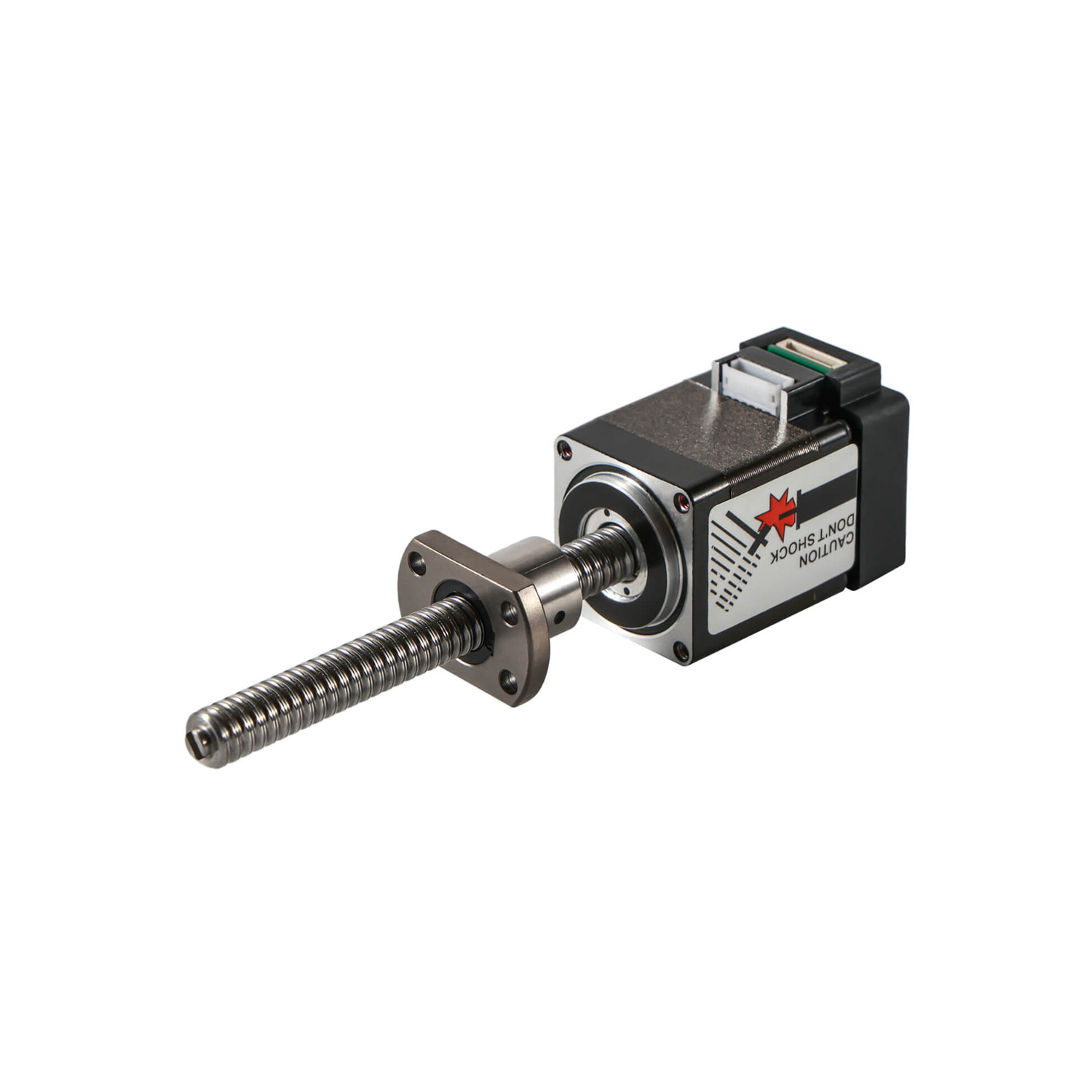
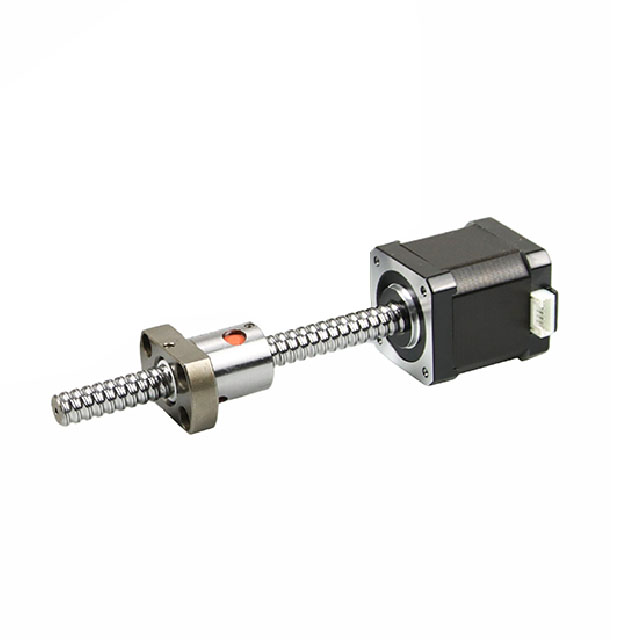
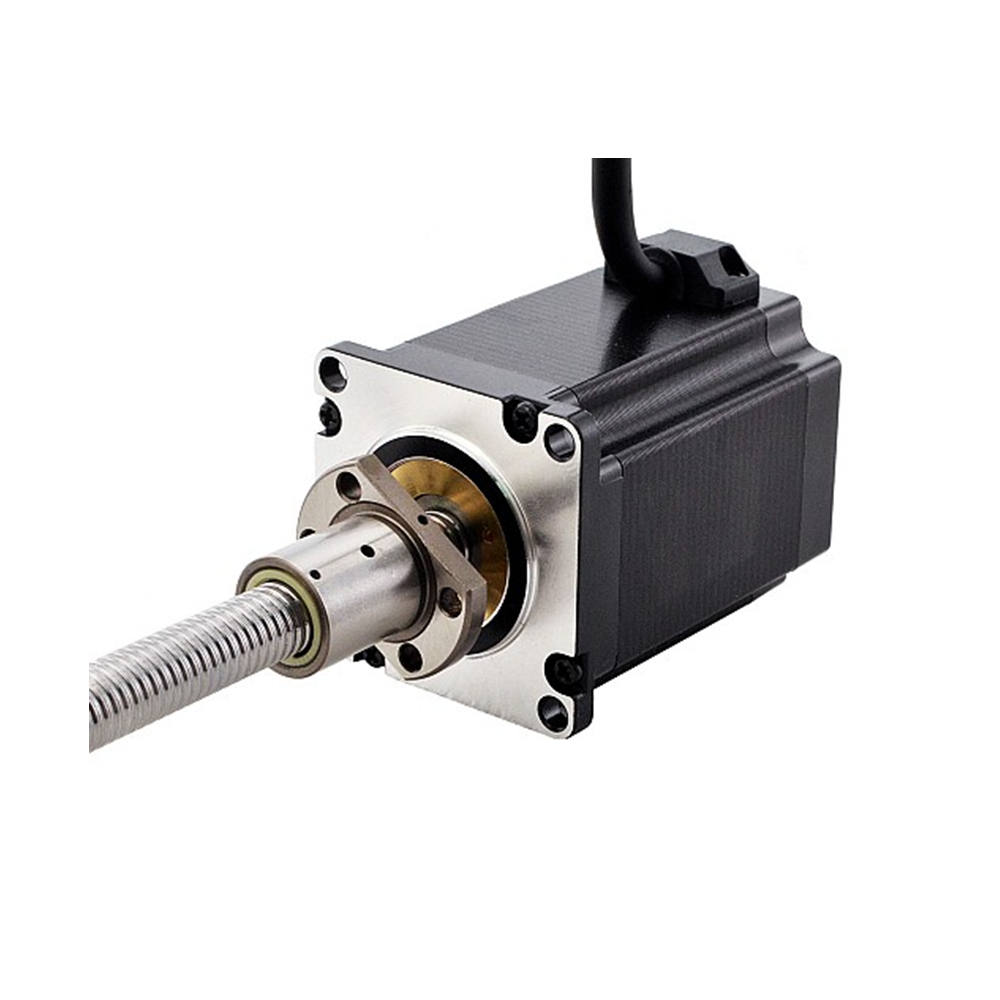
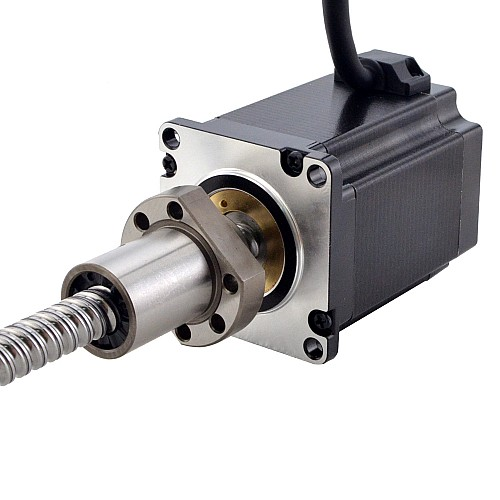
Ball screws feature a threaded shaft and a ball nut containing precisely machined grooves that form a continuous ball circulation channel. Hardened steel balls roll between the grooves, creating a low-friction interface.
Key Performance Characteristics
High Mechanical Efficiency (≥90%) due to rolling motion
Exceptional Positioning Accuracy suitable for precision CNC and robotic systems
Minimal Backlash with preloaded ball nuts
High Load Capacity, both dynamic and static
Smooth, Silent Motion at high speeds
Long Service Life under heavy or continuous use
Advantages
Ideal for fast, accurate linear motion
Reduced heat generation
High repeatability
Excellent for servo-driven systems requiring rapid acceleration
Limitations
Higher cost compared to lead screws
Requires regular lubrication
More sensitive to contamination
Can back-drive without braking or locking mechanisms
Linear Screw (Lead Screw) Overview: Simple, Quiet, and Cost-Effective Motion
Design and Mechanism
A linear screw relies on sliding friction between the screw shaft and the nut. Materials such as bronze or self-lubricating polymers (like PTFE-filled resins) minimize wear.
Key Performance Characteristics
Lower Mechanical Efficiency (20–70%)
Quiet Operation, especially with polymer nuts
Self-Locking Capabilities preventing back-driving
Simplified Maintenance
Cost-Effective Manufacturing and Replacement
Advantages
Great for vertical lifting applications
Quiet and smooth
Excellent for moderate-load, low-speed systems
Ideal for environments with contamination, moisture, or inconsistent maintenance schedules
Limitations
Lower efficiency results in energy loss
Generates more heat
Less suitable for continuous high-speed motion
Lower precision and higher potential for wear-induced backlash
Detailed Comparison: Ball Screw vs. Linear Screw
To choose the optimal motion system, it’s essential to compare critical engineering parameters.
1. Friction and Efficiency
Ball Screw: Extremely low friction (rolling), up to 95% efficiency
Linear Screw: Higher friction (sliding), 20–70% efficiency
Impact: Ball screws require less torque, support faster response, and reduce motor size requirements.
2. Load Capacity and Durability
Impact: Ball screws dominate in heavy machinery, whereas linear screws excel in simpler, lighter-duty designs.
3. Precision and Backlash
Impact: Precision manufacturing, metrology tools, and robotics typically favor ball screws.
4. Noise Levels
Impact: Consumer devices and medical equipment often prefer linear screws for quiet operation.
5. Speed and Acceleration Capability
Impact: CNC machines, high-speed gantries, and pick-and-place systems rely on ball screws.
6. Maintenance Requirements
Ball Screw: Requires lubrication and cleanliness
Linear Screw: Minimal maintenance, especially with self-lubricating nuts
Impact: Applications in dusty, wet, or inaccessible environments benefit from linear screws.
7. Cost Differences
Ball Screw: Higher overall cost due to precision manufacturing
Linear Screw: Affordable, simple, and cost-friendly to replace
Impact: Budget-sensitive applications or non-critical motion systems often choose linear screws.
Which Should You Choose? Application-Based Recommendations
Choosing between a ball screw and a linear screw (lead screw) depends on your application’s requirements for speed, precision, load capacity, maintenance, environment, and cost. Each screw type is engineered for different performance priorities, so selecting the right one ensures optimal efficiency and long-term reliability.
Choose a Ball Screw When You Need High Precision and Performance
A ball screw is the ideal choice for applications that demand accuracy, repeatability, high speed, and long service life. Its rolling-ball mechanism provides extremely low friction, making it suitable for heavy-duty and high-performance environments.
Best for applications that require:
High position accuracy
Low backlash or preload capability
High-speed linear motion
High-duty cycles or continuous operation
Heavy axial loads
Smooth, efficient movement
Common Ball Screw Applications:
CNC milling machines and lathes
Robotic arms and automation systems
Aerospace testing equipment
Semiconductor manufacturing tools
High-precision inspection systems
Pick-and-place machines
Medical imaging devices (CT, MRI positioning)
If the job demands fast, accurate, and reliable linear motion, a ball screw is almost always the superior choice.
Choose a Linear Screw (Lead Screw) When You Need Simplicity and Reliability
A linear screw is the best option for systems that require quiet operation, low maintenance, moderate loads, and cost efficiency. The sliding contact mechanism also makes many lead screws naturally self-locking, which prevents back-driving and is valuable for vertical lifting.
Best for applications that require:
Quiet, smooth motion
Low-to-moderate speed operation
Self-locking capability for safety
Minimal or zero maintenance
Simple, cost-effective design
Resistance to contaminants or harsh environments
Common Linear Screw Applications:
Medical and laboratory equipment
3D printers and small actuators
Consumer electronics and home automation
Packaging machines
Adjustable desks, hospital beds, and lifts
Instrumentation and measuring devices
Light-duty positioning systems
If cost, simplicity, and low-noise operation matter more than extreme precision or speed, a lead screw is usually the better fit.
Summary: Quick Selection Guide
Choose a Ball Screw if you need:
Choose a Linear Screw if you need:
Future Trends in Linear Motion Technology
Both ball screws and linear screws continue to evolve with modern engineering demands.
Advanced Coatings and Materials
Self-lubricating polymers, ceramic-coated shafts, and advanced bearing steels improve service life and reduce noise.
Smart Motion Systems
Integrated sensors for preload monitoring, wear detection, and predictive maintenance enhance reliability.
Hybrid Solutions
Manufacturers now offer precision lead screws and quiet ball screws, narrowing the gap between the two technologies.
Final Thoughts
Selecting between a ball screw and a linear screw requires analyzing your application’s speed, precision, load, maintenance, and cost requirements. Ball screws deliver superior efficiency, accuracy, and performance, while linear screws offer cost-effective, quiet, and maintenance-friendly operation.
Both systems play vital roles in modern automation, and choosing the right one ensures long-term reliability and optimal machine performance.