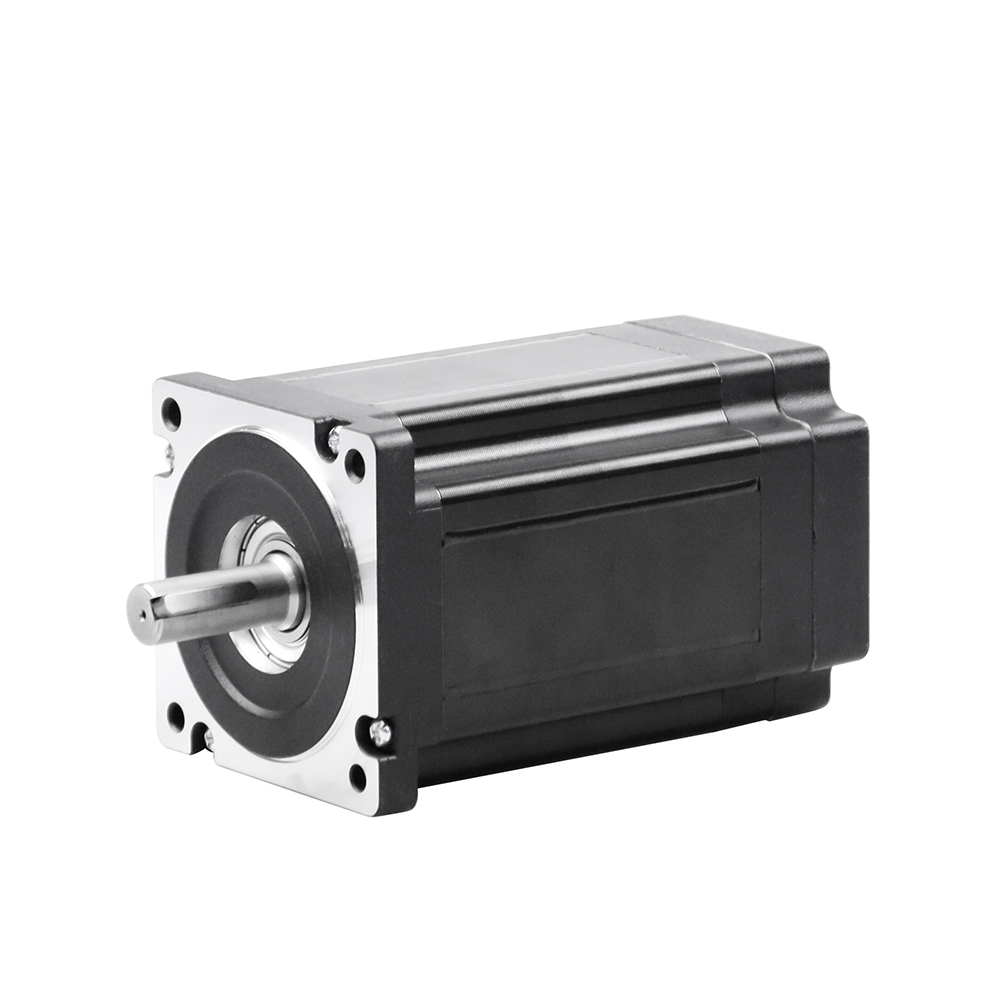
Selecting the right motor technology is a critical engineering and commercial decision that directly affects performance, efficiency, reliability, lifecycle cost, and user experience. Among the most widely used motor types, DC motors and BLDC motors dominate industrial, commercial, and consumer applications. While both convert electrical energy into mechanical motion, their structural design, control methods, and operational characteristics differ significantly.
In this article, we present a comprehensive, application-driven comparison of DC motors vs BLDC motors, helping decision-makers, engineers, and product managers determine the most suitable option for their specific requirements.
Understanding DC Motors
A DC motor is an electromechanical device that converts direct current electrical energy into rotational mechanical energy using brushes and a commutator. This technology has been widely used for decades due to its simple structure, low initial cost, and ease of control.
Core Characteristics of DC Motors
Mechanical commutation using carbon brushes
Simple speed control via voltage variation
High starting torque at low speeds
Compact and cost-effective for basic applications
DC motors remain prevalent in automotive systems, toys, basic pumps, power tools, and low-cost automation equipment where budget constraints outweigh long-term efficiency considerations.
Understanding BLDC Motors
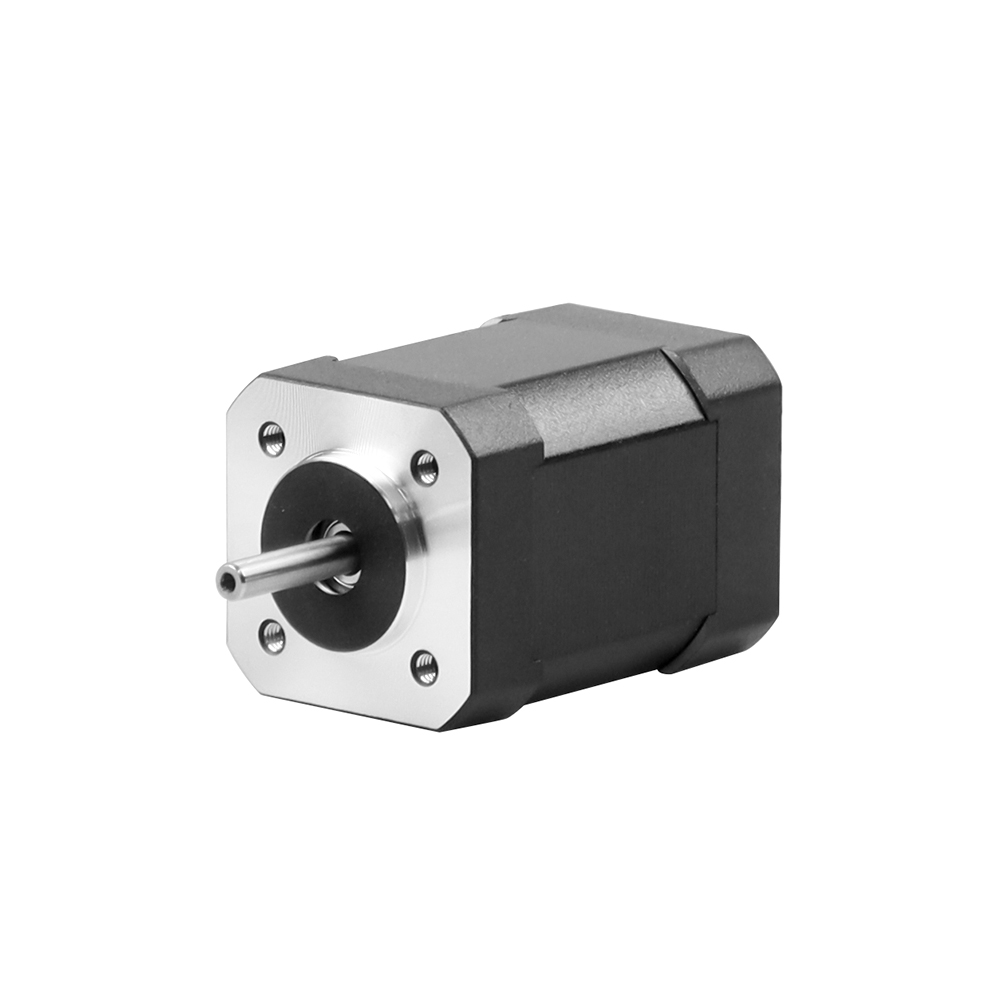
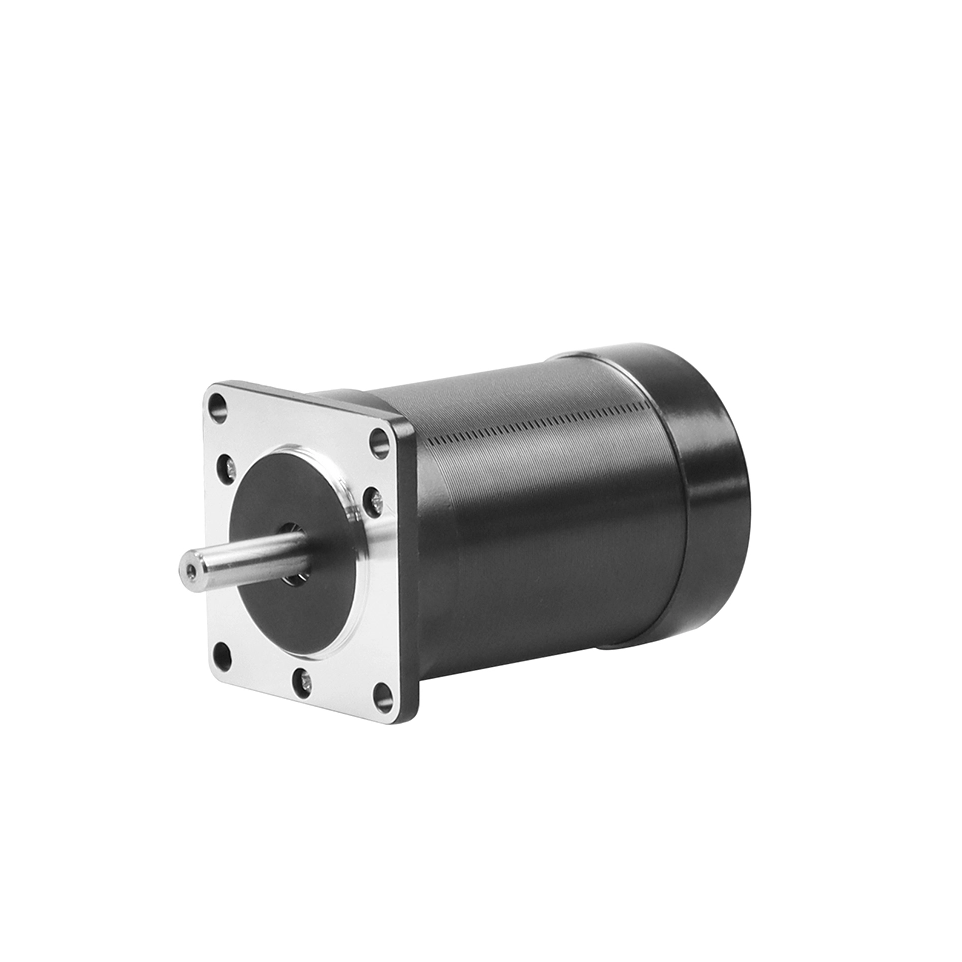
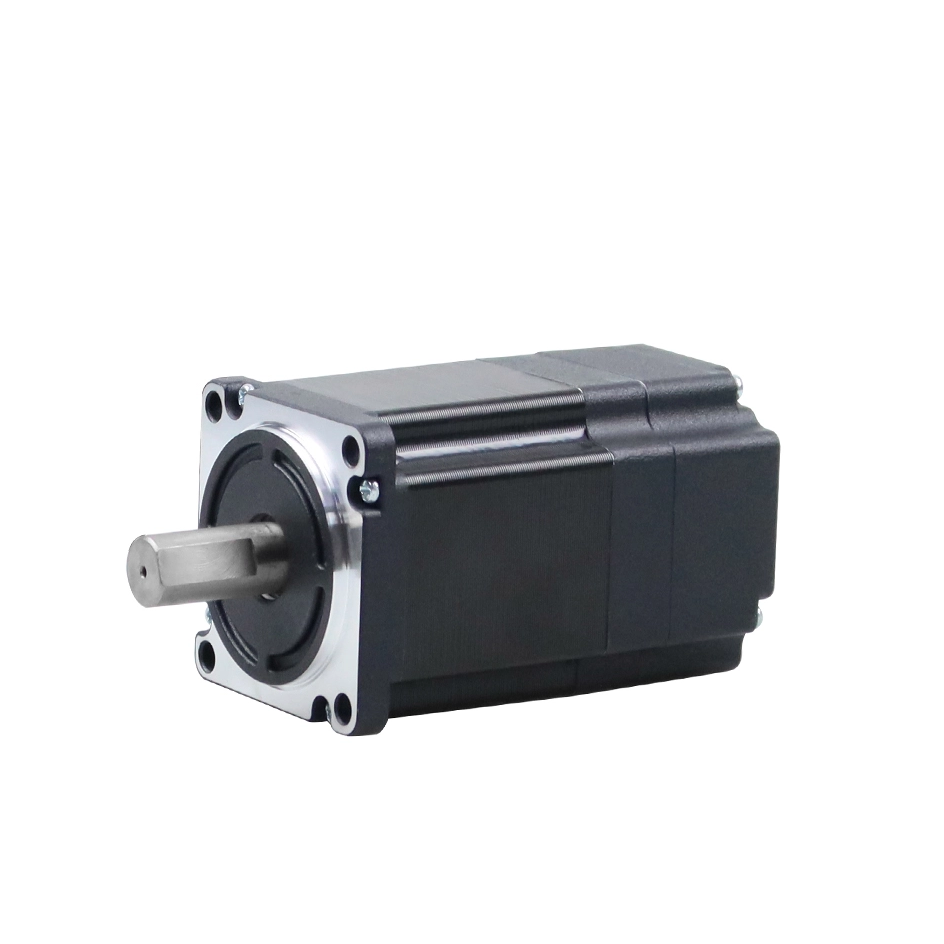
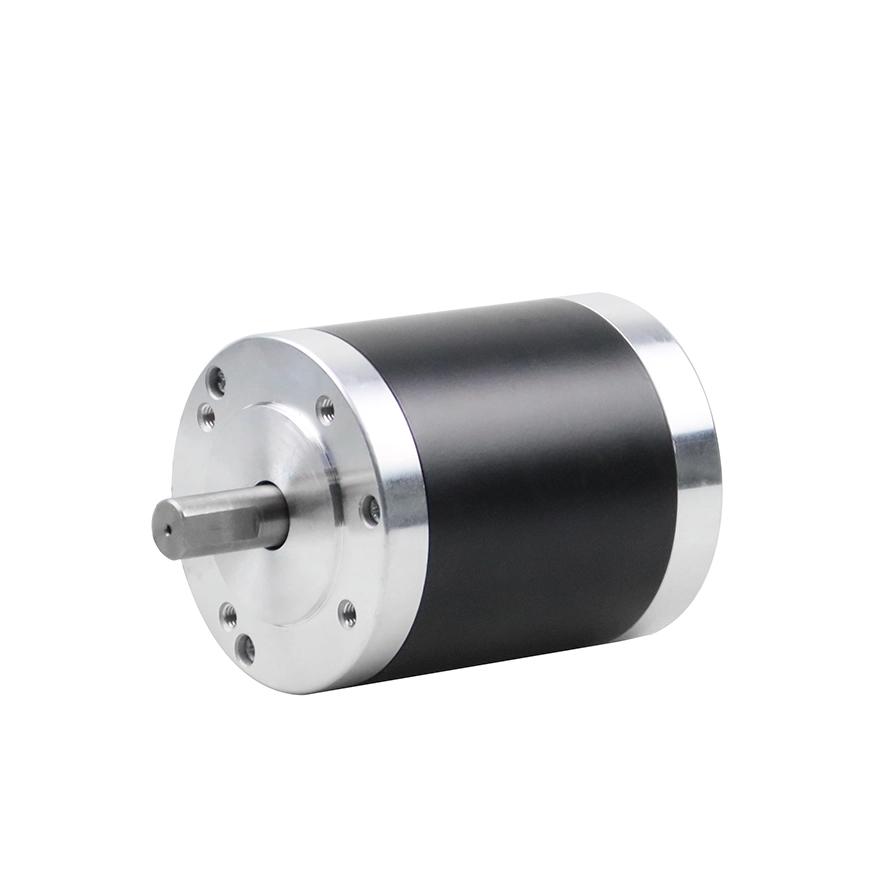
A BLDC motor (Brushless Direct Current motor) eliminates mechanical brushes and commutators, relying instead on electronic commutation controlled by a driver or inverter. Permanent magnets on the rotor interact with stator windings, enabling precise, efficient, and maintenance-free operation.
Core Characteristics of BLDC Motors
No brushes or commutators, eliminating mechanical wear
Electronic speed and torque control
Higher efficiency and power density
Longer lifespan and lower maintenance
BLDC motors are widely adopted in electric vehicles, HVAC systems, robotics, medical devices, drones, industrial automation, and energy-efficient appliances.
Structural Differences: DC vs BLDC Motors
Understanding the structural design of DC motors and BLDC motors is essential for evaluating their performance, durability, efficiency, and suitability across applications. While both convert electrical energy into mechanical motion, their internal architectures differ fundamentally, leading to very different operational characteristics.
DC Motor Structure
A DC motor relies on mechanical commutation to reverse current direction within the rotor windings. Its structure is straightforward and cost-effective, but inherently prone to wear.
Key Structural Components of a DC Motor
Rotor (Armature): Contains copper windings that carry current and generate magnetic fields.
Stator: Typically composed of permanent magnets or field windings that create a stationary magnetic field.
Commutator: A segmented copper ring mounted on the rotor shaft that switches current direction mechanically.
Carbon Brushes: Maintain physical contact with the commutator to transfer electrical power.
Shaft and Bearings: Convert electromagnetic force into usable mechanical rotation.
Structural Implications
Continuous brush-to-commutator contact causes friction, sparking, and heat.
Mechanical wear limits motor lifespan.
Brush dust and arcing introduce electrical noise.
Maintenance is unavoidable in long-duty or high-speed applications.
This structure makes DC motors suitable for low-cost, low-duty-cycle applications where simplicity outweighs longevity.
BLDC Motor Structure
A BLDC motor eliminates mechanical commutation entirely, replacing it with electronic commutation controlled by a driver circuit. This results in a cleaner, more efficient, and more durable design.
Key Structural Components of a BLDC Motor
Rotor: Equipped with high-strength permanent magnets, typically NdFeB.
Stator: Contains multi-phase windings arranged for electronic switching.
Electronic Controller (ESC or Driver): Manages current sequencing and speed control.
Position Feedback: Uses Hall-effect sensors or sensorless algorithms for rotor position detection.
Shaft and Bearings: Designed for high-speed, low-friction operation.
Structural Implications
No brushes or commutator means zero mechanical wear from commutation.
Improved thermal management due to stationary windings.
Higher rotational speeds with reduced vibration.
Increased reliability and longer service life.
This structure enables BLDC motors to excel in precision, high-efficiency, and continuous-operation environments.
Direct Structural Comparison
| Structural Element | DC Motor | BLDC Motor |
| Commutation Method | Mechanical | Electronic |
| Brushes | Required | Not required |
| Rotor Design | Wound armature | Permanent magnet |
| Stator Design | Magnetic field source | Multi-phase windings |
| Wear Components | Brushes & commutator | Bearings only |
| Cooling Efficiency | Moderate | High |
| Structural Complexity | Simple | Advanced |
Structural Impact on Application Selection
DC motors favor applications prioritizing low initial cost, simple control, and compact design.
BLDC motors support applications demanding high efficiency, precise control, minimal maintenance, and long operational life.
From a structural standpoint alone, BLDC motors represent a technological evolution that aligns with modern requirements for energy efficiency, reliability, and intelligent motor control.
Efficiency and Energy Consumption Comparison
Efficiency and energy consumption are decisive metrics when evaluating DC motors versus BLDC motors, particularly for applications involving continuous operation, battery power, or strict energy regulations. The fundamental design differences between these two motor types directly influence how effectively electrical energy is converted into usable mechanical output.
Energy Efficiency of DC Motors
Traditional DC motors rely on mechanical commutation through brushes and a commutator. While functional and cost-effective, this design introduces multiple sources of energy loss.
Primary Efficiency Limitations in DC Motors
Brush friction losses caused by continuous physical contact with the commutator
Electrical arcing and resistance losses at brush interfaces
Copper losses in rotor windings due to current flow
Heat generation, reducing usable output power
As a result, DC motors typically operate at 70%–80% efficiency under optimal conditions. Efficiency drops further at higher speeds, heavier loads, or extended duty cycles.
Energy Consumption Impact
Higher power draw for the same mechanical output
Reduced battery runtime in portable systems
Increased heat dissipation requirements
Higher long-term electricity costs
DC motors are best suited for intermittent or low-duty applications where efficiency is not a primary constraint.
Energy Efficiency of BLDC Motors
BLDC motors are engineered for maximum energy conversion efficiency by eliminating mechanical commutation and optimizing electromagnetic design.
Key Factors Driving Higher BLDC Efficiency
No brush-related friction or sparking losses
Electronic commutation with precise current control
Permanent magnet rotors, eliminating rotor copper losses
Optimized stator windings for reduced resistance
Superior thermal management, maintaining efficiency under load
BLDC motors commonly achieve 85%–92% efficiency, and in optimized designs, even higher performance levels are attainable.
Energy Consumption Impact
Lower current draw for equivalent torque output
Extended battery life in cordless and mobile equipment
Reduced heat generation and cooling requirements
Significant energy savings over long operating periods
These characteristics make BLDC motors ideal for energy-sensitive and high-duty-cycle applications.
Efficiency Across Load and Speed Ranges
DC motors show peak efficiency over a narrow operating range and suffer efficiency degradation under variable loads.
BLDC motors maintain high efficiency across a wide speed and torque range, thanks to real-time electronic control.
This stability is especially valuable in applications with frequent speed changes or fluctuating loads, such as HVAC systems, electric vehicles, and industrial automation.
Battery-Powered Application Performance
In battery-operated systems, energy efficiency directly impacts runtime, thermal stability, and system size.
For portable medical devices, drones, power tools, and electric mobility platforms, BLDC motors provide a decisive advantage.
Comparative Efficiency Overview
| Parameter | DC Motor | BLDC Motor |
| Typical Efficiency | 70–80% | 85–92% |
| Mechanical Losses | High | Minimal |
| Thermal Losses | Higher | Lower |
| Battery Runtime | Shorter | Longer |
| Energy Cost Over Time | Higher | Lower |
Long-Term Energy Cost Considerations
Although DC motors may offer a lower upfront cost, their higher energy consumption leads to:
BLDC motors, with their superior efficiency, deliver lower total cost of ownership by minimizing energy waste and maintaining performance consistency over time.
Efficiency-Driven Application Decision
From an efficiency and energy consumption perspective:
DC motors remain viable for cost-driven, short-duration tasks.
BLDC motors are the preferred solution for modern systems prioritizing energy efficiency, sustainability, and long-term performance.
In energy-conscious designs, BLDC motors clearly outperform DC motors and align with the evolving demands of high-efficiency electrical and electromechanical systems.
Performance: Torque, Speed, and Control Precision
DC Motor Performance
High starting torque
Linear speed-torque characteristics
Limited speed range at high efficiency
Reduced accuracy under load variation
DC motors are well-suited for simple speed control scenarios where high precision is not required.
BLDC Motor Performance
Flat torque curve over wide speed ranges
Excellent speed regulation under varying loads
High-speed operation with minimal losses
Precise digital control via PWM and feedback
BLDC motors excel in precision-driven applications such as CNC equipment, robotics, medical pumps, and aerospace systems.
Maintenance and Service Life
DC Motor Maintenance
Brush wear significantly limits the service life of DC motors, especially in continuous-duty applications.
BLDC Motor Maintenance
For applications where uptime, reliability, and total cost of ownership matter, BLDC motors are clearly superior.
Noise, Vibration, and Thermal Performance
DC motors generate audible noise due to brush contact and electrical arcing.
BLDC motors operate with lower acoustic noise, reduced vibration, and improved thermal dissipation.
This makes BLDC motors ideal for medical devices, home appliances, office equipment, and consumer electronics where noise control is critical.
Cost Analysis: Initial vs Lifetime Cost
Initial Cost
DC motors have a lower upfront price
BLDC motors require controllers and electronics, increasing initial investment
Lifetime Cost
When factoring in:
Energy savings
Reduced maintenance
Longer service life
Lower failure rates
BLDC motors consistently outperform DC motors in total lifecycle cost, especially in medium to high-volume production.
Application-Based Comparison
When DC Motors Are More Suitable
Low-cost consumer products
Intermittent operation
Simple control requirements
Short service life expectations
Examples include toys, basic actuators, automotive window lifts, and entry-level power tools.
When BLDC Motors Are More Suitable
Continuous-duty operation
Energy-efficient systems
High-speed or precision control
Battery-powered equipment
Examples include electric vehicles, drones, HVAC fans, industrial automation, medical pumps, and smart appliances.
Scalability and Customization Potential
BLDC motors offer greater design flexibility, including:
Custom winding configurations
Voltage and speed optimization
Integrated encoders and sensors
Smart motor-controller integration
This makes BLDC motors highly scalable for OEMs, industrial designers, and advanced product platforms.
Environmental and Regulatory Considerations
With increasing global emphasis on energy efficiency regulations and sustainability, BLDC motors align more closely with:
Many industries are actively replacing traditional DC motors with BLDC motors to meet future compliance requirements.
Final Comparison Summary
| Feature | DC Motor | BLDC Motor |
| Efficiency | Moderate | High |
| Maintenance | High | Low |
| Noise | Higher | Lower |
| Control Precision | Basic | Advanced |
| Lifespan | Shorter | Longer |
| Initial Cost | Lower | Higher |
| Lifetime Cost | Higher | Lower |
Conclusion: Making the Right Choice
Choosing between a DC motor and a BLDC motor depends on application demands, performance expectations, budget constraints, and long-term operational goals. While DC motors remain viable for simple, low-cost applications, BLDC motors represent the future of motion control, offering superior efficiency, reliability, and scalability.
For modern applications that prioritize energy efficiency, intelligent control, reduced maintenance, and long-term value, BLDC motors are the clear and strategic choice.
FAQs: Which BLDC Motor Is Best for Battery-Powered Equipment?
I. Product Perspective: Efficiency, Power Consumption & Battery Performance
1. Why are BLDC motors ideal for battery-powered equipment?
BLDC motors offer high efficiency, low energy loss, and precise control, making a standard BLDC motor ideal for extending battery life in portable equipment.
2. What types of battery-powered equipment commonly use BLDC motors?
Battery-powered BLDC motors are widely used in power tools, medical devices, robots, AGVs, drones, lawn equipment, and portable industrial machines.
3. How does a standard BLDC motor improve battery life?
A standard BLDC motor minimizes electrical and mechanical losses, allowing equipment to run longer on a single battery charge.
4. What voltage range is best for battery-powered BLDC motors?
Common voltage options include 12V, 24V, 36V, and 48V, depending on battery configuration and power requirements.
5. How important is motor efficiency in battery-powered applications?
Efficiency is critical; a high-efficiency BLDC motor directly reduces current draw and heat generation.
6. Are low-speed or high-speed BLDC motors better for battery operation?
Low-speed, high-torque BLDC motors or geared BLDC motors are often preferred to avoid excessive current consumption.
7. Can standard BLDC motors handle frequent start-stop cycles?
Yes, standard BLDC motors perform well under frequent start-stop conditions without brush wear.
8. How does motor size affect battery-powered equipment design?
Compact BLDC motors reduce system weight and improve overall energy efficiency.
9. Is thermal performance important in battery-powered BLDC motors?
Yes, efficient thermal management prevents energy loss and protects battery health.
10. Can BLDC motors operate reliably under fluctuating battery voltage?
Yes, with proper driver design, BLDC motors can maintain stable performance as battery voltage changes.
II. Factory Customization Capability: OEM Solutions for Battery-Powered Devices
11. Can a BLDC motor manufacturer customize motors for battery-powered equipment?
Yes, a BLDC motor manufacturer can customize voltage, torque, efficiency curve, and housing for battery-powered applications.
12. What customization options are available beyond a standard BLDC motor?
Custom BLDC motors may include optimized windings, lightweight housings, and battery-matched electrical designs.
13. Can BLDC motors be customized for low-power standby consumption?
Yes, manufacturers can optimize electromagnetic design and control logic to reduce idle power loss.
14. Is it possible to integrate the driver with the BLDC motor?
Many BLDC motor manufacturers offer integrated motor-driver solutions to reduce wiring and power loss.
15. Can BLDC motors be designed for compact and lightweight systems?
Yes, custom BLDC motor designs focus on high power density for portable and handheld equipment.
16. What is the typical MOQ for customized BLDC motors?
MOQ varies, but many manufacturers support low-MOQ prototyping before mass production.
17. How does customization affect lead time for BLDC motors?
Standard BLDC motors have shorter lead times, while custom BLDC motors require additional engineering and testing time.
18. Can a BLDC motor manufacturer support high-volume production?
Yes, experienced manufacturers support scalable production from pilot runs to large-volume manufacturing.
19. How do manufacturers ensure consistent quality for battery-powered BLDC motors?
Quality assurance includes efficiency testing, load testing, thermal aging, and battery-simulation testing.
20. Why choose an experienced BLDC motor manufacturer for battery-powered equipment?
An experienced BLDC motor manufacturer delivers optimized efficiency, stable quality, and long-term supply reliability for battery-powered BLDC motor applications.