Why Do Tracked Agricultural Robots Use BLDC Motors?
Views: 0 Author: Site Editor Publish Time: 2026-07-21 Origin: Site
Modern agriculture is rapidly transforming through automation, and tracked agricultural robots are becoming an important solution for improving farming efficiency, reducing labor dependency, and enabling precision agriculture. These intelligent machines are designed to operate in challenging environments such as muddy fields, uneven farmland, slopes, greenhouses, and outdoor agricultural areas where traditional wheeled machines may struggle.
At the heart of these robotic platforms is a critical component that determines their mobility, efficiency, and reliability: the motor system. Among various motor technologies, brushless DC motors (BLDC motors) have become the preferred choice for tracked agricultural robots due to their high efficiency, precise control capability, compact design, and excellent durability.
By combining advanced motor technology with intelligent control systems, BLDC motors provide tracked agricultural robots with the power, traction, and reliability required for continuous agricultural operations.
What Is a Tracked Agricultural Robot?
A tracked agricultural robot is an autonomous or semi-autonomous farming machine equipped with crawler tracks instead of conventional wheels. The tracked structure allows the robot to distribute its weight over a larger contact area, providing better stability and traction on difficult terrains.
These robots are widely used in applications such as:
Crop monitoring and inspection
Precision spraying
Automated weed removal
Fertilizer and pesticide application
Seed planting assistance
Harvesting support
Agricultural transportation
Farm data collection
Unlike traditional agricultural vehicles, tracked robots are designed to work autonomously for long periods. Therefore, their drive system must provide consistent performance, accurate movement control, and low maintenance requirements.
The motor system directly affects the robot’s ability to climb slopes, overcome obstacles, maintain stable speed, and operate efficiently in harsh outdoor conditions.
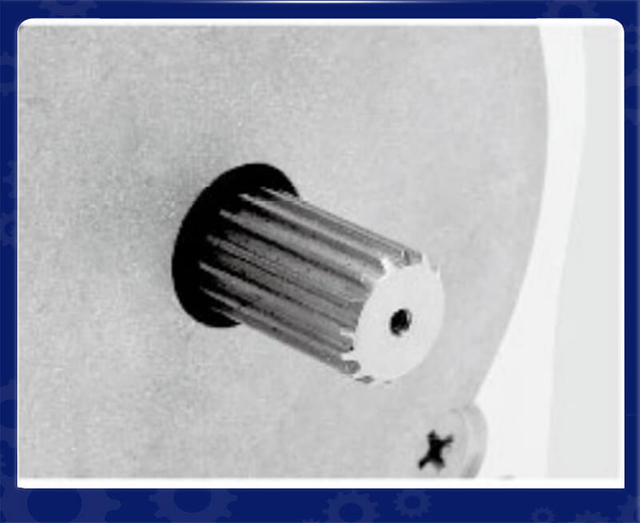
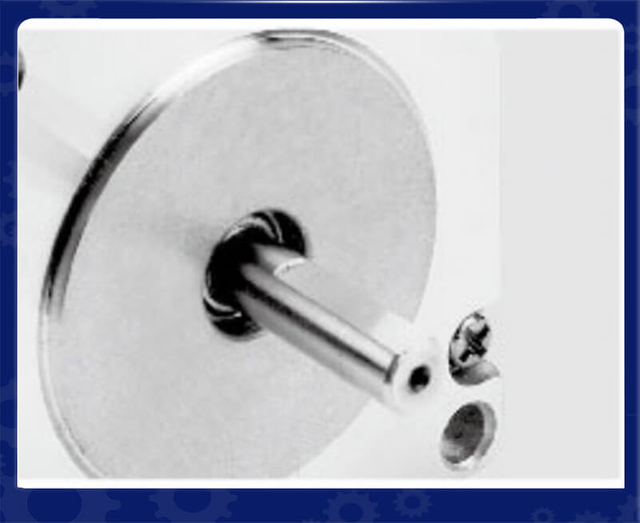
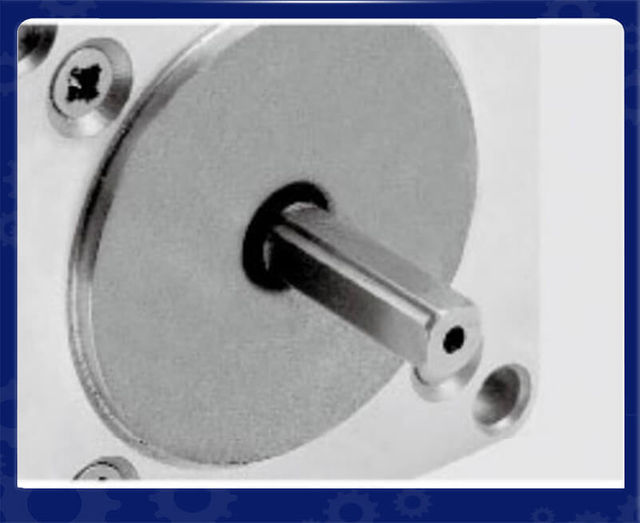
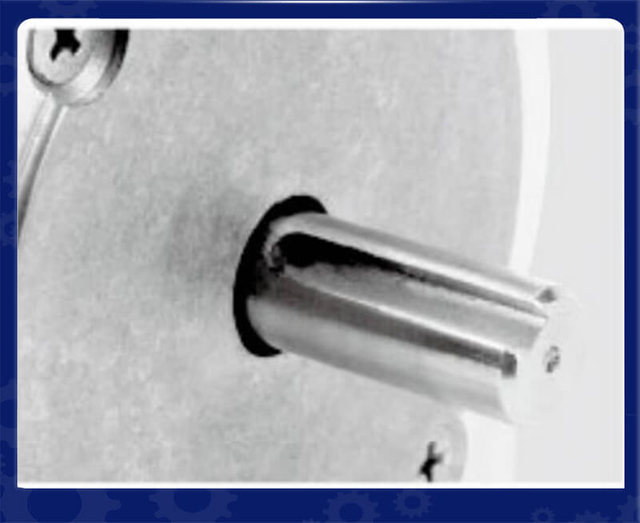
80BLS01 BLDC Motor — Compact, Intelligent, and Reliable Brushless Motor Drive System
Product Overview:The BF80BLS Brushless DC Motor is a compact, high-efficiency motor designed for precision motion applications. Featuring reliable performance, low noise operation, and excellent speed control, it provides stable power output for automation equipment, robotics, medical devices, and other space-constrained systems requiring efficient and durable motion solutions.
Key Technical Highlights
Compact 80MM Frame Size: Provides a space-saving design while delivering reliable torque output for compact automation and motion systems.
High Efficiency Brushless Design: Ensures low energy consumption, reduced heat generation, and longer service life compared with traditional brushed motors.
Low Noise & Smooth Operation: Optimized electromagnetic design enables stable rotation and quiet performance for precision applications.
Excellent Speed Control Capability: Supports accurate speed regulation and responsive dynamic performance for various motion requirements.
Durable & Maintenance-Free Operation: The brushless structure eliminates brush wear, improving reliability and reducing maintenance needs.
Wide Application Flexibility: Suitable for robotics, automation equipment, medical devices, and other compact motion control systems.
Typical Applications
Robotics and Automation Equipment – Provides precise and stable driving power for robotic mechanisms and automated systems.
Medical Devices – Suitable for compact medical instruments requiring quiet, reliable, and maintenance-free operation.
Laboratory and Testing Equipment – Delivers smooth speed control and consistent performance for precision motion applications.
3D Printers and CNC Equipment – Supports efficient and stable movement in compact manufacturing systems.
BF80BLS Series Integrated Brushless Dc Motor Parameters
Why Are BLDC Motors Used in Tracked Agricultural Robots?
Tracked agricultural robots require motors that can deliver high torque, precise speed control, and reliable operation under variable loads. BLDC motors meet these requirements better than traditional brushed DC motors or standard induction motors.
The main reasons tracked agricultural robots use BLDC motors include:
High efficiency and reduced energy consumption
High torque output in a compact size
Precise speed and position control
Long service life with minimal maintenance
Excellent environmental adaptability
Smooth operation and low noise
These advantages make BLDC motors ideal for agricultural robots that need to operate continuously in demanding outdoor environments.
1. High Torque Performance for Tracked Robot Mobility
One of the biggest challenges for agricultural robots is moving across complex terrain. Farm environments often include:
Soft soil
Mud
Gravel surfaces
Slopes
Uneven ground
Heavy payload conditions
Tracked robots require strong driving torque to maintain traction and prevent slipping. BLDC motors provide high torque density, allowing manufacturers to achieve powerful driving performance without increasing the overall robot size.
Compared with traditional motors, BLDC motors can generate stronger torque from a smaller package. This is especially important for compact agricultural robots where installation space is limited.
When combined with a planetary gearbox or harmonic reducer, BLDC motors can provide higher output torque at lower speeds, making them suitable for crawler drive systems.
The motor and gearbox combination enables tracked agricultural robots to:
Climb agricultural slopes efficiently
Carry heavier equipment
Maintain stable movement under changing loads
Improve traction on difficult terrain
2. Higher Energy Efficiency Extends Robot Operating Time
Battery life is a major concern for autonomous agricultural robots. Since these machines often operate far away from charging stations, energy efficiency directly affects working time and productivity.
BLDC motors are highly efficient because they eliminate mechanical brushes and reduce energy losses caused by friction.
Compared with brushed DC motors, BLDC motors typically provide:
Lower electrical losses
Reduced heat generation
Higher conversion efficiency
Longer battery operating time
For solar-powered or battery-powered agricultural robots, improved motor efficiency means:
Longer field operation periods
Fewer charging cycles
Reduced operating costs
Higher farming productivity
The energy-saving characteristics of BLDC motors make them especially suitable for autonomous agricultural equipment that requires long-duration operation.
3. Precise Speed Control Improves Agricultural Robot Accuracy
Precision agriculture requires accurate movement control. A tracked agricultural robot may need to follow specific paths between crop rows, maintain consistent spraying distances, or perform detailed inspection tasks.
BLDC motors support accurate control through:
Encoder feedback
Closed-loop speed control
Position control
Torque control
With an integrated servo control system, the motor can continuously monitor operating conditions and automatically adjust output performance.
This allows agricultural robots to achieve:
Accurate navigation
Smooth acceleration and deceleration
Stable low-speed movement
Precise turning control
For example, during crop monitoring, the robot must move slowly and steadily to capture accurate images and sensor data. BLDC motors provide the smooth motion required for these precision tasks.
Agricultural environments are demanding. Robots may operate in dusty fields, humid conditions, and outdoor environments for extended periods.
Traditional brushed motors use carbon brushes that physically contact the commutator. Over time, these components wear out, causing:
Reduced efficiency
Increased maintenance requirements
Electrical noise
Shorter service life
BLDC motors eliminate brushes by using electronic commutation technology. This design provides several advantages:
No brush replacement
Reduced mechanical wear
Longer operating lifespan
Higher reliability
For agricultural robots that need to work continuously during planting or harvesting seasons, this reliability is extremely valuable.
5. Compact BLDC Motor Design Saves Installation Space
Agricultural robots require compact mechanical structures to move efficiently between crops and operate in narrow farming areas.
BLDC motors offer excellent power density, meaning they can provide significant output power while maintaining a small size.
The compact design helps robot manufacturers:
Reduce overall machine weight
Optimize internal layout
Increase battery capacity
Add more agricultural equipment
Improve robot mobility
Many modern tracked agricultural robots use integrated BLDC servo motors, which combine:
Motor
Driver
Encoder
Control electronics
into one compact unit.
This integrated design reduces wiring complexity and simplifies robot system integration.
6. Better Adaptability to Harsh Agricultural Environments
Agricultural robots must withstand outdoor conditions that include:
Rain
Dust
Temperature changes
Vibration
Mud exposure
High-quality BLDC motors can be designed with protection features such as:
Waterproof housing
Dust-resistant structures
High IP-rated protection
Sealed bearings
These features allow BLDC motors to maintain stable operation even in challenging farming environments.
For tracked agricultural robots working outdoors, motor durability directly influences equipment reliability and maintenance costs.
7. Smooth and Quiet Operation Benefits Smart Farming Applications
Noise reduction is becoming increasingly important in modern agriculture. Autonomous robots are often designed to work near crops, livestock areas, or residential environments.
BLDC motors operate more quietly because they do not have mechanical brush friction. Their smooth electromagnetic operation reduces vibration and mechanical noise.
Quiet operation provides benefits including:
Less disturbance to livestock
Better working environments
Improved sensor accuracy
More comfortable autonomous operation
BLDC Motor Solutions for Tracked Agricultural Robot Drive Systems
The drive system is one of the most critical components of a tracked agricultural robot because it directly determines the robot’s traction capability, movement accuracy, energy efficiency, and operational reliability. Unlike traditional agricultural machinery, tracked robots need to operate autonomously in complex outdoor environments, including muddy fields, uneven farmland, slopes, and areas with changing soil conditions.
To meet these challenges, many manufacturers choose BLDC motor solutions as the core power system for tracked agricultural robot drive mechanisms. With advantages such as high torque density, precise control, low maintenance, and excellent efficiency, BLDC motors provide the performance required for modern smart farming applications.
Structure of a BLDC Motor Drive System for Tracked Agricultural Robots
A typical tracked agricultural robot drive system consists of several key components:
Battery System → Motor Controller → BLDC Motor → Gearbox → Track Drive Mechanism
Each component works together to convert electrical energy into controlled mechanical movement.
1. Battery and Power Supply System
Tracked agricultural robots are usually powered by lithium batteries or other rechargeable energy systems. The battery provides electrical power to the BLDC motor controller, which regulates motor operation according to movement requirements.
Energy-efficient BLDC motors help maximize battery utilization by reducing power losses and improving overall operating time.
2. BLDC Motor and Electronic Control System
The BLDC motor serves as the primary power source for the robot’s track movement. Unlike brushed motors, BLDC motors use electronic commutation, which provides smoother operation and eliminates brush wear.
The motor controller manages:
Motor speed
Torque output
Rotation direction
Acceleration and deceleration
Protection functions
With advanced control algorithms, the BLDC drive system can automatically adjust motor performance according to terrain conditions and load changes.
3. Gearbox Integration for High Torque Applications
Tracked agricultural robots often require high torque at low speeds. Although BLDC motors provide excellent torque density, a gearbox is commonly used to optimize output performance.
A planetary gearbox or precision reduction gearbox can:
Increase output torque
Reduce motor speed
Improve climbing ability
Enhance track traction
The combination of a BLDC motor + gearbox allows agricultural robots to move heavy loads while maintaining stable and efficient operation.
Key BLDC Motor Features for Tracked Robot Drive Systems
1. High Torque Density for Strong Traction
Agricultural environments present significant mobility challenges. Soft soil, slopes, and uneven terrain require strong driving force to prevent track slipping.
BLDC motors provide high torque output within a compact structure, making them suitable for crawler-type drive systems.
Benefits include:
Strong starting torque
Improved obstacle-climbing ability
Stable operation under heavy loads
Better adaptability to changing terrain
For tracked agricultural robots carrying spraying systems, sensors, or harvesting tools, sufficient torque is essential for reliable field performance.
2. Closed-Loop Control for Precise Movement
Precision agriculture requires accurate robot movement. A tracked robot may need to follow predefined routes, maintain crop-row alignment, or perform automated farming tasks with high accuracy.
BLDC motor systems equipped with encoders provide closed-loop feedback, allowing real-time monitoring and adjustment.
Closed-loop BLDC servo systems enable:
Accurate speed regulation
Precise positioning
Smooth track synchronization
Reduced movement errors
This improves the robot’s ability to perform automated agricultural operations efficiently.
3. Energy-Efficient Operation for Longer Working Time
Battery endurance is a major factor affecting autonomous agricultural robot performance. A motor with poor efficiency will quickly consume battery power and reduce field operation time.
BLDC motors offer excellent efficiency due to:
Reduced mechanical friction
Improved electromagnetic design
Lower heat generation
Optimized power conversion
Higher efficiency allows tracked agricultural robots to:
Operate longer between charges
Reduce energy costs
Improve productivity
Minimize downtime
4. Compact and Integrated Motor Design
Space is limited in agricultural robots because the platform must accommodate:
Batteries
Sensors
Cameras
Control units
Agricultural tools
An integrated BLDC servo motor combines:
Brushless motor
Motor driver
Encoder
Control electronics
into one compact actuator.
This integrated design provides:
Simplified wiring
Reduced installation space
Easier system integration
Improved reliability
For compact tracked agricultural robots, integrated BLDC motor solutions offer significant design advantages.
5. Durable Performance in Outdoor Environments
Tracked agricultural robots often operate in harsh conditions, including:
Dust
Rain
Mud
Humidity
Vibration
Temperature changes
BLDC motor solutions can be customized with protective designs such as:
Waterproof housing
Dust-resistant sealing
High IP protection levels
Corrosion-resistant materials
These features ensure reliable operation and reduce maintenance requirements during long-term agricultural use.
Recommended BLDC Motor Configurations for Tracked Agricultural Robots
Different agricultural robot applications require different motor specifications. Common BLDC motor configurations include:
Low-Voltage BLDC Motors
Low-voltage BLDC motors are widely used in small and medium-sized agricultural robots because they provide:
Safe operation
Compact structure
Easy battery integration
High efficiency
Typical voltage options include:
24V BLDC motors
36V BLDC motors
48V BLDC motors
BLDC Servo Motors with Encoders
For robots requiring accurate movement control, BLDC servo motors with encoders provide superior performance.
They are suitable for:
Autonomous navigation robots
Precision spraying robots
Crop inspection robots
Intelligent farming platforms
Integrated BLDC Motor Drive Units
Integrated BLDC motors are becoming increasingly popular because they reduce system complexity.
A complete integrated drive unit typically includes:
Motor
Driver
Encoder
Communication interface
Common communication options include:
CAN bus
RS485
Modbus
These features allow seamless integration with robotic control systems.
How to Select the Right BLDC Motor for a Tracked Agricultural Robot
When selecting a BLDC motor for a tracked agricultural robot, engineers should consider several factors:
1. Required Torque
Calculate the torque required based on:
Robot weight
Payload capacity
Terrain conditions
Track size
Maximum slope angle
Higher-load robots require higher torque motors or larger reduction ratios.
2. Operating Speed
Tracked robots usually operate at relatively low speeds but require precise speed adjustment.
The motor selection should consider:
Maximum travel speed
Low-speed stability
Acceleration requirements
3. Environmental Protection
Outdoor agricultural applications require motors with suitable protection levels.
Important considerations include:
Waterproof performance
Dust protection
Temperature resistance
Mechanical durability
4. Control Requirements
Different applications require different control methods.
For simple transportation robots, speed control may be sufficient. For autonomous agricultural robots, closed-loop servo control is usually preferred.
Future Trends of BLDC Motor Drive Systems in Agricultural Robots
With the development of smart agriculture, BLDC motor technology is continuously evolving toward:
Higher power density
More intelligent control
Integrated servo solutions
Improved energy efficiency
Advanced communication capabilities
Future tracked agricultural robots will rely more heavily on intelligent BLDC drive systems to achieve autonomous navigation, precision farming, and efficient field operation.
Conclusion
BLDC motor solutions provide an ideal drive technology for tracked agricultural robots by combining high torque performance, precise control, energy efficiency, compact design, and long-term reliability.
Through integration with gearboxes, encoders, and intelligent controllers, BLDC motors enable agricultural robots to overcome challenging terrains, extend operating time, and perform automated farming tasks with higher accuracy.
As the demand for smart farming and autonomous agricultural equipment continues to grow, high-performance BLDC motor drive systems will become an essential foundation for next-generation tracked agricultural robots.
BLDC Motors vs Traditional Motors for Agricultural Robots
Feature
BLDC Motor
Brushed DC Motor
Induction Motor
Efficiency
High
Medium
Medium
Maintenance
Very Low
High
Low
Torque Density
High
Medium
Low
Control Accuracy
Excellent
Limited
Moderate
Size
Compact
Larger
Larger
Battery Compatibility
Excellent
Good
Poor
Service Life
Long
Shorter
Long
For autonomous tracked agricultural robots, BLDC motors provide the best balance between performance, reliability, and energy efficiency.
Future Development of BLDC Motors in Agricultural Robotics
As agriculture continues moving toward automation, tracked agricultural robots will require more intelligent and efficient motion systems.
Future BLDC motor developments will focus on:
Higher torque density
Smarter integrated servo control
Improved waterproof designs
AI-based motion optimization
Lower energy consumption
More compact actuator systems
With the development of precision farming, autonomous navigation, and intelligent agricultural equipment, BLDC motors will continue playing a key role in next-generation agricultural robots.
Conclusion: BLDC Motors Are the Ideal Drive Solution for Tracked Agricultural Robots
Tracked agricultural robots require powerful, efficient, and reliable drive systems to operate successfully in complex farming environments. BLDC motors provide the high torque, precise control, energy efficiency, compact structure, and long service life required for modern agricultural automation.
By integrating BLDC motors with gearboxes, encoders, and intelligent controllers, agricultural robots can achieve improved traction, longer operating time, and more accurate movement performance.
As smart farming continues to expand, brushless DC motors will remain one of the most important technologies enabling the next generation of autonomous tracked agricultural robots.
FAQs:
1: Why do tracked agricultural robots use BLDC motors?
Answer: Tracked agricultural robots use BLDC motors (Brushless DC motors) because they provide high torque, high efficiency, precise control, and long service life. These advantages allow robots to operate reliably on challenging terrains such as mud, slopes, and uneven farmland while maintaining stable traction and low energy consumption.
2: What advantages do BLDC motors provide for tracked agricultural robot drive systems?
Answer: BLDC motors offer several advantages for tracked agricultural robot drive systems, including high torque density, low maintenance, compact size, accurate speed control, and excellent energy efficiency. These features help robots improve mobility, extend battery life, and perform autonomous farming tasks more effectively.
3: Are BLDC motors suitable for agricultural robots operating in harsh outdoor environments?
Answer: Yes. BLDC motors are highly suitable for outdoor agricultural robots because they can be designed with dustproof, waterproof, and vibration-resistant structures. Their brushless design reduces mechanical wear, allowing reliable operation in environments with moisture, dust, mud, and temperature variations.
4: How do BLDC motors improve the traction performance of tracked agricultural robots?
Answer: BLDC motors improve traction performance by providing high starting torque and stable low-speed operation. When combined with a gearbox, they deliver sufficient torque to drive crawler tracks across soft soil, slopes, and uneven terrain while reducing track slipping and improving robot stability.
5: Why are BLDC motors more energy-efficient than traditional motors in agricultural robots?
Answer: BLDC motors are more energy-efficient because they use electronic commutation instead of mechanical brushes, which reduces friction and energy loss. Higher efficiency allows battery-powered agricultural robots to operate longer, reduce charging frequency, and improve overall farming productivity.
6: Do tracked agricultural robots need BLDC motors with encoders?
Answer: For autonomous and precision farming applications, BLDC motors with encoders are highly recommended. Encoder feedback enables closed-loop control, allowing accurate speed regulation, position control, smooth movement, and better navigation performance in agricultural environments.
7: Can BLDC motors be integrated with gearboxes for tracked agricultural robots?
Answer: Yes. BLDC motors are commonly combined with planetary gearboxes or other reduction systems to increase output torque and reduce speed. This combination provides the high torque and low-speed performance required for tracked agricultural robot drive systems.
8: What type of BLDC motor is commonly used in tracked agricultural robots?
Answer: Tracked agricultural robots commonly use low-voltage BLDC motors, BLDC servo motors, and integrated BLDC servo motors. These motor solutions provide compact size, efficient operation, intelligent control capabilities, and easy integration with robotic control systems.
9: How do BLDC motors reduce maintenance costs for agricultural robots?
Answer: BLDC motors reduce maintenance costs because they do not use mechanical brushes that wear out over time. This brushless structure minimizes component replacement, reduces downtime, and provides a longer operating lifespan compared with traditional brushed DC motors.
10: How do I choose the right BLDC motor for a tracked agricultural robot?
Answer: Choosing the right BLDC motor requires considering factors such as required torque, operating speed, robot weight, payload capacity, terrain conditions, battery voltage, and control requirements. For autonomous tracked robots, a BLDC servo motor with encoder feedback is often the best solution for precise and reliable operation.