Home » News » Top 15 Integrated DC Servo Motor Manufacturers in The United States(2026 Updated)
Top 15 Integrated DC Servo Motor Manufacturers in The United States(2026 Updated)
Views: 0 Author: Site Editor Publish Time: 2026-09-16 Origin: Site
The U.S. market for integrated DC servo motors continues to develop alongside robotics, automation, medical equipment, semiconductor manufacturing, laboratory systems, packaging machinery, and other precision motion-control applications. Unlike conventional motor-and-drive combinations, an integrated DC servo motor combines the motor with feedback and control electronics, reducing external wiring and simplifying machine integration.
For OEMs and system integrators, selecting the right manufacturer requires more than comparing motor power. Encoder resolution, torque, speed, voltage, communication interfaces, gearbox options, thermal performance, mechanical dimensions, IP protection, braking, control architecture, customization, and technical support can all affect the suitability of a motor for a particular machine.
Below, we present 15 manufacturers and suppliers relevant to the U.S. integrated DC servo motor and compact motion-control market, covering dedicated servo specialists as well as established motor and automation companies with products applicable to integrated motion systems.
Note: Product portfolios and manufacturing arrangements can change over time. The companies below should therefore be evaluated against current datasheets and application requirements before an OEM makes a purchasing decision.
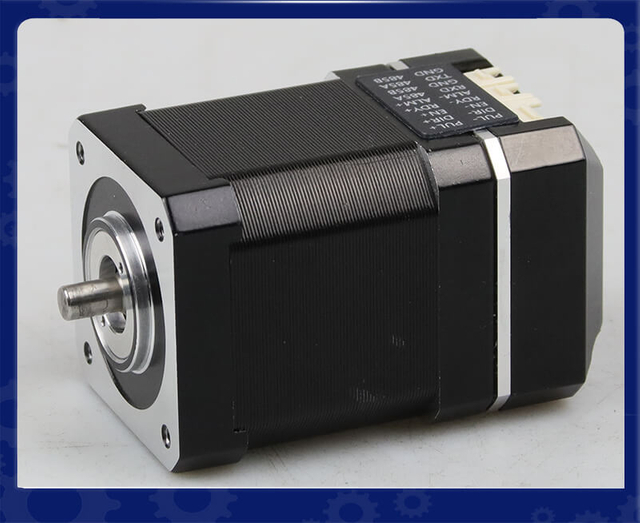
An integrated DC servo motor is a compact motion-control unit that combines a DC servo motor, encoder, and motor controller/driver into a single housing. Instead of using separate components connected by cables, the motor and key control electronics are integrated into one system.
This design allows the motor to provide closed-loop position, speed, and torque control while reducing wiring, installation space, and system complexity.
How Does an Integrated DC Servo Motor Work?
A typical integrated DC servo motor consists of three main elements:
DC Servo Motor – Converts electrical energy into mechanical rotation.
Encoder – Detects the motor's actual position and speed.
Integrated Controller/Driver – Receives commands from the host controller and regulates motor operation based on encoder feedback.
The basic closed-loop process is:
Motion Command → Integrated Controller → DC Servo Motor → Encoder Feedback → Controller Correction
For example, if the target position is 1,000 pulses but the motor stops at 980 pulses, the encoder detects the difference. The controller then commands the motor to continue moving until the required position is reached.
Key Features
An integrated DC servo motor commonly offers:
Closed-loop control
High positioning accuracy
Precise speed regulation
Encoder feedback
Compact installation
Reduced external wiring
Built-in motor driver
Overcurrent and overvoltage protection
Communication interfaces such as RS-485, CANopen, Modbus, or EtherCAT, depending on the model
Programmable motion parameters on some models
Integrated DC Servo Motor vs. Conventional DC Motor
Feature
Conventional DC Motor
Integrated DC Servo Motor
Feedback
Usually none
Encoder feedback
Control
Open loop
Closed loop
Position control
Limited
High precision
Speed control
Basic
Precise
Driver
External
Often integrated
Controller
External
May be integrated
Wiring
More components/cables
Simplified
System size
Larger
More compact
Error correction
Limited
Automatic closed-loop correction
The major difference is feedback and control. A conventional DC motor can rotate when voltage is applied, but an integrated DC servo motor continuously monitors its actual motion and adjusts operation according to the commanded target.
Main Advantages
1. Compact Design
Because the motor, encoder, and electronics are packaged together, an integrated DC servo motor requires less installation space than a traditional motor-plus-driver configuration.
2. Simplified Wiring
The integrated architecture can significantly reduce the number of cables between the motor and controller, making machine design and installation easier.
3. Closed-Loop Accuracy
Encoder feedback allows the system to detect position or speed errors and compensate for them automatically.
4. Better Dynamic Performance
DC servo motors can provide rapid acceleration and deceleration, making them suitable for applications requiring frequent and precise movements.
5. Easier Machine Integration
Depending on the model, integrated servo motors can support industrial communication protocols, allowing them to communicate directly with PLCs, motion controllers, or other automation equipment.
Integrated DC Servo Motor vs. Integrated Stepper Servo Motor
These two technologies are related but use different motor principles.
An integrated DC servo motor uses a DC motor and encoder-based feedback system, while an integrated stepper servo motor combines a stepper motor with closed-loop feedback and an integrated driver/controller.
In general:
DC servo: smooth operation, high speed, and strong dynamic response.
Stepper servo: high holding torque, precise incremental motion, and often lower system cost.
Integrated DC servo: useful when compact servo motion and high-speed operation are required.
Integrated stepper servo: useful when high torque at low-to-medium speeds and accurate positioning are priorities.
In simple terms
An integrated DC servo motor is a DC servo motor with its encoder and control electronics built into the motor assembly, creating a compact closed-loop motion-control solution.
For OEM machinery, this architecture can simplify motor selection, wiring, installation, commissioning, and overall system integration while providing accurate motion control.
Top 15 Integrated DC Servo Motor Manufacturers ****
1. LeanMotor
Company Profile
LeanMotor focuses on compact integrated motion-control solutions, with an emphasis on integrating motor, feedback, and control technologies into space-efficient products.
Integrated DC servo motors can provide a practical alternative to conventional architectures where a separate motor, encoder, and servo drive are installed as individual components.
Main Products
Integrated DC servo motors
Integrated stepper servo motors
Closed-loop stepper motors
Integrated servo drives
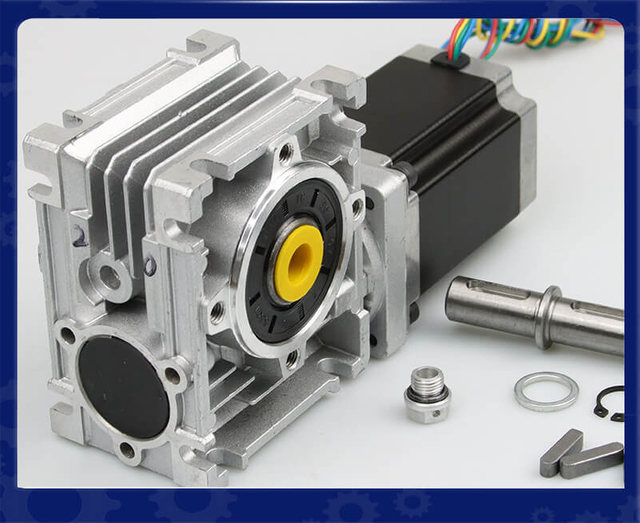
Geared integrated motors
Motion controllers
Customized integrated motion solutions
Advantages
LeanMotor's integrated architecture is designed to simplify machine integration while reducing external wiring and control-cabinet requirements.
For OEMs, this can be especially useful when developing robotic systems, packaging machines, CNC equipment, medical devices, inspection equipment, and automated production machinery.
The combination of motor and electronics also supports distributed machine architectures, in which individual motors can be positioned close to their mechanical loads rather than requiring every drive component to be installed inside a centralized electrical cabinet.
JKONGMOTOR is a specialized motion-control manufacturer providing stepper motors, integrated stepper servo motors, DC servo motors, geared motors, and intelligent drive solutions for industrial automation and OEM applications. The company focuses on developing compact and reliable motion systems that integrate motor technology with encoders, drivers, controllers, and gearboxes, helping equipment manufacturers achieve precise motion while simplifying machine architecture and wiring.
Main Products
Integrated Servo Motors
Geared Stepper Motors
Servo motors
Servo Motors & Servo Systems
Encoders
Motor Drivers & Controllers
Customized Motion Solutions
Advantages
JKONG MOTOR offers a combination of integrated motion technology, flexible product configurations, and OEM customization capabilities. Its solutions can integrate motors with encoders, drivers, controllers, and planetary or worm gearboxes, helping reduce wiring, installation space, and system complexity. The company provides various motor sizes and configurations to meet different requirements for torque, speed, positioning accuracy, and mechanical integration, making its products suitable for robotics, CNC machines, AGV/AMR systems, laboratory equipment, and other industrial automation applications.
3. BesFoc
Company Profile
BesFoc focuses on integrated stepper and servo motion solutions, including integrated DC servo motors designed to combine motor, feedback, and control functions within a compact assembly.
The integrated architecture can reduce the number of external components required by a machine builder while simplifying wiring between the motor and control system.
Main Products
Integrated DC servo motors
Integrated stepper servo motors
Closed-loop stepper motors
Integrated servo drives
Geared integrated motors
Motion controllers and related accessories
Advantages
BesFoc's integrated motor architecture is particularly relevant to OEMs seeking to reduce control-cabinet space, wiring complexity, installation time, and overall system integration work.
Typical applications include robotics, packaging machinery, CNC equipment, medical equipment, laboratory automation, and industrial machinery.
For OEM projects, important specifications include motor frame size, rated voltage, continuous and peak torque, encoder type, communication interface, gearbox ratio, brake requirements, protection rating, and available customization.
4. ServoCity
Company Profile
ServoCity is a U.S.-based motion and robotics supplier known for compact servo motors, gearmotors, actuators, controllers, and related mechanical components. Its product ecosystem is particularly relevant to robotics and small automation projects.
Main Products
DC gearmotors
Servo motors
Continuous-rotation servos
Encoders
Motor controllers
Linear actuators
Robotics components
Advantages
ServoCity provides a broad ecosystem for robotics, educational automation, mobile platforms, and compact electromechanical systems. Its combination of motors, gearboxes, controllers, and mechanical components can simplify prototype development.
5. MICROMO
Company Profile
MICROMO specializes in precision miniature motion systems and is part of the FAULHABER Group. Its U.S. presence makes it relevant to engineers looking for compact servo motor and drive technologies.
Main Products
DC micromotors
Brushless DC motors
Servo motors
Gearheads
Encoders
Motion controllers
Integrated drive systems
Advantages
MICROMO focuses on applications where small dimensions, precision, dynamic response, and low weight are important. Typical applications include medical instruments, laboratory automation, optics, robotics, and precision equipment.
6. Applimotion
Company Profile
Applimotion develops compact motion-control products for OEM applications. The company focuses on small servo motors, integrated motors, drives, and precision motion solutions.
Main Products
Brushless servo motors
DC servo motors
Integrated motors
Servo drives
Motor controllers
Custom motion solutions
Advantages
Applimotion is particularly relevant for OEMs seeking compact motor-and-drive solutions. Its application-focused approach can be useful when engineers need a customized combination of motor performance, electronics, feedback, and mechanical configuration.
7. Anaheim Automation
Company Profile
Anaheim Automation is a U.S. motion-control manufacturer and supplier with a broad portfolio covering motors, drives, controllers, and automation components.
Main Products
DC motors
Brushless DC motors
Servo motors
Stepper motors
Gearmotors
Motor controllers
Servo drives
Encoders
Advantages
Its extensive product range allows machine builders to compare multiple motor technologies within one supplier ecosystem. Products are used in industrial automation, robotics, packaging, conveyors, medical equipment, and positioning systems.
8. Intec Controls
Company Profile
Intec Controls provides motion-control and automation products for OEM and industrial applications. Its portfolio includes motor-control technologies applicable to compact automation systems.
Main Products
DC motors
Servo motors
Motion controllers
Motor drives
Encoders
Automation components
Advantages
The company is relevant to system integrators that require motor control, feedback, and automation components for specialized machinery.
9. ISL Products International
Company Profile
ISL Products International develops and supplies miniature motors and motion-control components for specialized OEM applications. Its products are particularly relevant to applications with limited installation space.
Main Products
DC motors
Gearmotors
Brushless motors
Encoders
Actuators
Custom motor assemblies
Advantages
A major area of interest is customization for OEM applications. Motor specifications can be adapted around available space, torque, speed, voltage, gearbox requirements, and other mechanical constraints.
10. Groschopp
Company Profile
Groschopp is an established U.S. motor manufacturer with experience in AC, DC, brushless, servo, and gearmotor technologies. The company works extensively with OEMs requiring application-specific motor solutions.
Main Products
DC motors
Brushless DC motors
Servo motors
Gearmotors
AC motors
Custom motor systems
Advantages
Groschopp's strength lies in custom motor engineering and application-specific configurations. This can be valuable for equipment manufacturers that need modifications beyond standard catalog specifications.
11. Bodine Electric Company
Company Profile
Bodine Electric is a U.S. manufacturer specializing in fractional-horsepower motors and gearmotors, including DC and brushless motor technologies.
Main Products
DC motors
Brushless DC motors
Gearmotors
AC motors
Motor controls
Custom drive systems
Advantages
Bodine has extensive experience in OEM motor applications. Its gearmotor expertise can be particularly useful where the machine requires a combination of controlled speed, output torque, compact mechanical packaging, and continuous operation.
12. Bison Gear & Engineering
Company Profile
Bison Gear & Engineering focuses on gearmotors, gearboxes, and custom motion solutions for industrial OEM applications.
Main Products
DC gearmotors
AC gearmotors
Brushless gearmotors
Gearboxes
Custom geared motor assemblies
Advantages
For integrated motion applications, the gearbox is often just as important as the motor itself. Bison's expertise in gear reduction and mechanical transmission can help OEMs develop compact drive assemblies for material handling, automation, and machinery.
Anaheim's motion-control operations cover multiple motor and control technologies, giving OEMs access to compact motor and electronic control products.
Main Products
DC motors
Brushless motors
Servo motors
Stepper motors
Gearmotors
Encoders
Controllers
Drives
Advantages
The broad product range is useful when an OEM is comparing open-loop stepper, closed-loop stepper, DC servo, and brushless servo architectures for the same machine.
14. MCG Motion Control Group
Company Profile
Motion-control specialists such as MCG serve OEMs requiring customized motion systems and motor-control components. Their relevance is particularly strong in applications where standard motor products need to be adapted to a specific machine architecture.
Main Products
Servo motors
DC motors
Motor controllers
Servo drives
Encoders
Motion-control assemblies
Advantages
The focus on application engineering can be beneficial for special-purpose machinery, robotics, positioning equipment, and automated production systems where motor selection depends on the complete motion profile.
15. Custom Servo Motors and Motion OEM Specialists
Company Profile
The U.S. market also contains smaller OEM-focused motor engineering companies that specialize in custom DC servo motors, geared motors, encoder-equipped motors, and application-specific motion assemblies rather than maintaining large consumer-facing product portfolios.
These companies can be less visible in conventional manufacturer searches but may provide valuable engineering support for specialized equipment.
Main Products
Custom DC servo motors
Encoder-equipped DC motors
Brushless servo motors
DC gearmotors
Integrated motor assemblies
Custom actuators
Motion-control assemblies
Advantages
The primary benefit of smaller specialized suppliers is often engineering flexibility. OEMs may be able to specify custom winding characteristics, shaft dimensions, mounting configurations, encoder types, gear ratios, cables, connectors, or control requirements.
How to Select an Integrated DC Servo Motor Manufacturer
Selecting an integrated DC servo motor should begin with the machine's actual operating requirements rather than the motor's nominal power alone.
1. Check Continuous and Peak Torque
Determine the required continuous torque, peak torque, acceleration torque, and load inertia. A motor that satisfies only the nominal load may still be unsuitable if the machine requires rapid acceleration or frequent direction changes.
2. Match Voltage and Speed
Common DC servo architectures may operate at different supply voltages. The motor's rated voltage should be compatible with the machine's power architecture.
The required speed range is equally important. Evaluate:
Rated speed
Maximum speed
Continuous operating speed
Acceleration and deceleration requirements
Low-speed stability
3. Evaluate Encoder Resolution
The encoder determines the feedback information available to the control system. Depending on the application, OEMs may require different levels of position resolution, speed feedback, and control accuracy.
For precision positioning, encoder specifications should be evaluated together with gearbox backlash, mechanical compliance, and controller performance.
4. Consider Communication Interfaces
Integrated servo motors may support different control architectures and communication interfaces. Depending on the machine, requirements can include:
CAN/CANopen
RS-485
Modbus
Ethernet-based communication
Pulse and direction
Analog control
Other proprietary or application-specific interfaces
Compatibility with the existing PLC or motion controller should be confirmed before selecting the motor.
5. Check Gearbox Requirements
A gearbox can increase output torque while reducing output speed. For compact automation equipment, an integrated gearbox can also simplify mechanical installation.
Important specifications include gear ratio, rated output torque, efficiency, backlash, radial load, axial load, and service life.
6. Evaluate Thermal Performance
Servo motors can experience significant heating during continuous operation, especially at high torque or low speed. Evaluate the motor's thermal characteristics under the actual duty cycle rather than relying only on short-duration peak ratings.
7. Consider Mechanical Integration
The motor should fit the machine's available installation envelope.
Important parameters include:
Frame size
Motor length
Shaft diameter
Shaft length
Mounting-hole pattern
Connector position
Cable exit
Weight
Gearbox dimensions
For compact equipment, mechanical dimensions can be just as important as electrical specifications.
8. Confirm Protection and Environmental Requirements
Applications exposed to dust, moisture, oil, vibration, or temperature variations may require an appropriate IP rating and environmental specification.
Medical, outdoor, mobile, and industrial applications can have significantly different environmental requirements.
9. Review OEM Customization Capability
For volume machine production, customization can become an important selection factor. Manufacturers may offer modifications involving:
Winding specifications
Voltage
Encoder
Gear ratio
Brake
Connector
Shaft configuration
Mounting structure
Communication interface
Firmware
Cable length
The availability of engineering support during prototype development can also influence the overall project cycle.
Applications of Integrated DC Servo Motors
Integrated DC servo motors are suitable for applications where compact construction, feedback control, distributed architecture, and simplified wiring are valuable.
Typical applications include:
Robotics
Robotic joints and auxiliary axes can benefit from compact servo packages that combine motor and control electronics.
CNC Machinery
Integrated servo systems can be used for auxiliary positioning axes, tooling mechanisms, automatic adjustment systems, and other machine functions.
Packaging Machinery
High-speed positioning, indexing, feeding, labeling, and adjustment mechanisms can require coordinated servo motion.
Medical Equipment
Compact servo systems are relevant to pumps, actuators, positioning mechanisms, diagnostic equipment, and laboratory automation.
AGV and AMR Systems
Mobile robots can use compact motor-drive architectures where space, wiring, efficiency, and distributed control are important.
Laboratory Automation
Precision positioning and compact mechanical assemblies make integrated motion systems useful for automated laboratory equipment and analytical instruments.
Why Integrated DC Servo Motors Are Increasingly Used in OEM Equipment
The primary architectural advantage is the integration of several motion-control functions into one assembly. A traditional system may require a motor, encoder, servo drive, communication wiring, and associated cabinet hardware.
An integrated DC servo motor can consolidate some of these functions, potentially reducing wiring, cabinet space, installation complexity, component count, and commissioning work.
For machine builders producing multiple equipment models, standardized integrated motor platforms can also simplify mechanical and electrical design across different machine configurations.
At the same time, integrated motors should not be selected solely because they are compact. Engineers should verify thermal capacity, feedback accuracy, communication compatibility, continuous torque, peak torque, mechanical loads, environmental requirements, and long-term service considerations.
Conclusion
The U.S. integrated DC servo motor market includes companies with different areas of expertise, ranging from miniature precision motors and conventional servo systems to highly integrated motor-controller architectures.
Maxon, FAULHABER, Moog, Allied Motion, Kollmorgen, Parker Hannifin, Teknic, Oriental Motor, Arc Systems, ElectroCraft, AMETEK Haydon Kerk Pittman, Nanotec, Lin Engineering, BesFoc, and LeanMotor represent different approaches to precision motion and integrated motor technology.
For OEMs, the most appropriate manufacturer depends on the machine's specific requirements. Torque, speed, voltage, encoder resolution, communication protocol, gearbox, thermal performance, IP rating, dimensions, brake configuration, customization, production volume, and technical support should all be evaluated before finalizing a motor platform.
For applications where reducing wiring and control-cabinet requirements is a priority, an integrated DC servo motor can provide a compact motion architecture while maintaining closed-loop control and programmable machine functionality.
FAQ:
1. What is an integrated DC servo motor?
An integrated DC servo motor combines a DC servo motor with feedback and control electronics in a compact motion-control assembly. Depending on the design, it may include an encoder, servo drive, controller, and communication interface, reducing external components and wiring.
2. What are the advantages of integrated DC servo motors?
The main advantages include compact construction, simplified wiring, closed-loop motion control, accurate positioning, speed regulation, and easier machine integration. These characteristics make integrated DC servo motors suitable for automated equipment and precision motion applications.
3. Who are the leading integrated DC servo motor manufacturers in the United States?
The U.S. market includes manufacturers and motion-control companies offering DC servo motors, integrated servo systems, and related motion-control technologies. The appropriate manufacturer depends on factors such as motor specifications, feedback requirements, control interface, application, and customization needs.
4. What applications use integrated DC servo motors?
Integrated DC servo motors can be used in robotics, automation equipment, medical devices, packaging machinery, laboratory equipment, CNC systems, inspection equipment, conveyors, and other applications requiring controlled rotary motion.
5. How does an encoder improve an integrated DC servo motor?
An encoder provides feedback about the motor's actual position, speed, or direction. The controller can compare this feedback with the commanded motion and make corrections, enabling closed-loop operation and improved positioning and speed control.
6. What should I consider when selecting an integrated DC servo motor manufacturer?
Important factors include motor torque, rated speed, operating voltage, encoder resolution, control method, communication protocol, mechanical dimensions, environmental requirements, customization capability, production capacity, technical support, and application experience.
7. Are integrated DC servo motors suitable for OEM applications?
Yes. Integrated DC servo motors can be particularly suitable for OEM machinery because the motor and control components can be packaged into a compact unit. This can simplify machine architecture, reduce wiring, and make integration more straightforward.
8. What is the difference between a DC servo motor and an integrated DC servo motor?
A conventional DC servo motor generally requires an external servo drive and other control components. An integrated DC servo motor incorporates some or all of these electronics into the motor assembly, depending on the product architecture. This can reduce the size and complexity of the overall motion-control system.
9. How do I compare integrated DC servo motor manufacturers?
A useful comparison should consider technical specifications, product range, feedback options, control interfaces, customization services, quality systems, application support, delivery capabilities, and long-term technical support rather than evaluating manufacturers only by motor price.
10. Can integrated DC servo motors be customized?
Many manufacturers provide customization options for OEM applications. Potential customization may include motor dimensions, winding specifications, encoder configuration, gear reduction, connectors, communication interfaces, control parameters, mounting arrangements, and other mechanical or electrical requirements. Specific options depend on the manufacturer and product series.