Home » News » Top 15 Integrated DC Servo Motor Manufacturers in France
Top 15 Integrated DC Servo Motor Manufacturers in France
Views: 0 Author: Site Editor Publish Time: 2026-09-22 Origin: Site
France has a strong industrial automation ecosystem covering DC servo motors, brushless servo motors, integrated motor drives, motion controllers, robotics, and precision positioning systems. Integrated DC servo motors are increasingly used where engineers need a compact combination of motor, encoder, drive electronics, and intelligent control without the wiring and cabinet space required by conventional servo systems.
For machine builders, OEMs, robotics companies, laboratory equipment manufacturers, medical-device developers, and industrial automation integrators, choosing the right supplier requires more than comparing motor power. Important factors include continuous torque, peak torque, encoder resolution, operating voltage, communication protocols, positioning accuracy, thermal performance, mechanical dimensions, customization capability, and long-term technical support.
Below is a practical overview of 15 established motor and motion-control manufacturers or brands with significant manufacturing, engineering, or commercial operations serving the French industrial market. The companies are presented according to their relevance to DC servo, integrated motion, compact servo, and related automation applications rather than as an independently verified market-share ranking.
What Is an Integrated DC Servo Motor?
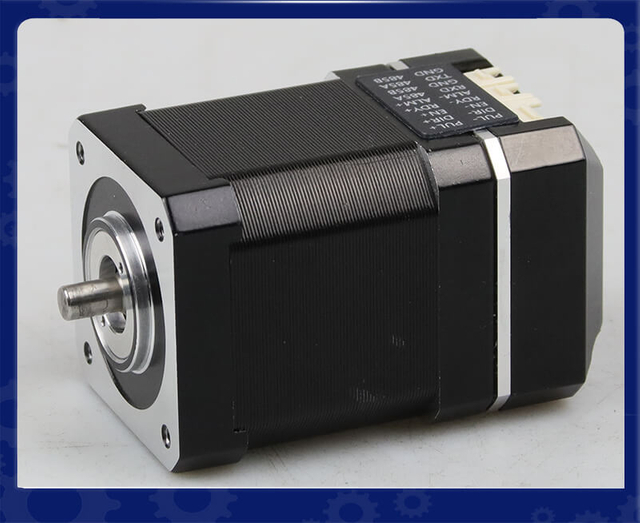
An integrated DC servo motor is a compact motion-control unit that combines a DC motor, encoder, servo drive, and control electronics into a single motor assembly. Unlike a conventional servo system, which typically requires a separate motor, drive, encoder wiring, and controller, an integrated DC servo motor places many of these components directly inside or onto the motor housing.
This integrated design simplifies machine architecture, reduces wiring, saves cabinet space, and can make installation and commissioning easier.
How Does an Integrated DC Servo Motor Work?
An integrated DC servo motor operates through a closed-loop control system. The motor converts electrical energy into mechanical rotation, while an encoder continuously detects the motor's position and speed.
The basic operating process is:
The controller sends a motion command.
The integrated servo drive receives and processes the command.
The DC motor generates the required rotational motion.
The encoder measures the actual position or speed.
The control electronics compare the commanded and actual motion.
The servo system automatically adjusts motor current and speed to reduce the error.
This feedback mechanism enables the motor to achieve accurate positioning, stable speed control, and responsive torque control.
Main Components of an Integrated DC Servo Motor
A typical integrated DC servo motor may include:
DC motor: Generates mechanical rotation and torque.
Encoder: Provides position and speed feedback.
Servo drive: Controls motor current, velocity, and torque.
Controller: Processes motion commands and control parameters.
Communication interface: Enables connection to PLCs, computers, or industrial networks.
Housing: Protects the internal electronics and mechanical components.
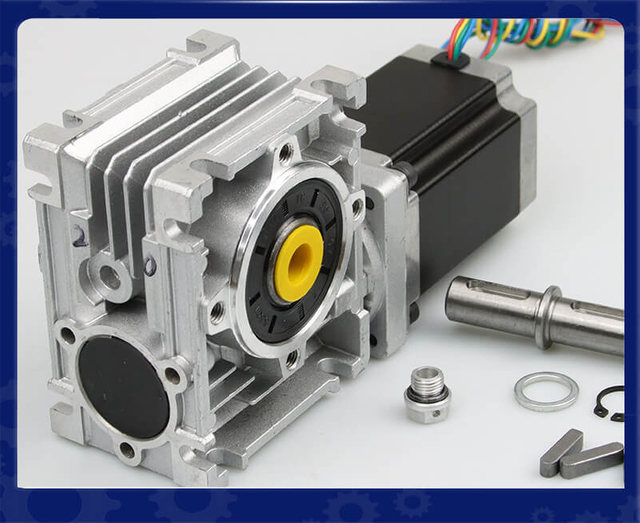
Depending on the manufacturer and application, the system may also incorporate a gearbox, brake, current sensor, temperature sensor, or programmable motion controller.
Integrated DC Servo Motor vs. Conventional DC Motor
The primary difference is the control architecture.
A conventional DC motor generally requires external electronics for precise speed or position control. An integrated DC servo motor incorporates feedback and control components into the motor assembly, creating a more complete motion-control solution.
Feature
Conventional DC Motor
Integrated DC Servo Motor
Encoder
Usually external or optional
Typically integrated
Servo drive
External
Integrated
Feedback control
Requires additional system components
Built into the system
Wiring
More components and cables
Simplified
Position control
Requires external control
Available through servo system
Installation
More components to configure
More compact
Cabinet space
Generally higher
Can be reduced
OEM customization
Depends on system
Often available
Advantages of Integrated DC Servo Motors
1. Compact Design
Combining the motor and electronics into one assembly can significantly reduce the overall footprint. This is valuable for robotics, medical equipment, laboratory automation, AGVs, and compact machinery.
2. Simplified Wiring
Because the drive and feedback electronics are integrated, fewer cables may be required between the motor and control cabinet. This can simplify machine wiring and reduce installation work.
3. Closed-Loop Precision
The encoder continuously provides feedback, allowing the servo system to correct position and speed errors. This makes integrated DC servo motors suitable for applications requiring accurate and repeatable motion.
4. Easier Machine Integration
Integrated servo motors can communicate with the machine controller through interfaces such as CANopen, RS-485, Modbus, EtherCAT, Ethernet, or pulse/direction, depending on the product.
5. Reduced Control Cabinet Requirements
Moving drive electronics closer to the motor can reduce the amount of equipment required inside the electrical cabinet, particularly in machines with multiple independently controlled axes.
Where Are Integrated DC Servo Motors Used?
Integrated DC servo motors are suitable for many automated motion applications, including:
Industrial robotics
AGV and AMR systems
Packaging machinery
Pick-and-place equipment
Medical equipment
Laboratory automation
CNC and positioning equipment
Printing machinery
Conveyor systems
Linear actuator systems
Automated inspection equipment
Semiconductor equipment
They are particularly useful when a machine requires precise motion, compact dimensions, distributed control, and simplified wiring.
What Should You Consider When Choosing an Integrated DC Servo Motor?
When selecting an integrated DC servo motor, engineers should evaluate more than rated motor power. Important specifications include:
Rated voltage
Rated and peak torque
Rated and maximum speed
Encoder resolution
Positioning accuracy
Communication protocol
Motor dimensions
Gear ratio
Protection rating
Operating temperature
Continuous and intermittent duty
Feedback type
Control modes
Mounting configuration
For OEM applications, customization options such as shaft dimensions, cable configuration, connectors, encoder type, firmware, gearbox, and communication interface can also be important.
Top 15 integrated DC Servo Motor Manufacturers in France
1. LeanMotor
Company Profile
LeanMotor focuses on compact integrated motion-control solutions, with an emphasis on integrating motor, feedback, and control technologies into space-efficient products.
Integrated DC servo motors can provide a practical alternative to conventional architectures where a separate motor, encoder, and servo drive are installed as individual components.
Main Products
Integrated DC servo motors
Integrated stepper servo motors
Closed-loop stepper motors
Integrated servo drives
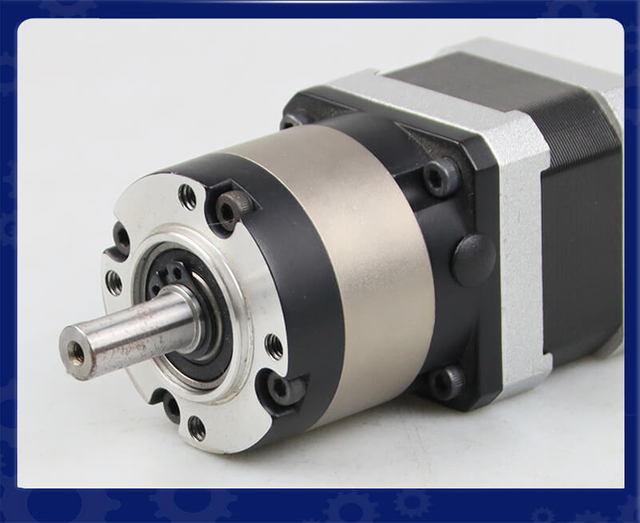
Geared integrated motors
Motion controllers
Customized integrated motion solutions
Advantages
LeanMotor's integrated architecture is designed to simplify machine integration while reducing external wiring and control-cabinet requirements.
For OEMs, this can be especially useful when developing robotic systems, packaging machines, CNC equipment, medical devices, inspection equipment, and automated production machinery.
The combination of motor and electronics also supports distributed machine architectures, in which individual motors can be positioned close to their mechanical loads rather than requiring every drive component to be installed inside a centralized electrical cabinet.
JKONGMOTOR is a specialized motion-control manufacturer providing stepper motors, integrated stepper servo motors, DC servo motors, geared motors, and intelligent drive solutions for industrial automation and OEM applications. The company focuses on developing compact and reliable motion systems that integrate motor technology with encoders, drivers, controllers, and gearboxes, helping equipment manufacturers achieve precise motion while simplifying machine architecture and wiring.
Main Products
Integrated Servo Motors
Geared Stepper Motors
Servo motors
Servo Motors & Servo Systems
Encoders
Motor Drivers & Controllers
Customized Motion Solutions
Advantages
JKONG MOTOR offers a combination of integrated motion technology, flexible product configurations, and OEM customization capabilities. Its solutions can integrate motors with encoders, drivers, controllers, and planetary or worm gearboxes, helping reduce wiring, installation space, and system complexity. The company provides various motor sizes and configurations to meet different requirements for torque, speed, positioning accuracy, and mechanical integration, making its products suitable for robotics, CNC machines, AGV/AMR systems, laboratory equipment, and other industrial automation applications.
3. BesFoc
Company Profile
BesFoc focuses on integrated stepper and servo motion solutions, including integrated DC servo motors designed to combine motor, feedback, and control functions within a compact assembly.
The integrated architecture can reduce the number of external components required by a machine builder while simplifying wiring between the motor and control system.
Main Products
Integrated DC servo motors
Integrated stepper servo motors
Closed-loop stepper motors
Integrated servo drives
Geared integrated motors
Motion controllers and related accessories
Advantages
BesFoc's integrated motor architecture is particularly relevant to OEMs seeking to reduce control-cabinet space, wiring complexity, installation time, and overall system integration work.
Typical applications include robotics, packaging machinery, CNC equipment, medical equipment, laboratory automation, and industrial machinery.
For OEM projects, important specifications include motor frame size, rated voltage, continuous and peak torque, encoder type, communication interface, gearbox ratio, brake requirements, protection rating, and available customization.
4. Mavilor Motors
Company Profile:
Mavilor Motors is a European manufacturer specializing in DC and brushless servo motors for industrial motion-control applications. Its products are used where controlled speed, torque, and positioning are required.
Main Products:
DC servo motors
Brushless servo motors
Permanent-magnet motors
Servo motor solutions
Customized motors
Advantages:
Strong DC servo motor expertise
Industrial-oriented motor designs
Customization for OEM applications
Suitable for demanding motion systems
5. Servotronix
Company Profile:
Servotronix develops servo drives, motion controllers, and motor-control technologies for industrial automation. Its solutions are relevant to applications requiring coordinated and programmable servo motion.
Main Products:
Servo drives
Servo motors
Motion controllers
Multi-axis motion systems
Digital servo solutions
Advantages:
Advanced motion-control technology
Flexible servo architectures
Suitable for OEM machinery
Supports multi-axis applications
6. ISL Products / ISL France
Company Profile:
ISL specializes in compact motion solutions and motor-control technologies for industrial equipment. Its products are relevant to applications where motor size, feedback, and electronic control need to be optimized together.
Main Products:
DC motors
Brushless motors
Gear motors
Encoders
Motor-control solutions
Advantages:
Compact drive technologies
OEM-oriented engineering
Flexible motor configurations
Suitable for space-constrained equipment
7. ETEL
Company Profile:
ETEL is a specialist in high-precision direct-drive motion systems and is particularly associated with precision automation, semiconductor manufacturing, electronics production, and advanced positioning equipment.
Main Products:
Torque motors
Linear motors
Rotary motors
Motion-control systems
Precision positioning systems
Advantages:
High positioning precision
High dynamic performance
Direct-drive technology
Strong expertise in precision automation
8. MDP Motion
Company Profile:
MDP Motion develops and supplies motion-control components and customized motor solutions for industrial automation and OEM applications.
Main Products:
DC motors
Brushless motors
Servo motors
Gear motors
Motion-control components
Advantages:
Flexible OEM solutions
Customized motor configurations
Compact motion products
Suitable for automated machinery
9. Alxion
Company Profile:
Alxion specializes in high-performance permanent-magnet motors and motion solutions for demanding industrial applications. The company has developed expertise in high-torque-density motor technology.
Main Products:
Permanent-magnet motors
Torque motors
Servo motors
High-performance motor systems
Customized motor solutions
Advantages:
High torque density
Compact motor designs
Precision motion capability
Suitable for demanding industrial applications
10. Electrocraft Europe
Company Profile:
ElectroCraft develops custom and standard motor technologies for automation, medical equipment, robotics, material handling, and other industrial applications. Its European activities make its products accessible to French OEMs.
Main Products:
DC motors
Brushless DC motors
Servo motors
Gear motors
Integrated motor solutions
Advantages:
Broad motor technology portfolio
Strong OEM customization capability
Integrated motor and gearbox options
Suitable for robotics and automation
11. Portescap
Company Profile:
Portescap specializes in miniature motion solutions and has a strong presence in European industrial and medical markets. Its technologies are particularly relevant to compact precision equipment.
Main Products:
DC coreless motors
Brushless DC motors
Servo motors
Gearheads
Encoders
Advantages:
Excellent power-to-size ratio
Low-inertia motor technologies
High-speed operation
Strong miniature-motion expertise
12. Allied Motion France
Company Profile:
Allied Motion develops motion-control products for industrial automation, robotics, medical equipment, and mobile applications. Its portfolio includes multiple motor technologies suitable for closed-loop motion systems.
Main Products:
DC motors
BLDC motors
Servo motors
Gear motors
Motor controllers
Advantages:
Broad motion technology portfolio
Customized motor solutions
Strong OEM support
Suitable for mobile and industrial equipment
13. MICROMO
Company Profile:
MICROMO specializes in miniature and precision motion systems and is closely associated with FAULHABER technologies. Its solutions target applications requiring compact dimensions and precise positioning.
Main Products:
DC micromotors
Brushless motors
Servo systems
Encoders
Gearheads
Motion controllers
Advantages:
Miniature precision technology
High-quality feedback systems
Compact integrated solutions
Strong suitability for medical and laboratory equipment
14. Dunkermotoren France
Company Profile:
Dunkermotoren provides intelligent drive technology combining motors, gearboxes, sensors, and electronics. Its decentralized drive concepts are particularly relevant to modern automation systems.
Main Products:
DC motors
BLDC motors
Gear motors
Integrated drive systems
Encoders
Intelligent motors
Advantages:
High level of motor-system integration
Decentralized automation capability
Integrated feedback and electronics
Suitable for logistics and industrial automation
15. Jenaer Antriebstechnik / JAT
Company Profile:
JAT develops customized motion-control and servo solutions for precision machinery. Although headquartered outside France, its products are available to French industrial customers and are relevant to high-performance OEM motion applications.
Main Products:
Servo motors
Servo drives
Linear motors
Motion controllers
Positioning systems
Customized drive systems
Advantages:
Strong engineering capabilities
Customized motion systems
High-precision positioning
Suitable for complex OEM machinery
How to Select an Integrated DC Servo Motor Manufacturer
Selecting an integrated DC servo motor supplier requires consideration of both electrical specifications and the complete machine architecture.
1. Motor Voltage
Common DC servo applications use 12 VDC, 24 VDC, 36 VDC, 48 VDC, or other customized supply voltages. The selected motor should match the available machine power architecture.
2. Continuous and Peak Torque
Continuous torque determines the motor's sustainable operating capability, while peak torque is important during acceleration, deceleration, and short-duration overload conditions.
3. Encoder Resolution
Encoder resolution directly affects the feedback information available to the controller. Higher-resolution encoders can support demanding positioning and speed-control applications, although the appropriate resolution depends on the complete mechanical system.
4. Communication Interface
Modern integrated servo motors may support interfaces such as:
CANopen
EtherCAT
Modbus RTU
RS-485
RS-232
Ethernet
Pulse/direction
Selecting a motor with the appropriate communication architecture can simplify machine integration.
5. Motor Size and Mounting
Mechanical dimensions, shaft diameter, mounting pattern, cable direction, connector configuration, and gearbox compatibility should be considered before final selection.
6. Customization
OEM applications frequently require customized:
Shaft dimensions
Encoder specifications
Connectors
Cable lengths
Mounting configurations
Gear ratios
Firmware
Communication protocols
Voltage ratings
A manufacturer's customization capability can therefore be as important as its standard product catalog.
Integrated DC Servo Motor Applications in France
Integrated servo technology is increasingly applicable across a wide range of French industrial sectors.
Industrial Robotics
Compact integrated motors can reduce wiring and enable decentralized axis control in robotic systems.
Medical Equipment
Precision DC servo systems are suitable for laboratory automation, diagnostic equipment, surgical systems, and medical positioning mechanisms where compact dimensions and controlled motion are important.
Packaging Machinery
Servo-controlled axes can provide accurate positioning for filling, labeling, cutting, sealing, and material-handling processes.
AGV and AMR Systems
Battery-powered mobile robots require efficient motors and compact electronics. Integrated servo systems can help reduce cabinet space and simplify distributed motor control.
Semiconductor and Electronics Manufacturing
Precision positioning systems often require low backlash, high repeatability, and carefully controlled acceleration and velocity.
Linear Motion Systems
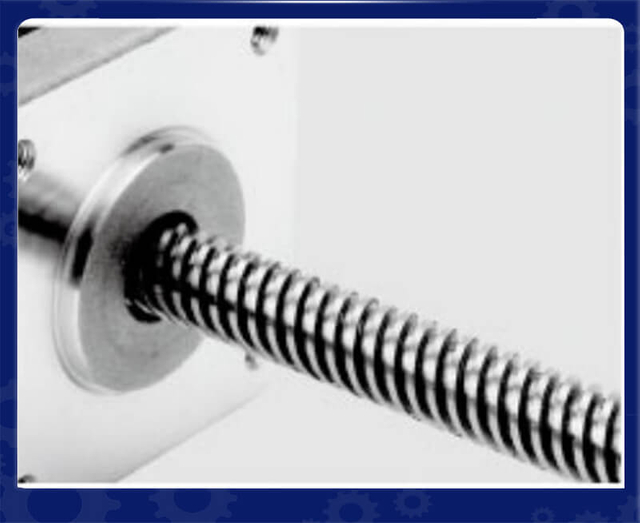
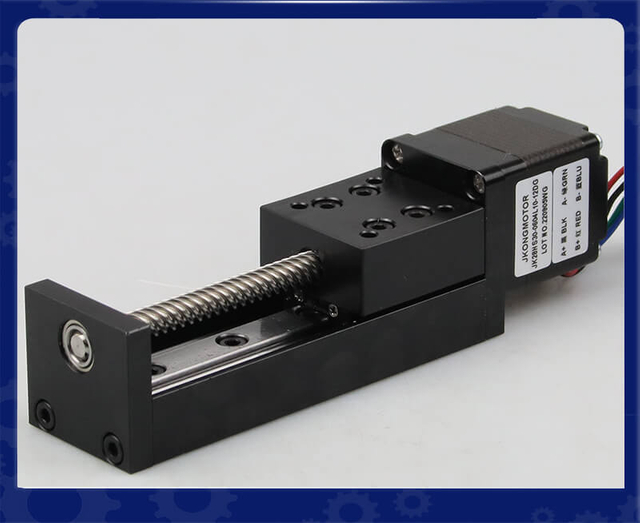
When paired with ball screws, lead screws, belts, or linear modules, integrated DC servo motors can create compact positioning systems for automated equipment.
Final Considerations for French OEMs
For French OEMs developing industrial automation equipment, robotics, medical devices, packaging machinery, AGVs, laboratory systems, and precision positioning equipment, selecting an integrated DC servo motor should be approached as a complete motion-system decision rather than simply a motor purchase.
The right supplier should be able to balance motor performance, integrated electronics, feedback accuracy, communication compatibility, mechanical requirements, customization, quality, and long-term supply stability.
Match the Motor to the Actual Application
French OEMs should begin with the machine's actual load profile rather than selecting a motor based only on rated power.
Important parameters include:
Required continuous torque
Peak torque
Operating speed
Acceleration and deceleration
Duty cycle
Supply voltage
Load inertia
Positioning accuracy
Available installation space
A detailed torque-speed analysis can help determine whether a standard integrated DC servo motor is sufficient or whether a customized solution is required.
Prioritize Complete Motion Integration
One of the main benefits of an integrated DC servo motor is the combination of multiple functions in a compact package.
Depending on the model, the system may integrate:
DC motor + encoder + servo drive + controller + communication interface
This architecture can reduce external wiring and control-cabinet requirements while making decentralized machine architectures easier to implement.
For machines with multiple motion axes, OEMs should evaluate whether integrated motors can simplify the overall electrical and mechanical design.
Confirm Communication Compatibility
French machine builders frequently integrate motors into sophisticated PLC and industrial automation environments. Before selecting a supplier, we should confirm compatibility with the machine's existing control architecture.
Potential interfaces include:
CANopen
EtherCAT
Modbus RTU
RS-485
Ethernet
Pulse/Direction
RS-232
The availability of configuration software, communication documentation, object dictionaries, APIs, and example programs can also influence integration time.
Consider European Compliance Requirements
The motor itself is only one part of the compliance process. OEMs should consider the requirements applicable to the complete machine and its intended application.
Depending on the product and market, relevant considerations can include:
CE-related requirements
EMC compatibility
RoHS requirements
Machinery-related requirements
Electrical safety
Applicable EN/IEC standards
Environmental requirements
The specific conformity obligations should be assessed according to the finished machine, installation environment, and applicable European legislation.
Evaluate Customization and Engineering Support
Many French OEM projects require more than a standard catalog motor.
A capable manufacturer should ideally be able to customize:
Motor voltage
Shaft configuration
Mounting dimensions
Encoder
Gearbox
Brake
Connector
Cable
Firmware
Communication interface
Housing
Control parameters
This is especially important for specialized equipment where the motor must fit precisely into an existing mechanical architecture.
Consider Long-Term Reliability and Supply
OEM equipment may remain in production for many years. Therefore, product lifecycle management and supply stability should be considered during supplier selection.
French OEMs should examine:
Manufacturing capacity
Component sourcing
Production lead times
Quality-control procedures
Batch consistency
Product lifecycle
Spare-parts availability
Engineering-change notifications
After-sales service
International logistics
A technically suitable motor may not be an appropriate long-term OEM component if its availability cannot be maintained throughout the expected product lifecycle.
Test Prototypes Before Mass Production
Prototype testing is strongly recommended before committing to large-volume production.
A typical evaluation process can include:
Technical specification
Motor selection
Prototype delivery
Mechanical installation
Load testing
Servo tuning
Thermal testing
Communication testing
Reliability validation
Pilot production
Mass production
Testing the motor under the actual machine's load, acceleration, duty cycle, and ambient conditions can reveal issues that may not appear in basic laboratory testing.
Compare the Complete System Cost
An integrated DC servo motor should be evaluated according to total system cost, not simply the purchase price of the motor.
Potential savings may come from:
Fewer external servo drives
Reduced control-cabinet space
Less wiring
Simplified connectors
Shorter installation time
Easier machine assembly
Reduced commissioning work
At the same time, OEMs should consider software, maintenance, replacement parts, communication hardware, and technical-support requirements.
Choose a Manufacturer With Appropriate Technical Capability
There is no single integrated DC servo motor manufacturer suitable for every French OEM application. Different suppliers may specialize in miniature motors, industrial servo systems, high-speed applications, robotics, decentralized drives, precision positioning, or customized OEM motors.
The final selection should therefore be based on the actual requirements of the machine.
A practical evaluation should compare motor specifications, encoder technology, integrated drive functions, communication protocols, mechanical compatibility, customization capability, certifications, testing procedures, production capacity, technical support, and total cost.
Final
For French OEMs, an integrated DC servo motor can provide a compact and intelligent approach to modern machine design. By combining motor, feedback, drive electronics, and communication functions, the technology can simplify system architecture while supporting accurate closed-loop motion.
The most effective supplier evaluation should focus on the complete application and long-term partnership, from prototype development and machine integration to quality assurance, production scalability, and after-sales support. This allows OEMs to select an integrated DC servo motor solution that is technically compatible with the machine today while remaining practical for long-term industrial production.
FAQs:
1. What is an integrated DC servo motor?
An integrated DC servo motor combines a DC motor with feedback components, a servo drive, and, depending on the model, a controller and communication interface in one compact assembly. This design can reduce wiring, save installation space, and simplify integration into automation and motion-control equipment.
2. Who are the leading integrated DC servo motor manufacturers in France?
France has a broad industrial motion-control market involving manufacturers and suppliers such as Nidec Leroy-Somer, Parker Parvex, Crouzet, Schneider Electric, and other European and international motion-control companies serving French OEMs. The most suitable supplier depends on motor specifications, control requirements, customization needs, and application.
3. What are integrated DC servo motors used for?
Integrated DC servo motors are commonly used in industrial automation, robotics, AGVs and AMRs, packaging machinery, medical equipment, laboratory automation, linear motion systems, CNC equipment, and precision positioning systems. They are particularly useful where compact dimensions and closed-loop motion control are required.
4. What are the advantages of an integrated DC servo motor?
The main advantages include compact construction, reduced wiring, simplified installation, closed-loop feedback, decentralized control, and reduced control-cabinet requirements. Depending on the design, integrating the motor and drive can also simplify machine commissioning and maintenance.
5. How do I choose an integrated DC servo motor manufacturer?
When selecting a manufacturer, we should compare rated and peak torque, speed, voltage, encoder resolution, communication protocols, mechanical dimensions, thermal performance, customization capability, quality control, certifications, technical support, and production capacity. Prototype testing under actual machine conditions is also recommended.
6. What communication protocols can integrated DC servo motors support?
Depending on the manufacturer and model, integrated DC servo motors may support CANopen, EtherCAT, Modbus RTU, RS-485, RS-232, Ethernet, or pulse-and-direction control. The selected interface should be compatible with the machine's PLC, motion controller, industrial PC, or automation network.
7. Can integrated DC servo motors be customized for OEM applications?
Yes. Many manufacturers provide OEM customization options. These can include motor voltage, shaft dimensions, mounting configuration, encoder type, gearbox, brake, connector, cable length, communication interface, firmware, and housing design. The available customization depends on the manufacturer's engineering and production capabilities.
8. What is the difference between an integrated DC servo motor and a conventional DC motor?
A conventional DC motor normally requires external components for precise closed-loop motion control. An integrated DC servo motor incorporates some or all of the encoder, servo drive, and control electronics into the motor assembly. This can result in a more compact and easier-to-integrate motion-control system.
9. Are integrated DC servo motors suitable for French industrial automation equipment?
Yes. Integrated DC servo motors can be used in French OEM and industrial automation applications when their electrical, mechanical, control, and compliance requirements match the machine. Engineers should verify voltage, torque, speed, feedback, communication, EMC, environmental conditions, and applicable European requirements before final selection.
10. What should OEMs compare when sourcing integrated DC servo motors from France?
OEMs should compare the complete motion solution, rather than motor price alone. Important factors include motor and drive performance, encoder feedback, communication compatibility, customization, quality consistency, prototype support, lead time, production capacity, documentation, after-sales service, and long-term product availability.