Home » News » Top 15 Integrated DC Servo Motor Manufacturers in Poland
Top 15 Integrated DC Servo Motor Manufacturers in Poland
Views: 0 Author: Site Editor Publish Time: 2026-09-24 Origin: Site
Poland has developed into an important manufacturing and engineering hub in Central Europe, with strong capabilities in industrial automation, robotics, motion control, machine building, packaging, electronics, and precision manufacturing. These industries increasingly require compact, accurate, and digitally controllable motion systems, making integrated DC servo motors an attractive solution for OEMs and automation engineers.
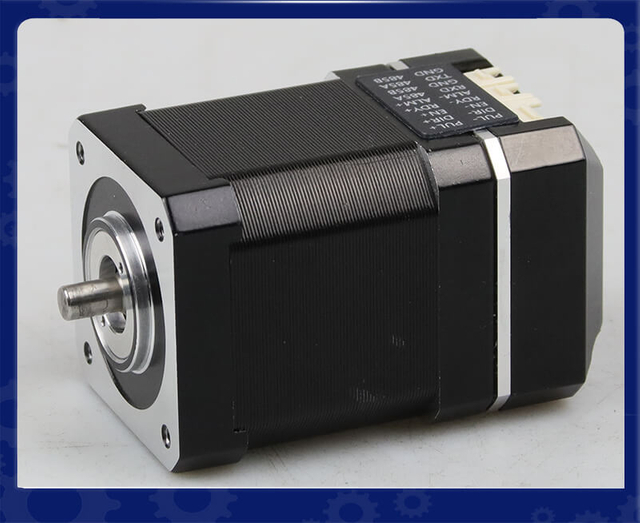
An integrated DC servo motor combines a DC servo motor with electronics such as a servo drive, controller interface, encoder, or communication circuitry within a compact assembly. Compared with conventional motor-and-drive architectures, an integrated design can reduce wiring, simplify machine integration, and save valuable control-cabinet space.
For Polish machine builders and international OEMs sourcing from Poland, supplier selection should consider more than motor specifications. Important factors include continuous and peak torque, rated voltage, encoder resolution, speed range, communication interfaces, protection rating, thermal management, customization capability, production consistency, and technical support.
Below is a practical list of 15 integrated DC servo motor manufacturers and motion-control companies serving the Polish market, covering established Polish manufacturers, automation specialists, and international suppliers with strong relevance to Polish industrial applications.
What Is an Integrated DC Servo Motor?
An integrated DC servo motor is a compact closed-loop motion-control system that combines a DC motor, encoder, servo drive, and control electronics into a single motor assembly. Unlike a conventional servo system, which typically requires separate motor, encoder, and servo drive components, an integrated DC servo motor places most or all of these functions inside the motor housing.
This integrated architecture simplifies machine design, reduces external wiring, saves control-cabinet space, and makes the motor easier to install in compact automation equipment.
How Does an Integrated DC Servo Motor Work?
An integrated DC servo motor operates through a continuous closed-loop feedback process.
The DC motor generates mechanical rotation, while the encoder continuously detects the motor's position and speed. The integrated controller compares the actual motor movement with the commanded target and adjusts the motor current accordingly.
A typical operating sequence is:
Motion command → Integrated controller → Servo drive → DC motor → Encoder feedback → Controller correction
This feedback loop allows the motor to accurately control position, speed, and torque.
For example, if an automated mechanism is commanded to rotate the motor shaft to a specific position, the encoder reports the actual shaft position to the controller. If there is a difference between the target and actual position, the control electronics adjust the motor output until the error is minimized.
Main Components of an Integrated DC Servo Motor
An integrated DC servo motor generally consists of several key components.
1. DC Servo Motor
The motor converts electrical energy into mechanical rotation. Depending on the design, the motor can use a brushed DC or brushless DC architecture.
2. Encoder
The encoder provides real-time feedback about shaft position, rotational speed, and direction.
Common encoder options include:
Incremental encoders
Magnetic encoders
Optical encoders
Absolute encoders
3. Integrated Servo Drive
The servo drive controls the electrical power delivered to the motor. It regulates motor current and enables precise control of acceleration, speed, and torque.
4. Controller and Communication Electronics
Many integrated servo motors include a built-in controller or communication interface. Depending on the model, communication may use RS485, CANopen, Modbus RTU, EtherCAT, or other industrial interfaces.
5. Optional Gearbox or Brake
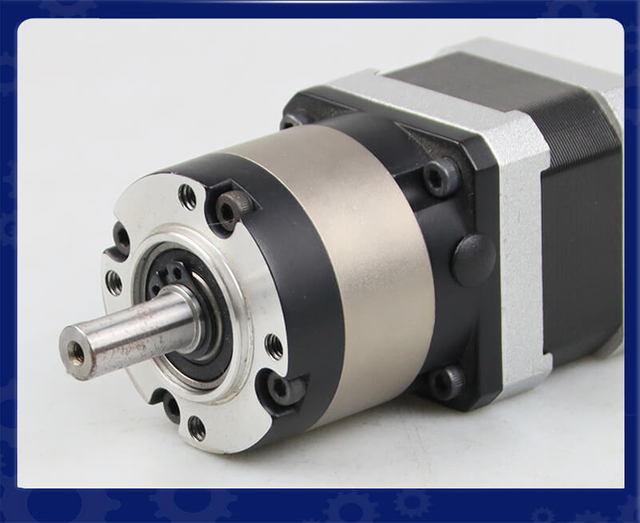
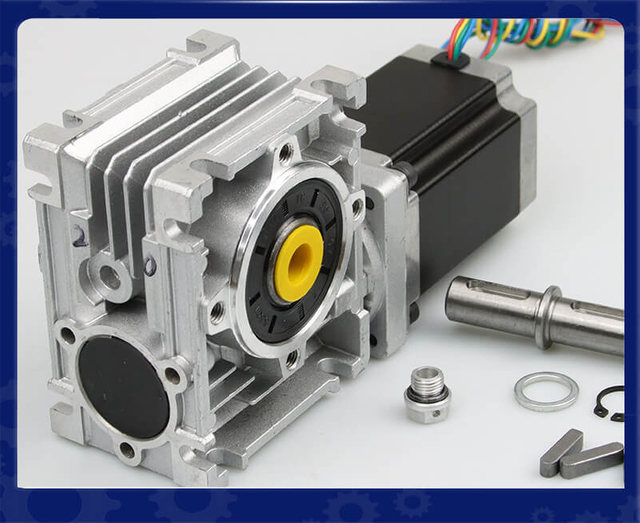
Some integrated DC servo motors can be combined with a planetary gearbox, worm gearbox, or electromagnetic brake to meet specific torque, speed, or holding requirements.
Integrated DC Servo Motor vs. Conventional DC Servo System
The main difference is the level of integration.
A conventional system may require:
DC Servo Motor + Encoder + External Servo Drive + Controller
An integrated DC servo motor can combine these functions into:
Motor + Encoder + Servo Drive + Control Electronics
Feature
Conventional DC Servo System
Integrated DC Servo Motor
Motor
Separate
Integrated
Encoder
Separate or motor-mounted
Integrated
Servo drive
External
Integrated
Wiring
More extensive
Reduced
Installation
More components
Simplified
Control cabinet space
Higher
Lower
Distributed installation
More complex
Easier
Maintenance
Multiple components
Fewer external components
The exact level of integration varies between manufacturers and product models.
Advantages of Integrated DC Servo Motors
Compact Design
Integrating the drive and feedback electronics into the motor reduces the number of external components and can create a more compact motion-control architecture.
Reduced Wiring
Because the servo electronics are integrated into the motor, fewer motor-to-drive connections may be required. This can simplify machine wiring and installation.
Closed-Loop Control
Unlike an open-loop motor, an integrated servo motor uses feedback to monitor actual movement. This enables more precise control of position, speed, and torque.
Easier Machine Integration
Integrated communication interfaces can allow the motor to connect directly with a PLC, industrial controller, or other automation equipment.
Reduced Control Cabinet Requirements
Moving drive electronics closer to the motor can reduce the amount of equipment required inside a centralized electrical cabinet.
Flexible OEM Design
Integrated servo motors are particularly useful for OEMs developing compact machines because motor, feedback, and drive functions can be packaged into a single unit.
Where Are Integrated DC Servo Motors Used?
Integrated DC servo motors are commonly used in applications requiring compact and accurate motion control.
Typical applications include:
Robotics
AGVs and AMRs
Packaging machinery
Conveyor systems
Medical equipment
Laboratory automation
CNC equipment
Printing machinery
Inspection systems
Material handling equipment
Automatic doors and access systems
Industrial positioning mechanisms
They are especially useful when machine designers need closed-loop motion control without installing a separate servo drive for every motor.
How to Select an Integrated DC Servo Motor
When selecting an integrated DC servo motor, several specifications should be evaluated.
Rated Voltage
Common DC servo motor voltage options include 12 VDC, 24 VDC, 36 VDC, and 48 VDC. The selected voltage should match the machine's power architecture.
Torque
Consider both continuous torque and peak torque. The motor needs sufficient torque for normal operation as well as acceleration and temporary overload conditions.
Speed
Check the required operating speed and maximum speed. A gearbox may be appropriate when an application requires lower output speed and higher torque.
Encoder Resolution
Encoder resolution affects feedback precision and positioning performance. The appropriate encoder depends on the required accuracy and control architecture.
Communication Interface
For automated equipment, communication compatibility is important. Common interfaces include:
RS485, CANopen, Modbus RTU, EtherCAT, and Ethernet-based protocols.
Protection Rating
The required IP rating depends on the operating environment. Applications exposed to dust, moisture, oil, or cleaning processes may require increased environmental protection.
Top 15 Integrated DC Servo Motor Manufacturers in Poland
1.LeanMotor
Company Profile
LeanMotor is a professional manufacturer specializing in integrated motion-control and motor solutions for industrial automation and OEM applications. The company focuses on combining motor technology with drive, feedback, and control electronics to create compact and application-oriented motion products. Its solutions are designed for machinery manufacturers and automation engineers seeking space-saving, reliable, and easy-to-integrate motion systems.
Main Products
Integrated DC servo motors
Integrated BLDC motors
Integrated stepper motors
Integrated stepper servo motors
Servo motor solutions
Linear motion products
Motorized linear actuators
Customized integrated motor solutions
Advantages
Focus on integrated motor and motion-control technology
Compact motor-drive integration for reduced wiring and cabinet space
Wide range of integrated motion products
OEM-oriented customization capabilities
Suitable for robotics, automation equipment, packaging machinery, and linear-motion applications
Designed for decentralized motion-control architectures
2.JKONGMOTOR
Company Profile
JKONGMOTOR is a motor manufacturer providing stepper motors, BLDC motors, servo motors, and integrated motion-control solutions for industrial and OEM applications. The company focuses on providing customized motor products and complete motion solutions for applications requiring accurate positioning, controlled speed, and reliable continuous operation.
Main Products
Integrated DC servo motors
Integrated BLDC motors
Integrated stepper motors
Integrated stepper servo motors
Stepper motors
BLDC motors
Servo motors
Linear stepper motors
Geared motors
Customized motor solutions
Advantages
Broad motor and motion-control product portfolio
Integrated motor solutions for space-constrained equipment
Multiple motor configurations and transmission options
Customization for OEM applications
Suitable for automation machinery and robotics
Can provide motor solutions for both rotary and linear motion
Useful for applications requiring precise positioning and controlled motion
3.BESFOC
Company Profile
BESFOC is a professional manufacturer of integrated stepper motors, integrated servo motors, and intelligent motion-control products. The company provides integrated motor solutions that combine the motor, driver, encoder, and control electronics into compact units. Its products are developed for OEMs and industrial automation applications where precise positioning, simplified wiring, and space-efficient machine design are important.
Main Products
Integrated DC servo motors
Integrated BLDC servo motors
Integrated stepper motors
Integrated stepper servo motors
Closed-loop stepper motors
Integrated servo drives
Linear actuator systems
Motorized linear modules
Customized motion-control solutions
Advantages
Strong specialization in integrated motor technology
Motor, drive, and feedback integration in compact packages
Supports multiple communication and control options
Broad selection of frame sizes and motor configurations
OEM customization and application support
Suitable for robotics, CNC machinery, packaging, medical equipment, and industrial automation
Helps reduce control-cabinet wiring and overall system complexity
4. LAFERT Polska
Company Profile
LAFERT Polska is associated with the LAFERT Group, a European manufacturer specializing in electric motors and drive technologies. Its products serve industrial automation, motion control, and machinery applications. The company's presence in Poland makes its motor technologies accessible to local OEMs and industrial customers.
Main Products
DC motors
Brushless DC motors
Servo motors
Permanent-magnet motors
Customized electric motors
Motor-drive systems
Advantages
Extensive motor-engineering experience
Customized motor configurations
Suitable for industrial OEM applications
Broad range of motor technologies
Strong European manufacturing support
5. KOMEL – Institute of Electrical Machines and Drives
Company Profile
KOMEL is a Polish research and engineering organization specializing in electrical machines, drives, and electromechanical systems. Although it is better known for engineering and R&D than for mass-market servo motors, its expertise is relevant to customized motor and drive development.
Main Products and Services
Electric motor development
Permanent-magnet motors
BLDC motor technologies
Servo drive development
Motor prototypes
Customized electromechanical systems
Advantages
Strong R&D capabilities
Experience with customized motor designs
Advanced electrical-machine engineering
Suitable for prototype and specialized projects
Can support demanding industrial applications
6. WAMTECH
Company Profile
WAMTECH is a Polish engineering company focused on automation, electronics, and motion-control technologies. Its activities include industrial control systems and solutions integrating motors, drives, and controllers.
Main Products
Servo systems
DC motor controllers
BLDC drives
Motion controllers
Industrial automation systems
Customized electronic control systems
Advantages
Flexible engineering approach
Customized control solutions
Integration of hardware and software
Suitable for specialized OEM machinery
Polish technical support
7. APS Automatyka
Company Profile
APS Automatyka is a Polish automation and engineering company providing industrial control and motion solutions. Its expertise includes drive systems, industrial electronics, and automation integration for machinery and production equipment.
Main Products
Servo drives
DC motor drives
BLDC motor systems
Motion-control systems
PLC systems
Industrial automation equipment
Advantages
Strong system-integration capabilities
Customized automation solutions
Experience with industrial drives
Suitable for OEM machine development
Integration of motors with control systems
8. Elmark Automatyka
Company Profile
Elmark Automatyka is a Polish industrial automation company supplying industrial computing, control, communication, and automation technologies. Its portfolio and engineering services can be relevant to motion-control applications requiring integrated controllers and motor systems.
Main Products
Motion-control equipment
Servo systems
Industrial controllers
Embedded computing systems
Industrial communication
Automation components
Advantages
Broad industrial automation expertise
Strong embedded-control capabilities
Industrial networking experience
Suitable for customized automation architectures
Engineering support for OEM applications
9. Control Engineering Polska
Company Profile
Control Engineering Polska is involved in industrial automation and control solutions, supporting Polish manufacturers and machine builders. Its activities cover industrial control, drives, motion systems, and automation technologies.
Main Products
Servo control systems
Motor controllers
Industrial drives
Motion-control solutions
PLC systems
Automation engineering
Advantages
Application-oriented engineering
Flexible system integration
Suitable for specialized machinery
Experience with industrial control systems
Can combine multiple automation technologies
10. Relpol Motion
Company Profile
Relpol is a Polish electronics manufacturer with expertise in industrial electrical and electronic components. Its engineering capabilities can support specialized control and automation applications, including motor-control electronics.
Main Products
Industrial electronic components
Control electronics
Switching components
Automation components
Customized electronic solutions
Advantages
Established Polish electronics manufacturing background
Experience with industrial components
Suitable for OEM electronics
Local engineering capabilities
Potential for customized electronic integration
11. MicroB
Company Profile
MicroB is a Polish engineering and electronics company working with embedded control and industrial automation technologies. Its capabilities are relevant to applications where servo motors require customized controllers, feedback electronics, or embedded motion-control functions.
Main Products
Motor controllers
Embedded control systems
Motion-control electronics
BLDC controllers
DC motor control systems
Customized electronics
Advantages
Flexible development capabilities
Strong embedded-electronics expertise
Suitable for customized projects
Compact control-system design
Useful for low- and medium-volume OEM applications
12. TME – Transfer Multisort Elektronik
Company Profile
TME is a major Polish distributor of electronic and automation components headquartered in Łódź. It is not primarily a motor manufacturer, but its extensive product portfolio makes it relevant for OEM developers sourcing DC, BLDC, servo, encoder, and motor-control components for integrated motion systems.
Main Products
DC motors
BLDC motors
Servo motors
Encoders
Motor drivers
Controllers
Industrial automation components
Advantages
Very broad component selection
Strong availability of electronic components
Suitable for prototype development
Convenient OEM component sourcing
Extensive technical documentation
13. ASTOR
Company Profile
ASTOR is a Polish industrial automation company with a long history in automation, robotics, control systems, and industrial digitalization. It provides automation components and engineering services to manufacturers and machine builders.
Main Products
Servo systems
Motion controllers
Industrial robots
PLCs
Industrial networking
Automation software
Drive systems
Advantages
Strong Polish automation presence
Extensive engineering experience
Robotics and motion-control expertise
Suitable for integrated automation projects
Technical support and training
14. APA Group
Company Profile
APA Group is a Polish industrial automation and engineering company providing solutions for manufacturing and smart-industry applications. Its engineering capabilities cover industrial control, robotics, machine automation, and customized automation systems.
Polish automation integrators such as Elmark and other specialist engineering companies serve OEMs that need customized motion-control architectures rather than standard catalog motors. Their work may involve combining DC/BLDC motors, encoders, drives, and industrial communication into application-specific systems.
Main Products and Services
DC motor systems
BLDC motor systems
Servo drives
Encoders
Motion controllers
Industrial communication systems
Customized motion-control solutions
Advantages
Application-specific engineering
Flexible component selection
Integration of motor and controller technologies
Suitable for prototype and OEM projects
Local technical assistance
How to Select an Integrated DC Servo Motor Supplier in Poland
Choosing an integrated DC servo motor manufacturer requires matching the drive system with the machine's mechanical and control requirements.
1. Check Rated Voltage
Common DC servo system voltage options include 12 VDC, 24 VDC, 36 VDC, and 48 VDC.
The selected motor should match the available machine power supply and required operating conditions.
2. Compare Continuous and Peak Torque
Torque requirements should be evaluated under both normal and transient operating conditions.
A suitable system should provide sufficient:
Continuous torque
Peak torque
Starting torque
Acceleration torque
Holding torque
Selecting a motor only according to nominal torque can result in insufficient dynamic performance.
3. Evaluate Encoder Resolution
The encoder determines the feedback information available to the servo control system.
Depending on the application, manufacturers may offer:
Incremental encoders
Magnetic encoders
Optical encoders
Absolute encoders
Higher-resolution feedback can support finer positioning and improved velocity control, although the appropriate specification depends on the machine architecture.
4. Consider Communication Protocols
Modern integrated servo motors increasingly support digital communication.
Common interfaces include:
RS485, CANopen, Modbus RTU, EtherCAT, RS232, and Ethernet-based protocols.
Selecting a communication interface compatible with the machine controller can significantly simplify commissioning and system integration.
5. Evaluate Mechanical Compatibility
Mechanical integration should consider:
Motor frame size
Shaft diameter
Shaft length
Mounting pattern
Motor length
Gear ratio
Connector position
Cable direction
Brake requirements
For OEM production, customized shaft and mounting configurations can often reduce mechanical redesign.
Applications of Integrated DC Servo Motors in Poland
Polish manufacturers operate across numerous sectors where compact servo technology can provide practical benefits.
Industrial Robotics
Servo motors provide closed-loop feedback for robotic joints, positioning mechanisms, and automated handling equipment.
Packaging Machinery
Integrated servo systems can control feeders, conveyors, cutters, indexing mechanisms, and labeling equipment.
AGVs and AMRs
Battery-powered mobile robots can benefit from 24 VDC and 48 VDC integrated drive systems, particularly where decentralized control is preferred.
Medical Equipment
Compact servo motors can provide controlled positioning for pumps, actuators, laboratory equipment, and diagnostic systems.
CNC and Precision Machinery
Closed-loop servo control enables accurate positioning and coordinated movement of machine axes.
Conveyor Systems
Distributed integrated drives can reduce the amount of centralized wiring required in long conveyor systems.
Integrated DC Servo Motor vs. Conventional Servo System
A conventional servo architecture often consists of separate:
Motor + Encoder + Servo Drive + Controller
An integrated servo motor can combine several of these components:
Motor + Encoder + Drive Electronics + Communication
This difference can influence machine design in several ways.
Feature
Conventional Servo System
Integrated DC Servo Motor
Motor
Separate
Integrated
Drive
External
Integrated
Encoder
Usually separate/integrated with motor
Integrated
Wiring
More extensive
Reduced
Control Cabinet Space
Higher
Lower
Installation
More components
More compact
Distributed Architecture
Possible
Particularly suitable
Customization
High
High with suitable supplier
Neither architecture is universally appropriate. The selection should depend on the machine's power requirements, environmental conditions, controller architecture, serviceability, and production objectives.
Key Questions for Polish OEMs
Before purchasing an integrated DC servo motor, we recommend confirming the following specifications with the manufacturer:
What is the rated DC voltage?
What are the continuous and peak torque ratings?
What maximum speed can the motor achieve?
Which encoder options are available?
Is the drive electronics integrated into the motor housing?
Which communication protocols are supported?
Is closed-loop position control available?
Are speed and torque modes supported?
What is the motor's IP protection rating?
Can the shaft and mounting dimensions be customized?
Is a gearbox available?
Is a holding brake available?
What operating temperature range is supported?
What software is available for configuration?
Can samples be provided for OEM testing?
Conclusion
Poland's growing automation, robotics, machine-building, logistics, and manufacturing sectors create strong demand for compact and intelligent motion-control technology. The 15 manufacturers and suppliers listed above represent a broad range of capabilities, from miniature DC servo systems and integrated motors to complete industrial automation platforms.
For applications requiring compact dimensions, closed-loop positioning, distributed control, reduced wiring, and simplified installation, integrated DC servo motors can provide an effective alternative to traditional motor-and-drive architectures.
When comparing suppliers, Polish OEMs should evaluate the complete technical specification rather than focusing exclusively on motor power or price. Torque, voltage, encoder resolution, communication protocol, mechanical dimensions, environmental protection, customization capability, and long-term technical support should all be considered before selecting a motion-control solution.
For high-volume OEM applications, requesting motor samples and conducting testing under actual load conditions is also an effective way to verify positioning accuracy, thermal performance, acceleration response, noise, vibration, and communication reliability before committing to series production.
FAQ:
1. What is an integrated DC servo motor?
An integrated DC servo motor combines a DC motor with control electronics, feedback components such as an encoder, and often a servo drive in a single compact unit. This design can simplify wiring, reduce control-cabinet space, and provide precise speed and position control.
2. What are the main advantages of integrated DC servo motors?
The main advantages include compact construction, simplified wiring, reduced installation complexity, precise motion control, and easier integration into automated machinery. Integrated designs can also help reduce the number of separate components required in a motion-control system.
3. Which industries use integrated DC servo motors in Poland?
Integrated DC servo motors can be used in industrial automation, robotics, packaging machinery, CNC equipment, material handling, medical equipment, laboratory automation, inspection systems, and linear motion applications.
4. How do I choose an integrated DC servo motor for an OEM application?
Important specifications include rated voltage, continuous and peak torque, speed range, encoder resolution, control method, communication interface, mounting dimensions, IP rating, brake requirements, and available gearbox or linear-actuator options. The required load profile and duty cycle should also be considered.
5. Are integrated DC servo motors suitable for robotics?
Yes. Integrated DC servo motors can be used in robotic systems that require controlled speed, accurate positioning, and compact motion-control hardware. The appropriate motor should be selected according to the robot's payload, speed, torque, positioning accuracy, and communication requirements.
6. What is the difference between an integrated DC servo motor and a conventional servo motor?
A conventional servo system generally uses separate components such as a motor, encoder, servo drive, and controller. An integrated DC servo motor incorporates some or all of these components into the motor assembly, which can reduce wiring, installation space, and system complexity.
7. What communication interfaces are available for integrated servo motors?
Depending on the manufacturer and model, integrated servo motors may support interfaces such as RS-485, CANopen, Modbus RTU, EtherCAT, and other industrial communication protocols. Buyers should verify the exact interface and control architecture before selecting a motor.
8. Can integrated DC servo motors be customized for OEM projects?
Many manufacturers and motion-control suppliers offer customization options for OEM applications. Depending on the supplier, customization may include motor dimensions, winding specifications, encoder type, gearbox, brake, connector, communication interface, cable configuration, and control parameters.
9. What should I consider when comparing integrated DC servo motor manufacturers in Poland?
Consider the manufacturer's motor technology, integrated electronics, available torque and speed ranges, encoder options, communication protocols, customization capability, quality-control processes, technical documentation, lead times, after-sales support, and experience with your specific application.
10. Where can I find integrated DC servo motor suppliers for the Polish market?
Polish OEMs can source integrated DC servo motors from local automation companies, motion-control specialists, distributors, and international manufacturers serving Poland. When comparing suppliers, confirm whether the company actually manufactures the integrated motor or acts primarily as a distributor or system integrator.