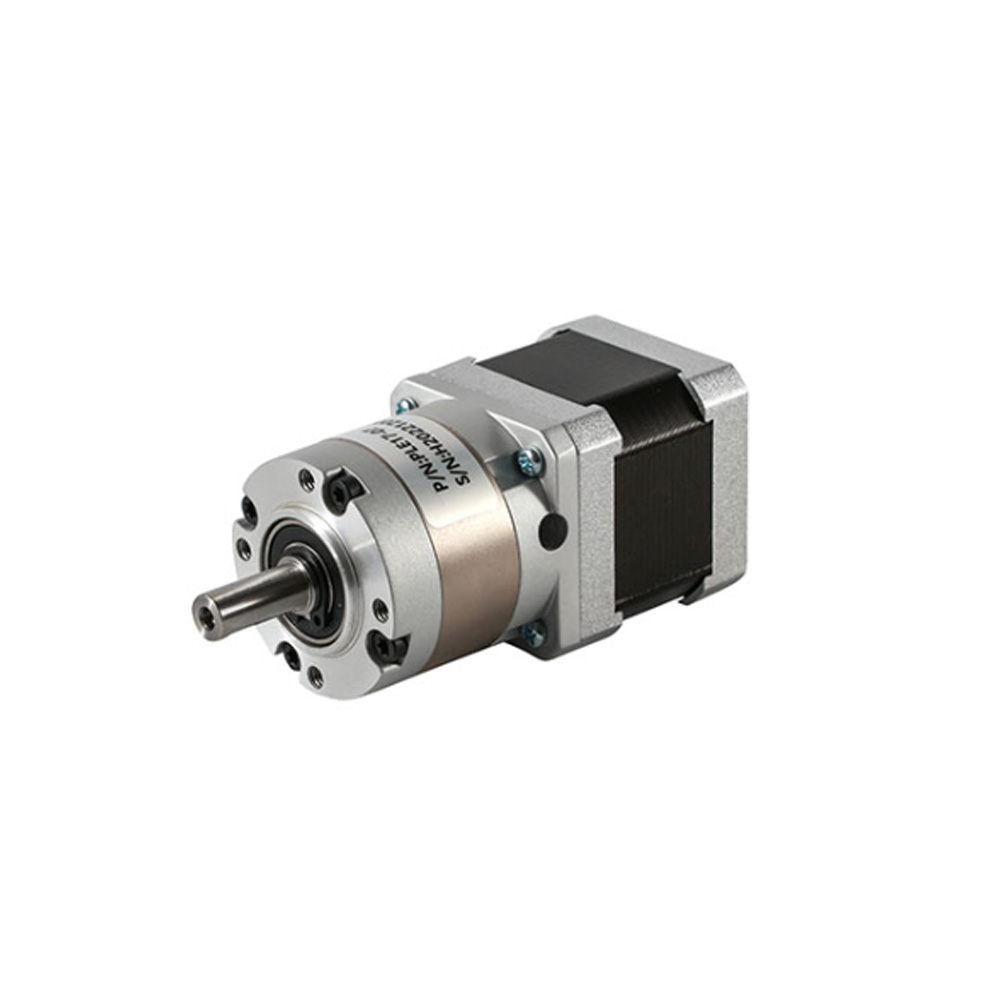
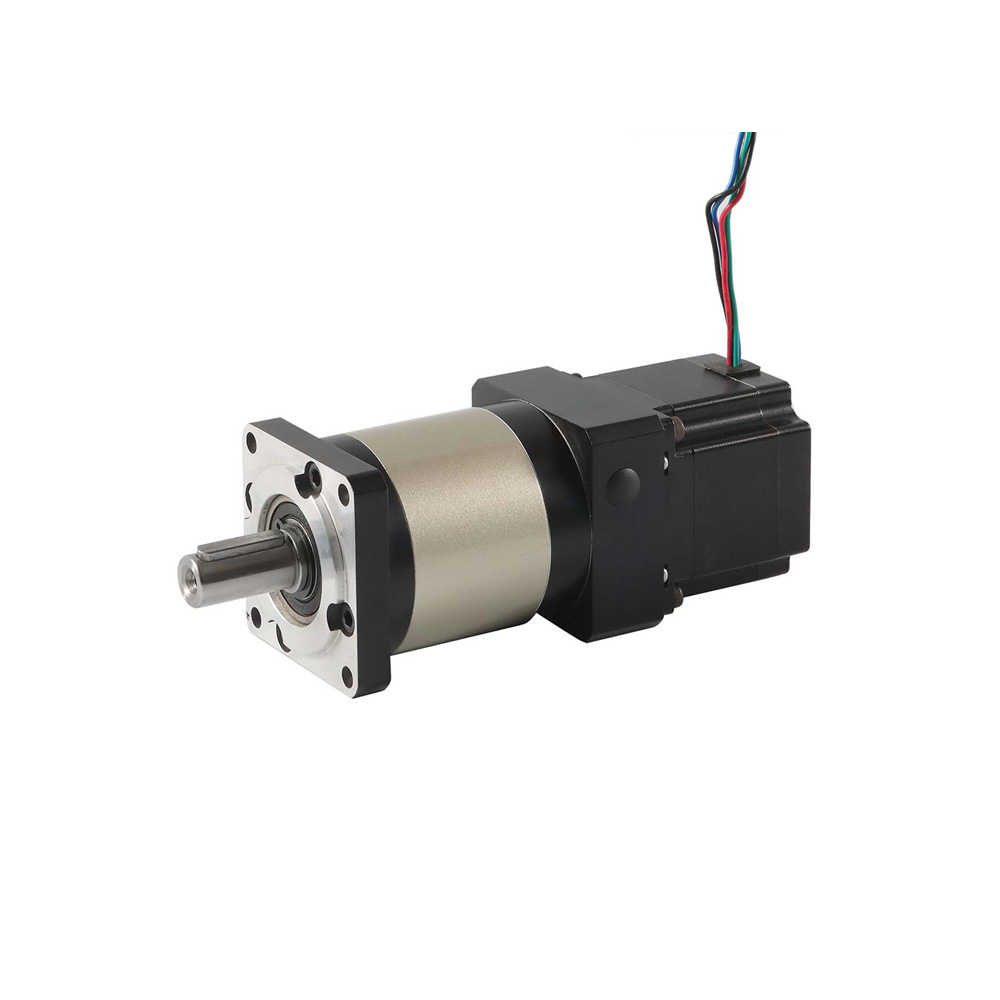
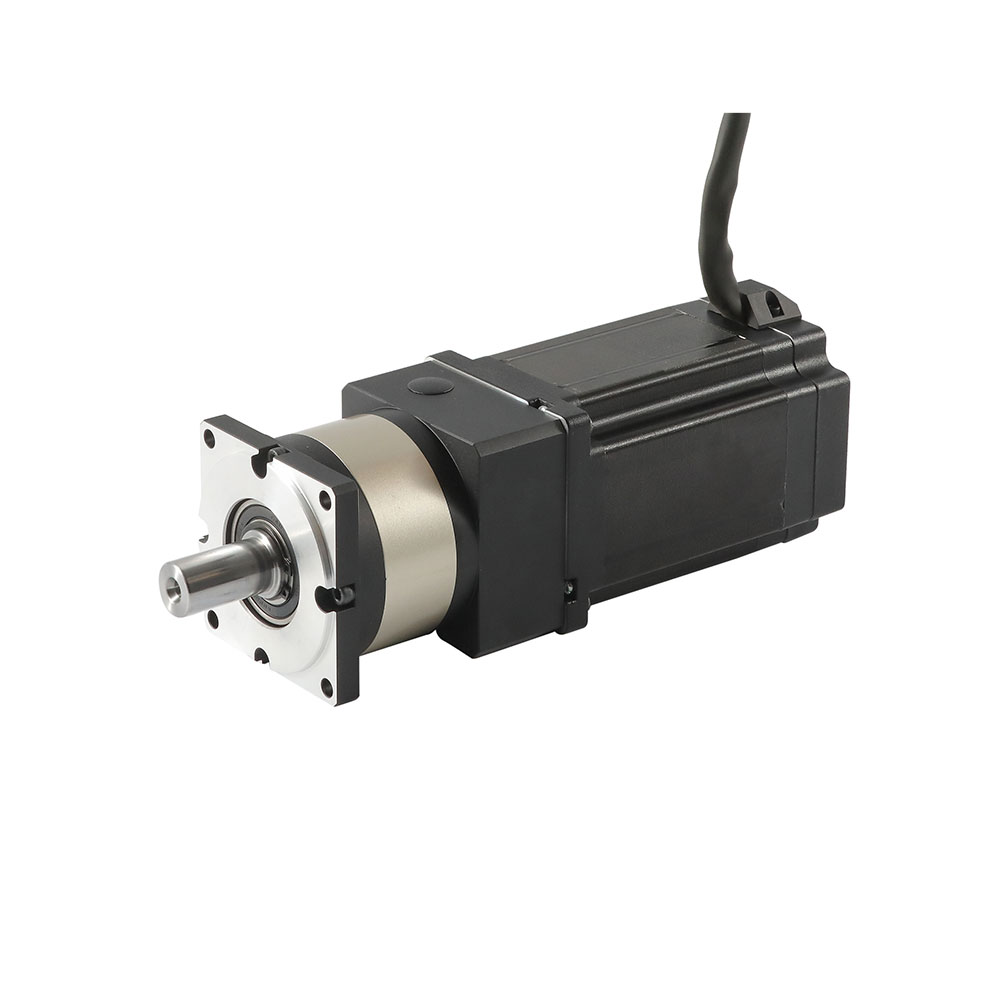
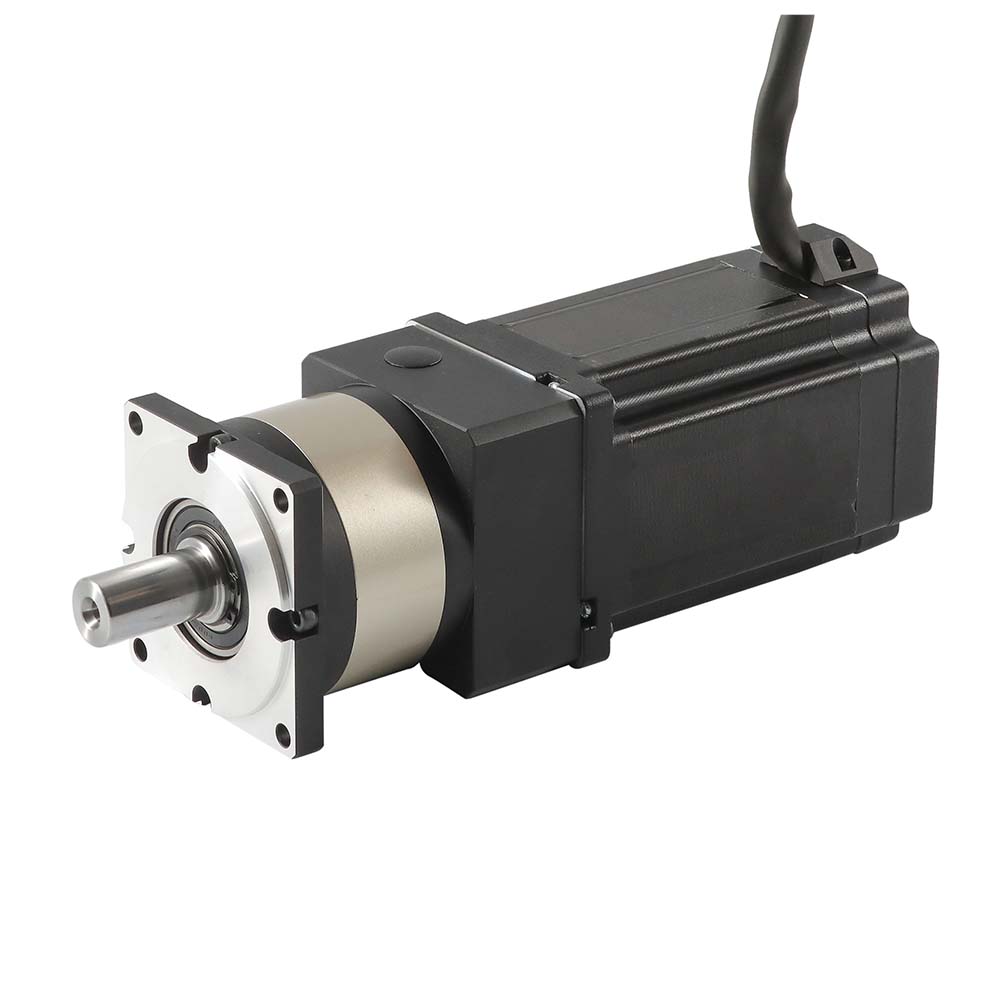
In modern industrial automation, precision, repeatability, and reliability are non-negotiable requirements for conveyor belt systems. We increasingly rely on planetary gear stepper motors to deliver accurate positioning, stable torque output, and long-term operational consistency. These motors combine the inherent accuracy of stepper technology with the torque multiplication and compactness of a planetary gearbox, making them ideal for precise conveyor belt positioning applications across manufacturing, packaging, logistics, and material handling industries.
By integrating planetary gear mechanisms, we achieve superior control over belt indexing, synchronized motion, and load stability—key factors for optimizing throughput and reducing downtime.
Understanding Planetary Gear Stepper Motor Architecture
Core Mechanical Structure
A planetary gear stepper motor consists of three primary mechanical elements:
Sun Gear mounted on the motor shaft
Planet Gears rotating around the sun gear
Ring Gear enclosing the system
This configuration distributes load evenly across multiple contact points, significantly enhancing torque density and mechanical efficiency.
Stepper Motor Integration
When paired with a high-resolution stepper motor, the planetary gearbox allows us to convert precise step inputs into controlled linear or rotational motion of conveyor belts. The result is exceptional positioning accuracy without feedback devices in many applications.
Types of Planetary Gear Stepper Motors
Planetary gear stepper motors are available in multiple configurations to meet different torque, precision, space, and application requirements. Below are the main types of planetary gear stepper motors, classified by motor technology, gearbox structure, and application design. Each type offers distinct performance advantages for industrial automation, robotics, and conveyor systems.
1. Hybrid Planetary Gear Stepper Motors
Hybrid planetary gear stepper motors are the most widely used type in industrial applications. They combine permanent magnet and variable reluctance technologies with a planetary gearbox.
Key characteristics:
High torque output with compact size
Step angles typically 1.8° or 0.9°
Excellent holding torque and repeatability
Smooth motion when paired with microstepping drivers
Typical applications:
2. Permanent Magnet (PM) Planetary Gear Stepper Motors
Permanent magnet planetary gear stepper motors use a simpler rotor structure combined with a planetary gearbox to increase torque.
Key characteristics:
Lower cost compared to hybrid types
Moderate torque and positioning accuracy
Larger step angles (commonly 7.5° or 15°)
Simplified control requirements
Typical applications:
3. High-Torque Planetary Gear Stepper Motors
These motors are specifically designed to deliver maximum output torque by combining a high-performance stepper motor with a multi-stage planetary gearbox.
Key characteristics:
High gear reduction ratios (up to 100:1 or higher)
Exceptional torque density
Excellent load-handling capability
Stable low-speed performance
Typical applications:
Heavy-load conveyor systems
Automated lifting mechanisms
Industrial indexing tables
Material handling equipment
4. Low-Backlash Planetary Gear Stepper Motors
Low-backlash planetary gear stepper motors are optimized for applications where precision and bidirectional accuracy are critical.
Key characteristics:
Backlash typically ≤10 arc-min, some designs ≤5 arc-min
Highly accurate positioning and repeatability
Reduced mechanical play during direction changes
Enhanced motion synchronization
Typical applications:
Precision conveyor indexing
Robotics and automation arms
Semiconductor equipment
Vision-guided motion systems
5. Integrated Planetary Gear Stepper Motors
Integrated planetary gear stepper motors combine the motor, planetary gearbox, and sometimes the driver into a single compact unit.
Key characteristics:
Typical applications:
Modular conveyor systems
Smart manufacturing lines
Automated packaging machines
Space-constrained equipment designs
6. NEMA Frame Planetary Gear Stepper Motors
These motors are classified by NEMA standard sizes, such as NEMA 11, NEMA 17, NEMA 23, and NEMA 34, paired with planetary gearboxes.
Key characteristics:
Standardized mounting dimensions
Easy replacement and system integration
Wide torque and speed ranges
Broad driver compatibility
Typical applications:
7. Closed-Loop Planetary Gear Stepper Motors
Closed-loop planetary gear stepper motors integrate encoders for real-time position feedback, combining stepper precision with servo-like performance.
Key characteristics:
No loss of steps under load
Higher dynamic performance
Improved efficiency and thermal control
Enhanced reliability in demanding conditions
Typical applications:
High-speed conveyors
Automated sorting systems
Robotics and pick-and-place machines
Precision manufacturing equipment
8. Hollow Shaft Planetary Gear Stepper Motors
These motors feature a hollow output shaft combined with a planetary gearbox, enabling flexible mechanical integration.
Key characteristics:
Direct mounting over lead screws or shafts
Reduced couplings and alignment issues
Compact and lightweight structure
High torque transmission efficiency
Typical applications:
Linear conveyor actuators
Rotary indexing platforms
Compact automation modules
Medical and laboratory equipment
Conclusion
The wide variety of planetary gear stepper motor types allows engineers and system designers to precisely match motor performance to application demands. Whether the priority is high torque, compact size, low backlash, closed-loop control, or simplified integration, there is a planetary gear stepper motor configuration optimized for each use case. Selecting the correct type ensures improved efficiency, higher precision, and long-term system reliability.
Why Planetary Gear Stepper Motors Excel in Conveyor Belt Positioning
High Torque at Low Speeds
Conveyor systems frequently operate under heavy loads at relatively low speeds. Planetary gear stepper motors provide:
This ensures smooth belt motion even during start-stop cycles or when handling uneven payloads.
Superior Positioning Accuracy
Thanks to fine step resolution combined with gearbox reduction, we achieve:
Micron-level positioning accuracy
Repeatable indexing operations
Consistent belt alignment
These attributes are critical for automated assembly lines, labeling machines, and pick-and-place conveyor systems.
Reduced Backlash for Synchronized Motion
Low-backlash planetary gearboxes minimize positional deviation during direction changes. This is essential for:
Key Performance Advantages in Industrial Conveyors
Compact Design with High Power Density
Planetary gear stepper motors deliver maximum torque in minimal space, allowing us to design compact conveyor systems without sacrificing performance. This is especially valuable in:
Space-constrained production lines
Modular conveyor architectures
Retrofit and upgrade projects
Energy Efficiency and Thermal Stability
Efficient torque transmission reduces energy loss and heat generation. Benefits include:
Durability in Continuous Duty Cycles
Industrial conveyors often run 24/7. Planetary gear stepper motors are engineered for:
Applications of Planetary Gear Stepper Motors in Conveyor Systems
Planetary gear stepper motors play a critical role in modern conveyor systems where precision, reliability, and controlled motion are essential. By combining the accurate step control of stepper motors with the high torque density and compact structure of planetary gearboxes, these motors deliver consistent performance across a wide range of conveyor applications. Below are the key application areas where planetary gear stepper motors are widely used in conveyor systems.
Precision Indexing Conveyors
Planetary gear stepper motors are ideal for indexing conveyor systems that require precise positioning at fixed intervals. The gearbox reduction enhances torque and minimizes positional error, allowing the conveyor to stop accurately at predefined stations.
Typical uses include:
Assembly line positioning
Automated inspection stations
Component transfer between work cells
The low-backlash characteristics ensure repeatable stopping accuracy, even during frequent start–stop cycles.
Packaging and Labeling Conveyors
In packaging environments, conveyor belts must maintain exact speed control and synchronized motion with upstream and downstream equipment. Planetary gear stepper motors provide stable output torque and smooth motion control.
Common applications:
Bottle and container labeling
Cartoning and case packing
Filling and sealing lines
Accurate motor control ensures correct label placement and consistent package spacing.
Sorting and Distribution Conveyor Systems
Automated sorting systems rely on precise timing and controlled acceleration to divert products efficiently. Planetary gear stepper motors support accurate belt positioning and controlled motion profiles.
Application benefits include:
These motors are frequently used in logistics centers and distribution hubs.
Heavy-Duty Material Handling Conveyors
For conveyors transporting heavy or uneven loads, high-torque planetary gear stepper motors provide the required mechanical strength and stability.
Typical scenarios:
The planetary gearbox distributes load evenly, reducing mechanical stress and extending system lifespan.
Modular and Flexible Conveyor Systems
Planetary gear stepper motors are well suited for modular conveyor designs where flexibility and scalability are essential. Their compact size allows easy integration into standardized conveyor modules.
Key advantages:
This makes them ideal for reconfigurable production lines and smart factories.
Accumulation and Buffer Conveyors
Accumulation conveyors require precise speed regulation to manage product flow without collisions or jams. Planetary gear stepper motors offer fine speed control and smooth low-speed operation.
Common applications include:
Accurate motion control helps maintain product integrity and operational efficiency.
Inclined and Vertical Conveyor Systems
Inclined and vertical conveyors place higher torque demands on drive motors due to gravitational forces. Planetary gear stepper motors deliver enhanced torque output while maintaining precise control.
Typical applications:
Inclined belt conveyors
Vertical lift conveyors
Spiral conveyor systems
The increased torque ensures stable movement without rollback or slippage.
Cleanroom and Specialized Environment Conveyors
In cleanroom or controlled environments, motion systems must be compact, reliable, and low maintenance. Planetary gear stepper motors meet these requirements through efficient torque transmission and sealed gearbox designs.
Used in:
Electronics manufacturing conveyors
Semiconductor processing lines
Pharmaceutical and medical device production
Their precise control supports contamination-sensitive processes.
Conclusion
Planetary gear stepper motors are a versatile and highly effective solution for conveyor systems requiring precise positioning, high torque, and reliable performance. From indexing and packaging conveyors to heavy-duty material handling and cleanroom applications, these motors enable accurate motion control, improved efficiency, and long-term operational stability. By selecting the appropriate planetary gear stepper motor configuration, conveyor systems can achieve optimized performance and enhanced productivity across diverse industrial environments.
Gear Ratio Selection for Conveyor Belt Optimization
Low Ratios for Speed-Focused Conveyors
Gear ratios such as 3:1 or 5:1 provide faster belt movement while maintaining acceptable torque levels.
Medium Ratios for Balanced Performance
Ratios between 10:1 and 20:1 deliver an optimal balance of speed, torque, and accuracy for most industrial conveyors.
High Ratios for Heavy Loads
Ratios exceeding 30:1 are ideal for heavy-duty conveyors requiring maximum torque and precise positioning under high inertia.
Control and Integration Benefits
Simplified Motion Control
Stepper-based systems eliminate the need for complex feedback mechanisms in many applications, simplifying system architecture.
PLC and Driver Compatibility
Planetary gear stepper motors integrate seamlessly with:
Scalable Automation Design
Their modular nature allows easy scaling from small conveyor modules to fully automated production lines.
Maintenance and Reliability Considerations
Low Maintenance Requirements
The robust gearbox design minimizes wear, reducing lubrication and maintenance needs.
Consistent Performance Over Time
Uniform load distribution prevents premature gear failure, ensuring long-term reliability.
Predictable Operational Behavior
Stepper motors provide deterministic motion control, simplifying troubleshooting and system diagnostics.
Selecting the Right Planetary Gear Stepper Motor for Your Conveyor
Selecting the right planetary gear stepper motor is critical to achieving reliable performance, precise positioning, and long-term efficiency in conveyor systems. A well-matched motor and gearbox combination ensures stable operation under load, accurate motion control, and reduced maintenance costs. Below is a structured, application-focused guide to help determine the most suitable planetary gear stepper motor for your conveyor.
Define Load and Torque Requirements
The first step is to accurately calculate the required output torque. Conveyor load, belt friction, pulley diameter, and acceleration profiles all directly affect torque demand.
Key considerations include:
Maximum payload weight
Conveyor length and belt tension
Starting and stopping torque
Inclined or vertical conveyor angles
Planetary gear stepper motors are ideal when high torque is required at low to moderate speeds, ensuring smooth movement without stalling.
Select the Appropriate Gear Ratio
The gear ratio determines the balance between speed, torque, and positioning resolution. Choosing the correct ratio is essential for optimal conveyor performance.
Low ratios (3:1–5:1): Higher belt speed with moderate torque
Medium ratios (10:1–20:1): Balanced speed and torque for general conveyors
High ratios (30:1–100:1): Maximum torque for heavy-duty or inclined conveyors
Higher ratios also improve positioning accuracy by increasing effective step resolution.
Evaluate Required Positioning Accuracy
Precision requirements vary significantly between conveyor types. Indexing, sorting, and automated assembly conveyors require high positional repeatability.
Important factors:
For high-precision applications, selecting a low-backlash planetary gearbox ensures consistent bidirectional accuracy.
Determine Conveyor Speed and Duty Cycle
Operating speed and duty cycle directly influence motor sizing and thermal performance.
Consider:
Continuous vs intermittent operation
Acceleration and deceleration frequency
Required belt speed consistency
For continuous-duty conveyors, motors with higher torque margins and efficient planetary gearboxes provide better thermal stability and extended service life.
Choose the Correct Motor Frame Size
Planetary gear stepper motors are commonly available in standard NEMA frame sizes, such as NEMA 17, NEMA 23, and NEMA 34.
Selection criteria:
Larger frame sizes deliver higher torque but require more installation space.
Assess Backlash and Motion Smoothness
Backlash can affect product spacing and belt alignment, particularly in start-stop or reversing conveyors.
For applications demanding:
A low-backlash planetary gear stepper motor is strongly recommended.
Consider Environmental and Operating Conditions
Environmental factors significantly impact motor reliability and lifespan.
Key aspects include:
Sealed planetary gearboxes and appropriate motor protection ratings ensure reliable operation in harsh or sensitive environments.
Decide Between Open-Loop and Closed-Loop Control
Traditional stepper systems operate in open-loop control, while advanced systems use closed-loop feedback with encoders.
Comparison:
Open-loop: Cost-effective, simple, suitable for predictable loads
Closed-loop: No lost steps, higher efficiency, improved reliability under variable loads
For conveyors with changing loads or higher dynamic demands, closed-loop planetary gear stepper motors offer enhanced performance.
Integration and Control Compatibility
Ensure compatibility with existing control systems and power supplies.
Important checks:
Integrated planetary gear stepper motors can simplify wiring and reduce installation time.
Plan for Maintenance and Lifecycle Costs
Beyond initial purchase cost, consider total cost of ownership.
Planetary gear stepper motors offer:
Selecting a motor with sufficient torque reserve minimizes wear and operational stress.
Conclusion
Selecting the right planetary gear stepper motor for your conveyor requires a thorough evaluation of load, torque, speed, precision, environment, and control requirements. By carefully matching motor characteristics with conveyor system demands, it is possible to achieve superior positioning accuracy, stable performance, and long-term operational reliability. A well-selected planetary gear stepper motor ultimately enhances productivity, reduces downtime, and supports scalable conveyor system design.
Future Trends in Conveyor Belt Motion Control
As automation advances, planetary gear stepper motors continue to evolve with:
These innovations further solidify their role as a cornerstone technology for precision conveyor belt positioning.
Conclusion
Planetary gear stepper motors represent a high-performance, cost-effective, and reliable solution for precise positioning of conveyor belts. By combining high torque, compact design, low backlash, and exceptional accuracy, they enable modern conveyor systems to meet the demands of high-speed, high-precision industrial automation. For organizations seeking optimized motion control, improved productivity, and long-term operational reliability, these motors remain an indispensable choice.