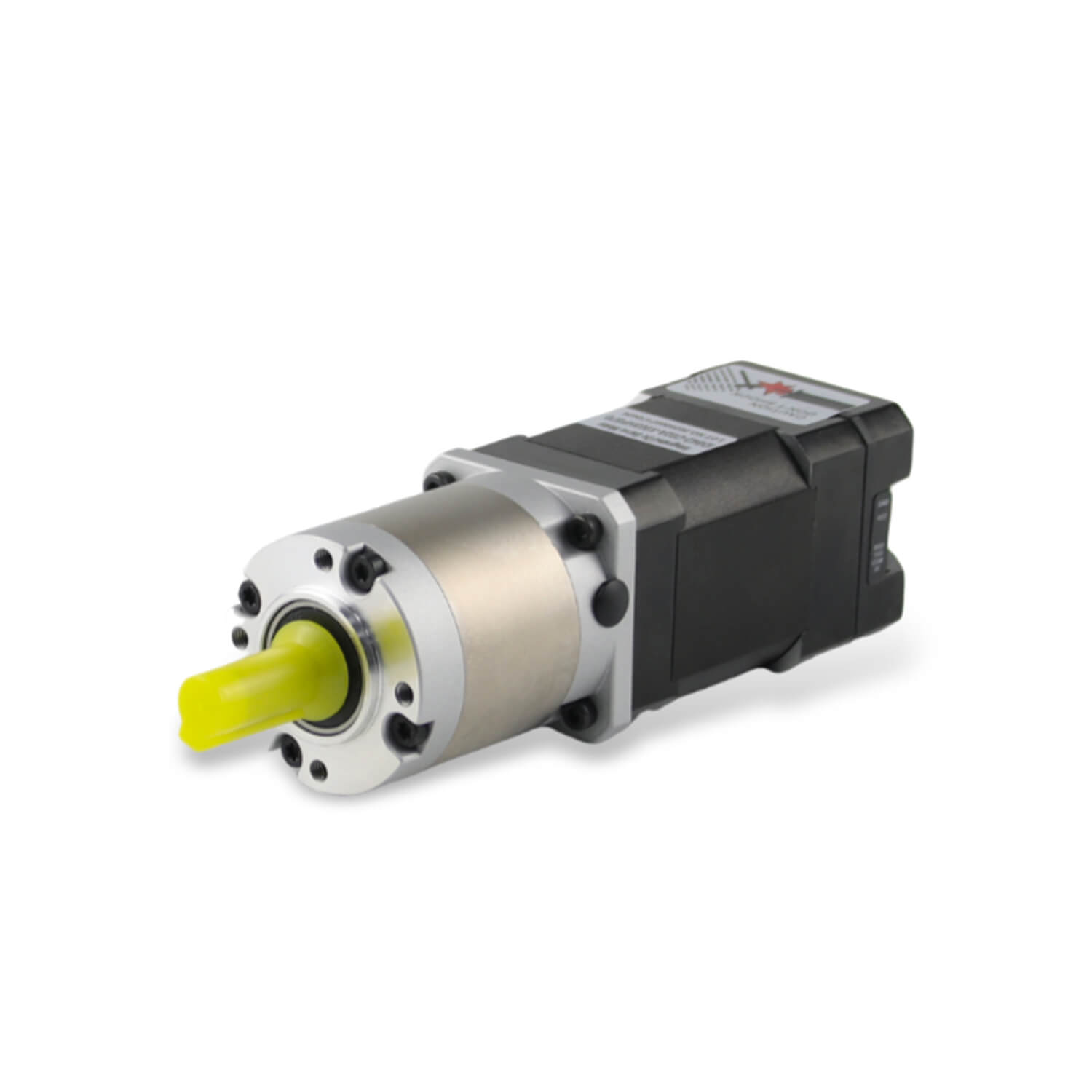
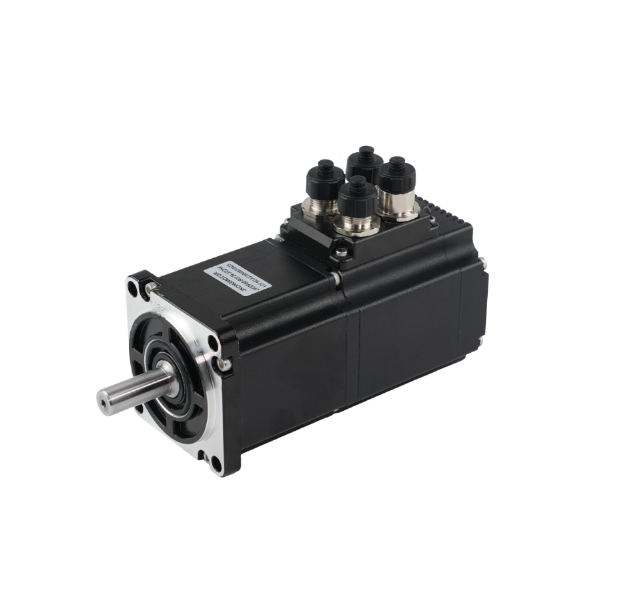
Modern industrial automation demands high precision, compact architecture, and reliable motion control. As articulated robots continue to dominate manufacturing, logistics, electronics assembly, and medical automation, the need for efficient drive systems has never been greater. We address this challenge with the integrated servo motor for articulated robots, a technology that combines the servo motor, drive electronics, encoder, and control system into a single compact unit.
By eliminating complex wiring, reducing installation space, and improving system efficiency, integrated servo technology has become the preferred motion solution for next-generation articulated robotic arms.
What Is an Integrated Servo Motor for Articulated Robots
An integrated servo motor for articulated robots is a compact motion control device that combines several critical components—including the servo motor, servo drive (controller), encoder feedback system, and communication interface—into a single unified unit. This all-in-one design enables precise, efficient, and simplified motion control for the multiple joints found in articulated robotic arms.
In traditional robotic systems, the servo motor and servo drive are installed separately. The motor is mounted on the robot joint, while the drive controller is typically located in a control cabinet. These components must be connected using multiple cables for power, encoder feedback, and communication. This structure increases system complexity, installation time, and maintenance requirements.
An integrated servo motor eliminates this separation by embedding the drive electronics and control circuitry directly inside the motor housing. The result is a self-contained motion unit that requires fewer cables and significantly simplifies the architecture of articulated robotic systems.
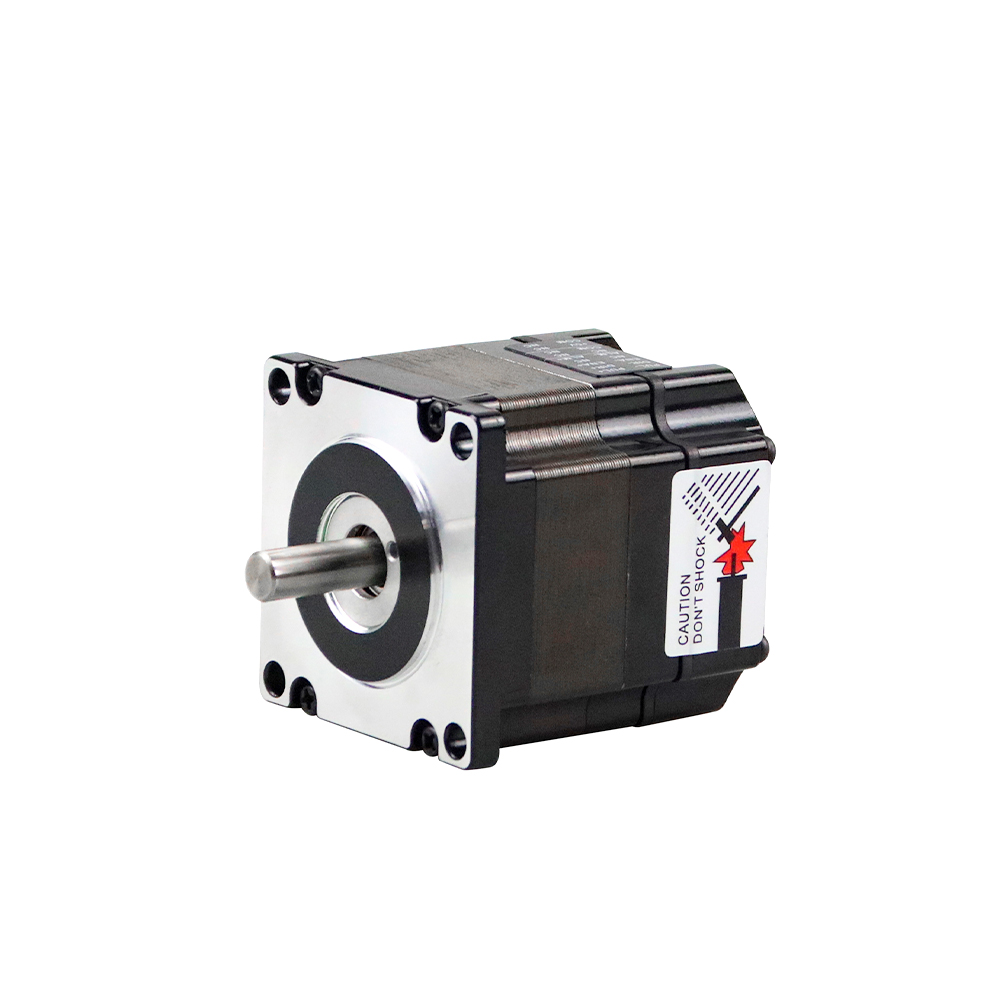
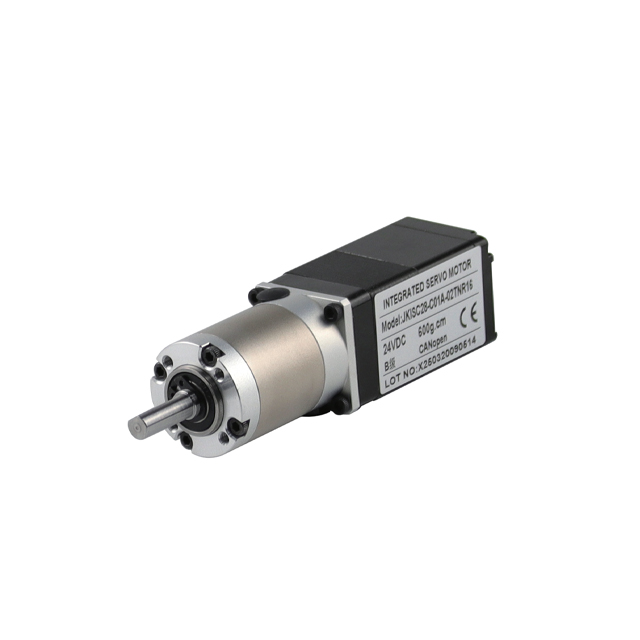
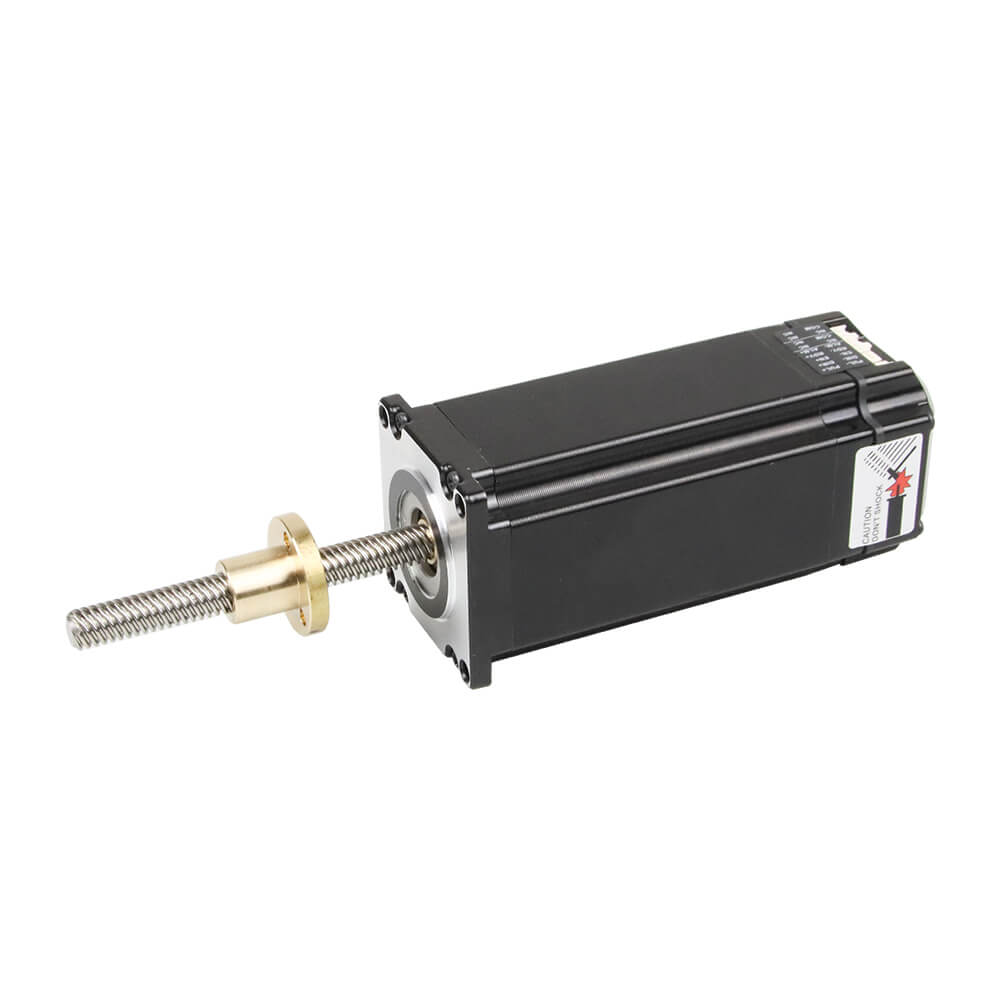
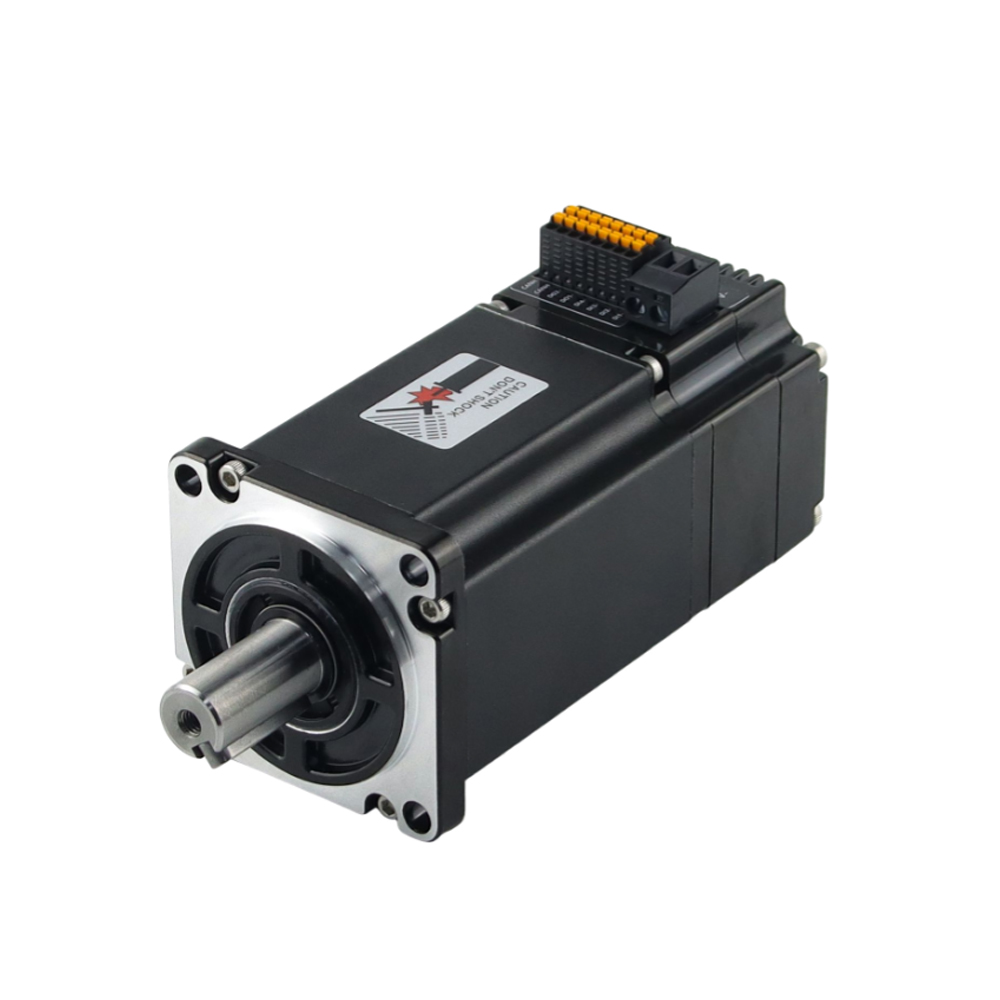
LeanMotor Integrated Servo Motor Products
Core Components of an Integrated Servo Motor
An integrated servo motor used in articulated robots typically includes the following essential elements:
1. Brushless Servo Motor
The main motor is usually a high-efficiency brushless AC or BLDC servo motor designed to provide high torque density, smooth operation, and precise speed control. These motors are optimized for robotic joints where accurate positioning and rapid acceleration are required.
2. Integrated Servo Drive
The servo drive controls the motor’s motion by regulating current, speed, and position. In an integrated system, this drive is built directly into the motor housing, allowing for faster signal processing and more responsive motion control.
3. Encoder or Feedback Device
To achieve precise positioning, the motor includes a high-resolution encoder or resolver that continuously monitors the motor shaft’s position and speed. This feedback enables closed-loop control, ensuring the robot moves with high accuracy and repeatability.
4. Communication Interface
Integrated servo motors often support industrial communication protocols such as EtherCAT, CANopen, Modbus, or RS485. These interfaces allow the motor to communicate with the robot’s central controller and coordinate motion across multiple axes.
5. Embedded Control Electronics
Advanced integrated servo motors also include embedded processors and firmware that manage motion algorithms, diagnostics, and protection functions.
How Integrated Servo Motors Work in Articulated Robots
Articulated robots consist of multiple rotary joints, each responsible for a specific axis of movement. These joints must operate in perfect synchronization to achieve smooth and precise robotic motion.
An integrated servo motor is mounted directly at each joint of the robot. The motor receives commands from the robot controller through a communication network and converts electrical signals into precise mechanical motion. The built-in encoder continuously provides feedback, allowing the system to adjust torque, speed, and position in real time.
Because the drive electronics are integrated with the motor, signal transmission distance is shorter and control response is faster, improving overall motion accuracy and stability.
Key Benefits for Articulated Robotics
Using integrated servo motors in articulated robots provides several important advantages.
Simplified System Architecture
By integrating multiple components into one device, the system requires fewer external modules and less wiring.
Compact Design
Integrated motors are designed to fit inside robotic joints, making them ideal for space-constrained robotic arms.
Improved Reliability
With fewer connectors and cables, the risk of electrical failure or signal interference is significantly reduced.
Faster Installation and Maintenance
Robotic manufacturers can reduce assembly time and simplify maintenance procedures.
Higher Motion Precision
Integrated feedback systems and optimized control algorithms deliver high positioning accuracy and smooth robotic movement.
Typical Applications
Integrated servo motors are widely used in articulated robots for:
Industrial automation
Electronic component assembly
Automated welding
Pick-and-place operations
Medical and laboratory robotics
Logistics and warehouse automation
These applications require precise multi-axis coordination, making integrated servo motors an ideal motion control solution.
Summary
An integrated servo motor for articulated robots is an advanced motion control solution that combines the motor, drive electronics, feedback system, and communication interface into a single compact unit. This integration simplifies robotic system design while delivering high precision, improved efficiency, and reliable performance.
As robotic automation continues to evolve, integrated servo motors are becoming an essential technology for achieving high-performance articulated robotic systems across a wide range of industries.
Why Articulated Robots Require Integrated Servo Motors
Articulated robots operate through multiple rotational joints, typically ranging from 4 to 6 axes or more. Each joint requires a motor capable of delivering precise torque control, high dynamic response, and compact mechanical integration.
Traditional motor systems create several limitations:
Complex wiring between motor and controller
Large control cabinets
Higher electromagnetic interference
Increased installation time
Greater maintenance requirements
Integrated servo motors eliminate these issues by delivering distributed motion control directly at each robotic joint.
We implement integrated servo systems to achieve:
Higher positioning accuracy
Simplified system architecture
Reduced wiring complexity
Improved thermal management
Greater system reliability
These advantages make integrated servo motors ideal for articulated robot arms used in advanced automation environments.
Key Advantages of Integrated Servo Motors in Articulated Robotic Arms
Compact Design for Robotic Joint Integration
Space inside robotic arms is extremely limited. Integrated servo motors offer compact form factors that fit directly inside robot joints, eliminating the need for external drive cabinets.
This compact architecture enables:
Smaller robotic arms
Lighter mechanical structures
Increased payload capacity
More flexible robot designs
By integrating the drive electronics within the motor housing, we reduce the overall footprint of robotic motion systems.
Reduced Wiring and Simplified Installation
Traditional servo systems require separate power cables, encoder cables, and communication cables running from the control cabinet to each motor. In multi-axis robots, this creates complex wiring harnesses.
Integrated servo motors dramatically simplify this structure by using:
The result is:
Faster installation
Reduced wiring errors
Lower assembly costs
Improved reliability
For robotic manufacturers, this translates into shorter production cycles and simplified system integration.
High Precision Motion Control
Articulated robots rely heavily on accurate motion synchronization between multiple axes. Integrated servo motors are equipped with high-resolution encoders and advanced control algorithms, enabling extremely precise positioning.
Key motion capabilities include:
These features are essential for applications such as:
Integrated servo motors ensure stable and repeatable robotic movement under demanding conditions.
Improved System Efficiency
Integrated servo motors often use high-efficiency brushless DC or AC permanent magnet motors, delivering excellent torque density and reduced energy consumption.
Benefits include:
For automated production lines operating continuously, this efficiency leads to significant energy savings and lower operating costs.
Enhanced Reliability and Reduced Maintenance
Because integrated servo motors reduce external connections, they significantly minimize potential failure points.
Advantages include:
Fewer cables and connectors
Reduced signal interference
Sealed and protected drive electronics
Simplified maintenance procedures
This leads to longer system uptime, which is critical in industrial robotics where downtime can disrupt entire production lines.
Typical Applications of Integrated Servo Motors in Articulated Robots
Integrated servo motors have become a critical component in modern articulated robot systems, enabling precise motion control, simplified wiring, and compact robotic designs. Because articulated robots rely on multiple joints that require synchronized movement, integrated servo motors provide the accuracy, responsiveness, and reliability needed for advanced automation tasks. These motors are widely used across various industries where high precision, repeatability, and efficiency are essential.
Below are the most common applications where integrated servo motors play a vital role in articulated robotic systems.
Industrial Manufacturing and Assembly Automation
One of the most prominent applications of integrated servo motors in articulated robots is industrial manufacturing automation. Robotic arms used in factories must perform repetitive tasks with extreme accuracy and speed, often operating continuously for long production cycles.
Integrated servo motors allow these robotic systems to deliver precise multi-axis motion control, ensuring smooth and coordinated movement between joints.
Common manufacturing tasks include:
Automated assembly operations
Machine tending for CNC equipment
Component installation
Screw driving and fastening
Precision part alignment
Because integrated servo motors reduce wiring complexity and eliminate external drive cabinets, manufacturers can design more compact robotic workstations, improving production line efficiency.
Robotic Welding Systems
Articulated robots are widely used in automated welding applications, particularly in industries such as automotive manufacturing, heavy equipment production, and metal fabrication. Welding tasks require robots to maintain stable movement paths and precise positioning to ensure consistent weld quality.
Integrated servo motors enable:
Smooth trajectory control
Accurate torch positioning
High-speed movement between welding points
Stable arc welding processes
With built-in feedback systems and high torque output, integrated servo motors allow articulated robots to maintain consistent weld penetration and seam accuracy, even in complex welding patterns.
Electronics and Semiconductor Manufacturing
The electronics and semiconductor industries require ultra-precise robotic movements for handling delicate components. Articulated robots equipped with integrated servo motors are commonly used in environments where micron-level positioning accuracy is essential.
Typical applications include:
Printed circuit board (PCB) assembly
Semiconductor wafer handling
Micro-component placement
Precision soldering operations
Automated testing and inspection
Integrated servo motors provide high-resolution encoder feedback and smooth torque control, ensuring that robotic arms move delicately without damaging sensitive electronic components.
Pick-and-Place Robotics
Pick-and-place operations are among the most common tasks performed by articulated robots. These robots must move quickly while maintaining high positional accuracy when transferring objects from one location to another.
Integrated servo motors improve pick-and-place performance by offering:
Fast acceleration and deceleration
Precise stopping positions
Smooth motion trajectories
Reduced cycle times
These capabilities are especially valuable in industries such as:
The compact nature of integrated servo motors also allows robotic arms to operate efficiently in space-constrained production environments.
Automated Material Handling
Material handling is another major application area for articulated robots. In factories and warehouses, robots must lift, move, and position materials with reliable and controlled motion.
Integrated servo motors enable articulated robots to perform:
Robotic palletizing and depalletizing
Automated loading and unloading
Sorting and distribution tasks
Heavy component handling
Because these motors provide high torque density and accurate load control, robots can handle both lightweight and heavy materials while maintaining stable movement.
Logistics and Warehouse Automation
The rapid growth of e-commerce and smart logistics systems has increased the demand for automated warehouse robotics. Articulated robots equipped with integrated servo motors help improve the speed and efficiency of warehouse operations.
Typical logistics applications include:
Integrated servo motors enable these robots to perform continuous high-speed movements with precise positioning, ensuring efficient handling of large volumes of goods.
Medical and Laboratory Robotics
In medical and laboratory environments, robotic systems must operate with extreme precision, smooth motion, and high reliability. Integrated servo motors are well suited for these environments due to their compact design and accurate control capabilities.
Articulated robots in medical applications may perform:
Automated laboratory sample handling
Pharmaceutical manufacturing processes
Medical device assembly
Surgical assistance robotics
The integrated architecture helps reduce vibration and mechanical complexity, ensuring stable and precise robotic movements required for sensitive medical tasks.
Automotive Manufacturing
The automotive industry is one of the largest adopters of articulated robotic systems. Integrated servo motors help power robotic arms that perform critical tasks throughout vehicle production.
Typical automotive robotic applications include:
Robotic systems in automotive factories operate continuously under demanding conditions. Integrated servo motors offer durability, precision, and high torque output, ensuring reliable performance throughout long production cycles.
Quality Inspection and Vision-Guided Robotics
Integrated servo motorss also support robotic inspection systems that rely on machine vision. These robots must position cameras, sensors, or inspection tools with high accuracy and repeatability.
Applications include:
Automated product inspection
Defect detection systems
3D scanning and measurement
Precision optical alignment
The precise motion control provided by integrated servo motors allows robots to move smoothly and position sensors exactly where needed, improving inspection accuracy and production quality.
Conclusion
Integrated servo motors have become an essential technology for articulated robotic systems across multiple industries. Their compact design, precise motion control, and simplified wiring architecture allow robotic arms to operate with greater efficiency, reliability, and flexibility.
From industrial manufacturing and welding to electronics assembly, logistics automation, and medical robotics, integrated servo motors provide the performance required for modern robotic applications. As automation continues to expand worldwide, these advanced motion solutions will remain a key driver of high-performance articulated robotic systems.
Important Design Considerations When Selecting an Integrated Servo Motor
Selecting the right integrated servo motor is a critical step in designing high-performance motion control systems. Because integrated servo motors combine the motor, drive electronics, encoder feedback, and communication interface into one compact unit, choosing the correct specifications directly affects the efficiency, precision, and reliability of the entire system.
Engineers and system designers must evaluate multiple technical parameters to ensure the integrated servo motor matches the requirements of the application. The following are the most important design considerations when selecting an integrated servo motor for robotics, automation equipment, and precision motion systems.
Torque Requirements and Load Characteristics
One of the most important factors when selecting an integrated servo motor is determining the required torque output. The motor must be capable of delivering sufficient torque to move the mechanical load smoothly and reliably.
Key torque parameters include:
Rated (continuous) torque – the torque the motor can provide continuously without overheating.
Peak torque – the maximum torque available for short periods during acceleration or load changes.
Holding torque – the ability to maintain position under load when the motor is stationary.
To determine the appropriate torque rating, designers must consider:
Selecting a motor with insufficient torque may result in unstable motion, positioning errors, or motor overheating, while an oversized motor may increase cost and reduce system efficiency.
Speed and Dynamic Performance
Another critical parameter is the motor speed range and dynamic response. Different applications require different speed capabilities depending on the type of movement involved.
Important speed specifications include:
High-speed applications such as pick-and-place robotics, packaging machinery, or semiconductor handling systems require motors capable of rapid acceleration and precise speed control.
The integrated servo motor must deliver smooth motion profiles and fast response times to ensure accurate positioning and reduced cycle times.
Encoder Resolution and Feedback Accuracy
Precision motion control depends heavily on the quality of the feedback system. Integrated servo motors typically include high-resolution encoders that monitor the motor’s position and speed.
Common encoder options include:
Incremental encoders
Absolute single-turn encoders
Absolute multi-turn encoders
Magnetic or optical encoders
Higher encoder resolution allows the system to achieve:
Greater positioning accuracy
Improved motion smoothness
Better synchronization between multiple axes
For applications such as robotic arms, semiconductor manufacturing, or precision assembly, selecting a motor with a high-resolution encoder is essential for maintaining precise control.
Communication Protocol Compatibility
Modern automation systems rely on industrial communication networks to coordinate motion between multiple devices. The integrated servo motor must support communication protocols that are compatible with the system controller or PLC.
Common industrial communication interfaces include:
EtherCAT
CANopen
Modbus RTU
RS485
PROFINET
High-speed communication protocols enable real-time data exchange, which is essential for synchronized multi-axis motion control in applications such as articulated robots and automated production lines.
Choosing the correct communication protocol ensures **seamless integration with existing automation communication protocol ensures seamless integration with existing automation infrastructure.
Power Supply and Voltage Requirements
Integrated servo motors operate within specific voltage and power ranges. Selecting a motor that matches the available power supply is necessary to ensure stable operation.
Typical voltage ranges include:
The choice depends on the application environment and power infrastructure. For example:
Low-voltage DC integrated servo motors are often used in mobile robots and compact automation equipment.
AC-powered servo motors are commonly used in industrial robotic systems requiring higher power output.
Matching the motor's power requirements with the system design helps prevent power instability and electrical inefficiencies.
Thermal Management and Heat Dissipation
Because integrated servo motors contain both the motor and drive electronics within a single housing, proper thermal management becomes extremely important.
Heat generated during operation must be dissipated effectively to prevent performance degradation or component damage.
Key thermal considerations include:
Motor housing material and design
Heat dissipation paths
Cooling methods (passive or active)
Ambient operating temperature
High-quality integrated servo motors incorporate optimized thermal structures and temperature protection systems to maintain stable operation under demanding conditions.
Mechanical Integration and Mounting Options
Mechanical compatibility is another important factor when selecting an integrated servo motor. The motor must fit properly within the mechanical structure of the equipment or robotic system.
Important mechanical parameters include:
Motor size and frame dimensions
Mounting flange standards
Shaft diameter and configuration
Gearbox compatibility
In applications such as articulated robotic arms, motors are often installed directly within the robot joints. Therefore, compact size and flexible mounting options are critical for efficient mechanical integration.
Protection Rating and Environmental Conditions
Industrial automation equipment often operates in harsh environments, including dust, humidity, vibration, and temperature fluctuations.
Integrated servo motors should have appropriate protection ratings (IP ratings) to ensure reliable operation in these environments.
Common protection levels include:
IP54 for general industrial environments
IP65 for dust and water resistance
Higher protection levels for harsh conditions
Additional environmental considerations include:
Selecting a motor designed for the specific environment helps ensure long-term durability and system reliability.
Control Features and Intelligent Functions
Advanced integrated servo motors offer built-in control capabilities that enhance system performance and simplify system architecture.
Common intelligent features include:
Closed-loop position control
Speed and torque control modes
Auto-tuning functions
Real-time diagnostics
Overload and temperature protection
Some modern integrated servo motors also support predictive maintenance and condition monitoring, which help reduce downtime and maintenance costs.
Reliability and Manufacturer Support
Finally, choosing a reliable integrated servo motor manufacturer is essential for ensuring consistent product quality and long-term technical support.
Key factors to evaluate include:
Product reliability and testing standards
Customization capabilities
Technical support and documentation
Production capacity and lead time
Availability of spare parts
Working with an experienced manufacturer ensures that the integrated servo motor meets both performance requirements and industry standards.
Summary
Selecting the right integrated servo motor requires careful consideration of torque, speed, encoder resolution, communication protocols, power requirements, thermal management, and mechanical compatibility. Each of these factors directly affects the performance and reliability of the motion control system.
By evaluating these design considerations thoroughly, engineers can choose an integrated servo motor that delivers precise motion control, high efficiency, and long-term operational stability. As automation technology continues to advance, integrated servo motors will remain a core component of modern robotic and industrial motion systems.
Future Trends in Integrated Servo Technology for Robotics
The robotics industry continues to evolve rapidly, and integrated servo motors are at the center of this transformation. Several trends are shaping the future of robotic motion systems.
Higher Torque Density
New motor materials and magnetic designs are enabling more powerful motors within smaller housings, allowing robotic joints to achieve higher torque without increasing size.
Smart Integrated Motion Control
Next-generation integrated servo motors are incorporating advanced processors and embedded intelligence, enabling features such as:
Predictive maintenance
Real-time diagnostics
Adaptive motion control
AI-driven optimization
This makes robotic systems smarter and more autonomous.
Improved Networked Robotics
With the rise of Industry 4.0 and smart factories, integrated servo motors will increasingly support high-speed industrial Ethernet communication, enabling seamless connectivity between robots, sensors, and factory management systems.
Conclusion
Integrated servo motors represent a major advancement in articulated robot motion control. By combining the motor, drive electronics, encoder, and communication interface into a single compact unit, these systems simplify robotic architecture while improving performance and reliability.
We leverage integrated servo technology to deliver:
Compact robotic joint designs
High-precision motion control
Reduced wiring complexity
Improved energy efficiency
Enhanced system reliability
As robotics continues to expand across manufacturing, logistics, medical automation, and electronics production, integrated servo motors will remain a core technology powering the next generation of high-performance articulated robots.