Views: 0 Author: Site Editor Publish Time: 2026-03-13 Origin: Site
Selecting the correct BLDC motor driver and controller is one of the most critical steps in designing high-performance motion systems. Brushless DC (BLDC) motors are widely used in robotics, automation equipment, medical devices, drones, electric vehicles, and industrial machinery due to their high efficiency, long lifespan, precise control, and low maintenance. However, achieving optimal performance requires precise matching between the BLDC motor, motor driver, and controller architecture.
In this comprehensive guide, we explain how to properly match a BLDC motor with the correct driver and controller, ensuring maximum efficiency, stable torque output, accurate speed regulation, and long-term reliability.
A BLDC motor system consists of three key components:
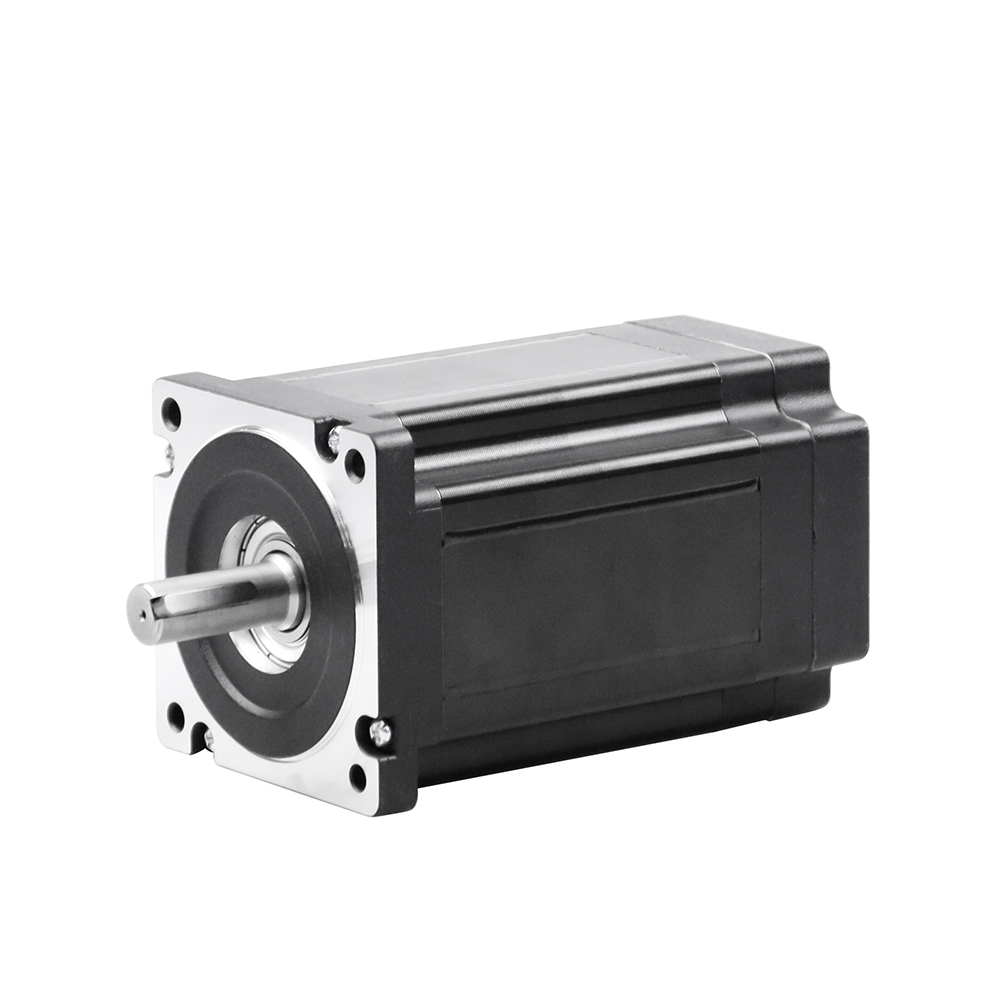
BLDC Motor – Converts electrical energy into mechanical rotation.
BLDC Motor Driver – Power electronics that regulate voltage and current supplied to the motor.
Motor Controller – The intelligence that determines commutation timing, speed regulation, and torque control.
Unlike brushed motors, BLDC motors require electronic commutation, meaning the driver and controller must precisely coordinate phase switching based on rotor position.
A mismatch between these components can result in:
Overheating
Torque instability
Reduced efficiency
Motor vibration or noise
Driver failure
Therefore, careful selection ensures maximum system performance and durability.
Before selecting a driver or controller, we must analyze the core electrical and mechanical parameters of the BLDC motor.
The rated voltage of the BLDC motor determines the compatible power supply and driver voltage range.
Typical ranges include:
12V – 24V BLDC motors for consumer electronics and small robotics
24V – 48V motors for automation and AGV systems
72V+ motors for electric vehicles and heavy equipment
The driver must support a voltage range slightly above the motor's rated voltage to allow for transient spikes and efficient operation.
Drivers must handle both:
Continuous current
Peak startup or load current
BLDC motors often require 2–3 times their rated current during startup or acceleration.
Example:
| Parameter | Motor Spec | Driver Requirement |
|---|---|---|
| Rated Current | 5A | ≥ 5A continuous |
| Peak Current | 15A | ≥ 15A peak |
Selecting a driver with insufficient current capacity leads to thermal shutdown, torque loss, and potential damage.
The KV rating (RPM per volt) determines how fast the motor spins for each volt applied.
Formula:
Motor Speed (RPM) = Voltage × KV
Example:
24V motor
KV = 1000
Maximum speed:
24 × 1000 = 24,000 RPM
The controller must support commutation frequency capable of handling this speed.
High-speed BLDC motors require drivers with high PWM switching frequency and fast MOSFET response.
The pole count directly affects commutation frequency and control complexity.
Typical BLDC motors:
2–4 poles – high-speed motors
6–14 poles – industrial applications
20+ poles – high torque motors
More poles mean higher electrical switching frequency, so the driver must support the corresponding electrical RPM.
Electrical RPM calculation:
Electrical RPM = Mechanical RPM × Pole Pairs
Example:
10 pole motor (5 pole pairs)
Mechanical speed = 6000 RPM
Electrical RPM:
6000 × 5 = 30,000 ERPM
Drivers must support ERPM limits above this value.
Once the motor parameters are defined, the next step is choosing the correct BLDC motor driver.
The driver voltage range must exceed the motor's rated voltage.
Recommended rule:
Driver Voltage Range = 20–30% above motor rated voltage
Example:
Motor: 24V
Driver range: 18–36V
This ensures safe operation during voltage fluctuations and regenerative braking events.
Driver current rating must exceed both continuous and peak motor current.
General guideline:
Continuous current rating ≥ 1.2 × motor rated current
Peak current rating ≥ 2–3 × motor rated current
Industrial drivers often feature:
Current limiting
Overcurrent protection
Thermal shutdown
These protections increase system reliability.
BLDC drivers use different commutation techniques.
Uses Hall effect sensors or encoders to detect rotor position.
Advantages:
Smooth startup
Precise speed control
Stable low-speed torque
Applications:
Industrial automation
Medical equipment
Robotics
Uses back EMF detection to determine rotor position.
Advantages:
Lower cost
Simpler wiring
Higher reliability
Limitations:
Difficult low-speed control
Harder startup under load
Applications:
Cooling fans
Pumps
Drones
Pulse Width Modulation controls motor speed and torque.
Key parameters:
PWM frequency
Duty cycle resolution
Control interface
Higher PWM frequencies:
Reduce acoustic noise
Improve current smoothness
Minimize torque ripple
Typical industrial drivers use 20 kHz – 40 kHz PWM.
The motor controller provides intelligence for motion control algorithms.
Controllers determine:
Speed regulation
Position control
Torque management
Safety protection
Different applications require different control strategies.
Maintains constant RPM regardless of load changes.
Common in:
Fans
Pumps
Conveyor systems
Controls motor current to regulate torque output.
Used in:
Electric vehicles
Robotics
Industrial automation
Uses encoders to precisely control position.
Applications include:
CNC machines
Pick-and-place robots
Semiconductor equipment
Modern BLDC controllers support various industrial communication protocols.
Common interfaces:
PWM
Analog voltage (0–10V)
UART
CAN Bus
RS485
EtherCAT
Industrial automation systems often rely on CAN or RS485 for reliable communication across multiple devices.
Advanced BLDC control requires accurate rotor feedback.
Supported sensors include:
Hall sensors
Incremental encoders
Absolute encoders
Resolvers
High-precision applications demand encoder-based control for closed-loop positioning.
Even perfectly matched drivers can fail without adequate thermal management.
Critical factors include:
Driver heat sink design
Motor ventilation
Ambient temperature
Continuous duty cycle
High-power BLDC systems often integrate:
Aluminum heat sinks
Active cooling fans
Thermal protection circuits
Maintaining optimal temperature ensures long service life and stable performance.
The power supply must meet the demands of both motor and driver.
Important parameters include:
Voltage stability
Current capacity
Ripple suppression
Recommended rule:
Power Supply Current ≥ 1.5 × motor rated current
Stable power prevents:
Driver resets
Torque fluctuation
Control instability
Professional BLDC driver systems include comprehensive protection mechanisms.
Essential protections:
Overvoltage protection
Undervoltage lockout
Overcurrent protection
Thermal shutdown
Short circuit protection
Phase loss detection
These features prevent catastrophic failures in demanding environments.
Selecting the correct combination of BLDC motor, driver, and controller depends heavily on the specific application. Different industries demand unique performance characteristics such as high torque, ultra-precise positioning, low noise operation, or extremely high rotational speeds. Understanding how these requirements influence motor system design is essential for achieving maximum efficiency, reliability, and operational performance.
Below are several application-specific matching examples that demonstrate how to properly select and integrate a BLDC motor with the appropriate driver and controller.
Robotics applications require high precision, smooth motion control, and fast response times. Industrial robots and collaborative robots (cobots) often perform delicate tasks such as assembly, inspection, and material handling. These operations demand precise positioning, minimal vibration, and consistent torque delivery.
In robotic systems, the preferred configuration typically includes:
High-performance BLDC Servo motors
FOC (Field-Oriented Control) drivers
High-resolution encoder-based controllers
BLDC motors used in robotics usually feature multiple pole pairs and high torque density, allowing compact designs that still provide strong mechanical output. The motor driver must support closed-loop feedback from incremental or absolute encoders to maintain accurate position control.
Recommended system configuration:
BLDC motor with integrated encoder
FOC-based intelligent driver
High-speed communication interface such as CAN or EtherCAT
This setup enables precise torque control, smooth acceleration, and accurate positioning, which are essential for robotic arms, automated guided vehicles (AGVs), and collaborative robots.
Industrial automation equipment, including CNC machines, conveyor systems, packaging machines, and assembly lines, requires motors that deliver high reliability, continuous operation, and stable torque output.
BLDC motors are widely used in these systems due to their low maintenance requirements and long operational life. In many industrial environments, motors operate continuously for extended periods, making thermal stability and durability critical factors.
For automation applications, the typical system design includes:
Medium-speed BLDC motors with Hall sensors
Industrial-grade BLDC drivers
Programmable motion controllers
Hall sensors allow the driver to determine rotor position with sufficient accuracy for stable startup and consistent torque production. In addition, industrial controllers often integrate PLC communication protocols, allowing seamless integration into larger automation systems.
Typical industrial matching example:
48V BLDC motor
Hall-sensor driver with current protection
RS485 or CAN communication controller
This configuration ensures reliable speed regulation, high torque at low speeds, and long-term operational stability, which are critical for manufacturing equipment.
Electric mobility solutions such as electric scooters, e-bikes, electric wheelchairs, and small electric vehicles rely heavily on high-efficiency BLDC motors. These applications require strong torque output, high energy efficiency, and intelligent motor control to maximize battery life.
In electric mobility systems, the motor driver must manage dynamic load conditions, including rapid acceleration, hill climbing, and regenerative braking.
Typical configuration includes:
High-torque BLDC hub motor
High-current motor driver with regenerative braking
Advanced motor controller with torque control algorithms
Field-Oriented Control (FOC) is commonly used in these systems because it provides smooth torque output and high energy efficiency. The controller continuously adjusts current vectors to maintain optimal motor performance.
Recommended system features include:
Battery voltage monitoring
Current limiting protection
Temperature monitoring
Regenerative braking support
These capabilities allow electric mobility systems to operate efficiently while maintaining safety and performance stability.
BLDC motors are increasingly replacing traditional AC and brushed motors in cooling fans, ventilation systems, and HVAC equipment. These applications prioritize energy efficiency, quiet operation, and long service life.
For fan and HVAC systems, the motor configuration is usually optimized for continuous operation with minimal noise and vibration.
Typical matching example:
Low-voltage BLDC motor (12V–24V)
Sensorless motor driver
Simple speed controller
Sensorless drivers are commonly used because they reduce system complexity and eliminate the need for additional wiring. These drivers use back electromotive force (back-EMF) detection to determine rotor position and manage electronic commutation.
Key benefits include:
Lower system cost
High reliability
Reduced maintenance requirements
BLDC motors used in HVAC systems are often designed with high-efficiency stator structures and optimized blade integration, ensuring maximum airflow while minimizing power consumption.
Medical devices require extremely precise, quiet, and reliable motor operation. Applications such as surgical robots, infusion pumps, diagnostic equipment, and laboratory automation systems demand motors that provide high precision and low vibration.
BLDC motors used in medical equipment typically feature:
Compact size
Low noise levels
High positional accuracy
For these systems, the recommended configuration often includes:
Precision BLDC motor
Digital motion controller
Encoders provide accurate feedback, allowing the controller to maintain precise speed and position control. Additionally, medical equipment often incorporates advanced safety monitoring, ensuring that the motor system operates reliably under strict regulatory requirements.
Many medical-grade systems also use low electromagnetic interference (EMI) drivers to prevent interference with sensitive medical electronics.
Unmanned aerial vehicles (UAVs) and drones require motors capable of extremely high rotational speeds, lightweight construction, and rapid response times. In these systems, performance depends heavily on power-to-weight ratio and motor efficiency.
Drone propulsion systems typically use:
High KV BLDC motors
Electronic speed controllers (ESCs)
High-frequency PWM controllers
Sensorless control is preferred in UAV systems because it reduces weight and simplifies wiring. Modern ESCs use advanced algorithms to provide precise throttle response and smooth motor acceleration.
Typical drone motor setup:
High-speed BLDC outrunner motor
Sensorless ESC driver
Flight controller with PWM control signals
These components work together to provide rapid speed adjustments and stable flight control, which are essential for aerial maneuverability.
Semiconductor manufacturing and laboratory automation systems demand extremely precise motion control with minimal vibration and ultra-clean operation.
BLDC motors used in these environments must support:
High-resolution positioning
Low torque ripple
Ultra-stable speed control
Typical system configuration includes:
Precision BLDC servo motor
FOC driver with advanced vector control
High-resolution absolute encoder
These systems often integrate EtherCAT or high-speed industrial communication protocols, enabling real-time motion control across multiple devices.
The result is extremely accurate positioning and consistent motion control, which is essential in semiconductor fabrication and high-end laboratory instrumentation.
Matching the correct BLDC motor, driver, and controller requires understanding the unique demands of each application. Key factors to evaluate include:
Speed requirements
Torque output
Control precision
Communication protocols
Environmental conditions
By selecting the appropriate motor system architecture, engineers can ensure maximum efficiency, optimal motion control, and long-term system reliability across industries ranging from robotics and automation to electric mobility and medical technology.
Careful application-specific matching allows BLDC motor systems to deliver exceptional performance, reduced maintenance costs, and superior operational efficiency in modern motion control applications.
Field-Oriented Control (FOC), also known as vector control, represents one of the most advanced and efficient control methods used in modern BLDC motor systems. Unlike traditional trapezoidal commutation techniques, FOC precisely controls the magnetic field orientation inside the motor, enabling extremely smooth torque production, higher efficiency, and superior dynamic performance. This control strategy has become the preferred solution in applications that demand high precision, low noise, and optimal energy utilization, such as robotics, electric vehicles, industrial automation, and medical equipment.
By transforming motor currents into rotating reference frames, FOC allows engineers to independently control torque-producing and magnetic field components of the motor current. This approach dramatically improves motor efficiency, response time, and operational stability compared with conventional control methods.
The fundamental concept behind Field-Oriented Control is to align the stator magnetic field with the rotor magnetic field. When the two magnetic fields are properly aligned, the motor produces maximum torque with minimal energy loss.
In BLDC motor systems, the stator windings generate a rotating magnetic field through controlled current injection. FOC continuously adjusts the magnitude and phase of this current so that the stator magnetic field remains optimally oriented relative to the rotor magnets.
The process involves several computational steps:
Measurement of motor phase currents
Transformation of three-phase currents into two-axis coordinates
Separation of torque and flux components
Independent control of these components
Inverse transformation back to three-phase signals
These transformations allow the controller to manage motor behavior with exceptional precision.
Two mathematical transformations play a crucial role in FOC motor control algorithms:
The Clarke transformation converts three-phase stator currents into two orthogonal components known as alpha (α) and beta (β) coordinates. This simplifies the analysis of motor current behavior and reduces computational complexity.
Instead of dealing with three sinusoidal currents, the controller can analyze motor behavior within a two-dimensional stationary reference frame.
The Park transformation rotates the stationary α-β coordinate system into a rotating d-q reference frame aligned with the rotor magnetic field.
In this rotating frame:
d-axis current (Id) controls the magnetic flux
q-axis current (Iq) controls torque production
By controlling these two current components independently, the controller achieves precise torque and speed regulation.
One of the most powerful advantages of Field-Oriented Control is the ability to decouple torque and magnetic flux control.
In traditional motor control methods, torque and flux are closely linked, making it difficult to optimize motor efficiency under varying loads. FOC separates these two parameters, allowing the controller to adjust them independently.
Benefits of torque-flux decoupling include:
Higher torque accuracy
Improved efficiency at partial loads
Reduced torque ripple
Better dynamic response
This precise control makes FOC particularly suitable for applications that require high-performance motion control and smooth motor operation.
Accurate rotor position information is essential for effective Field-Oriented Control. The controller must know the exact orientation of the rotor magnetic field to properly align the stator current vector.
Several sensor technologies can provide rotor position feedback:
Hall effect sensors
Incremental encoders
Absolute encoders
Resolvers
High-precision applications typically use optical or magnetic encoders, which deliver extremely accurate rotor position data. This enables the controller to maintain optimal magnetic field alignment and achieve precise torque output.
In some designs, sensorless FOC algorithms estimate rotor position using back electromotive force (back-EMF) and advanced mathematical models. Sensorless solutions reduce hardware complexity while still providing high performance at moderate speeds.
Compared with traditional BLDC motor control methods such as six-step commutation, FOC offers numerous performance advantages.
FOC generates sinusoidal current waveforms rather than trapezoidal switching patterns. This significantly reduces torque ripple and vibration, producing smoother motor operation.
Smooth torque delivery is essential for robotic joints, precision positioning systems, and high-end medical equipment.
By maintaining optimal alignment between stator and rotor magnetic fields, FOC ensures that electrical energy is converted into mechanical output with maximum efficiency.
This efficiency improvement reduces power consumption, heat generation, and operating costs.
Trapezoidal commutation can create abrupt switching events that produce audible noise and electromagnetic vibration. FOC's sinusoidal current control eliminates these sudden transitions, resulting in quiet motor operation.
This is especially important for applications such as medical devices, home appliances, and office automation equipment.
FOC allows extremely fast adjustments to changes in load or speed. This results in rapid acceleration, precise speed regulation, and stable torque control, even under varying operating conditions.
High dynamic response is critical in robotics, drones, and automated manufacturing systems.
Implementing Field-Oriented Control requires more advanced hardware than traditional BLDC control methods. The system must include:
High-performance microcontrollers or digital signal processors (DSPs)
Current sensing circuits
High-speed PWM drivers
Rotor position sensors or sensorless estimation algorithms
Modern microcontrollers designed for motor control often include specialized peripherals such as:
High-resolution PWM modules
Analog-to-digital converters (ADCs)
Hardware accelerators for mathematical transformations
These components allow real-time implementation of complex FOC algorithms while maintaining high control accuracy.
Many advanced industries rely on Field-Oriented Control for superior motor performance.
FOC enables smooth acceleration, high efficiency, and regenerative braking, making it ideal for electric propulsion systems.
Robotic systems require precise torque control and smooth motion, which FOC provides through accurate current vector regulation.
Precision manufacturing equipment uses FOC to achieve high positioning accuracy and stable spindle speeds.
Low vibration and silent operation make FOC suitable for surgical robots, laboratory automation equipment, and imaging systems.
As microcontroller performance continues to improve, Field-Oriented Control algorithms are becoming more accessible and efficient. Advanced developments include:
AI-assisted motor control optimization
Sensorless FOC with enhanced low-speed performance
Integrated smart motor drivers
Digital twin modeling for predictive performance tuning
These innovations will further enhance the capabilities of BLDC motor systems, allowing engineers to achieve even greater levels of efficiency, precision, and reliability.
Field-Oriented Control (FOC) has become the industry standard for high-performance BLDC motor control. By precisely aligning the stator and rotor magnetic fields and independently controlling torque and flux components, FOC enables exceptional efficiency, ultra-smooth torque output, and precise dynamic response.
When properly implemented with the right BLDC motor, driver hardware, and control algorithms, FOC delivers superior motion control across a wide range of demanding applications. From electric vehicles and robotics to medical technology and industrial automation, this advanced control strategy continues to drive the evolution of modern motor systems.
Matching a BLDC motor with the right driver and controller is essential for building a high-performance, efficient, and reliable motion system. By carefully analyzing motor parameters such as voltage, current, KV rating, and pole count, and selecting drivers with compatible current capacity, commutation methods, and PWM control, engineers can ensure optimal operation across a wide range of applications.
Incorporating advanced controllers with closed-loop feedback, communication interfaces, and intelligent protection features further enhances system performance and longevity. With the correct combination of BLDC motor, driver, and controller, modern motion systems achieve exceptional precision, efficiency, and durability across robotics, automation, transportation, and industrial equipment.