How To Choose The Integrated Servo Motor for Robotic Joint Actuators?
Views: 0 Author: Site Editor Publish Time: 2026-07-09 Origin: Site
Introduction: The Role of Integrated Servo Motors in Robotic Joint Actuation
Modern robotic systems require increasingly compact, intelligent, and efficient motion solutions. From collaborative robots and industrial robotic arms to humanoid robots and automated manufacturing equipment, robotic joint actuators are critical components that determine movement accuracy, payload capacity, responsiveness, and overall system reliability.
Traditional robotic joints often rely on separate motors, servo drives, encoders, and controllers connected through complex wiring systems. While this approach provides flexibility, it also increases installation complexity, space requirements, and maintenance costs. As robotic designs become more compact and decentralized, integrated servo motors have become an ideal solution by combining the motor, drive electronics, feedback system, and communication interface into a single compact unit.
Choosing the right integrated servo motor for robotic joint actuators requires careful consideration of torque requirements, speed, control performance, mechanical integration, communication methods, and environmental conditions. The correct motor selection can significantly improve robot precision, efficiency, and long-term operational stability.
What Is an Integrated Servo Motor for Robotic Joint Actuators?
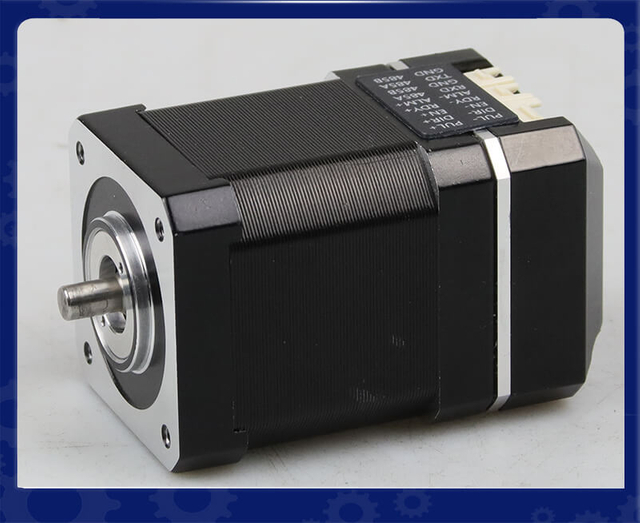
An integrated servo motor for robotic joint actuators is a compact motion control solution that combines a servo motor, servo drive, encoder, and control electronics into a single integrated unit. Unlike traditional robotic actuator systems that require separate motors, external drivers, and complex wiring connections, integrated servo motors provide a more compact, efficient, and simplified approach for controlling robotic joints.
In robotic systems, the joint actuator is responsible for generating precise rotational movement, controlling position, adjusting speed, and providing the required torque to move robotic arms, legs, grippers, and other mechanical structures. The integrated servo motor acts as the core power and control component, enabling robots to achieve accurate, responsive, and intelligent motion.
How Does an Integrated Servo Motor Work in Robotic Joint Actuators?
In a robotic joint system, the integrated servo motor receives motion instructions from the main robot controller. The internal servo drive then processes these commands and controls the motor according to the required position, speed, or torque.
The working process typically includes:
Receiving control commands from the robot controller.
Processing motion instructions through the integrated servo drive.
Driving the motor to generate rotational movement.
Receiving encoder feedback to monitor actual motor position and speed.
Adjusting output automatically to maintain accurate motion.
This closed-loop control process allows robotic joints to move smoothly and accurately even under changing loads or operating conditions.
Why Are Integrated Servo Motors Used in Robotic Joint Actuators?
Modern robotic systems require actuators that are compact, intelligent, and highly reliable. Integrated servo motors provide several advantages compared with traditional servo solutions.
1. Compact and Space-Saving Design
Robotic joints often have limited installation space, especially in:
Collaborative robots
Humanoid robots
Lightweight robotic arms
Wearable robotic systems
By combining multiple components into one unit, integrated servo motors significantly reduce the size and weight of the actuator system.
2. Simplified Wiring and Installation
Traditional servo systems require separate connections between:
Motor
Servo amplifier
Encoder
Controller
Integrated servo motors reduce the number of external cables and simplify system architecture, making robot assembly faster and maintenance easier.
3. Improved Motion Control Performance
With the servo drive and feedback system integrated into the motor, the actuator can respond faster to control commands.
This makes them suitable for continuous industrial robotic applications.
Integrated Servo Motor vs Traditional Servo System
Feature
Integrated Servo Motor
Traditional Servo System
Structure
Motor + drive + encoder integrated
Separate motor and drive
Installation
Simple installation
More complex wiring
Size
Compact design
Requires additional space
Maintenance
Easier troubleshooting
More components to maintain
Wiring
Reduced cables
Multiple connections required
Application
Modern compact robots
Conventional automation systems
Final
An integrated servo motor for robotic joint actuators is an advanced motion solution that combines motor power, intelligent control, and feedback technology into a compact unit. By integrating the servo motor, driver, encoder, and communication system, it provides robotic manufacturers with a simpler, smaller, and more reliable actuator design.
For applications such as industrial robots, collaborative robots, humanoid robots, and robotic grippers, integrated servo motors deliver the precise control, high efficiency, and compact performance required for next-generation robotic motion systems.
IDC60 Integrated BLDC Servo Motor — High-Efficiency, Compact, and Smart Closed-Loop Motion Control Solution
Product Overview:The IDC60 integrated BLDC servo motor from LeanMotor is a compact NEMA 24 solution combining motor, drive, and encoder in one unit. It provides precise closed-loop control, stable torque, and fast response. Its integrated design reduces wiring, saves space.
Key Technical Highlights
Integrated All-in-One Design Combines BLDC motor, servo drive, and encoder in a compact unit, reducing wiring complexity and improving installation efficiency.
High-Precision Closed-Loop Control Ensures accurate position, speed, and torque regulation with real-time feedback for stable and smooth motion performance.
Powerful Modular Customization (OEM/ODM) Supports flexible customization options, including voltage, torque, communication protocols, and encoder resolution to meet diverse application requirements.
High Efficiency & Compact Structure Delivers strong torque density with optimized thermal performance, making it ideal for space-limited automation and robotics systems.
Typical Applications
Pipeline Inspection Robots Provides stable low-speed torque and precise motion control for navigating narrow, curved, and complex pipeline environments.
Automated Guided Vehicles (AGVs) Ensures smooth acceleration, accurate positioning, and reliable operation in logistics and smart warehouse systems.
Robotic Automation Systems Ideal for robotic arms, grippers, and compact motion modules requiring high precision and fast response.
Smart Manufacturing Equipment Supports high-accuracy motion control in assembly lines, packaging machines, and precision industrial automation devices.
IDC60 Series Integrated Brushless Dc Motor Parameters
Key Factors When Choosing an Integrated Servo Motor for Robotic Joint Actuators
1. Determine the Required Torque for the Robotic Joint
Torque is one of the most important parameters when selecting an integrated servo motor. The motor must generate enough torque to move the robotic joint while handling the required payload, acceleration, friction, and external forces.
The required torque depends on several factors:
Robot arm length
Payload weight
Joint structure
Acceleration requirements
Operating angle
Gear reduction ratio
For example, a small collaborative robot joint may require compact motors with moderate torque output, while industrial robotic arms require higher torque density to handle heavier loads.
When selecting an integrated servo motor, engineers should consider:
Continuous torque:
The torque the motor can provide during normal operation.
Peak torque:
The maximum torque available for short periods during acceleration or sudden load changes.
A suitable motor should provide sufficient torque margin to prevent overheating, performance degradation, and mechanical stress.
2. Consider Torque Density and Motor Size
Robotic joints have strict space limitations. Especially in applications such as collaborative robots, humanoid robots, and robotic arms, the actuator must provide high performance while maintaining a compact size.
Torque density refers to the amount of torque generated relative to the motor size and weight.
A high torque-density integrated servo motor provides several advantages:
Smaller robotic joint structure
Reduced robot weight
Improved energy efficiency
Easier mechanical integration
Higher payload-to-weight ratio
For compact robotic systems, integrated servo motors with optimized electromagnetic design and integrated electronics are often preferred because they reduce the overall actuator footprint.
3. Evaluate Position Accuracy and Encoder Resolution
Robotic joint actuators require precise position control to achieve accurate movement. The encoder inside an integrated servo motor provides real-time feedback about motor position, speed, and direction.
When selecting a motor, consider:
Encoder resolution
Position feedback accuracy
Response speed
Repeatability requirements
High-resolution encoders enable:
Smooth robotic movement
Accurate positioning
Better trajectory tracking
Improved repeatability
For applications such as robotic assembly, medical robots, and precision manufacturing, encoder performance directly affects the final accuracy of the robot.
4. Select the Appropriate Control Method
Different robotic systems require different control strategies. A suitable integrated servo motor should support the control modes required by the robot system.
Common control modes include:
Position Control Mode
The motor moves the robotic joint to a specific target position.
Typical applications:
Industrial robots
Pick-and-place systems
Automated assembly equipment
Speed Control Mode
The motor maintains a specific rotational speed.
Typical applications:
Conveyor robots
Mobile robot wheels
Continuous motion systems
Torque Control Mode
The motor regulates output force or torque.
Typical applications:
Collaborative robots
Robotic grippers
Force-controlled applications
For advanced robotic joint actuators, torque control capability is especially important because robots often need to interact safely with humans and uncertain environments.
5. Choose the Right Communication Interface
Communication capability is another important factor when selecting an integrated servo motor for robotic applications.
Common communication protocols include:
CANopen
RS485
Modbus RTU
EtherCAT
RS232
Pulse and direction control
For multi-axis robotic systems, communication networks allow multiple joint actuators to operate synchronously.
A suitable communication interface helps achieve:
Faster data transmission
Easier system integration
Reduced wiring complexity
Real-time motion coordination
For high-performance robots requiring synchronized movement, EtherCAT-based servo communication is often preferred because of its high speed and low latency.
6. Pay Attention to Speed Requirements
Different robotic joints require different speed characteristics.
A robotic wrist joint may require high-speed rotation and precise positioning, while a robotic shoulder joint may prioritize high torque output.
Important motor speed parameters include:
Rated speed
Maximum speed
Acceleration capability
Dynamic response
The selected integrated servo motor should match the robot's motion profile.
A motor that operates outside its optimal speed range may experience:
Reduced efficiency
Excessive heat generation
Lower positioning accuracy
Shortened service life
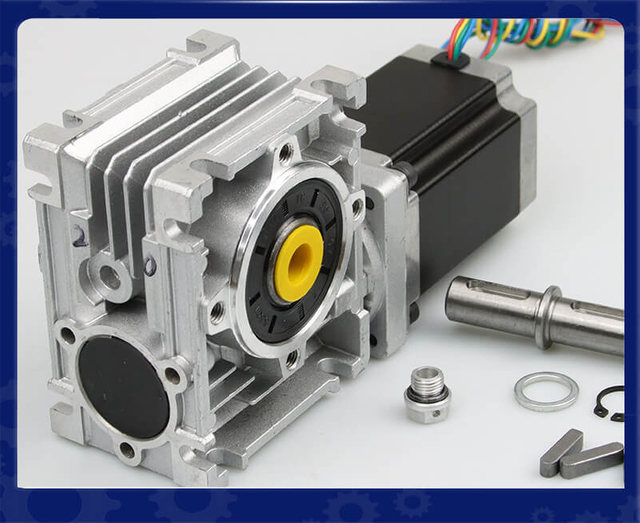
7. Consider Gearbox Compatibility
Many robotic joint actuators use gear reduction systems to increase torque and improve positioning accuracy.
Common robotic gearboxes include:
Harmonic drives
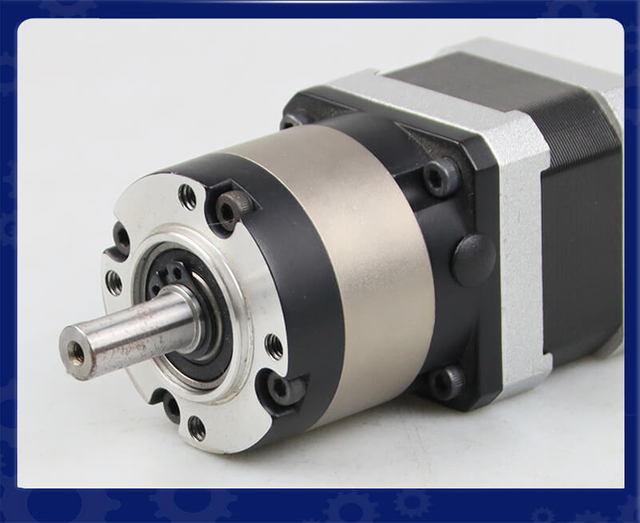
Planetary gearboxes
Cycloidal reducers
When selecting an integrated servo motor, ensure compatibility with the gearbox in terms of:
Output torque
Shaft design
Mounting dimensions
Backlash requirements
Operating speed
A properly matched motor and gearbox combination creates a high-performance robotic actuator with excellent precision and reliability.
8. Evaluate Thermal Performance and Reliability
Robotic joints often operate continuously under dynamic loads, making thermal management essential.
Important factors include:
Motor efficiency
Heat dissipation design
Operating temperature range
Overload protection
Integrated servo motors with efficient thermal designs can maintain stable performance during long working cycles.
Reliable protection features may include:
Overcurrent protection
Overvoltage protection
Overtemperature protection
Encoder fault detection
These features help prevent unexpected downtime and improve robot lifespan.
9. Check Mechanical Integration Requirements
A major advantage of integrated servo motors is simplified mechanical and electrical integration.
Before selecting a motor, engineers should confirm:
Motor mounting dimensions
Shaft size
Weight limitations
Connector position
Cable routing requirements
Compact integrated servo motors can significantly reduce robotic joint assembly complexity by eliminating external servo drives and reducing additional wiring.
Integrated Servo Motor Applications in Robotic Joint Actuators
Integrated servo motors are widely used in various robotic applications.
Collaborative Robots (Cobots)
Cobots require compact, lightweight, and highly responsive joint actuators. Integrated servo motors provide precise torque control and safe interaction capabilities.
Industrial Robotic Arms
Industrial robots benefit from integrated servo motors through improved motion accuracy, simplified wiring, and reduced control cabinet size.
Humanoid Robots
Humanoid robots require dozens of compact actuators for human-like movement. Integrated servo motors provide the necessary combination of torque density and intelligence.
Robotic Grippers
Servo motors enable precise opening, closing, and force control for robotic hands and gripping systems.
Medical and Rehabilitation Robots
Medical robots require quiet operation, high precision, and reliable control, making integrated servo motors suitable for robotic joints used in healthcare applications.
Why Integrated Servo Motors Are Ideal for Modern Robotic Joint Systems
Modern robotic systems are moving toward higher intelligence, smaller structures, improved efficiency, and greater flexibility. Whether used in industrial robotic arms, collaborative robots, humanoid robots, medical robots, or autonomous machines, robotic joint systems require motion components that can deliver precise control, fast response, and reliable operation.
Traditional robotic joint designs typically use separate motors, servo drives, encoders, and control modules. While this structure can meet basic motion requirements, it often results in complex wiring, larger installation space, and higher system integration costs.
An integrated servo motor provides a more advanced solution by combining the motor, servo drive, encoder, controller, and communication interface into a single compact unit. This integrated design makes it an ideal choice for modern robotic joint systems that demand high performance, simplified architecture, and intelligent motion control.
1. Compact Design for Space-Constrained Robotic Applications
One of the biggest advantages of integrated servo motors for robotic joint systems is their compact structure.
Robotic joints often have strict size and weight limitations, especially in applications such as:
Collaborative robots (cobots)
Humanoid robots
Lightweight robotic arms
Medical robots
Service robots
Traditional servo systems require separate installation spaces for motors, drives, and controllers. This increases the overall actuator size and makes robotic joint design more complicated.
By integrating multiple components into one housing, integrated servo motors significantly reduce:
Overall actuator volume
System weight
Installation space requirements
Mechanical complexity
This compact design allows engineers to develop smaller, lighter, and more flexible robotic structures while maintaining excellent motion performance.
2. Simplified Wiring and Easier System Integration
Robotic systems usually contain multiple joints that must operate together with high synchronization. Traditional servo solutions require extensive wiring between:
Servo motors
Servo amplifiers
Encoders
Controllers
Power supplies
As the number of robotic axes increases, wiring complexity becomes a major challenge.
Integrated servo motors simplify the system architecture by placing the drive electronics and feedback system directly inside the motor assembly. This reduces the number of external cables and improves installation efficiency.
The advantages include:
Faster robot assembly
Reduced wiring errors
Lower installation costs
Easier maintenance
Cleaner robotic designs
For multi-axis robotic systems, simplified wiring also improves reliability by reducing potential connection failures.
3. Improved Motion Control Accuracy
Robotic joint systems require highly accurate motion control to achieve precise positioning and smooth operation.
Integrated servo motors use closed-loop control technology with built-in encoder feedback to continuously monitor:
Motor position
Rotation speed
Torque output
Operating status
The integrated control system can automatically adjust motor performance according to real-time feedback, ensuring accurate movement even when the robot experiences changing loads.
This enables robotic systems to achieve:
Higher positioning accuracy
Better repeatability
Faster response times
Smoother motion trajectories
These advantages are especially important for precision applications such as:
Electronic assembly robots
Laboratory automation robots
Medical robotic systems
High-speed manufacturing equipment
4. High Torque Density for Robotic Joint Actuators
Robotic joints require strong output torque while maintaining a compact size. This makes torque density one of the most important performance indicators.
A high torque-density integrated servo motor can provide:
Greater output power in a smaller package
Reduced robot weight
Higher payload capacity
Improved energy efficiency
For robotic arms and humanoid robots, every reduction in actuator size and weight can improve overall system performance.
Integrated servo motors are often combined with:
Harmonic gear reducers
Planetary gearboxes
Precision transmission systems
to create compact robotic joint modules with high torque output and excellent positioning capability.
5. Faster Response and Dynamic Performance
Modern robots must respond quickly to changing environments and motion commands. Integrated servo motors improve dynamic performance by placing the control electronics close to the motor.
This shortens signal transmission paths and improves communication efficiency between the controller and actuator.
Benefits include:
Faster acceleration and deceleration
Improved motion synchronization
Reduced control delay
Better trajectory tracking
For applications requiring real-time interaction, such as collaborative robots and intelligent robotic systems, fast response is essential for both performance and safety.
6. Support for Intelligent Communication Networks
Modern robotic systems require advanced communication capabilities to coordinate multiple actuators efficiently.
Integrated servo motors can support various industrial communication protocols, including:
CANopen
RS485
Modbus RTU
EtherCAT
Pulse and Direction
These communication options allow robotic joint actuators to exchange real-time information with the main robot controller.
Advantages include:
Multi-axis synchronization
Real-time parameter adjustment
Easier robot programming
Improved system scalability
For advanced robotic platforms, network-based control enables more intelligent and flexible motion management.
Summary
Integrated servo motors are ideal for modern robotic joint systems because they combine compact design, precise control, high torque density, intelligent communication, and simplified integration into a single solution.
Compared with traditional servo architectures, integrated servo motors help robot manufacturers create lighter, smarter, and more efficient machines while reducing system complexity and maintenance costs.
As robotic applications continue to expand toward higher levels of automation and intelligence, integrated servo motors will remain a key technology for developing advanced robotic joint actuators with superior performance and reliability.
Conclusion: Selecting the Right Integrated Servo Motor for Robotic Joint Actuators
Choosing the right integrated servo motor for robotic joint actuators requires a comprehensive evaluation of torque, speed, accuracy, communication, mechanical compatibility, and thermal performance.
The ideal motor should provide sufficient torque capacity, high positioning accuracy, reliable feedback, efficient operation, and seamless integration with the robotic control system.
As robotics continues to evolve toward more compact, intelligent, and autonomous systems, integrated servo motors will play an increasingly important role in developing high-performance robotic joint actuators. By selecting the appropriate integrated servo solution, robot manufacturers can achieve improved motion control, simplified system design, and greater operational reliability.
FAQs
1. What Is an Integrated Servo Motor for Robotic Joint Actuators?
Answer:
An integrated servo motor for robotic joint actuators is a compact motion control solution that combines a servo motor, servo drive, encoder, and control electronics into a single unit. Compared with traditional servo systems that require separate motors and external drives, integrated servo motors simplify robotic joint design by reducing wiring complexity, saving installation space, and improving system reliability.
In robotic joint applications, integrated servo motors provide accurate position control, speed regulation, and torque management, making them suitable for industrial robots, collaborative robots, humanoid robots, robotic grippers, and other advanced automation systems.
2. How Do You Choose the Right Integrated Servo Motor for Robotic Joint Actuators?
Answer:
Choosing the right integrated servo motor for robotic joint actuators requires evaluating several key factors, including torque requirements, motor size, speed range, control accuracy, communication interface, and mechanical compatibility.
The main selection considerations include:
Torque capacity: Ensure the motor can provide enough continuous and peak torque for the robotic joint load.
Torque density: Select a compact motor that delivers sufficient output power while meeting space limitations.
Encoder resolution: Higher-resolution feedback improves positioning accuracy and motion stability.
Control mode: Choose a motor that supports position, speed, and torque control according to application requirements.
Communication protocol: Ensure compatibility with the robot controller through interfaces such as CANopen, EtherCAT, RS485, or Modbus.
Thermal performance: Verify that the motor can operate reliably under continuous working conditions.
A properly selected integrated servo motor improves robotic performance, efficiency, and long-term reliability.
3. Why Are Integrated Servo Motors Suitable for Robotic Joint Systems?
Answer:
Integrated servo motors are ideal for robotic joint systems because they combine multiple motion control components into one compact design. This integration provides several advantages, including reduced system size, simplified wiring, faster installation, and improved reliability.
For robotic applications, integrated servo motors offer:
Compact actuator design for space-limited robot structures.
High torque density for handling demanding robotic movements.
Precise closed-loop control through integrated encoder feedback.
Fast dynamic response for accurate and smooth motion.
Reduced maintenance requirements due to fewer external components.
These advantages make integrated servo motors widely used in industrial robots, collaborative robots, and next-generation intelligent robotic systems.
4. What Factors Affect the Performance of Integrated Servo Motors in Robotic Joint Actuators?
Answer:
The performance of an integrated servo motor in a robotic joint actuator depends on multiple factors, including motor torque, speed capability, encoder accuracy, control algorithms, communication efficiency, and thermal management.
Important performance factors include:
Motor torque and speed: Determine whether the actuator can achieve the required movement and payload capacity.
Encoder feedback accuracy: Influences positioning precision and repeatability.
Control response time: Affects robot motion smoothness and dynamic performance.
Heat dissipation capability: Ensures stable operation during long working cycles.
Mechanical integration: Proper matching with gear reducers and robotic structures improves overall efficiency.
Selecting an integrated servo motor with suitable specifications ensures reliable and precise robotic joint operation.
5. What Are the Main Applications of Integrated Servo Motors in Robotic Joint Actuators?
Answer:
Integrated servo motors are widely used in various robotic joint applications that require compact design, precise control, and reliable motion performance.
Common applications include:
Industrial robotic arms: Providing accurate joint movement for assembly, welding, packaging, and material handling.
Collaborative robots (Cobots): Enabling safe and flexible human-machine interaction.
Humanoid robots: Driving multiple joints for human-like movement.
Robotic grippers: Controlling gripping position and force with high precision.
Inspection and service robots: Providing efficient motion control in compact robotic platforms.
With their integrated design and intelligent control capabilities, servo motors are becoming an important motion solution for modern robotic systems.