Why Are Servo Motors Widely Used in Powder Filling Machines?
Views: 0 Author: Site Editor Publish Time: 2026-07-03 Origin: Site
Introduction to High-Precision Powder Filling Automation
In modern industrial packaging systems, powder filling machines play a critical role in industries such as food processing, pharmaceuticals, chemicals, cosmetics, and nutraceuticals. These industries demand extreme accuracy, repeatability, and cleanliness during the dosing process. Even minor inconsistencies in powder weight or flow control can lead to significant product loss, compliance issues, or customer dissatisfaction.
To meet these strict requirements, manufacturers increasingly rely on servo motor technology. The adoption of servo-driven systems has transformed powder filling equipment from mechanically limited machines into highly intelligent, adaptive, and precise automation systems.
We explore why servo motors have become the dominant driving force in powder filling machines, and how they improve accuracy, efficiency, and operational stability across production environments.
The Functional Demands of Powder Filling Machines
Powder filling machines operate in one of the most technically challenging areas of industrial packaging. Unlike liquids or solid pieces, powders behave unpredictably due to variations in particle size, density, moisture content, and flowability. As a result, these machines must be engineered to meet a set of strict functional requirements that ensure accuracy, consistency, and production stability.
Below are the core functional demands that define modern powder filling systems.
1. High Dosing Accuracy and Weight Consistency
One of the most critical requirements is precise dosing control. Industries such as pharmaceuticals, food, and chemicals often require extremely tight tolerances, sometimes within ±0.1% to ±1% of target weight.
To achieve this, powder filling machines must:
Maintain stable material flow during each cycle
Eliminate overfilling and underfilling risks
Compensate for variations in powder density
Deliver repeatable results across long production runs
Even small deviations can lead to product waste, regulatory issues, or quality inconsistencies.
2. Stable Powder Flow Control
Powders are inherently inconsistent in how they move through hoppers, augers, and funnels. A high-performance filling system must ensure smooth, uninterrupted material flow.
Key requirements include:
Prevention of bridging or clogging inside hoppers
Controlled agitation when necessary
Consistent feeding into the dosing mechanism
Reduced air entrapment during transfer
Stable flow directly affects fill accuracy and production efficiency.
3. Adaptability to Different Powder Characteristics
Not all powders behave the same. A single machine may need to handle:
Fine powders (e.g., milk powder, flour, pharmaceuticals)
Granular powders (e.g., sugar, salt, detergents)
Cohesive or sticky materials (e.g., protein powder, additives)
Each material has unique challenges such as moisture sensitivity, flow resistance, or static buildup. Therefore, powder filling machines must offer adjustable operating parameters to accommodate different product types.
4. High-Speed Continuous Operation
Modern production environments demand both precision and throughput. Powder filling machines are expected to operate at high cycle rates without sacrificing accuracy.
This requires:
Fast response time for start/stop dosing cycles
Minimal settling time between fills
Synchronization with conveyors and packaging systems
Reduced downtime during changeovers
Maintaining accuracy at high speed is one of the most difficult engineering challenges in powder filling.
5. Anti-Contamination and Hygienic Design
In industries such as food and pharmaceuticals, hygiene is a non-negotiable requirement. Powder filling machines must be designed to minimize contamination risks.
This includes:
Stainless steel construction for contact parts
Easy-to-clean structures with minimal dead zones
Sealed or enclosed drive systems
Dust control and extraction mechanisms
Clean operation ensures compliance with GMP, FDA, and ISO standards.
6. Minimal Material Waste and Product Loss
Powder materials are often expensive, especially in pharmaceutical or nutraceutical applications. Machines must therefore reduce:
Overfilling during dosing
Spillage during transfer
Residual buildup in feeding systems
Calibration losses during startup and shutdown
Efficient systems help manufacturers significantly reduce operating costs over time.
7. Real-Time Control and Process Feedback
Modern powder filling machines are expected to provide intelligent monitoring and adjustment capabilities. This includes:
Real-time weight tracking
Feedback-based correction during filling
Detection of abnormal flow conditions
Integration with PLC and automation systems
This level of control ensures consistent product quality even under changing environmental conditions.
Summary
The functional demands of powder filling machines revolve around achieving a balance between precision, speed, adaptability, hygiene, and reliability. These requirements define every aspect of machine design and are the reason advanced motion control systems—such as servo-driven technologies—are increasingly used in modern powder filling automation.
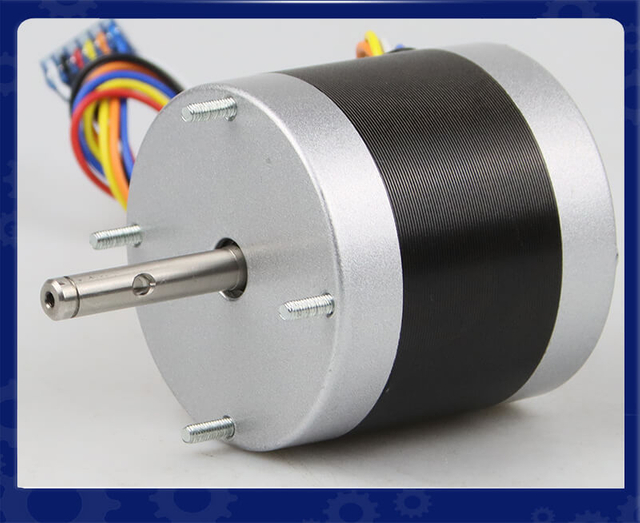
IDC60 Integrated BLDC Servo Motor — High-Efficiency, Compact, and Smart Closed-Loop Motion Control Solution
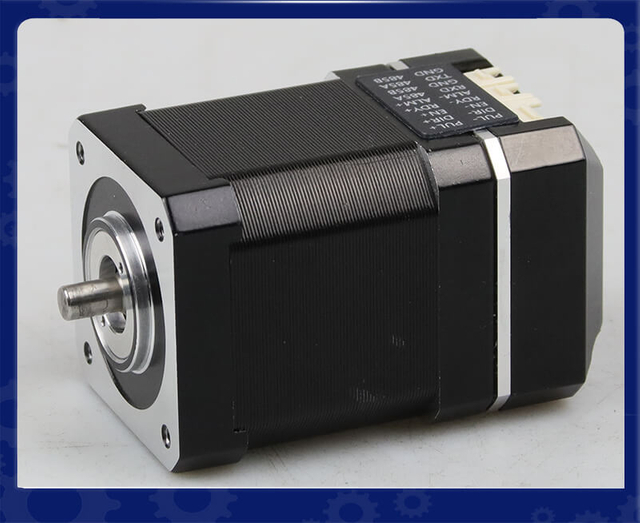
Product Overview:The IDC60 integrated BLDC servo motor from LeanMotor is a compact NEMA 24 solution combining motor, drive, and encoder in one unit. It provides precise closed-loop control, stable torque, and fast response. Its integrated design reduces wiring, saves space.
Key Technical Highlights
Integrated All-in-One Design Combines BLDC motor, servo drive, and encoder in a compact unit, reducing wiring complexity and improving installation efficiency.
High-Precision Closed-Loop Control Ensures accurate position, speed, and torque regulation with real-time feedback for stable and smooth motion performance.
Powerful Modular Customization (OEM/ODM) Supports flexible customization options, including voltage, torque, communication protocols, and encoder resolution to meet diverse application requirements.
High Efficiency & Compact Structure Delivers strong torque density with optimized thermal performance, making it ideal for space-limited automation and robotics systems.
Typical Applications
Pipeline Inspection Robots Provides stable low-speed torque and precise motion control for navigating narrow, curved, and complex pipeline environments.
Automated Guided Vehicles (AGVs) Ensures smooth acceleration, accurate positioning, and reliable operation in logistics and smart warehouse systems.
Robotic Automation Systems Ideal for robotic arms, grippers, and compact motion modules requiring high precision and fast response.
Smart Manufacturing Equipment Supports high-accuracy motion control in assembly lines, packaging machines, and precision industrial automation devices.
IDC60 Series Integrated Brushless Dc Motor Parameters
Why Servo Motors Are Ideal for Powder Filling Machines
1. Ultra-High Precision Position and Torque Control
One of the primary reasons servo motors are widely used is their ability to deliver closed-loop precision control. Unlike stepper motors or conventional AC motors, servo motors continuously monitor and adjust their position, speed, and torque in real time.
In powder filling applications, this enables:
Precise control of auger screw rotation
Accurate dosing volume per cycle
Real-time compensation for powder density variations
Consistent fill weights across long production runs
This level of control significantly reduces product giveaway and ensures compliance with strict packaging standards.
2. Smooth and Stable Low-Speed Operation
Powder filling often requires low-speed, high-torque rotation, especially in auger fillers. Servo motors excel in this operating range due to their ability to maintain smooth motion without vibration or torque ripple.
Benefits include:
Preventing powder compaction inconsistencies
Reducing air entrapment in fine powders
Improving fill uniformity
Avoiding sudden jerks that cause overflow
This stability is critical when handling fine, lightweight, or hygroscopic powders such as milk powder, flour, or pharmaceutical granules.
3. High Responsiveness for Fast Production Lines
Modern packaging lines demand both speed and accuracy. Servo motors provide rapid acceleration and deceleration, enabling machines to achieve high throughput without sacrificing precision.
Key advantages include:
Faster cycle times per fill
Instant start-stop control for batch dosing
Seamless integration with PLC systems
Reduced downtime between filling cycles
This responsiveness ensures that production lines remain highly efficient even under variable load conditions.
4. Programmable Flexibility for Multiple Products
Powder filling machines often handle different products with varying densities and flow characteristics. Servo systems allow operators to easily adjust parameters such as:
Rotation speed of auger screw
Torque limits
Fill volume per cycle
Acceleration profiles
This programmability makes servo-driven machines ideal for multi-product manufacturing environments, eliminating the need for frequent mechanical adjustments.
5. Improved Hygiene and Reduced Mechanical Wear
In industries such as pharmaceuticals and food processing, hygiene is non-negotiable. Servo motors contribute to cleaner machine designs because they:
Require fewer mechanical transmission components
Reduce reliance on belts and gears
Minimize lubrication requirements
Support fully enclosed motor structures
With fewer mechanical contact points, there is less risk of contamination, easier cleaning, and improved compliance with hygiene standards like GMP and FDA requirements.
6. Enhanced Feedback and Intelligent Control
Servo systems operate with integrated feedback devices such as encoders or resolvers, allowing continuous monitoring of system performance.
This enables:
Real-time error correction
Detection of abnormal load conditions
Compensation for material inconsistencies
Predictive maintenance capabilities
In powder filling, this intelligence ensures that every dose remains consistent even when environmental or material conditions fluctuate.
Servo Motor vs Stepper Motor in Powder Filling Applications
Many manufacturers compare servo motors with stepper motors when designing powder filling machines. While both are used in automation, their performance differences are significant.
Feature
Servo Motor
Stepper Motor
Accuracy
Extremely high (closed-loop)
Moderate (open-loop or semi-closed)
Torque at High Speed
Stable
Drops significantly
Energy Efficiency
High
Lower
Vibration
Minimal
Noticeable at low speeds
Feedback System
Built-in encoder
Usually none
Suitability for High-End Filling
Excellent
Limited
Servo motors clearly outperform stepper systems in applications requiring high precision, continuous operation, and industrial-scale production.
The integration of servo motors in powder filling systems has become a defining factor in modern packaging automation. As production demands shift toward higher precision, faster cycle times, and greater product flexibility, servo-driven architectures provide the motion control foundation needed to achieve stable and repeatable powder dosing.
Unlike traditional mechanical or open-loop systems, servo motors enable closed-loop intelligent control, allowing every stage of the filling process to be precisely managed and adjusted in real time.
1. Servo-Controlled Auger Filling Mechanism
One of the most common applications of servo motors in powder filling systems is the auger filling unit.
In this configurationIn this configuration, the servo motor is directly coupled to the auger screw, replacing older gear-driven or pneumatic systems. This allows:
Precise control of auger rotation angle
Accurate dosing based on motor feedback
Adjustable speed profiles for different powders
Consistent torque output during filling cycles
By controlling the exact number of motor revolutions, the system can deliver highly accurate volumetric or semi-gravimetric filling results.
This is especially important for fine powders such as milk powder, coffee powder, protein supplements, and pharmaceutical ingredients, where even slight deviations affect product quality.
2. Synchronization with Conveyor and Packaging Lines
Servo motors are not limited to the filling head—they also play a key role in line synchronization.
In a complete powder filling system, multiple servo axes may coordinate:
Conveyor movement of bottles or pouches
Indexing of containers under filling nozzles
Timing of sealing or capping stations
Transfer between multiple filling heads
Through precise motion coordination, servo systems eliminate timing mismatches, ensuring that every container is filled at the exact correct position and moment.
3. Multi-Axis Servo Architecture for Complex Systems
Advanced powder filling machines often use multi-axis servo systems to manage different mechanical functions simultaneously.
Each axis operates under a centralized controller, allowing coordinated motion with microsecond-level timing accuracy.
This architecture significantly improves production efficiency while maintaining consistent dosing accuracy across all filling stations.
4. Closed-Loop Feedback for Real-Time Accuracy Control
A major advantage of servo integration is the use of real-time feedback systems, typically through encoders.
This enables the machine to:
Continuously monitor motor position and speed
Adjust torque output based on load variation
Detect inconsistencies in powder flow resistance
Correct deviations during each filling cycle
For powders with fluctuating density or flow behavior, this feedback loop ensures that fill accuracy remains stable even under changing conditions.
5. Programmable Filling Profiles for Different Powders
Servo-driven systems allow operators to create custom filling profiles tailored to specific materials.
These profiles can include:
Fast-fill phase for bulk dosing
Slow-fill phase for precision topping
Anti-drip deceleration control
Torque limiting for sensitive powders
This flexibility makes servo-integrated systems ideal for manufacturers handling multiple product lines on a single machine.
6. Improved Hygiene Through Reduced Mechanical Complexity
Servo integration also enhances machine hygiene by simplifying mechanical design. Since servo motors can be directly mounted to drive components:
Fewer belts, pulleys, and gearboxes are required
Mechanical wear points are reduced
Lubrication requirements are minimized
Cleaning becomes faster and more efficient
This is particularly important in food-grade and pharmaceutical environments, where contamination control is critical.
7. Energy Efficiency and Operational Stability
Servo motors operate with high energy efficiency due to their ability to supply torque on demand. In powder filling systems, this results in:
Lower power consumption during idle states
Efficient torque delivery during peak load
Reduced heat generation
Stable long-term operation under continuous duty cycles
This improves both operational cost efficiency and machine lifespan.
8. Integration with PLC and Smart Factory Systems
Modern powder filling machines equipped with servo systems are fully compatible with PLC controllers and Industry 4.0 platforms.
This allows:
Remote monitoring of production data
Automated parameter adjustment
Predictive maintenance alerts
Integration into MES (Manufacturing Execution Systems)
As a result, manufacturers gain full visibility and control over their filling processes in real time.
9. Precision Improvement Compared to Traditional Systems
When compared with pneumatic or stepper-based systems, servo integration offers clear advantages:
Higher repeatability in dosing accuracy
Better control at low-speed operation
Reduced mechanical backlash
Improved consistency across long production runs
These improvements directly translate into reduced material waste and higher product quality.
Summary
The integration of servo motors in powder filling systems transforms traditional packaging machines into highly precise, intelligent, and adaptable automation platforms. By enabling closed-loop control, multi-axis synchronization, and programmable flexibility, servo technology ensures that modern powder filling operations meet the increasingly strict demands of industrial production.
Key Industrial Benefits of Servo-Driven Powder Filling Machines
Servo-driven powder filling machines have become a cornerstone of modern industrial packaging because they directly address the core challenges of accuracy, speed, consistency, and operational efficiency. By replacing conventional mechanical or pneumatic control methods with closed-loop servo technology, manufacturers achieve a significant upgrade in both performance and reliability.
Below are the most important industrial benefits that explain their widespread adoption.
1. Significantly Improved Filling Accuracy
One of the most critical advantages of servo-driven systems is their ability to deliver exceptional dosing precision.
Servo motors provide:
Exact control of auger or dosing mechanisms
Real-time correction of positional errors
Stable torque output during every fill cycle
Repeatable performance over long production runs
This results in highly consistent fill weights, often within very tight tolerances, which is essential in industries such as pharmaceuticals, food production, and chemical packaging.
2. Reduced Material Waste and Product Giveaway
In powder packaging, even small overfills accumulate into significant material losses over time. Servo-driven machines minimize this issue by ensuring:
Accurate cut-off at the exact dosing point
Controlled slow-fill phases for precision topping
Reduced overshooting during high-speed operation
This leads to lower product giveaway, improved cost control, and higher profitability per production batch.
3. Higher Production Efficiency and Throughput
Servo systems enable fast acceleration, deceleration, and cycle execution, which directly improves machine productivity.
Key efficiency improvements include:
Shorter filling cycle times
Reduced downtime between batches
Smooth synchronization with conveyors and sealing units
Stable operation at high speeds without loss of accuracy
This allows manufacturers to scale output without compromising quality.
4. Superior Stability During Continuous Operation
Industrial environments require machines that can operate continuously for long periods. Servo-driven powder filling systems maintain stability through:
Closed-loop feedback control
Automatic compensation for load variations
Consistent torque output under changing conditions
Reduced mechanical vibration and wear
This ensures reliable performance even in 24/7 production lines.
5. Flexible Multi-Product Handling Capability
Modern factories often produce multiple powder-based products on the same line. Servo-driven machines offer excellent flexibility by allowing quick adjustments such as:
Different dosing volumes
Customized speed profiles
Variable auger rotation settings
Recipe-based operation modes
This eliminates the need for extensive mechanical reconfiguration and reduces changeover time.
6. Enhanced Hygiene and Compliance Standards
Servo systems support cleaner machine designs by reducing mechanical complexity. This contributes to:
These characteristics are especially valuable in food-grade and pharmaceutical environments, where strict regulatory compliance is required.
7. Improved Process Control and Automation Integration
Servo-driven powder filling machines integrate seamlessly into modern automated production environments.
They support:
PLC-based centralized control systems
Real-time production monitoring
Data logging for quality control
Integration with Industry 4.0 platforms and MES systems
This enhances visibility, traceability, and control across the entire production process.
Final
Servo-driven powder filling machines deliver a powerful combination of precision, efficiency, flexibility, and reliability. Their ability to optimize dosing accuracy while improving production speed and reducing operational costs makes them a preferred solution in modern automated packaging industries.
Future Trends in Servo Technology for Powder Filling
As automation evolves, servo systems are becoming even more advanced with:
Integrated servo motors with built-in drives
AI-based adaptive control algorithms
IoT-enabled predictive maintenance
Higher torque density compact designs
Energy-saving regenerative control systems
These innovations are making powder filling machines smarter, smaller, and more efficient than ever before.
Conclusion
The widespread use of servo motors in powder filling machines is driven by their unmatched ability to deliver precision, stability, speed, and intelligent control. As production requirements become increasingly demanding, servo technology continues to set the standard for modern powder dosing and packaging automation.
By enabling highly accurate, clean, and efficient filling processes, servo-driven systems have become an essential component in industries where consistency and quality are non-negotiable.
FAQs
1. Why are servo motors widely used in powder filling machines?
Servo motors are widely used in powder filling machines because they provide high-precision motion control, stable torque output, and real-time feedback. This allows filling systems to achieve extremely accurate dosing, even when handling powders with varying density or flow characteristics. Compared with traditional motor systems, servo technology significantly improves consistency, efficiency, and automation level in packaging lines.
2. How do servo motors improve filling accuracy in powder filling systems?
Servo motors improve filling accuracy by using a closed-loop control system with encoder feedback. This enables continuous monitoring and adjustment of auger rotation or dosing mechanisms. As a result, the machine can precisely control material output, reduce overfilling or underfilling, and maintain stable performance even during high-speed operation.
3. What types of powder filling machines use servo motors?
Servo motors are commonly used in a variety of powder filling equipment, including:
Auger powder filling machines
Vertical form fill seal (VFFS) machines
Multi-head powder filling systems
Bottle and pouch filling lines
These machines rely on servo-driven motion to ensure accurate dosing, synchronization, and high-speed production performance.
4. What is the difference between servo motors and stepper motors in powder filling applications?
Servo motors operate with closed-loop feedback control, allowing real-time correction of position, speed, and torque. Stepper motors typically operate in open-loop mode and may lose synchronization under load.
In powder filling applications, servo motors offer:
Higher accuracy and repeatability
Better performance at high speeds
Smoother low-speed operation
Reduced vibration and material waste
This makes servo systems more suitable for industrial-grade, high-precision filling operations.
5. Are servo-driven powder filling machines suitable for food and pharmaceutical industries?
Yes, servo-driven powder filling machines are highly suitable for food, pharmaceutical, and nutraceutical industries. Their high precision, stable operation, and reduced mechanical complexity make them ideal for hygienic environments. They also support stainless steel construction, easy cleaning design, and compliance with strict industry standards such as GMP and FDA requirements.