Views: 0 Author: Site Editor Publish Time: 2026-07-23 Origin: Site
Commercial blenders are widely used in restaurants, cafes, hotels, juice bars, food processing facilities, and industrial kitchens where high-speed mixing, continuous operation, and consistent performance are essential. Unlike household blenders, commercial blenders must handle heavier workloads, longer operating cycles, tougher ingredients, and frequent start-stop operations. Therefore, selecting the right BLDC motor (Brushless DC motor) is one of the most important decisions when designing a high-performance commercial blender.
A properly selected BLDC motor for commercial blenders can significantly improve blending efficiency, reduce energy consumption, extend service life, and provide stable torque output under demanding conditions. However, choosing the correct motor requires careful consideration of factors such as motor power, torque, speed range, efficiency, thermal performance, control system compatibility, noise level, and durability.
This article explains how to choose the right brushless DC motor for commercial blenders and the key technical factors that should be evaluated during motor selection.
Why Do Commercial Blenders Use BLDC Motors?
Traditional commercial blenders often use brushed DC motors or AC induction motors. However, modern high-performance commercial blending equipment increasingly adopts BLDC motors because they offer better efficiency, higher reliability, and more precise speed control.
A BLDC motor uses electronic commutation instead of mechanical brushes and a commutator. This design eliminates brush wear, reduces maintenance requirements, and allows the motor to operate efficiently at high speeds.
The main advantages of usingBLDC motors in commercial blenders include:
1. High Torque Output for Heavy-Duty Blending
Commercial blenders need strong torque to process hard ingredients such as:
Ice cubes
Frozen fruits
Nuts
Vegetables
Thick sauces
Protein mixtures
A high-performance BLDC motor provides high starting torque, allowing the blender blade to quickly accelerate even under heavy loads. This prevents motor overload and ensures smooth blending performance.
2. High-Speed Operation
Most commercial blenders require blade speeds ranging from thousands to tens of thousands of revolutions per minute (RPM).
BLDC motors are ideal for high-speed applications because they can maintain stable rotation while minimizing mechanical losses. This helps achieve:
Faster blending cycles
More consistent texture
Improved mixing efficiency
3. Higher Energy Efficiency
Compared with conventional brushed motors, brushless DC motors offer higher electrical efficiency because they eliminate friction losses caused by brushes.
Higher efficiency means:
Lower power consumption
Reduced operating costs
Less heat generation
Longer motor lifespan
For commercial kitchens operating multiple hours every day, energy savings can become a significant advantage.
4. Longer Service Life
Commercial blenders frequently operate hundreds of cycles per day. Motor reliability is therefore critical.
Since BLDC motors do not use carbon brushes, they avoid common failure issues such as:
Brush wear
Spark generation
Reduced performance over time
Frequent maintenance
A properly designed BLDC motor can provide a much longer operational lifespan compared with traditional motors.
Key Factors When Choosing a BLDC Motor for Commercial Blenders
Selecting a BLDC motor requires matching the motor characteristics with the blender's mechanical and operational requirements.
The following factors should be carefully evaluated.
1. Determine the Required Motor Power
Motor power is one of the first specifications to consider when choosing a BLDC motor for a commercial blender.
The required power depends on:
Blender capacity
Ingredient hardness
Blade design
Operating frequency
Expected blending speed
Continuous operation requirements
Typical commercial blender applications may require motors ranging from several hundred watts to several kilowatts.
For example:
Small commercial smoothie machines may use lower-power BLDC motors.
Industrial food processing blenders may require high-torque motors with continuous-duty ratings.
Choosing insufficient motor power may cause:
Slow blending performance
Excessive heat generation
Motor overload
Reduced lifespan
Choosing excessive power may increase:
Equipment cost
Energy consumption
Mechanical stress
Therefore, the motor power should be matched precisely with the blender application.
2. Select the Correct Torque Characteristics
Torque is one of the most important parameters for commercial blender motors.
A blender motor must provide:
High starting torque
Stable running torque
Overload capability
When blending thick materials or crushing ice, the blade experiences sudden increases in resistance. A motor with insufficient torque may experience speed reduction or even stall.
A high-quality BLDC motor with optimized torque performance maintains stable blade speed even when the load changes.
Important torque specifications include:
Rated torque
Peak torque
Starting torque
Continuous torque capability
For heavy-duty commercial blenders, selecting a motor based only on RPM is not recommended. A high-speed motor without enough torque will not deliver reliable blending performance.
3. Consider Motor Speed Requirements
Commercial blenders typically require high rotational speed to create strong centrifugal force and achieve fine blending results.
When selecting a BLDC motor, consider:
Rated speed
Maximum speed
Speed regulation capability
Load speed stability
A good commercial blender motor should maintain consistent speed under different ingredient conditions.
The motor controller should also support precise speed adjustment, allowing users to select different blending modes such as:
Low-speed mixing
Medium-speed blending
High-speed crushing
4. Evaluate Motor Efficiency and Heat Management
Commercial blenders often operate continuously, making thermal management extremely important.
Excessive heat can reduce:
Motor efficiency
Bearing life
Insulation performance
Electronic component reliability
A suitable BLDC motor for commercial blender applications should have:
High efficiency design
Optimized electromagnetic structure
Effective heat dissipation
Suitable thermal protection
Some high-power BLDC motors use:
Aluminum housings
Cooling fans
Advanced winding designs
Temperature sensors
These features help maintain stable operation during long working cycles.
5. Choose the Right BLDC Motor Controller
A BLDC motor cannot operate without an electronic controller.
The controller is responsible for:
Motor commutation
Speed regulation
Current management
Protection functions
When selecting a motor system, the motor and controller should be considered together.
A suitable controller should support:
Accurate speed control
Over-current protection
Over-temperature protection
Soft start function
Load compensation
For commercial blenders, advanced control algorithms can improve blending consistency by automatically adjusting motor output according to load changes.
6. Pay Attention to Noise and Vibration Performance
Commercial environments such as cafes and restaurants require equipment with acceptable noise levels.
Poorly designed motors may create:
Electromagnetic noise
Mechanical vibration
Unstable operation sounds
A high-quality brushless DC motor for blender applications can reduce noise through:
Balanced rotor design
Precision manufacturing
Optimized magnetic structure
High-quality bearings
Lower vibration also helps protect the blender structure and improves user experience.
7. Consider Waterproof and Dust-Resistant Design
Commercial kitchens often involve:
Water splashes
Humidity
Food particles
Frequent cleaning
Therefore, the motor should have suitable protection against environmental conditions.
Important considerations include:
IP protection rating
Sealed bearings
Protective housing design
Corrosion-resistant materials
A properly protected BLDC motor improves reliability in demanding kitchen environments.
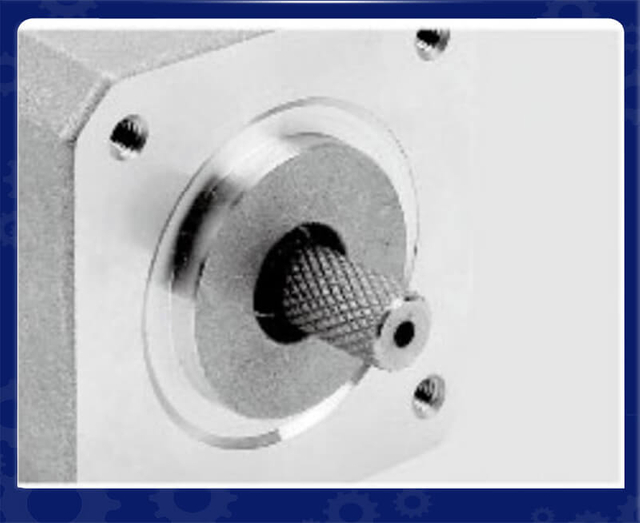
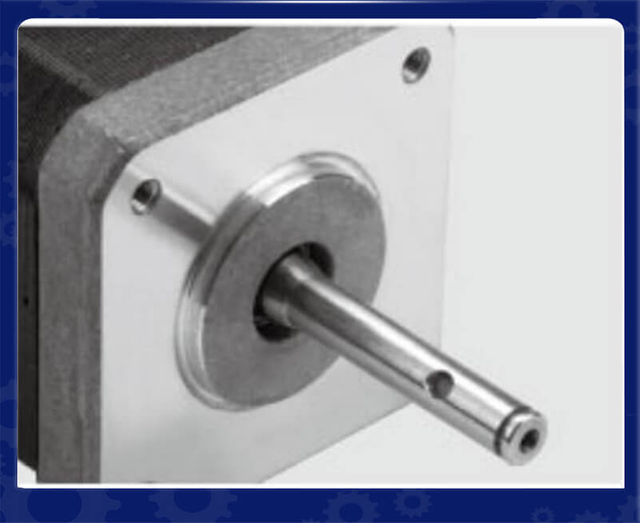
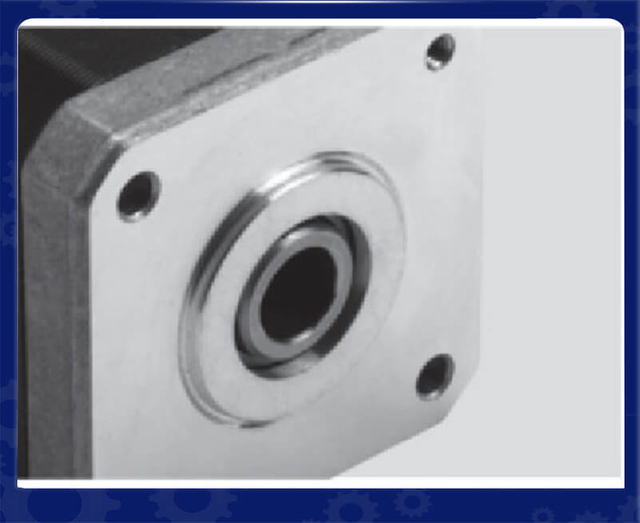
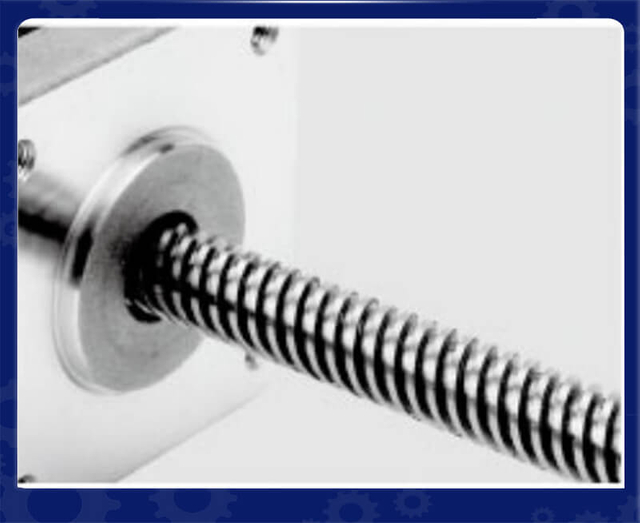
8. Check Mechanical Compatibility
Before selecting a BLDC motor, the mechanical interface must be evaluated.
Important factors include:
Motor diameter
Shaft size
Mounting structure
Coupling method
Blade connection design
The motor must integrate smoothly with the blender transmission system.
In some high-performance commercial blenders, the BLDC motor connects directly to the blade shaft to reduce mechanical losses and improve efficiency.
80BLS01 BLDC Motor — Compact, Intelligent, and Reliable Brushless Motor Drive System
Product Overview:The BF80BLS Brushless DC Motor is a compact, high-efficiency motor designed for precision motion applications. Featuring reliable performance, low noise operation, and excellent speed control, it provides stable power output for automation equipment, robotics, medical devices, and other space-constrained systems requiring efficient and durable motion solutions.
Key Technical Highlights
Compact 80MM Frame Size: Provides a space-saving design while delivering reliable torque output for compact automation and motion systems.
High Efficiency Brushless Design: Ensures low energy consumption, reduced heat generation, and longer service life compared with traditional brushed motors.
Low Noise & Smooth Operation: Optimized electromagnetic design enables stable rotation and quiet performance for precision applications.
Excellent Speed Control Capability: Supports accurate speed regulation and responsive dynamic performance for various motion requirements.
Durable & Maintenance-Free Operation: The brushless structure eliminates brush wear, improving reliability and reducing maintenance needs.
Wide Application Flexibility: Suitable for robotics, automation equipment, medical devices, and other compact motion control systems.
Typical Applications
Robotics and Automation Equipment – Provides precise and stable driving power for robotic mechanisms and automated systems.
Medical Devices – Suitable for compact medical instruments requiring quiet, reliable, and maintenance-free operation.
Laboratory and Testing Equipment – Delivers smooth speed control and consistent performance for precision motion applications.
3D Printers and CNC Equipment – Supports efficient and stable movement in compact manufacturing systems.
BF80BLS Series Integrated Brushless Dc Motor Parameters
Modern commercial blenders require motors that can deliver high torque, stable high-speed operation, low noise, and long service life. As the demand for efficient and reliable professional blending equipment increases, direct drive BLDC motors (Brushless DC motors) are becoming a preferred solution for high-performance commercial blender systems.
Unlike traditional motor systems that rely on belts, gears, or other transmission components, a direct drive BLDC motor connects directly to the blender blade shaft, transferring power with minimal mechanical loss. This design improves efficiency, reduces maintenance requirements, and provides more accurate speed control.
Advantages of Direct Drive BLDC Motors in Commercial Blenders
1. Higher Energy Efficiency
One of the biggest advantages of direct drive BLDC motors is improved energy efficiency.
Because there are fewer mechanical transmission parts, the system reduces:
Friction losses
Mechanical power loss
Energy conversion loss
The motor can transfer more electrical energy directly into blade rotation, resulting in lower power consumption during daily operation.
For commercial kitchens, juice shops, and food processing facilities that operate equipment for many hours, improved efficiency can significantly reduce operating costs.
2. Strong Torque Performance for Heavy-Duty Blending
Commercial blenders often process challenging materials such as:
Ice cubes
Frozen fruits
Nuts
Seeds
Thick mixtures
These applications require high starting torque and stable load performance.
A direct drive BLDC motor provides immediate torque output because the motor directly drives the blade without transmission delay.
Benefits include:
Faster acceleration
Stronger crushing capability
Stable speed under heavy loads
Reduced risk of motor overload
This makes direct drive BLDC motors ideal for professional blending applications requiring powerful performance.
3. Compact and Simplified Mechanical Design
Removing gearboxes and belt systems allows manufacturers to create more compact blender structures.
A direct drive system offers:
Fewer mechanical components
Smaller installation space
Reduced system weight
Easier assembly
The simplified structure also improves reliability because fewer mechanical parts means fewer potential failure points.
4. Lower Maintenance Requirements
Traditional motor systems may require regular maintenance for:
Belt replacement
Gear lubrication
Mechanical alignment
Transmission inspection
Direct drive BLDC motors eliminate many of these maintenance concerns.
Since BLDC motors do not use carbon brushes, they also avoid:
Brush wear
Electrical sparks
Frequent replacement
This significantly extends the operating life of commercial blender equipment.
5. Precise Speed Control
Commercial blending applications often require different speed settings for different ingredients.
A direct drive BLDC motor combined with an advanced controller can provide precise speed regulation through electronic control.
The system can support:
Variable speed adjustment
Smooth acceleration
Stable RPM control
Intelligent load compensation
This allows commercial blenders to achieve consistent results for smoothies, sauces, soups, and other food products.
How Direct Drive BLDC Motors Improve Commercial Blender Performance
Stable High-Speed Operation
Commercial blenders typically require very high blade speeds to achieve fine mixing and crushing performance.
Direct drive BLDC motors maintain stable operation even when ingredient resistance changes.
The motor controller can automatically adjust current output according to load conditions, ensuring:
Constant blade speed
Improved blending quality
Reduced vibration
Better texture consistency
Reduced Noise and Vibration
Noise is an important consideration in commercial environments such as cafes, hotels, and restaurants.
Direct drive BLDC motor systems reduce noise by eliminating mechanical transmission components that generate vibration.
A well-designed system provides:
Smooth rotation
Lower mechanical noise
Reduced vibration transmission
Improved user experience
This makes direct drive BLDC motors suitable for premium commercial kitchen equipment.
Why Direct Drive BLDC Motors Are Ideal for Next-Generation Commercial Blenders
The commercial blender industry is moving toward smarter, more efficient, and more durable equipment.
Direct drive BLDC motors support these trends by providing:
Higher efficiency
Better torque performance
Lower maintenance
Precise control
Longer service life
Compact design
With advanced motor controllers and intelligent control systems, future commercial blenders can automatically adjust speed and power according to different ingredients and operating conditions.
Direct Drive BLDC Motor vs Traditional Blender Motors
Feature
Direct Drive BLDC Motor
Traditional Motor System
Energy Efficiency
High
Medium
Maintenance
Low
Higher
Torque Response
Fast
Slower
Noise Level
Lower
Higher
Speed Control
Precise
Limited
Service Life
Longer
Shorter
Mechanical Loss
Minimal
Higher
Direct drive BLDC motors provide clear advantages for commercial applications where reliability and performance are essential.
Summary
Direct drive BLDC motors for commercial blenders provide an advanced motor solution that combines high efficiency, powerful torque output, precise speed control, and long operational life.
By directly connecting the motor to the blender blade system, manufacturers can achieve better energy utilization, reduced maintenance, lower noise, and improved blending performance.
For modern commercial blender designs, adopting a high-performance direct drive brushless DC motor is an effective way to improve product reliability, efficiency, and competitiveness in demanding food processing environments.
How to Match BLDC Motor Specifications with Commercial Blender Requirements
When selecting a motor, engineers should evaluate the complete operating environment.
A basic selection process includes:
Step 1: Define Blender Requirements
Determine:
Blender capacity
Maximum load
Required speed
Operating hours per day
Ingredient types
Step 2: Calculate Required Torque
Estimate the torque required to rotate the blade under maximum load conditions.
Step 3: Select Motor Power and Speed
Choose a BLDC motor that provides sufficient power while maintaining efficiency.
Step 4: Match the Controller
Ensure the controller supports required speed control and protection functions.
Step 5: Test Under Real Working Conditions
Performance testing should include:
Heavy load operation
Continuous running
Temperature testing
Noise measurement
Why BLDC Motors Are the Future of Commercial Blender Applications
With increasing demand for energy-efficient and intelligent kitchen equipment, BLDC motors are becoming the preferred solution for commercial blending systems.
Future commercial blender designs will increasingly focus on:
Smart motor control
Lower energy consumption
Compact motor structures
Improved durability
Automated load adjustment
The combination of high efficiency, strong torque, precise speed control, and long service life makes BLDC motors an ideal choice for next-generation commercial blenders.
Conclusion
Choosing the right BLDC motor for commercial blenders requires comprehensive evaluation of power, torque, speed, efficiency, thermal performance, controller compatibility, and mechanical design.
A high-quality brushless DC motor enables commercial blenders to achieve faster processing speeds, stronger crushing capability, lower energy consumption, quieter operation, and longer service life.
For manufacturers designing professional blending equipment, selecting a properly matched BLDC motor system is essential for creating reliable, efficient, and competitive commercial blender products.
FAQ: How to Choose BLDC Motor for Commercial Blenders
1. Why are BLDC motors used in commercial blenders?
Answer: BLDC motors are widely used in commercial blenders because they provide high efficiency, strong torque output, precise speed control, and long service life. Unlike brushed motors, BLDC motors do not require carbon brushes, reducing maintenance and improving reliability during continuous commercial operation.
2. What factors should be considered when choosing a BLDC motor for a commercial blender?
Answer: When selecting a BLDC motor for a commercial blender, important factors include motor power, torque, speed range, efficiency, thermal performance, controller compatibility, noise level, and operating environment. The motor should match the blender’s capacity, blade design, and workload requirements to ensure stable performance.
3. How much power does a BLDC motor need for a commercial blender?
Answer: The required BLDC motor power depends on the blender application, including container capacity, ingredient hardness, blending frequency, and expected operating time. Small commercial blenders may require several hundred watts, while heavy-duty models used for crushing ice or processing thick materials may need higher-power BLDC motors.
4. Why is torque important when selecting a BLDC motor for commercial blenders?
Answer: Torque is critical because commercial blenders often process heavy loads such as ice, frozen fruits, nuts, and dense mixtures. A BLDC motor with high starting torque and stable running torque can maintain blade speed under load, prevent stalling, and improve blending consistency.
5. Are direct drive BLDC motors suitable for commercial blender applications?
Answer: Yes. Direct drive BLDC motors are highly suitable for commercial blenders because they connect directly to the blade shaft without additional transmission components. This design reduces mechanical losses, improves efficiency, lowers noise, minimizes maintenance, and provides faster torque response.
6. How do BLDC motors improve the efficiency of commercial blenders?
Answer: BLDC motors improve blender efficiency through optimized electromagnetic design, electronic commutation, and reduced mechanical friction. Compared with traditional brushed motors, they convert more electrical energy into mechanical power, resulting in lower energy consumption and less heat generation during operation.
7. What speed should a BLDC motor have for a commercial blender?
Answer: The required BLDC motor speed depends on the blender design and application. Commercial blenders usually require high-speed operation to achieve fine mixing and crushing performance. The motor should provide sufficient RPM while maintaining stable torque, efficiency, and temperature control under different loads.
8. What type of BLDC motor controller is required for commercial blenders?
Answer: Commercial blender BLDC motors require an electronic controller to manage commutation, speed adjustment, current control, and protection functions. A suitable controller should support features such as variable speed control, overload protection, over-temperature protection, and smooth acceleration.
9. How can a BLDC motor improve the lifespan of commercial blenders?
Answer: A BLDC motor improves blender lifespan by eliminating brush wear and reducing mechanical friction. With proper thermal management, sealed bearings, and optimized motor design, BLDC motors can provide longer operating life, lower maintenance requirements, and better reliability for continuous commercial use.
10. How do we select the right BLDC motor supplier for commercial blender applications?
Answer: A reliable BLDC motor supplier should provide customized motor solutions based on power requirements, torque characteristics, speed range, and installation conditions. Important factors include motor design capability, production quality, testing standards, controller integration experience, and technical support.