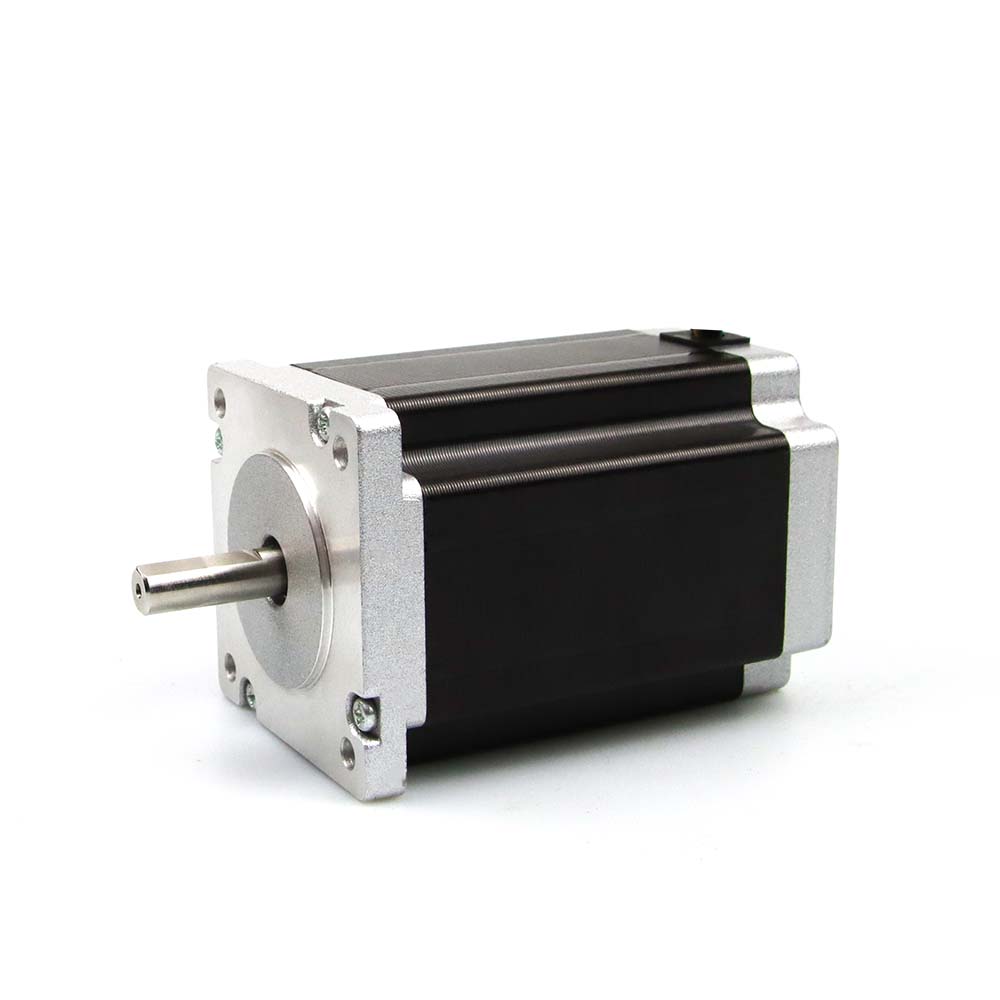
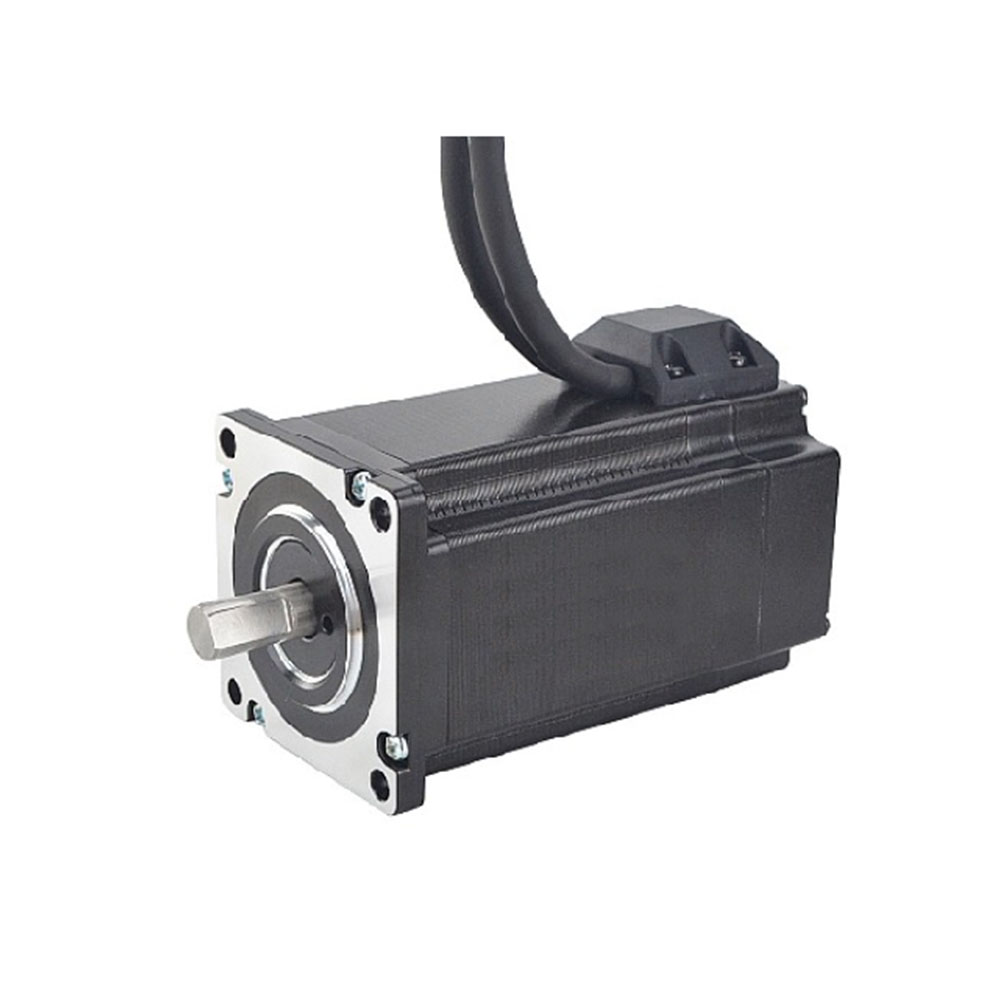
Stepper motors are widely used in automation, robotics, CNC machinery, and 3D printing for their precision and controlled motion. Unlike traditional DC or AC motors, a stepper motor moves in discrete step increments, allowing for highly accurate positioning. One of the most commonly asked questions is: how fast can a stepper motor move in steps per second or per revolution?
In this article, we will explore in depth how to calculate stepper motor speed, what factors influence it, and how to optimize step rates for maximum performance.
Understanding Stepper Motor Speed in Terms of Steps
When discussing stepper motor speed, it's important to understand that stepper motors don't spin continuously like DC or AC motors. Instead, they move in precise, discrete steps, each representing a fixed angle of rotation. The concept of speed in steps is therefore directly related to how many of these steps the motor completes per second or per minute.
A stepper motor's motion is defined by two main parameters:
Step angle – the angular displacement per step (commonly 1.8° or 0.9°).
Step rate – how many steps the motor takes each second (measured in steps per second, or SPS).
The step angle determines how many steps are required for one full revolution. For example:
Once you know the number of steps per revolution, you can easily calculate the rotational speed.
The formula is:
Speed (RPM) = (Step Rate in Steps per Second × 60) ÷ Steps per Revolution
Example:
If a 200-step-per-revolution motor runs at 1,000 steps per second:
Speed = (1,000 × 60) ÷ 200 = 300 RPM
This means the motor completes 300 revolutions per minute when operating at a step rate of 1,000 steps per second.
However, step rate is not the only factor that defines effective speed. It is also influenced by the driver's capability, microstepping settings, supply voltage, and load torque. Microstepping, for instance, divides each full step into smaller steps—such as half, quarter, or sixteenth steps—resulting in smoother motion but requiring more steps per revolution, thus lowering the effective RPM for the same pulse frequency.
In simple terms, the faster you send pulses (steps) to the stepper motor driver, the faster the motor shaft turns—as long as the motor torque is sufficient to overcome inertia and load. Understanding this relationship between step rate and rotational speed is key to optimizing performance in applications like 3D printers, CNC machines, and robotic actuators.
Typical Stepper Motor Step Rates
Stepper motors vary greatly in speed capability based on design, driver type, and load conditions. Below are typical step rate ranges:
| Motor Type | Step Angle | Steps per Revolution | Typical Step Rate (SPS) | Approx. Speed (RPM) |
| NEMA 17 | 1.8° | 200 | 200 – 4,000 | 60 – 1,200 |
| NEMA 23 | 1.8° | 200 | 200 – 3,000 | 60 – 900 |
| High-Torque Stepper | 0.9° | 400 | 200 – 2,000 | 30 – 300 |
| Hybrid Stepper | 1.8° | 200 | 200 – 10,000 (with microstepping) | 60 – 3,000+ |
These values can vary widely depending on driver voltage, microstepping configuration, and mechanical load. High-performance stepper systems using advanced drivers can reach step rates exceeding 20,000 SPS, especially when lightly loaded and powered with higher voltages.
How Microstepping Affects Step Rate and Speed
Modern stepper drivers support microstepping, which divides each full step into smaller increments—such as half, quarter, eighth, or even 1/256 microsteps. This technique smooths motor motion and reduces vibration.
However, microstepping also increases the number of steps required per revolution:
| Microstepping Setting | Steps per Revolution (1.8° Motor) |
| Full step (1x) | 200 |
| Half step (1/2) | 400 |
| Quarter step (1/4) | 800 |
| Eighth step (1/8) | 1,600 |
| Sixteenth step (1/16) | 3,200 |
| 1/32 microstep | 6,400 |
While this results in smoother rotation, the maximum achievable RPM decreases for a given step rate. To maintain high rotational speeds, higher driver pulse frequencies or increased supply voltage are required.
Calculating the Maximum Stepper Motor Speed
Let's consider an example:
Speed (RPM) = (3,000 × 60) ÷ 200 = 900 RPM
Now, if microstepping is set to 1/8 step, the steps per revolution increase to 1,600, and the speed becomes:
Speed (RPM) = (3,000 × 60) ÷ 1,600 = 112.5 RPM
Therefore, while microstepping improves precision, it lowers maximum speed unless the step pulse frequency is also increased proportionally.
Factors Influencing Stepper Motor Speed
The speed of a stepper motor is affected by multiple electrical and mechanical factors that determine how quickly and smoothly the motor can respond to step pulses. Understanding these factors is essential for optimizing performance, maintaining torque, and avoiding step loss during high-speed operation. Below are the main elements that influence stepper motor speed:
1. Supply Voltage
The supply voltage directly affects how fast current can build up in the motor windings. A higher voltage allows current to rise more quickly, enabling the motor to respond faster to each pulse. This results in a higher maximum step rate and faster overall speed.
However, excessive voltage beyond the driver's or motor's rated limit can lead to overheating or damage. For most stepper systems, using a driver with 24V, 36V, or 48V significantly improves performance at higher RPMs compared to a 12V supply.
2. Driver Current and Control Method
The motor driver controls how current flows through the windings. Setting the driver current close to the motor's rated value ensures maximum torque output.
Drivers using chopper current control or PWM regulation maintain consistent torque even as step frequency increases. Advanced stepper drivers with microstepping and current decay control allow smoother operation and better performance at high speeds.
3. Motor Inductance
Inductance measures how strongly the motor's windings resist changes in current. A high-inductance motor builds current more slowly, limiting speed performance. Conversely, a low-inductance motor allows faster current rise and supports higher step rates.
Therefore, for applications demanding higher RPM, motors with lower inductance (e.g., 2–4 mH) are preferred.
4. Load Torque and Inertia
The mechanical load attached to the motor greatly affects speed. Heavy loads require more torque to accelerate, reducing the maximum step rate before the motor skips steps.
The moment of inertia—how much resistance the load offers to changes in motion—also plays a key role. To achieve higher speed, it's ideal to minimize load inertia or use gear reductions that help balance torque and speed requirements.
5. Acceleration and Deceleration Profiles
Stepper motors cannot instantly jump from standstill to high speed. They must accelerate gradually to prevent missed steps due to insufficient torque at startup.
A proper acceleration (ramp-up) and deceleration (ramp-down) profile ensures the motor maintains synchronization with the input pulses. Motion controllers or drivers with built-in acceleration control help achieve smooth, high-speed operation.
6. Microstepping Settings
Microstepping divides each full step into smaller steps, such as 1/2, 1/8, or 1/16 microsteps. While this produces smoother motion and reduces vibration, it also increases the total number of steps per revolution.
As a result, for a given pulse frequency, the rotational speed (RPM) decreases. Balancing microstepping resolution and required speed is crucial. Many systems use 1/8 or 1/16 microstepping for an ideal mix of smoothness and speed.
7. Resonance and Vibration
Stepper motors can experience resonance at certain step frequencies, causing noise, vibration, or missed steps. These resonant frequencies occur when the motor’s natural vibration matches the step rate.
Solutions include:
Using microstepping to smooth motion
Adding dampers or mechanical isolation
Employing closed-loop control to adjust dynamically
8. Temperature and Thermal Limits
As the motor operates at high speed, heat generation increases due to current flow and internal resistance. High temperatures can reduce torque and efficiency. Keeping the motor and driver within their thermal limits ensures consistent performance and prevents permanent damage.
9. Power Supply Stability
A stable and sufficient power source ensures the driver can deliver consistent voltage and current. Voltage drops or unstable power can limit acceleration and cause irregular performance, especially at high step rates.
10. Driver Type and Control Signal Quality
The quality of the step pulses sent to the driver determines how accurately and quickly the motor responds. Drivers that support high-frequency pulse input can handle faster stepping commands.
Furthermore, digital signal integrity—clean, consistent pulse edges—ensures the driver interprets each command correctly, allowing the motor to reach higher reliable speeds.
Summary
In summary, the key factors that influence stepper motor speed include supply voltage, driver current, inductance, load characteristics, microstepping, and control strategy. To achieve high-speed performance, the motor must be paired with a suitable driver, powered by a stable high-voltage source, and controlled with optimized acceleration ramps and microstepping settings.
Properly balancing all these parameters allows a stepper motor to reach its maximum step rate while maintaining precision, torque, and efficiency—critical for applications in robotics, CNC machines, and precision automation systems.
Speed vs. Torque Relationship
The relationship between speed and torque in a stepper motor is one of the most critical aspects to understand when designing motion control systems. Unlike DC or servo motors, where torque can remain relatively constant across a wide speed range, stepper motors exhibit a distinct trade-off — as speed increases, available torque decreases. This inverse relationship defines how effectively a stepper motor can perform under different operating conditions.
1. The Basic Principle
Stepper motors generate torque by energizing coils in sequence, creating a magnetic field that pulls the rotor into alignment with each step. At low speeds, there is sufficient time for the current in each coil to reach its maximum value, producing maximum torque.
However, as step rate (steps per second) increases, the current has less time to rise to its full strength due to the winding's inductance. As a result, the torque produced at higher speeds drops significantly.
In other words:
Low speed = high torque
High speed = low torque
2. The Torque-Speed Curve
Manufacturers often provide a torque-speed curve for each motor, which visually represents how torque changes with speed. The curve typically has three main regions:
Start/Stop Region (Low Speed) – The motor can start, stop, and reverse instantly without losing steps. Torque is at its maximum here.
Pull-In Region (Medium Speed) – The motor can accelerate smoothly if the step rate is ramped up gradually. Torque begins to decline.
Pull-Out Region (High Speed) – The motor can run steadily at high speed, but cannot start or stop suddenly. Torque is lowest in this region.
At very high step rates, torque eventually drops below the load requirement, causing the motor to lose synchronization or miss steps.
3. Why Torque Decreases with Speed
Several electrical and magnetic effects contribute to the drop in torque as speed increases:
Inductive Reactance: Motor coils resist rapid current changes; higher step rates increase reactance, limiting current flow.
Back EMF (Electromotive Force): As the rotor spins, it generates a voltage opposing the applied voltage. This back EMF grows with speed, further reducing effective torque.
Current Rise Time: At higher pulse frequencies, the current cannot fully rise before the next step occurs, weakening the magnetic field strength.
These factors combine to reduce the motor's ability to generate strong torque at high speeds.
4. The Role of Supply Voltage and Driver
To counteract the torque drop at high speed, increasing the supply voltage is a common solution. Higher voltage helps overcome winding inductance and back EMF, allowing current to rise faster and maintaining torque at elevated speeds.
Similarly, advanced stepper drivers with current control and microstepping capabilities can dynamically regulate current flow, optimizing torque performance across the full speed range.
For example:
A 12V stepper system may start losing torque above 400 RPM.
The same motor with a 48V supply can maintain strong torque up to 1,000 RPM or more.
5. Effect of Load and Inertia
The mechanical load attached to the stepper motor determines how much torque is required at any given speed. A heavier load or higher inertia resists acceleration, demanding greater torque to maintain motion.
If the torque available from the motor drops below what is needed by the load, the motor skips steps or stalls. Therefore, ensuring that the load torque demand stays within the motor's torque-speed curve is vital for reliable operation.
6. Influence of Microstepping on Torque
While microstepping improves smoothness and positioning accuracy, it also slightly reduces the torque per microstep. This happens because, in microstepping, current is distributed between two phases in proportion, meaning neither phase reaches full current simultaneously.
Although this reduction is small (about 5–15%), at high speeds, it can contribute to an earlier torque drop-off if not compensated with appropriate voltage or driver tuning.
7. Practical Example
Let's take a NEMA 23 stepper motor rated for 3 Nm holding torque:
At 0–300 RPM, torque remains close to 3 Nm (maximum).
At 600 RPM, torque may drop to around 1.5 Nm.
At 1,000 RPM, torque might fall below 0.5 Nm.
Beyond this, the motor may no longer generate enough torque to drive the load effectively.
This behavior is typical and explains why stepper motors are ideal for low-to-medium-speed applications requiring high precision, such as CNC machines, 3D printers, and pick-and-place robots.
8. Extending the Usable Speed Range
To extend the speed range without severe torque loss, several strategies can be used:
Use higher supply voltage drivers (e.g., 48V instead of 24V).
Choose low-inductance motors for faster current rise.
Optimize acceleration profiles to gradually ramp up speed.
Use gear reductions to multiply torque while maintaining speed balance.
Consider closed-loop stepper systems that adjust current and position feedback dynamically for stable operation at higher speeds.
9. Summary
The speed vs. torque relationship defines how effectively a stepper motor performs under varying conditions. Torque is highest at low speeds and steadily decreases as speed increases due to inductance, back EMF, and current limitations.
Selecting the right motor, voltage, driver, and control strategy ensures a good balance between speed and torque. By understanding this relationship, engineers can design systems that maximize efficiency, maintain precision, and prevent step loss, ensuring smooth and reliable performance across the motor's operating range.
Optimizing Stepper Motor Speed Performance
To achieve maximum performance in steps or RPM, follow these guidelines:
1. Increase Supply Voltage
Using a driver rated for higher voltage (e.g., 24V or 48V) can dramatically improve speed by overcoming winding inductance faster.
2. Optimize Current Settings
Set the driver current close to the motor's rated current to maximize torque without overheating.
3. Use Proper Microstepping
Select a microstepping mode that balances smoothness and speed. For high-speed operations, 1/4 or 1/8 microstepping is often ideal.
4. Implement Acceleration Control
Ramp up the step rate gradually to avoid missed steps and mechanical stress.
5. Minimize Load Inertia
Use lightweight components or gear reduction systems to reduce load inertia, improving acceleration and stability.
6. Use Resonance Damping
Resonance at certain step frequencies can cause instability. Use dampers or controllers that dynamically adjust to minimize vibration.
Real-World Stepper Motor Speed Examples
3D Printers (NEMA 17): Typically operate between 300–1,000 SPS, achieving 90–300 RPM.
CNC Machines (NEMA 23 or 34): Commonly run at 1,000–3,000 SPS, translating to 300–900 RPM.
Robotics or Automation Systems: May reach 5,000–10,000 SPS for rapid motion, especially when paired with efficient drivers.
High-performance applications using closed-loop steppers can achieve 3,000+ RPM, with dynamic torque adjustment ensuring accurate positioning even at high speeds.
Conclusion: Understanding Stepper Motor Speed in Steps
The speed of a stepper motor in steps depends on step rate, step angle, microstepping configuration, and system design. A typical stepper operates efficiently within 200 to 5,000 steps per second, equivalent to 60–1,500 RPM, though advanced systems can exceed these limits.
To maximize speed without sacrificing torque or precision, ensure proper voltage, driver setup, and motion control algorithms are implemented. Mastering these parameters allows stepper motors to deliver both accuracy and performance, making them indispensable in precision motion applications.