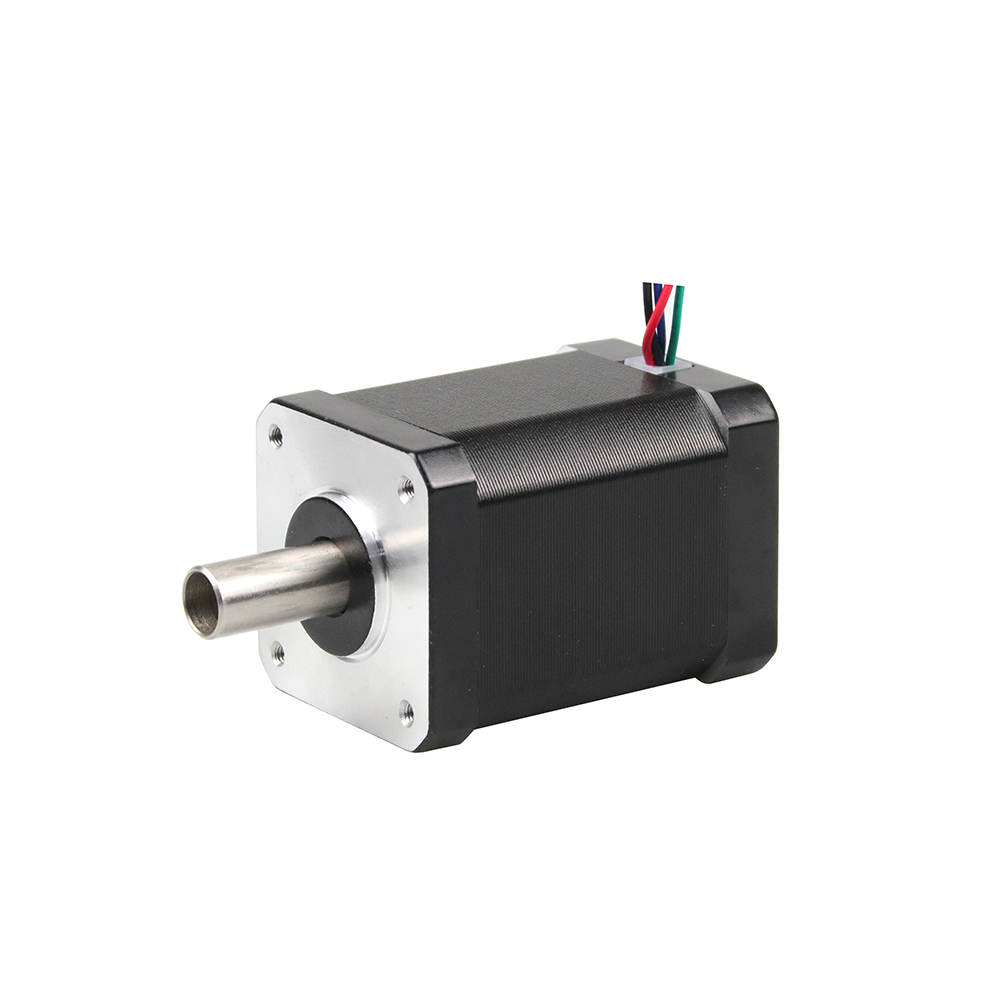
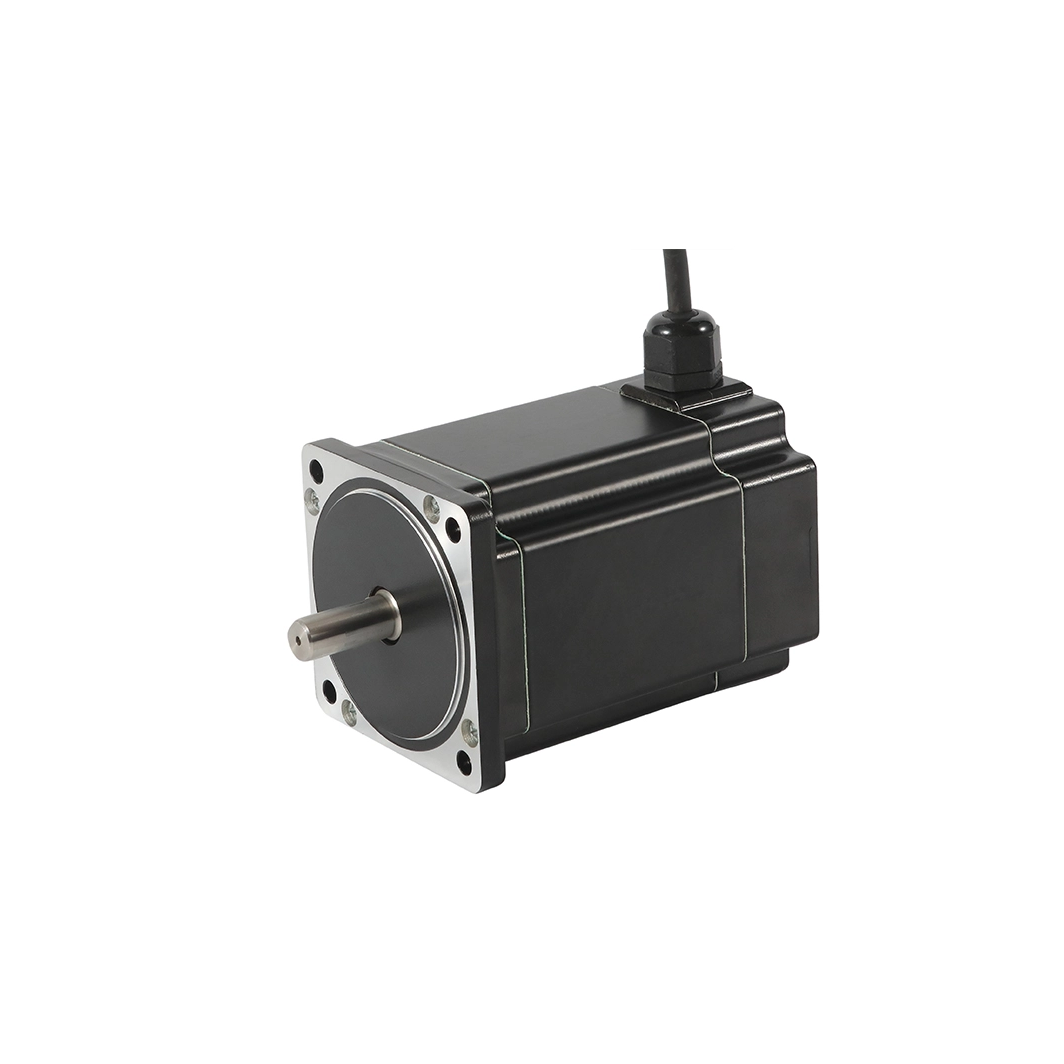
Introduction to Custom Winding Technology in Stepper Motors
We recognize that custom winding options for stepper motors are no longer a niche enhancement but a strategic engineering decision for applications demanding higher torque density, improved thermal performance, and optimized efficiency. As industrial automation, robotics, medical devices, and precision equipment continue to evolve, standard motor designs increasingly fall short of meeting exact performance requirements. Custom winding solutions allow stepper motors to be precisely tuned to application-specific electrical, mechanical, and thermal constraints, delivering measurable gains in performance and reliability.
Stepper motor windings directly determine critical parameters such as torque output, current draw, heat dissipation, speed-torque characteristics, and operational stability. By engineering these windings with intent rather than compromise, we unlock performance potential that off-the-shelf motors cannot provide.
Fundamentals of Stepper Motor Windings
Role of Windings in Torque Generation
Torque in a stepper motor is fundamentally a product of magnetic field strength and electromagnetic interaction between the stator and rotor. Windings govern this interaction through:
Number of turns per phase
Wire gauge and conductor material
Winding layout and phase configuration
Current density and resistance
Custom winding enables us to fine-tune these variables, directly influencing holding torque, pull-out torque, and dynamic torque across speed ranges.
Electrical Characteristics Shaped by Winding Design
Winding design establishes key electrical properties, including:
By adjusting turns count and wire diameter, we can optimize a stepper motor for low-voltage, high-current systems or high-voltage, low-current architectures, depending on the drive electronics and system-level design.
Custom Winding Options Explained
Increasing the number of turns per coil strengthens the magnetic field, resulting in higher holding torque at lower speeds. This approach is ideal for:
High-turn windings typically operate at higher voltages with reduced current, minimizing copper losses in low-speed, static-load applications.
Key benefits include:
Low-Turn Windings for High-Speed Performance
For applications requiring rapid acceleration and high rotational speeds, low-turn windings offer lower inductance, allowing current to rise more quickly. This results in superior torque retention at elevated speeds.
Common applications include:
Pick-and-place automation
Semiconductor manufacturing equipment
High-speed labeling and packaging systems
Advantages of low-turn windings:
Optimized Wire Gauge Selection
Optimized wire gauge selection is a critical factor in stepper motor winding design, directly influencing torque capability, electrical efficiency, and thermal performance. By carefully matching conductor size to application requirements, we ensure that the motor operates within its electrical limits while delivering stable and repeatable motion under real-world load conditions.
Relationship Between Wire Gauge and Electrical Resistance
Wire gauge determines the cross-sectional area of the conductor and therefore defines the phase resistance of the winding. A larger conductor diameter lowers resistance, allowing higher current flow with reduced copper losses. This reduction in resistive loss translates into improved electrical efficiency and lower heat generation during operation.
Conversely, smaller wire gauges increase resistance, which limits current and reduces torque potential. However, thinner wire enables a higher number of turns within the same stator slot, enhancing magnetic field strength when voltage availability is sufficient. Optimized gauge selection balances these opposing effects to meet targeted performance outcomes.
Impact on Torque Density and Current Capacity
Torque output in a stepper motor is directly proportional to phase current. Selecting an appropriate wire gauge ensures that the winding can safely carry the required current without excessive temperature rise. Proper current capacity supports higher continuous torque and prevents insulation degradation caused by prolonged thermal stress.
By optimizing conductor size, we maximize torque density while maintaining electrical stability, particularly in applications that demand sustained holding torque or frequent start-stop cycles.
Thermal Performance and Heat Management
Heat generation within stepper motor windings is dominated by I⊃2;R losses. Optimized wire gauge selection minimizes these losses by reducing resistance while maintaining efficient copper utilization. Improved thermal performance enables higher duty cycles, longer operating periods, and greater reliability in thermally constrained environments.
In precision systems and enclosed assemblies, effective heat management through conductor optimization is essential to preserve accuracy and prevent performance drift.
Slot Fill Ratio and Manufacturing Precision
Wire gauge selection directly affects the achievable slot fill ratio, which represents the proportion of stator slot volume occupied by copper. High slot fill ratios improve electromagnetic efficiency and reduce thermal resistance between the winding and stator core.
Advanced winding techniques allow precise placement of optimized wire gauges, ensuring consistent coil geometry, uniform magnetic fields, and repeatable motor performance across production batches.
Compatibility with Drive Electronics
Optimized wire gauge selection ensures electrical compatibility with motor drivers by aligning resistance, inductance, and current requirements. Proper matching reduces driver stress, improves current regulation, and enhances microstepping accuracy. This alignment is enhances microstepping accuracy. This alignment is particularly important in digitally controlled motion systems where precise current control directly affects positioning performance.
Long-Term Reliability and Operational Stability
Selecting the correct wire gauge extends motor lifespan by minimizing thermal cycling, reducing insulation wear, and maintaining consistent electromagnetic behavior over time. Optimized conductors support stable torque output and predictable motion characteristics, even under variable load conditions or continuous operation.
Conclusion
Optimized wire gauge selection is fundamental to achieving high-performance stepper motor windings. By balancing resistance, current capacity, thermal behavior, and slot utilization, we create winding designs that deliver superior torque, efficiency, and durability. This precision-driven approach ensures that stepper motors meet the demands of modern automation and precision motion applications with confidence and consistency.
Parallel and Series Winding Configurations
Custom winding supports flexible phase configurations:
Series Windings
Parallel Windings
Selecting the correct configuration ensures electrical compatibility with motor drivers while optimizing performance across the operating envelope.
Thermal Performance Optimization Through Custom Windings
Reducing Copper Losses
Copper losses (I⊃2;R losses) are a primary heat source in stepper motors. Custom winding strategies reduce these losses by:
Lowering phase resistance
Optimizing current density
Matching winding design to actual duty cycles
Reduced copper losses translate directly into lower operating temperatures, extended motor life, and improved reliability.
Improved Heat Dissipation Paths
Custom windings can be engineered to enhance thermal conduction from the stator to the motor housing. This includes:
Such refinements support continuous operation at higher torque levels without exceeding thermal limits.
Enabling Higher Continuous Torque Ratings
By managing heat more effectively, custom-wound stepper motors achieve higher continuous torque, not just peak torque. This is critical in applications such as:
Thermal stability ensures consistent performance over long duty cycles, reducing the risk of demagnetization, insulation degradation, or premature failure.
Advanced Winding Techniques for Specialized Applications
Concentrated vs. Distributed Windings
Concentrated and distributed windings represent two distinct design philosophies in stepper motor construction, each offering unique electromagnetic, thermal, and mechanical characteristics. Selecting the appropriate winding approach is essential for achieving the desired balance between torque density, motion smoothness, efficiency, and acoustic performance. A clear understanding of their differences enables precise alignment between motor design and application requirements.
Concentrated Windings
Concentrated windings place each phase winding around a single stator tooth or a small group of adjacent teeth. This compact arrangement creates a highly focused magnetic field, resulting in strong electromagnetic interaction between the stator and rotor.
Key characteristics of concentrated windings include:
High torque density due to localized magnetic flux
Compact stator design with reduced copper length
Lower copper losses resulting from shorter end turns
Simplified manufacturing and improved material utilization
Concentrated windings are particularly effective in applications where space constraints and high holding torque are primary considerations. Their efficient use of copper makes them well suited for compact hybrid stepper motors and integrated motor-drive assemblies.
However, the concentrated magnetic field can introduce higher torque ripple and increased harmonic content, which may lead to vibration or acoustic noise in precision motion systems if not carefully managed.
Distributed Windings
Distributed windings spread each phase across multiple stator slots, creating a more uniform magnetic field distribution around the stator circumference. This configuration closely approximates a sinusoidal magnetic waveform, improving electromagnetic smoothness.
Key characteristics of distributed windings include:
Reduced torque ripple and smoother rotational motion
Lower vibration and acoustic noise
Improved harmonic suppression
Enhanced microstepping accuracy
Distributed windings are preferred in applications requiring high positional accuracy, low resonance, and smooth continuous motion, such as precision instruments, optical systems, and advanced CNC equipment.
The trade-off lies in increased copper length and slightly higher losses due to longer end turns. Manufacturing complexity is also higher, requiring precise coil placement and winding control.
Electromagnetic Performance Comparison
Concentrated windings excel in producing strong magnetic fields with minimal copper usage, delivering higher peak torque per unit volume. Distributed windings, while slightly less compact, provide superior electromagnetic balance, resulting in smoother torque curves and improved dynamic behavior.
The choice between these designs depends on whether the application prioritizes maximum torque density or motion quality and stability.
Thermal and Efficiency Considerations
Shorter conductor paths in concentrated windings reduce resistive losses and improve thermal efficiency in compact designs. Distributed windings, although generating slightly more heat due to longer conductors, offer better heat distribution across the stator, supporting stable temperature profiles during continuous operation.
Proper thermal management strategies can mitigate these differences, making both designs viable for demanding duty cycles.
Application-Specific Selection Criteria
Concentrated windings are ideal for compact systems, high holding torque requirements, and cost-sensitive designs.
Distributed windings are best suited for precision motion, low noise environments, and applications requiring smooth microstepping performance.
Custom winding options can also combine elements of both approaches, achieving a tailored balance between torque output and motion smoothness.
Conclusion
Concentrated and distributed windings each offer distinct advantages in stepper motor design. Concentrated windings deliver compact, high-torque solutions, while distributed windings provide superior smoothness and precision. Understanding their respective strengths enables informed design choices that maximize performance, reliability, and efficiency across a wide range of motion control applications.
High-Temperature Insulation Systems
For harsh environments, custom winding integrates high-temperature enamel coatings, Class F or Class H insulation, and specialized varnishes. These materials allow operation in elevated ambient temperatures without sacrificing electrical integrity.
Multi-Stack and Hybrid Stepper Optimization
In multi-stack or hybrid stepper motors, winding customization ensures balanced magnetic fields across stacks, improving:
Torque linearity
Step accuracy
Resonance suppression
This results in smoother motion profiles and improved system-level performance.
System-Level Benefits of Custom Winding Stepper Motors
Custom winding options deliver advantages beyond the motor itself:
Reduced driver stress and energy consumption
Improved motion control accuracy
Lower system heat load
Enhanced reliability and service life
By aligning motor winding design with the complete electromechanical system, we achieve holistic performance optimization rather than isolated component improvements.
Applications That Benefit Most from Custom Winding Options
Industries leveraging custom-wound stepper motors include:
Industrial automation and robotics
Medical and laboratory equipment
Semiconductor manufacturing
Packaging and labeling machinery
Precision optical systems
In each case, tailored winding design translates directly into higher productivity, greater precision, and lower operating costs.
Conclusion: Unlocking Performance Through Custom Winding Design
Custom winding options for stepper motors represent a powerful engineering lever for improving torque output, thermal performance, and overall efficiency. By precisely tailoring turns count, wire gauge, phase configuration, and insulation systems, we deliver motors that outperform standard designs under real-world operating conditions. For demanding applications where reliability, precision, and efficiency are non-negotiable, custom winding is not an upgrade—it is a necessity.