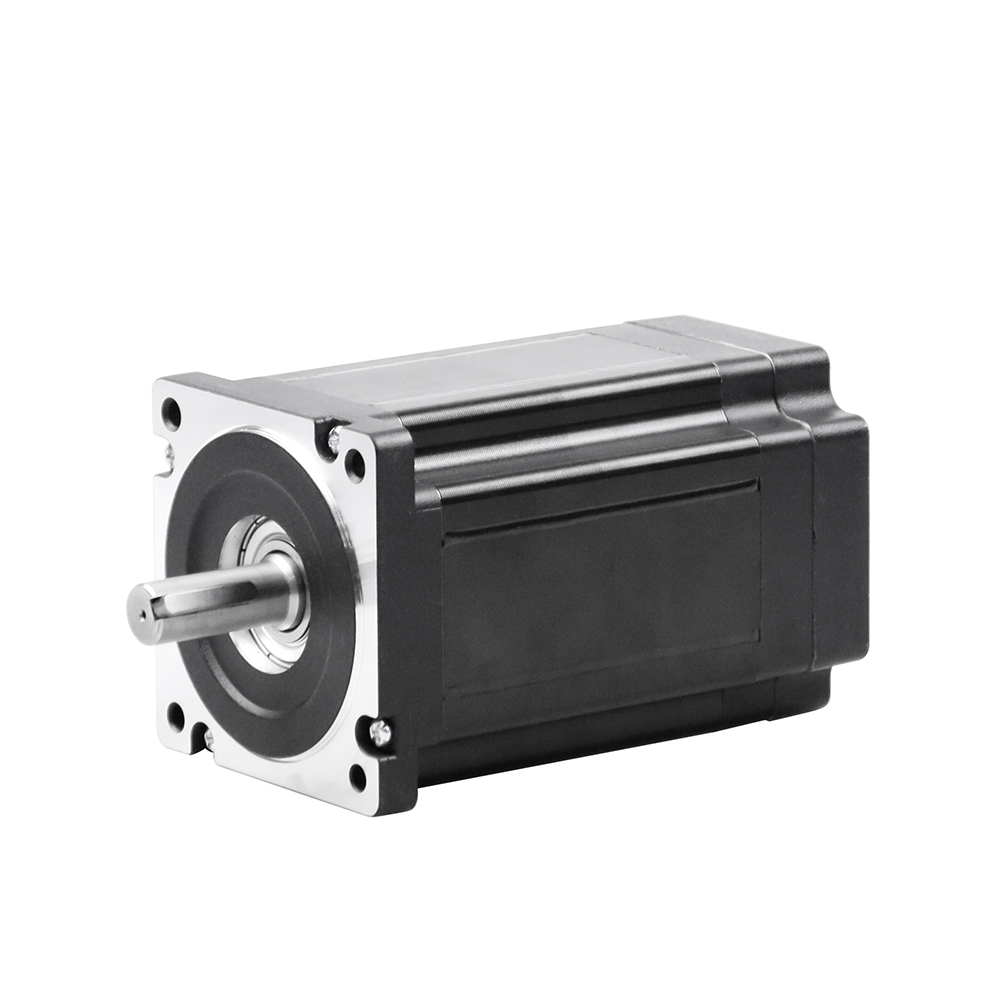
Brushless DC (BLDC) motors are widely recognized for their high efficiency, compact design, long service life, and precise speed control. However, even advanced BLDC motor systems can generate unwanted noise under certain operating conditions. In high-performance applications such as medical devices, robotics, electric vehicles, HVAC systems, and industrial automation, excessive BLDC motor noise is not acceptable.
We must understand the root causes of BLDC motor noise and apply targeted engineering solutions to achieve smooth, quiet, and reliable operation. Below, we present a comprehensive technical breakdown of mechanical, electrical, magnetic, and environmental noise sources, followed by proven methods to reduce and eliminate them.
Mechanical Causes of BLDC Motor Noise
1. Bearing Noise and Wear
One of the most common causes of BLDC motor noise originates from the bearings. Low-quality bearings, improper lubrication, contamination, or excessive radial and axial loads can result in:
To reduce bearing-related motor noise, we implement:
High-precision, low-noise ball bearings
Proper grease selection for operating temperature range
Sealed or shielded bearings to prevent dust ingress
Accurate shaft alignment to minimize uneven load distribution
For high-end applications, we recommend ceramic hybrid bearings, which offer lower friction and superior durability.
2. Rotor Imbalance and Shaft Misalignment
An imbalanced rotor generates vibration that translates into audible noise, especially at high RPM. Even slight mass eccentricity causes dynamic instability.
We eliminate this issue by:
Performing dynamic balancing during production
Using CNC-machined rotor assemblies
Ensuring tight tolerance concentricity between shaft and magnet assembly
In addition, improper motor mounting can amplify vibration. We advise using:
Anti-vibration mounting brackets
Flexible couplings where applicable
Rigid, flat installation surfaces
3. Structural Resonance
Every mechanical system has natural frequencies. When the BLDC motor operating speed matches a structural resonance frequency, noise becomes amplified.
We address resonance by:
Conducting modal analysis during design
Increasing housing rigidity
Modifying wall thickness or structural ribs
Adjusting operating speed range to avoid resonance peaks
A well-designed aluminum or steel housing significantly reduces structural vibration.
Electrical Causes of BLDC Motor Noise
4. PWM Switching Noise
BLDC motors rely on Pulse Width Modulation (PWM) for speed control. However, low PWM frequencies can generate audible whining noise.
We minimize PWM noise by:
Increasing PWM frequency above 20 kHz (ultrasonic range)
Using advanced motor drivers with optimized switching algorithms
Implementing sinusoidal commutation instead of trapezoidal control
Sinusoidal control dramatically reduces torque ripple and acoustic emissions.
5. Improper Commutation Timing
Incorrect Hall sensor positioning or poor sensorless algorithm calibration can cause:
Torque ripple
Vibration spikes
Audible clicking sounds
We improve commutation accuracy through:
High-resolution Hall sensors
Field-Oriented Control (FOC)
Auto-calibration algorithms
Precision rotor position detection
FOC control technology ensures smoother phase current transitions and lower acoustic output.
6. Current Ripple and Harmonics
Electrical harmonics and unstable current supply create electromagnetic vibration inside the stator.
We reduce current ripple by:
Using high-quality motor controllers
Adding filtering capacitors
Optimizing PCB layout to reduce electromagnetic interference
Ensuring stable DC power supply
Clean current equals quiet motor performance.
Magnetic Causes of BLDC Motor Noise
7. Cogging Torque
Cogging torque occurs due to magnetic interaction between permanent magnets and stator teeth. It results in low-speed vibration and pulsation noise.
We minimize cogging torque in BLDC motors by:
Skewing stator slots
Optimizing magnet pole arc design
Increasing slot/pole combinations
Using fractional-slot winding configurations
Advanced electromagnetic simulation tools allow precise optimization of magnetic geometry.
8. Magnet Adhesion and Assembly Issues
Loose magnets or poor adhesive bonding inside the rotor create rattling noise during rotation.
We ensure:
High-strength industrial adhesives
Precision magnet placement
Thermal-resistant bonding materials
Strict rotor curing processes
Reliable magnet fixation eliminates internal vibration sources.
Environmental and Application-Based Noise Factors
9. Load-Induced Noise
Sudden load variation causes torque fluctuation and transient vibration. This is common in:
Pumps
Compressors
Conveyor systems
Robotic arms
We address load-induced noise through:
Selecting the correct BLDC motor torque rating is essential for stable operation.
10. Poor Cooling Design
Overheating can change material properties and increase internal friction. As temperature rises, bearing grease degrades, and expansion may cause mechanical stress.
We improve cooling by:
Adding integrated cooling fans
Designing optimized airflow channels
Using aluminum housing for better heat dissipation
Implementing thermal protection sensors
Stable thermal conditions directly impact noise reduction.
Advanced Engineering Solutions to Reduce BLDC Motor Noise
1. Field-Oriented Control (FOC) Implementation
FOC provides:
Compared to traditional six-step commutation, FOC-controlled BLDC motors operate significantly quieter, especially in precision equipment.
2. Acoustic Optimization in Motor Design
We integrate acoustic analysis early in product development by:
Performing vibration spectrum analysis
Using finite element modeling (FEM)
Testing motors in anechoic chambers
Identifying dominant noise frequencies
This allows precise elimination of noise sources before mass production.
3. Precision Manufacturing and Quality Control
High manufacturing standards directly influence acoustic performance. We maintain:
Tight dimensional tolerances
Automated winding processes
Laser shaft alignment verification
100% dynamic balancing inspection
Consistent production quality ensures predictable low-noise operation.
4. Encapsulation and Sound Dampening
For ultra-quiet applications, we apply:
Vibration-absorbing mounting pads
Acoustic insulation materials
Resin potting for internal component stabilization
Rubber isolation couplings
These solutions reduce noise transmission to external structures.
Selecting a Low-Noise BLDC Motor: Key Specifications
Selecting a low-noise BLDC motor requires more than checking speed and torque ratings. Acoustic performance is directly influenced by electromagnetic design, mechanical precision, control strategy, and overall system integration. To ensure ultra-quiet operation in applications such as medical equipment, service robots, HVAC systems, office automation, and laboratory instruments, we evaluate the following critical specifications.
1. Acoustic Noise Rating (dB Level)
The first and most direct indicator is the measured sound pressure level, expressed in decibels (dB).
When assessing acoustic performance, we verify:
Test distance (typically 1 meter)
Operating speed during measurement
Load conditions
Background noise level
Background noise level in the test environment
For sensitive environments:
<30 dB is considered ultra-quiet
30–40 dB is suitable for office and medical devices
40–50 dB is acceptable for industrial equipment
Reliable manufacturers provide standardized acoustic testing data under clearly defined conditions.
2. Bearing Type and Precision Grade
Bearings are one of the most significant contributors to mechanical noise in BLDC motors. The specification should clearly define:
For low-noise applications, we prioritize:
High-precision deep-groove ball bearings
Low-friction grease optimized for temperature range
Preloaded bearings to reduce internal clearance vibration
Optional ceramic hybrid bearings for ultra-low noise performance
Lower tolerance deviation ensures smoother rotation and minimal acoustic emission.
3. Commutation Method (FOC vs. Trapezoidal Control)
The motor control method significantly affects torque ripple and sound generation.
We strongly recommend:
Field-Oriented Control (FOC) for smooth sinusoidal current waveforms
High-resolution position feedback
Stable current loop tuning
FOC control minimizes electromagnetic vibration and eliminates the harsh switching noise typical in six-step trapezoidal commutation.
When reviewing specifications, confirm:
4. PWM Frequency Range
Low PWM frequencies can create audible high-pitched noise. For quiet operation:
The motor driver must support stable high-frequency switching without generating excessive heat.
5. Rotor Dynamic Balancing Grade
Rotor imbalance leads to vibration, especially at high speeds. Manufacturers should specify:
Precision dynamic balancing reduces vibration transmission and acoustic amplification.
6. Cogging Torque Specification
Cogging torque produces low-speed pulsation noise and vibration. A lower cogging torque value results in smoother rotation.
When selecting a low-noise BLDC motor, examine:
Cogging torque measurement data
Slot/pole combination design
Skewed stator or magnet structure
Fractional-slot winding and optimized magnet geometry significantly reduce magnetic pulsation noise.
7. Housing Material and Structural Design
The motor housing affects both vibration transmission and resonance behavior.
Key design considerations include:
Aluminum alloy housing for heat dissipation and rigidity
Reinforced rib structures to prevent resonance
Thick-walled casing for vibration absorption
Avoid thin stamped metal housings in applications where acoustic performance is critical.
8. Thermal Management Capability
Excessive heat increases internal friction and accelerates bearing degradation, leading to increased noise over time.
Important thermal specifications:
Rated temperature rise
Insulation class (Class B, F, or H)
Built-in thermal protection
Cooling method (natural air, forced air, liquid cooling)
Stable thermal performance ensures consistent low-noise operation throughout the motor lifecycle.
9. Torque Ripple and Current Stability
Torque ripple directly translates into vibration and audible noise. We examine:
Motors designed with optimized stator winding distribution and sinusoidal back-EMF characteristics exhibit lower torque ripple.
10. Mounting Configuration and Vibration Isolation
Even a quiet motor can generate noise if improperly installed.
Check for:
Precision-machined mounting surfaces
Concentric shaft design
Compatibility with vibration isolation mounts
Balanced coupling interface
Flexible couplings and anti-vibration pads significantly reduce transmitted noise to surrounding structures.
11. IP Protection Rating
Environmental contamination increases friction and bearing wear.
For reliable low-noise performance:
Select IP54 or higher for dusty environments
Use sealed designs for humid or outdoor applications
Confirm ingress protection against fine particles
A well-sealed motor maintains stable internal conditions and consistent acoustic performance.
12. Load Matching and Rated Operating Point
Operating a motor outside its optimal efficiency zone can increase electromagnetic stress and vibration.
We verify:
Rated torque vs. actual application torque
Continuous vs. peak load requirements
Speed stability under varying load
Proper motor sizing ensures smooth operation without strain-induced noise.
13. Manufacturer Quality Control Standards
Low-noise BLDC motors depend on manufacturing precision. Evaluate:
ISO-certified production facilities
Automated winding processes
100% dynamic balancing inspection
End-of-line acoustic testing
Consistent quality control guarantees repeatable quiet performance across batches.
Final Considerations for Ultra-Quiet Applications
For applications such as medical ventilators, laboratory instruments, or premium consumer electronics, additional measures may include:
Resin potting to stabilize internal components
Acoustic insulation integration
Customized electromagnetic optimization
Low-vibration shaft coupling systems
Selecting a low-noise BLDC motor requires a holistic approach that combines mechanical precision, advanced motor control, optimized magnetic design, and proper system integration. By carefully evaluating acoustic ratings, bearing quality, control strategy, PWM frequency, torque ripple, and thermal stability, we ensure reliable, smooth, and exceptionally quiet performance in demanding environments.
Preventive Maintenance to Maintain Quiet Operation
Maintaining quiet and stable BLDC motor operation requires a structured preventive maintenance strategy. Even the most precisely engineered low-noise BLDC motor can develop vibration, resonance, or acoustic irregularities if maintenance is neglected. By implementing systematic inspection, monitoring, and servicing protocols, we preserve smooth rotation, reduce mechanical wear, and prevent noise escalation over time.
Below is a comprehensive preventive maintenance framework designed to sustain long-term low-noise motor performance across industrial, medical, HVAC, robotics, and automation applications.
1. Scheduled Bearing Inspection and Lubrication
Bearings are the most common source of mechanical noise. Over time, lubrication degrades, contamination accumulates, and internal clearances change.
We implement:
Regular inspection intervals based on operating hours
Vibration and acoustic monitoring for early fault detection
Grease replenishment according to manufacturer specifications
Replacement of worn or noisy bearings before failure
For precision environments, we recommend tracking:
Proactive bearing maintenance prevents grinding, rattling, and high-pitched mechanical noise.
2. Vibration Analysis and Trend Monitoring
Vibration increases gradually before audible noise becomes noticeable. Therefore, we integrate:
Tracking vibration patterns helps identify:
Rotor imbalance
Shaft misalignment
Structural resonance
Bearing defects
Early detection enables corrective action before noise becomes disruptive.
3. Shaft Alignment Verification
Improper alignment between the BLDC motor shaft and driven load generates mechanical stress and acoustic emission.
Preventive measures include:
Laser alignment checks
Inspection of coupling wear
Verification of mounting surface flatness
Ensuring concentric load attachment
Correct alignment minimizes radial forces and eliminates unnecessary vibration.
4. Fastener and Mounting Stability Checks
Loose mounting bolts or degraded isolation mounts can amplify structural noise.
We schedule:
Torque verification of mounting bolts
Inspection of anti-vibration pads
Replacement of hardened or cracked isolators
Confirmation of rigid baseplate integrity
Stable mechanical mounting reduces resonance amplification and structure-borne noise transmission.
5. Electrical Connection Inspection
Loose or oxidized electrical connections create irregular current flow, which can introduce electromagnetic noise and torque ripple.
Maintenance procedures include:
Tightening terminal connections
Inspecting connectors for corrosion
Checking insulation integrity
Verifying grounding continuity
Stable electrical supply ensures smooth commutation and reduced switching noise.
6. PWM and Controller Health Monitoring
The motor driver significantly affects acoustic behavior. Controller degradation or firmware irregularities can increase audible noise.
We conduct:
Firmware updates when applicable
PWM frequency verification (above 20 kHz recommended)
Monitoring of switching stability
Inspection of driver cooling systems
Maintaining a stable motor control system preserves smooth current waveforms and prevents harmonic vibration.
7. Cooling System Maintenance
Heat accelerates bearing wear and internal material stress, leading to increased noise over time.
Preventive cooling maintenance includes:
For liquid-cooled systems:
Stable operating temperature ensures consistent low-friction performance.
8. Contamination Prevention
Dust, debris, and moisture intrusion increase internal friction and accelerate component wear.
We implement:
Regular external cleaning
Seal inspection for IP-rated motors
Replacement of damaged gaskets
Environmental shielding when necessary
Maintaining a clean operating environment preserves long-term quiet functionality.
9. Rotor Balance Re-Verification
In high-speed applications, even minor mechanical shifts can alter rotor balance.
During major service intervals, we:
Check for unusual vibration spikes
Inspect magnet stability
Verify shaft straightness
Perform rebalancing if necessary
Maintaining rotor symmetry prevents dynamic vibration noise.
10. Load Condition Evaluation
Operating outside the rated torque range increases stress and acoustic output.
We review:
Actual load torque vs. rated torque
Speed stability under load variation
Sudden load change frequency
If necessary, we adjust system parameters or resize the motor to maintain optimal performance within its efficiency range.
11. Acoustic Testing and Benchmarking
For mission-critical low-noise applications, periodic sound testing is recommended.
We perform:
Decibel measurements at standardized distances
Comparison against baseline commissioning data
Frequency analysis to detect emerging noise signatures
Documented benchmarking ensures long-term compliance with acoustic performance standards.
12. Lifecycle-Based Component Replacement
Rather than waiting for failure, we implement predictive replacement schedules for:
Bearings
Couplings
Cooling fans
Isolation mounts
This strategy prevents sudden noise spikes and unplanned downtime.
Establishing a Preventive Maintenance Schedule
An effective preventive maintenance plan includes:
Daily visual and acoustic checks
Monthly vibration monitoring
Quarterly alignment and electrical inspections
Annual comprehensive performance evaluation
The exact interval depends on:
Operating hours
Load intensity
Environmental conditions
Application criticality
High-duty industrial systems require more frequent inspection compared to light-duty consumer applications.
Long-Term Benefits of Preventive Maintenance
Consistent preventive maintenance delivers measurable advantages:
Sustained low-noise BLDC motor operation
Reduced mechanical wear
Extended service life
Improved energy efficiency
Lower total cost of ownership
Enhanced user comfort and regulatory compliance
By integrating structured monitoring, precise inspection routines, and predictive component replacement, we ensure that BLDC motors maintain smooth, quiet, and stable operation throughout their lifecycle.
A disciplined maintenance strategy transforms noise control from a reactive fix into a proactive performance guarantee.
Conclusion: Achieving Quiet and Efficient BLDC Motor Operation
Reducing BLDC motor noise requires a systematic approach that combines mechanical precision, electromagnetic optimization, advanced motor control algorithms, and proper installation practices. By addressing bearing quality, rotor balance, commutation control, PWM frequency, cooling efficiency, and structural resonance, we achieve smooth, silent, and high-performance operation across industries.
A well-engineered low-noise BLDC motor system enhances product reliability, improves user comfort, and ensures compliance with stringent industrial acoustic standards. With advanced design methodologies and precision manufacturing, we deliver BLDC motors that meet the highest expectations for quiet performance.
FAQs: Common Causes of BLDC Motor Noise and How to Reduce It
I. Product Perspective: Noise Sources, Performance & Troubleshooting
1. What are the common causes of noise in a standard BLDC motor?
A standard BLDC motor may produce noise due to bearing wear, improper commutation, rotor imbalance, poor mounting alignment, or high switching frequency from the driver.
2. Why does a BLDC motor produce electrical noise?
Electrical noise can result from PWM switching, improper driver tuning, or electromagnetic interference in the BLDC motor system.
3. Can poor-quality bearings increase BLDC motor noise?
Yes, worn or low-grade bearings are a major source of mechanical noise in a BLDC motor.
4. Does rotor imbalance cause vibration and noise?
Yes, improper dynamic balancing leads to vibration, which increases acoustic noise in a standard BLDC motor.
5. How does improper driver tuning affect BLDC motor noise?
Incorrect current settings or PWM frequency can cause audible whining or humming in the motor.
6. Can load conditions influence BLDC motor noise?
Yes, operating outside the optimal load range may increase vibration and sound levels.
7. Is a BLDC motor quieter than a brushed DC motor?
Generally, a standard BLDC motor operates more quietly because it eliminates brush friction and sparking.
8. How does mounting alignment impact noise levels?
Misalignment between the motor shaft and load equipment can amplify vibration and noise.
9. Does high-speed operation increase BLDC motor noise?
Yes, higher RPM can amplify both mechanical and aerodynamic noise if not properly engineered.
10. How can noise in a standard BLDC motor be reduced?
Noise reduction involves proper driver tuning, precision balancing, high-quality bearings, and correct installation.
II. Factory Customization Capability: Engineering for Low-Noise Performance
Yes, a professional BLDC motor manufacturer can optimize magnetic design, rotor balance, and bearing selection to reduce noise.
12. What customization options are available beyond a standard BLDC motor?
Custom BLDC motors may include precision-balanced rotors, low-noise bearings, optimized windings, and improved housing structures.
13. Can a BLDC motor manufacturer adjust PWM frequency to reduce audible noise?
Yes, integrated driver customization allows frequency adjustments to minimize acoustic resonance.
14. Is it possible to design a BLDC motor specifically for silent operation?
Yes, a custom BLDC motor can be engineered for ultra-low noise applications such as medical or home appliances.
15. Can vibration dampening features be integrated into the motor design?
Yes, manufacturers can incorporate vibration-absorbing materials or structural reinforcements.
16. What role does electromagnetic design play in reducing noise?
Optimized electromagnetic design reduces torque ripple, which lowers vibration and sound output.
17. How does customization affect lead time?
A standard BLDC motor typically ships quickly, while a custom low-noise BLDC motor requires additional testing and validation.
18. Can manufacturers provide noise testing reports?
Yes, reputable BLDC motor manufacturers conduct acoustic testing and provide sound level data.
19. Are integrated BLDC motor solutions quieter?
Integrated motor-driver systems reduce wiring noise and improve overall system stability.
20. Why choose a professional BLDC motor manufacturer for low-noise applications?
A professional BLDC motor manufacturer offers engineering expertise, advanced balancing techniques, and validated low-noise solutions for demanding applications.