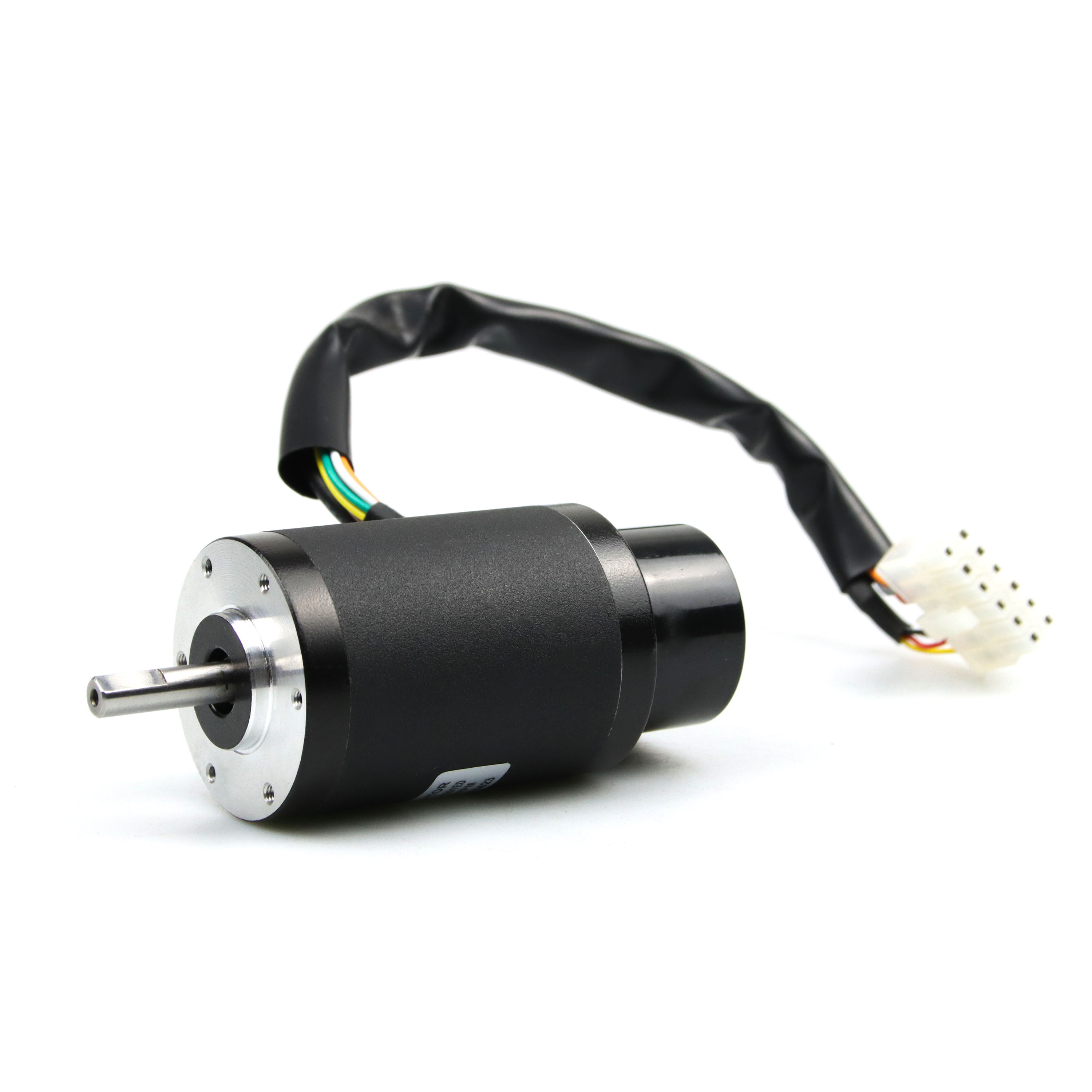
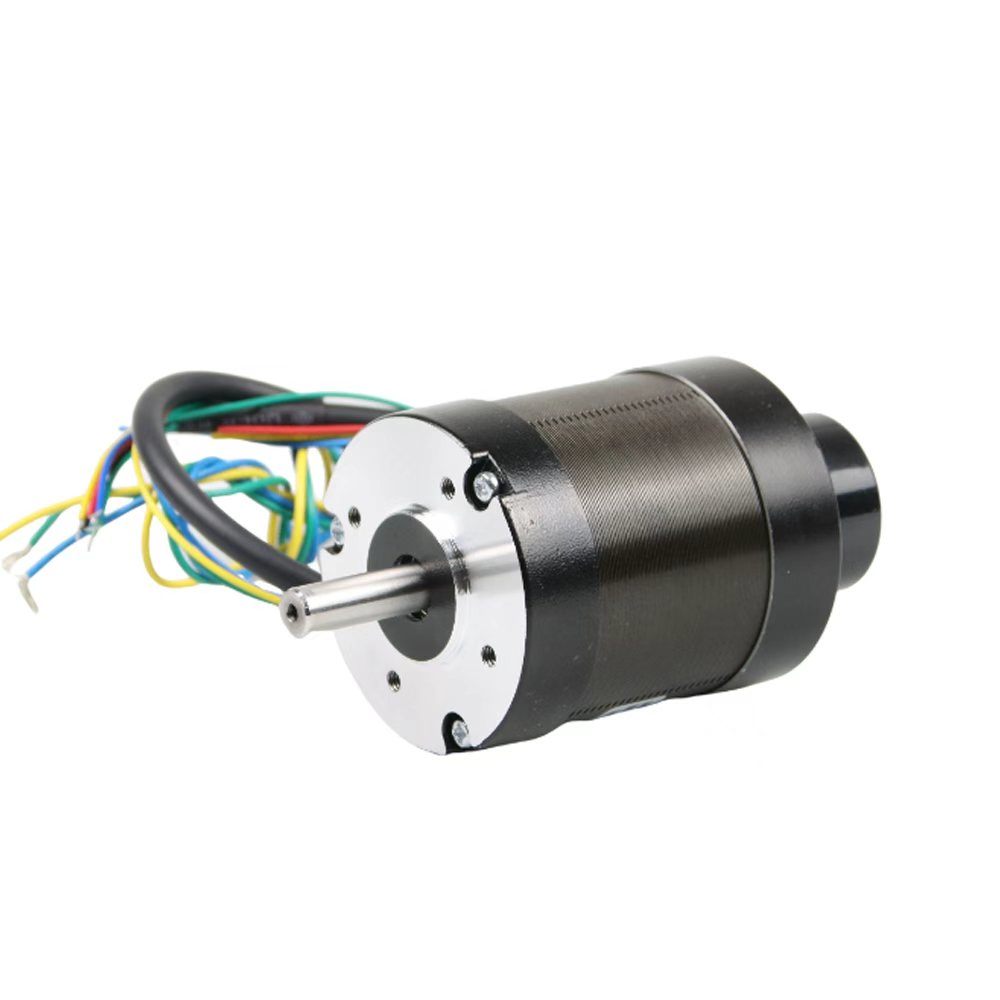
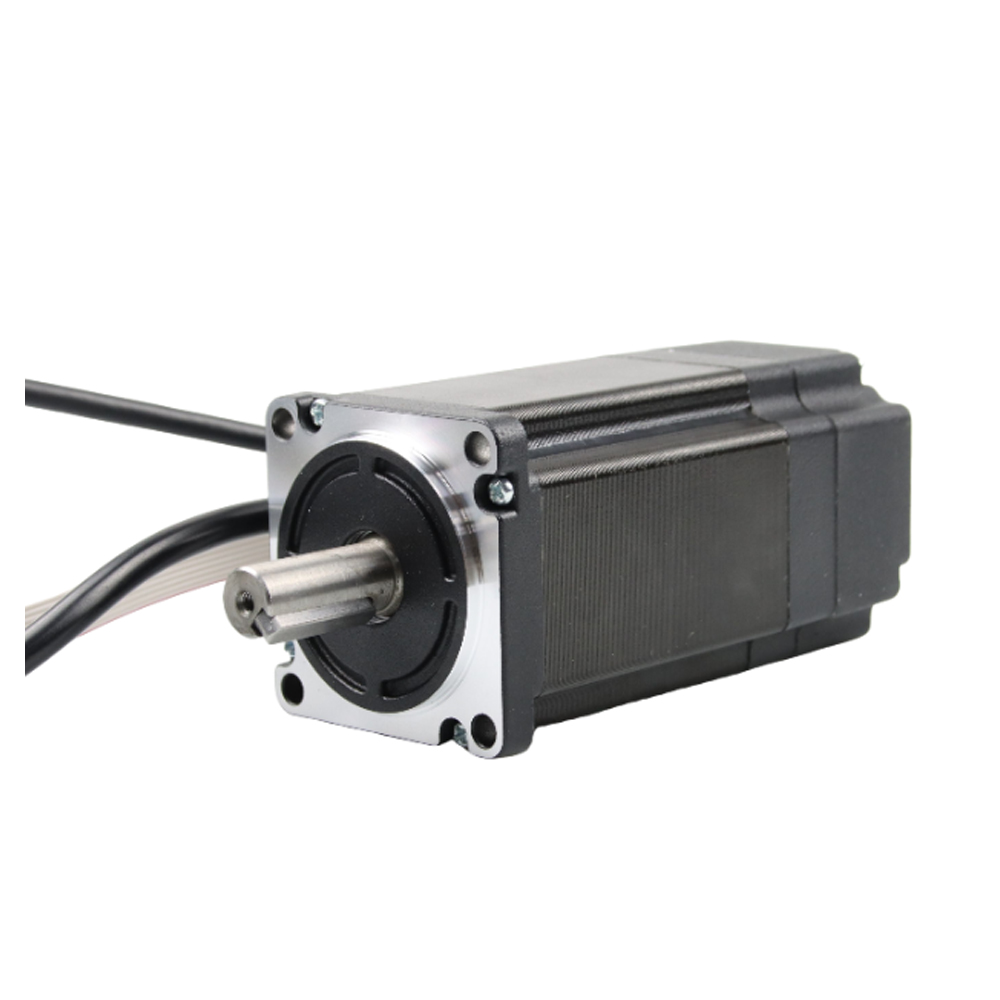
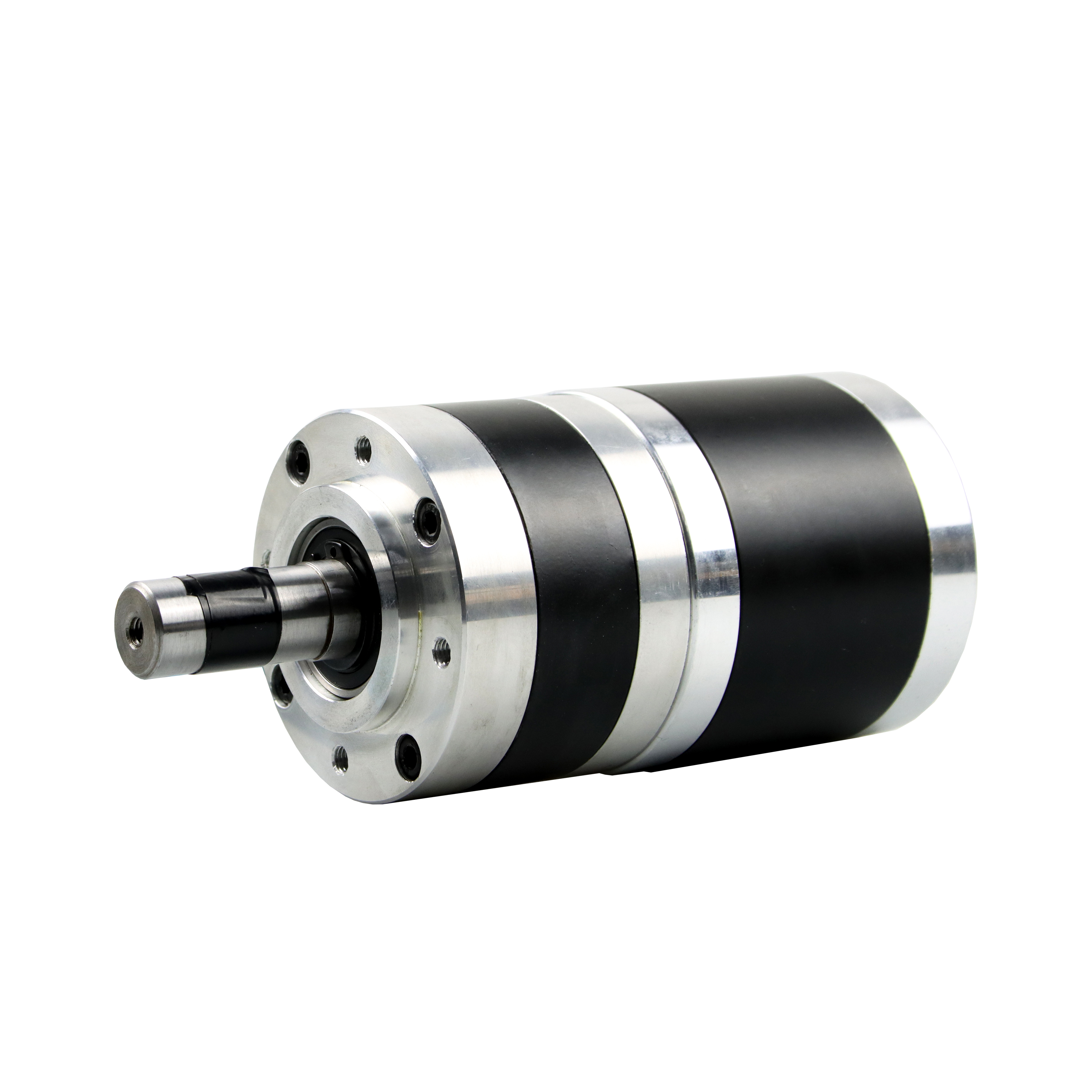
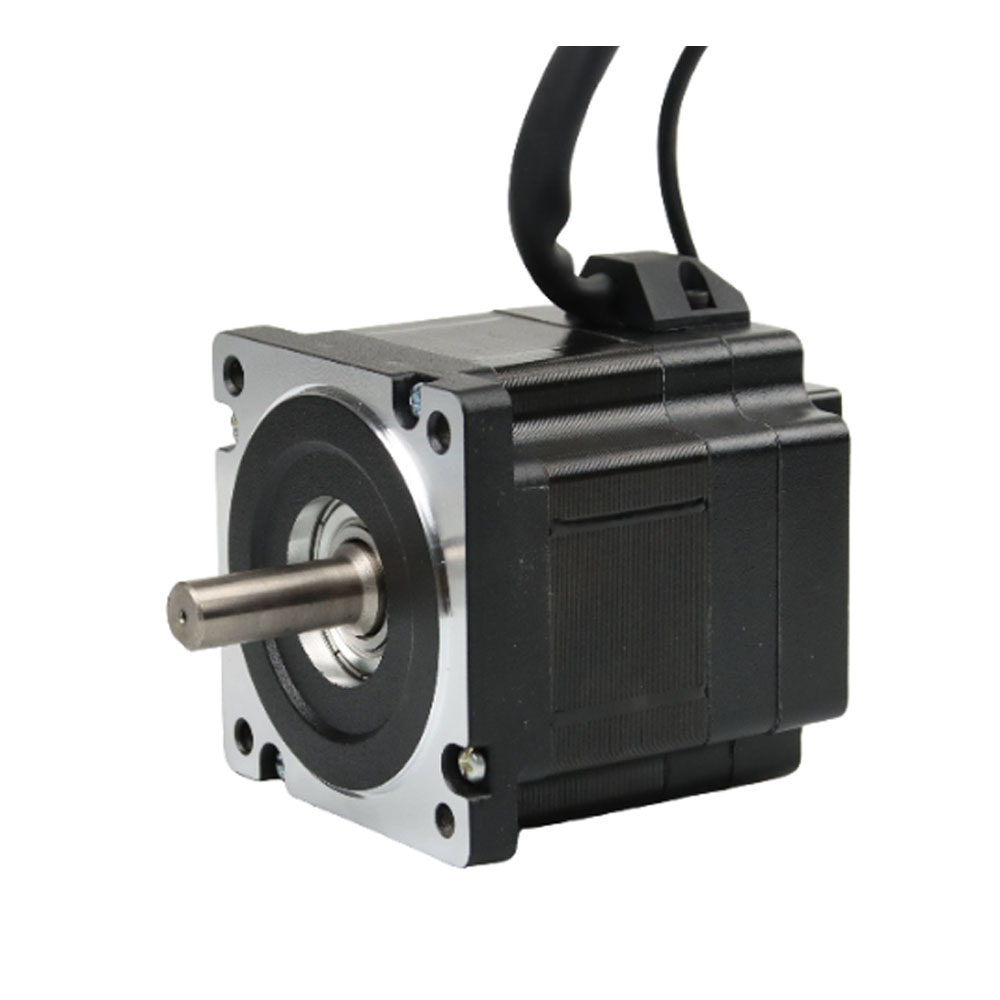
A brushless dc servo motor stands at the forefront of modern motion-control systems, offering unmatched precision, efficiency, and reliability. As industries move toward smarter automation, the demand for advanced servo solutions continues to grow rapidly. In this comprehensive guide, we explore the engineering behind BLDC servo motors, their performance advantages, and why they have become the preferred choice for high-performance applications.
What Is a Brushless DC Servo Motor?
A brushless dc servo motor is a high-performance electromechanical actuator that combines the efficiency of a BLDC motor with the precision of closed-loop servo control. Unlike conventional DC motors that rely on brushes and mechanical commutation, BLDC servo motors use electronic commutation, resulting in smoother operation, longer lifespan, and significantly improved control accuracy.
These motors operate under a fully closed-loop system that includes:
Rotor position feedback (typically via an encoder or resolver)
High-speed servo drive
Real-time current, speed, and position control
This configuration enables exceptionally accurate and repeatable motion, making BLDC servo motors the backbone of precision automation.
How Brushless DC Servo Motors Work
A brushless DC servo motor operates through a combination of electronic commutation, closed-loop feedback, and precision control algorithms. Its design allows for highly accurate, efficient, and reliable motion control—making it a preferred choice for robotics, automation, CNC machinery, and other precision systems.
Here is a detailed breakdown of how it works:
1. Electronic Commutation Replaces Mechanical Brushes
Traditional brushed DC motors rely on mechanical brushes to switch current between rotor windings. In a brushless dc servo motor, this process is handled electronically by the servo drive.
The stator contains multiple windings.
The servo drive energizes these windings in a precise sequence.
This creates a rotating magnetic field inside the motor.
The permanent magnet rotor follows this rotating field, producing torque and rotation.
Because there are no brushes, the motor operates with:
Higher efficiency
Less mechanical wear
No electrical sparking
Lower heat generation
2. Permanent Magnet Rotor Generates High Torque
The rotor is built using strong rare-earth magnets, typically neodymium (NdFeB). These magnets produce a stable, high-intensity magnetic field.
As the stator field rotates, the rotor's magnetic poles continuously align with it, causing rotation. This results in:
High torque density
Fast acceleration
Smooth, quiet operation
3. Closed-Loop Control with Position Feedback
This is what transforms a BLDC motor into a servo motor.
A feedback device—usually an encoder or resolver—continuously monitors the rotor position and speed. This data is sent back to the servo drive in real time.
The servo drive uses this feedback to:
Compare actual motion to commanded motion
Adjust current, speed, and torque within microseconds
Correct any positioning or speed errors
This closed-loop system achieves:
Precise position control
Stable low-speed operation
Zero-speed holding torque
Repeatable motion under varying loads
4. Servo Drive Executes Complex Control Algorithms
A high-performance servo drive manages the entire process. It performs several critical functions:
a. Current (Torque) Control
Regulates motor current to control torque output instantly.
b. Speed Control
Maintains a target RPM with high accuracy, even under changing loads.
c. Position Control
Ensures exact positioning using encoder feedback and motion profiles.
d. Motion Planning
Allows the motor to follow acceleration and deceleration curves smoothly.
The result is a system capable of extremely precise and responsive motion.
5. Three-Phase Operation for Smooth and Efficient Motion
BLDC servo motors typically use a three-phase stator, energized in the correct order to create continuous rotation.
The servo drive performs:
FOC allows the motor to produce:
Maximum torque per amp
Very low torque ripple
High energy efficiency
6. Immediate Response to Load Changes
One of the defining characteristics of a BLDC servo motor is its ability to react instantly.
If a load suddenly increases:
The encoder detects a speed drop
The drive increases current instantly
Torque rises to compensate
Speed and position remain accurate
This makes BLDC servos ideal for:
7. Stable Operation at All Speeds
Thanks to closed-loop control, BLDC servo motors maintain stability at:
High speeds (for rapid motion cycles)
Low speeds (where steppers struggle)
Zero speed (holding position without drift)
The motor operates smoothly across its entire speed range.
Summary
A brushless dc servo motor works through the integration of:
Electronic commutation – energizing stator windings without brushes
Permanent magnet rotor – delivering high torque and fast response
Feedback encoder – providing precise position and speed information
Servo drive control – adjusting torque, speed, and position continually
Closed-loop algorithms – ensuring accuracy, efficiency, and stability
Together, these systems create a high-performance motion control solution capable of exceptional precision and reliability in demanding industrial applications.
Key Advantages of Brushless DC Servo Motors
1. Exceptional Precision and Control
BLDC servo motors provide high-accuracy motion, ideal for applications requiring exact positioning. With advanced feedback systems, they deliver:
Zero-speed holding torque
Sub-micron positioning accuracy
Smooth motion with minimal vibration
2. Superior Efficiency
Compared with brushed DC motors, BLDC servos offer:
This efficiency makes them ideal for continuous-duty and energy-sensitive applications.
3. Long Lifespan and Reliability
Because there are no brushes, there is no mechanical wear from friction. This extends the operational life to tens of thousands of hours while reducing maintenance demands.
4. High Torque Density
Using compact rare-earth magnets, these motors deliver high torque output in small form factors, enabling lightweight designs without compromising performance.
5. Quiet and Smooth Operation
Electronic commutation eliminates sparking and reduces mechanical noise, ensuring quiet motion even at high speeds.
Common Applications of Brushless DC Servo Motors
BLDC servo motors are widely used across advanced industries requiring precision and reliability.
Robotics and Automation
CNC Machinery and Manufacturing
Medical and Laboratory Equipment
Surgical robots
Medical imaging systems
Automated analyzers
Aerospace and Defense
Guidance systems
UAV propulsion
Stabilization platforms
Industrial Automation
Every application benefits from precise control, high reliability, and smooth operation.
Core Components of a BLDC Servo System
A Brushless DC (BLDC) servo system is built from several tightly integrated components that work together to deliver high-precision, high-efficiency motion control. Each part plays a specific role in ensuring the motor operates smoothly, accurately, and reliably under various conditions. Below is a detailed look at the essential components that make up a modern BLDC servo system.
1. Brushless DC Servo Motor
The BLDC servo motor is the electromechanical heart of the system. Unlike brushed motors, it uses permanent magnets on the rotor and electromagnetic windings on the stator, with no brushes to perform commutation.
Key features:
High torque density
Efficient heat dissipation
Smooth rotation
Long lifespan due to no brush wear
High speed and acceleration capabilities
This motor produces the actual mechanical output, but it needs intelligent control to function as a true servo system.
2. Servo Drive (Motor Controller)
The servo drive is the brain of the BLDC servo system. It performs real-time electronic commutation and manages all control loops—making precise adjustments to motor torque, speed, and position.
Major functions of the servo drive:
a. Electronic Commutation
Replaces mechanical brushes by energizing stator phases in the correct sequence.
b. Current (Torque) Control Loop
Regulates motor current to achieve precise torque output.
c. Speed Control Loop
Ensures the motor maintains the commanded RPM—even under fluctuating loads.
d. Position Control Loop
Uses encoder feedback to ensure the rotor reaches and holds the exact target position.
e. Motion Profiling
Executes controlled acceleration/deceleration curves for smooth movement.
The servo drive is essential for converting input commands into highly accurate, stable motor motion.
3. Feedback Device (Encoder or Resolver)
A BLDC servo motor becomes a servo only when paired with a closed-loop feedback system. This device tracks the exact position and speed of the rotor and sends this data back to the servo drive.
Common types:
a. Optical Encoder
b. Magnetic Encoder
c. Resolver
Extremely robust
Operates in high temperatures, vibration, and noise
Common in aerospace, industrial robotics, and military systems
Without this feedback, accurate position and motion control would not be possible.
4. Power Supply
The power supply delivers the necessary electrical energy to both the servo drive and the motor. BLDC servo systems may use:
DC power supplies (24V, 48V, 72V typical)
AC power inputs (110–480VAC for industrial drives)
Regenerative supplies (recover braking energy)
Key requirements:
An undersized power supply can limit torque, reduce performance, or cause faults.
5. Communication Interface
Modern BLDC servo systems rely on digital communication protocols for synchronization and command transfer. This interface connects the servo drive to the main controller (PLC, motion controller, CNC, robot controller).
Popular communication protocols:
CANopen
EtherCAT
Modbus
RS485 / UART
Profinet
EtherNet/IP
These protocols allow precise control, high-speed updates, and multi-axis coordination.
6. Motion Controller
In many systems, an external motion controller or PLC issues commands to the servo drive. It generates trajectories and synchronizes motion across multiple motors.
Responsibilities include:
In integrated servo systems, this controller may be built into the drive itself.
7. Mechanical Transmission (Optional)
Depending on the application, the BLDC servo motor may drive loads through additional components:
These elements translate motor rotation into the desired motion—linear, amplified torque, or higher precision.
Summary
A complete BLDC servo system is made up of organized, interdependent components that work together to deliver exceptional motion control. These include:
BLDC servo motor – Mechanical torque output
Servo Drive – Electronic commutation and control loops
Feedback Device – Real-time position and speed data
Power Supply – Electrical energy source
Communication Interface – Command/control link
Motion Controller – Trajectory and logic control
Mechanical Transmission – Converts motion to usable form
Each component is essential to achieving accurate, responsive, and stable servo performance.
Brushless DC Servo Motor vs. Brushed Servo Motor
| Feature | BLDC Servo Motor | Brushed Servo Motor |
| Commutation | Electronic | Mechanical (brushes) |
| Maintenance | Very low | High (brush replacement) |
| Efficiency | High | Medium |
| Noise | Very quiet | Moderate–high |
| Lifespan | Long | Limited |
| Torque Ripple | Low | Higher |
| Heat Generation | Minimal | Higher |
BLDC servo motors outperform brushed motors in nearly all categories, making them the superior choice for long-term, high-precision applications.
Why BLDC Servo Motors Deliver Superior Motion Performance
Brushless DC (BLDC) servo motors are recognized as one of the most advanced motion-control technologies available today. Their unique design and closed-loop control system enable exceptionally smooth, accurate, and responsive performance—far beyond what traditional brushed motors or open-loop systems can achieve. Below is a comprehensive explanation of the key factors that make BLDC servo motors deliver superior motion performance.
1. High-Precision Electronic Commutation
Unlike brushed motors that rely on physical brushes and a commutator, BLDC servo motors use electronic commutation. This method regulates the phase energizing sequence electronically through the servo drive.
Why this matters:
No mechanical friction
No arcing or electrical noise
Perfect timing of current delivery
Smooth torque output
Longer lifespan and higher reliability
Electronic commutation enables far more accurate control over torque and speed, especially at low RPM.
2. Closed-Loop Feedback Ensures Exact Position and Speed
A BLDC servo motor uses a feedback device such as an encoder or resolver to constantly monitor rotor position and speed. This creates a fully closed-loop system.
Benefits of closed-loop control:
Zero position error through real-time correction
Perfect repeatability for high-precision tasks
Stable operation at ultra-low speeds
Ability to hold position with zero-speed torque
Immediate compensation for load disturbances
This is a major reason BLDC servos outperform steppers and brushed motors in precision applications.
3. High Torque Density with Rare-Earth Magnets
BLDC servo motors use strong permanent magnets—usually neodymium (NdFeB)—mounted on the rotor. These magnets produce a powerful magnetic field.
Advantages include:
High torque in compact motor size
Rapid acceleration and deceleration
Lightweight rotor with minimal inertia
High continuous and peak torque capability
This allows the motor to deliver fast dynamic response and superior motion quality.
4. Low Torque Ripple for Ultra-Smooth Operation
With advanced control algorithms such as sinusoidal commutation and Field-Oriented Control (FOC), BLDC servo motors maintain extremely low torque ripple.
This results in:
Low torque ripple directly enhances motion stability, especially at low speeds.
5. Rapid Response to Changing Loads (High Bandwidth)
BLDC servo systems are designed with very high control bandwidth. This means they react to changes in load or speed almost instantly—often within microseconds.
Why this matters:
Stability under variable loads
Consistent speed even during sudden load changes
Precise following of motion commands
Ability to execute complex, high-speed trajectories
This responsiveness is essential for robotics, industrial automation, and high-speed positioning.
6. Superior Efficiency and Thermal Performance
The design of a BLDC motor ensures that the windings are located on the stator—where heat can dissipate efficiently. With no brushes to generate heat or friction, the system operates at very high efficiency.
Resulting benefits:
Lower energy consumption
Cooler operation under load
Higher continuous torque levels
Longer motor and bearing lifespan
High efficiency also supports prolonged operation in demanding environments.
7. Precise Control Over Torque, Speed, and Position
A BLDC servo drive manages three control loops:
Current (Torque) Control Loop
Speed Control Loop
Position Control Loop
Each loop provides fine resolution adjustments. This multi-layered control structure results in:
Accurate torque generation for demanding tasks
Precise speed regulation across the full speed range
Exact positioning down to microns or arc-seconds
This combined precision is unmatched by most other motor technologies.
8. Stable Performance Across the Entire Speed Range
Many motors lose torque or efficiency at high or low speeds. BLDC servo motors maintain excellent performance throughout the entire operating range.
Stable at:
High speeds (ideal for fast cycles)
Low speeds (smooth, zero-cogging motion)
Zero speed (holding torque without drift)
This full-range stability makes them suitable for CNC axes, conveyors, robotics, and medical machines.
9. Quiet and Low-Vibration Operation
Because BLDC servo motors are brushless and electronically commutated, they produce very little noise and vibration. Combined with low torque ripple and precision bearings, they offer:
Extremely quiet operation
Minimal mechanical resonance
Superior performance in noise-sensitive environments
Applications such as medical imaging equipment, laboratory devices, and autonomous robots take advantage of this quiet operation.
10. Long Lifespan and High Reliability
With no brushes to wear out and excellent thermal characteristics, BLDC servo motors have a very long service life.
Reliability advantages:
This makes them ideal for mission-critical industrial systems.
Summary: Why BLDC Servo Motors Are Superior
A BLDC servo motor delivers unparalleled performance due to a combination of:
Electronic commutation for precise torque control
Closed-loop feedback for accuracy and repeatability
High torque density and fast dynamic response
Low torque ripple for smooth motion
High bandwidth control for rapid adjustments
Excellent efficiency and thermal stability
Quiet, low-vibration operation
Long-lasting, brushless reliability
These features make BLDC servo motors the preferred solution for advanced robotics, high-speed automation, CNC machinery, aerospace applications, and any system requiring superior motion quality.
Choosing the Right Brushless DC Servo Motor
When selecting a BLDC servo motor, consider:
Torque requirements (continuous and peak)
Speed range
Voltage and current ratings
Encoder resolution
Environmental factors (temperature, vibration, dust)
Integration with servo drives and controllers
Choosing the correct configuration ensures optimal system performance and longevity.
The Future of BLDC Servo Technology
As industries embrace Industry 4.0, BLDC servo motors continue evolving with:
AI-driven predictive control
Integrated servo drives
Higher-resolution feedback sensors
Compact, high-power designs
Improved thermal management technologies
These advancements will further solidify BLDC servo motors as the gold standard for precision motion control.
Conclusion
A brushless dc servo motor provides unmatched performance, efficiency, and reliability for precision applications across robotics, automation, manufacturing, aerospace, and more. With superior control accuracy, long operational life, and smooth operation, they remain the preferred choice for high-end motion systems.
By understanding how BLDC servo motors work and where they excel, engineers and system designers can unlock new levels of performance in their automation projects.