Home » News » Application Industries » How Do Integrated BLDC Servo Motors Improve Conveyor Roller Drive Performance in Smart Warehousing?
How Do Integrated BLDC Servo Motors Improve Conveyor Roller Drive Performance in Smart Warehousing?
Views: 0 Author: Site Editor Publish Time: 2026-10-10 Origin: Site
Introduction
Smart warehousing relies on efficient material handling, accurate product positioning, continuous operation, and intelligent automation. As e-commerce fulfillment, automated distribution centers, and intelligent manufacturing facilities process increasing volumes of goods, conveyor systems must deliver higher throughput while maintaining reliable and precise movement. Traditional conveyor roller drives can face limitations in speed regulation, energy efficiency, installation flexibility, and integration with warehouse control systems. Integrated BLDC servo motors provide a compact, intelligent, and energy-efficient drive solution for conveyor roller systems in modern smart warehouses.
By combining a brushless DC motor, servo control electronics, and position or speed feedback within a compact assembly, an integrated BLDC servo motor can simplify conveyor drive architecture and improve motion control performance. Depending on its configuration, the motor can support precise speed regulation, controlled acceleration and deceleration, synchronized material transfer, and communication with higher-level automation equipment.
For smart warehousing applications, these capabilities are particularly valuable in conveyor roller drives used in automated sorting systems, accumulation conveyors, automated storage and retrieval systems (AS/RS), warehouse robotic transfer stations, and intelligent parcel handling lines.
Understanding how integrated BLDC servo motors improve conveyor roller drive performance helps warehouse designers, system integrators, and equipment manufacturers select suitable motion control solutions for their operational requirements.
What Is an Integrated BLDC Servo Motor for Conveyor Roller Drives?
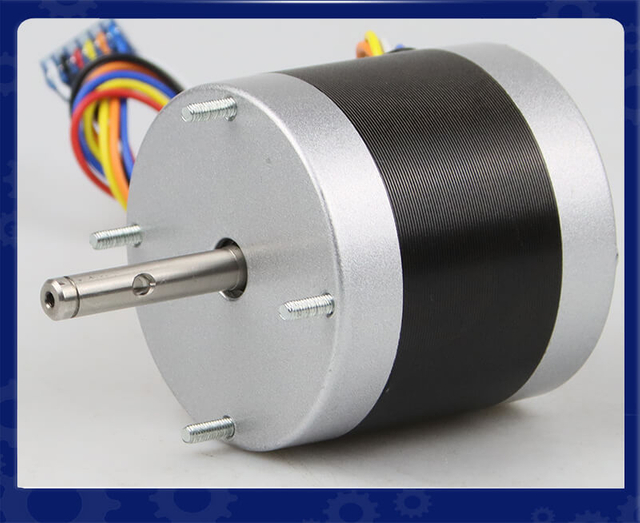
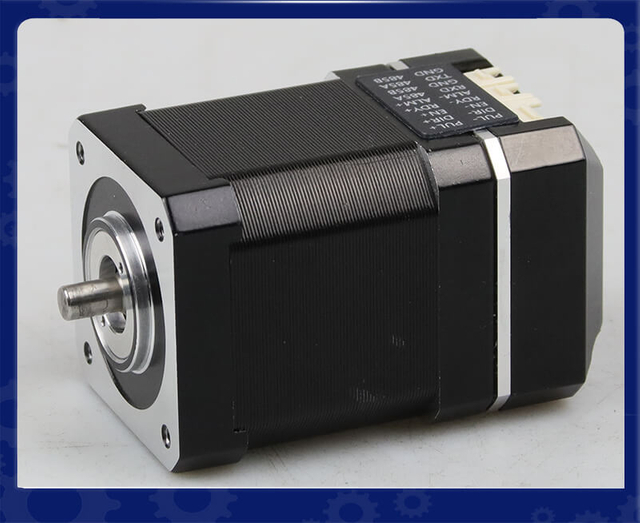
An integrated compact BLDC motor for roller conveyors is a brushless DC motor that combines the motor, drive electronics, and, depending on the model, feedback and communication functions into a compact assembly designed to drive conveyor rollers efficiently. By integrating multiple components into one unit, this motor simplifies conveyor system architecture, reduces installation complexity, and supports flexible motion control in modern material handling applications.
Unlike conventional conveyor drive systems that require a separate motor controller and additional control components, an integrated compact BLDC motor can provide a more space-efficient solution for smart warehousing, automated sorting systems, accumulation conveyors, and automated storage and retrieval systems (AS/RS).
Key Features of Integrated Compact BLDC Motors for Roller Conveyors
Compact, integrated design: Combines the motor and drive electronics in one assembly, reducing the need for separately installed drive components.
High efficiency: Brushless motor technology eliminates mechanical brush friction and supports efficient operation across the intended speed and load range.
Precise speed control: Models with suitable closed-loop feedback can maintain consistent conveyor speeds under changing load conditions.
Flexible automation integration: Depending on the configuration, supported communication interfaces may include CANopen, Modbus, EtherCAT, or other industrial protocols.
Reduced maintenance: The brushless design eliminates brush replacement, while integrated diagnostics may simplify fault identification.
Flexible installation: Compact dimensions support distributed drive architectures and modular conveyor designs.
How Does an Integrated Compact BLDC Motor Work in Roller Conveyors?
The integrated BLDC motor converts electrical energy into rotational motion to drive a conveyor roller directly or through a mechanical transmission. Its electronic controller regulates motor operation according to the commanded speed, torque, or position, depending on the functions supported by the model.
In automated conveyor systems, a PLC or motion controller can coordinate individual motor units to manage product transportation, accumulation, and transfers between conveyor zones. When equipped with suitable feedback and communication capabilities, the motor can help maintain consistent motion and improve synchronization with scanners, sensors, diverters, and downstream automation equipment.
Applications in Smart Warehousing
Integrated compact BLDC motors are suitable for a variety of conveyor roller drive applications, including:
Automated sorting conveyors: Maintain controlled product movement and support coordinated transfers between sorting zones.
Zero-pressure accumulation conveyors: Work with sensors and conveyor control logic to regulate individual zones and reduce product-to-product contact.
AS/RS conveyor interfaces: Drive rollers that transfer totes, cartons, and trays between storage equipment and conveyor lines.
E-commerce fulfillment systems: Support flexible material handling between picking, packing, scanning, and shipping stations.
Modular conveyor systems: Simplify distributed drive installation and facilitate system expansion or reconfiguration.
Why Choose an Integrated Compact BLDC Motor for Roller Conveyors?
Compared with conventional motor-and-drive arrangements, an integrated compact BLDC motor can reduce installation space, simplify wiring, and support more flexible control architectures. Its brushless construction also eliminates routine brush replacement, while optional feedback and communication functions can improve integration with intelligent warehouse automation.
For optimal performance, engineers should evaluate rated torque, peak torque, operating speed, acceleration requirements, communication compatibility, thermal performance, and environmental protection before selecting a motor. The appropriate configuration depends on conveyor load, roller diameter, required throughput, and the precision of the material handling process.
An integrated compact BLDC motor provides a practical drive solution for modern roller conveyors that require compact installation, efficient operation, reliable speed control, and seamless integration with smart warehousing systems.
Improving Conveyor Speed Control and Material Transfer Accuracy
Speed consistency is a critical requirement in automated conveyor systems. Products moving between conveyor zones, scanners, diverters, robotic picking stations, and sorting equipment must arrive at the correct time and maintain predictable spacing.
Conventional open-loop drive arrangements may struggle to maintain consistent motion when conveyor loads change or when precise synchronization is required. An integrated BLDC servo motor with closed-loop speed feedback can continuously adjust its output to maintain the commanded speed within the limits of its control system.
Closed-Loop Speed Regulation
A servo controller compares the commanded speed with measured motor feedback and adjusts the motor current to reduce the difference. This allows the drive to compensate for changing mechanical loads and improve speed consistency.
For smart warehouse conveyors, this capability supports:
More consistent carton and tote transportation.
Controlled product movement between adjacent conveyor sections.
Reduced speed variation during changes in load.
More predictable scanner and barcode-reading operations.
Improved coordination between conveyor zones and automated equipment.
Actual performance depends on the motor's control bandwidth, encoder resolution, load inertia, mechanical transmission, and controller configuration.
Controlled Acceleration and Deceleration
Rapid starts and stops can cause cartons to shift, products to collide, and mechanical components to experience unnecessary stress. Integrated servo control can implement programmable acceleration and deceleration profiles when supported by the drive or supervisory controller.
For example, a conveyor zone transporting lightweight parcels may use a gradual acceleration profile to reduce product movement. A transfer conveyor handling heavier totes may require a different profile to balance throughput with mechanical stability.
By matching motion profiles to the application, warehouse operators can improve product handling and reduce unnecessary mechanical shock.
Increasing Energy Efficiency in Smart Warehousing
Energy consumption is an important consideration in large distribution centers containing hundreds or thousands of conveyor rollers. Even small improvements in the efficiency of individual drive units can become significant when multiplied across an entire material handling network.
Integrated BLDC servo motors can improve conveyor energy efficiency through efficient brushless motor operation, demand-based speed control, and reduced unnecessary mechanical losses.
Brushless Motor Efficiency
BLDC motors eliminate the mechanical brushes used in brushed DC motors. Electronic commutation reduces brush-related friction and maintenance requirements while supporting efficient operation across an appropriate operating range.
High-quality BLDC motor designs can provide favorable torque-to-size ratios and efficient power conversion. However, actual efficiency depends on motor construction, drive electronics, operating speed, load, and thermal conditions.
Demand-Based Conveyor Operation
A conveyor does not always need to run at full speed. In a smart warehouse, control logic can adjust conveyor activity according to product flow, accumulation conditions, and downstream equipment availability.
Depending on the motor and system architecture, integrated BLDC servo drives can support variable-speed operation and coordinated stopping when a conveyor zone is not needed.
This approach can help reduce energy consumption by avoiding unnecessary continuous operation. The greatest savings depend on the conveyor layout, idle-time frequency, load profile, and control strategy.
Reduced Transmission Losses
Some integrated motor designs allow direct roller drive or compact mechanical coupling. Reducing unnecessary transmission stages can lower mechanical losses and simplify the drive assembly.
Nevertheless, direct drive is not appropriate for every conveyor. Required torque, roller diameter, load inertia, mechanical alignment, and speed range must be evaluated before selecting the transmission arrangement.
Reducing Installation Complexity and Control Cabinet Requirements
Traditional conveyor systems often use separate motors, external servo drives, feedback cables, power wiring, and control cabinets. When a warehouse contains a large number of individually controlled conveyor zones, these components can increase installation time and system complexity.
An integrated BLDC servo motor consolidates several drive components into one assembly, helping simplify the electrical and mechanical architecture.
Compact and Distributed Drive Architecture
By placing the motor and drive electronics close to the conveyor roller, equipment manufacturers can reduce the need for individual external drive units. This can free space in electrical cabinets and simplify the distribution of motor control functions.
For modular conveyor systems, a distributed architecture also supports flexible equipment layouts. Conveyor sections can be designed as standardized modules that are easier to install, expand, or reconfigure.
Simplified Wiring
Depending on the communication and power architecture, integrated motors can reduce the number of separate motor-to-drive connections and feedback cables.
This can provide several practical advantages:
Fewer separately mounted drive components.
Reduced control cabinet congestion.
Simplified equipment assembly.
Easier modular conveyor installation.
Potentially shorter commissioning time.
More straightforward maintenance access.
The complete system still requires appropriate power distribution, protective devices, network wiring, grounding, and emergency-stop or safety-related circuitry. Integration does not eliminate these requirements.
Supporting Intelligent Conveyor Communication and Warehouse Automation
Smart warehousing depends on communication between field devices, PLCs, warehouse control systems, warehouse management systems, and supervisory software. Conveyor motors must operate as part of this larger automation architecture rather than as isolated mechanical devices.
Integrated BLDC servo motors with suitable communication interfaces can support distributed motion control and improve the visibility of conveyor operations.
Communication With PLCs and Motion Controllers
Depending on the selected model, an integrated BLDC servo motor may support interfaces such as CANopen, Modbus RTU, Modbus TCP, EtherCAT, or other industrial communication technologies.
These protocols are not interchangeable, and support varies by product. The selected motor must be compatible with the control architecture, network topology, timing requirements, and configuration tools used by the warehouse automation system.
Through supported interfaces, the controller may issue commands such as:
Start and stop.
Speed reference.
Direction of rotation.
Position or motion commands.
Enable and disable.
Fault reset.
Operating mode selection.
Feedback data may include actual speed, position, operating status, current, temperature, or diagnostic information, depending on the implementation.
Coordinating Conveyor Zones
A smart conveyor system commonly divides its transport path into independent zones. Each zone moves products only when the downstream section is available or when a transfer operation is authorized.
Integrated servo motors can provide controlled motion at the zone level, while the PLC or conveyor controller manages the overall material flow.
For example, when a barcode scanner identifies a parcel, the control system can direct the relevant conveyor zones to transport it toward the correct sorting lane. Individual motor speed commands and controlled acceleration can help maintain predictable product movement.
The result is a more flexible material handling system that can respond to changing order volumes, product destinations, and downstream equipment availability.
Improving Accumulation Conveyor Performance
Accumulation conveyors temporarily hold products when downstream equipment is busy. They are widely used in distribution centers, packaging lines, and automated order fulfillment systems.
A poorly controlled accumulation system can create product collisions, excessive pressure between cartons, and unnecessary energy consumption.
Integrated BLDC servo motors can support more precise zone-level motion control when combined with suitable sensors and conveyor control logic.
Zero-Pressure Accumulation
In a zero-pressure accumulation architecture, individual conveyor zones stop or release products according to occupancy information and downstream availability. The objective is to prevent neighboring cartons from continuously pushing against one another.
The motor alone does not create zero-pressure accumulation. The complete solution requires appropriate sensors, zone logic, mechanical design, and a compatible drive-control interface.
When properly implemented, integrated servo drives can help provide:
Controlled stopping at occupied zones.
Smooth restarting when downstream capacity becomes available.
More consistent product spacing.
Reduced unnecessary roller operation.
Improved coordination between accumulation and transfer zones.
These capabilities are especially useful for handling fragile products, mixed-size parcels, and totes moving through high-throughput fulfillment centers.
Enhancing Sorting, Diverting, and Transfer Operations
Automated sorting systems require reliable coordination between conveyor movement, identification equipment, diverters, and destination lanes. Small timing errors can result in incorrect transfers, product congestion, or reduced throughput.
Integrated BLDC servo motors can improve motion consistency in conveyor sections that feed sorting equipment or position products for transfer.
Accurate Product Positioning
Some applications require products to stop at a defined position before being transferred to another conveyor or handled by a robotic mechanism. Where the integrated motor supports suitable position feedback and positioning control, it can help achieve repeatable motion.
However, motor position is not automatically equivalent to product position. Roller slip, belt elasticity, gearbox backlash, roller diameter tolerances, and product movement can introduce errors.
Applications requiring precise parcel positioning may need an external encoder, photoelectric sensors, mechanical registration features, or a higher-level motion controller.
Synchronization Between Conveyor Sections
Conveyor sections often need to operate at coordinated speeds to maintain product spacing during transfers. Servo-based speed control can help synchronize adjacent rollers or conveyor modules when the controller and communication network support the required performance.
For high-speed sorting applications, engineers should evaluate network update rates, drive response, sensor latency, conveyor geometry, and product spacing requirements. A suitable control architecture is essential for converting motor-level precision into reliable system-level performance.
Increasing Reliability and Reducing Maintenance Requirements
Warehouse conveyor systems frequently operate for extended periods, and unplanned downtime can disrupt order fulfillment across multiple processes. Drive selection therefore affects not only motion performance but also maintenance planning and operational reliability.
Integrated BLDC servo motors can reduce certain maintenance requirements compared with brushed motors because they do not require periodic brush replacement.
Fewer Brush-Related Maintenance Tasks
The brushless design eliminates brush wear and the associated maintenance activities. Depending on the motor construction, bearing condition, thermal management, and operating environment, this can support longer maintenance intervals.
However, brushless motors still contain components that can wear or fail, including bearings, seals, connectors, and electronic components.
Fault Monitoring and Diagnostics
Integrated drives may provide diagnostic functions that help maintenance personnel identify abnormal operating conditions. Depending on the product, these may include overcurrent detection, overtemperature protection, undervoltage monitoring, communication fault reporting, or position-feedback error detection.
When diagnostic information is available to the supervisory controller, maintenance teams can identify fault locations more quickly and reduce troubleshooting time.
For example, if a conveyor zone stops because of a drive fault, the controller may identify the affected motor and report its fault status. This helps technicians focus on the relevant section instead of inspecting the entire conveyor line.
Environmental and Thermal Considerations
Reliability depends on proper motor sizing, heat dissipation, ambient temperature, dust exposure, vibration, and installation quality. Warehouse applications involving cold storage, washdown, or dusty environments may require specific enclosure ratings and connector designs.
Engineers should verify the motor's protection rating, allowable ambient temperature, thermal derating characteristics, and mounting requirements before deployment.
Improving Space Utilization in Compact Conveyor Systems
Modern fulfillment centers often use dense conveyor layouts to maximize floor space and processing capacity. Compact motor assemblies are valuable when rollers, transfer mechanisms, sensors, and structural supports must fit within limited dimensions.
Integrated BLDC servo motors can reduce the space occupied by separately mounted drive electronics and associated wiring. Depending on the mechanical design, they can also support modular roller drive arrangements.
Compact Drive Integration
A compact integrated motor can simplify the placement of drive components within conveyor frames. This is particularly useful for narrow conveyor sections, modular sorting equipment, and systems installed beneath mezzanines or within automated storage facilities.
The appropriate motor size must still account for rated torque, peak torque, duty cycle, roller dimensions, and thermal performance. A smaller motor is not necessarily the better choice if it cannot handle the required load.
Flexible Conveyor Expansion
Modular conveyor sections make it easier to extend transport routes or change warehouse layouts as operational requirements evolve.
Standardized integrated motor modules can simplify equipment replication and replacement. If the motor supports a common communication interface and configuration method, integrating additional zones may also become more straightforward.
System designers should standardize motor ratings, connectors, parameter settings, and communication configurations wherever practical to simplify maintenance and spare-parts management.
Selecting the Right Integrated BLDC Servo Motor for Conveyor Roller Drives
Selecting the right integrated BLDC servo motor for conveyor roller drives is essential for achieving reliable motion control, energy efficiency, and stable material handling in smart warehousing systems. Engineers should evaluate load requirements, operating speed, control accuracy, communication protocols, and installation conditions to ensure the motor meets the application's performance needs.
1. Calculate Required Torque and Power
The motor must provide sufficient torque to overcome conveyor resistance and accelerate the load. Required torque depends on product weight, roller diameter, friction, acceleration, and transmission efficiency.
For a simplified roller-drive calculation:
T = F x r
Where:
T is the required roller torque (N·m).
F is the total tangential force (N).
r is the effective roller radius (m).
Engineers should also verify the motor's continuous torque and peak torque to ensure reliable startup and operation under varying loads.
2. Determine the Required Speed Range
Conveyor speed determines roller rotational speed and affects throughput and transfer accuracy. The required roller speed can be estimated using:
n = 60V / π D
Where:
n is roller speed (RPM).
v is conveyor speed (m/s).
D is roller diameter (m).
Choose a motor that supports the required speed range while maintaining sufficient torque and thermal performance.
3. Evaluate Feedback and Motion Control
Different conveyor applications require different levels of control precision. Standard transportation zones may need stable speed regulation, while sorting systems and synchronized transfers may require position feedback and more advanced motion control.
Consider whether the motor supports closed-loop speed control, position control, programmable acceleration and deceleration, and external encoder feedback when these functions are necessary.
4. Check Communication Compatibility
For smart warehousing, the motor should integrate seamlessly with the PLC or motion controller. Depending on the model, supported protocols may include CANopen, Modbus, or EtherCAT.
Verify protocol compatibility, communication timing, diagnostic functions, and available control commands before selecting the motor.
5. Consider Installation and Operating Conditions
An integrated BLDC servo motor can reduce wiring complexity and external drive requirements. However, engineers must still assess mounting space, heat dissipation, ambient temperature, dust exposure, and protection ratings.
Selecting a motor with suitable thermal characteristics and environmental protection helps improve long-term reliability.
Conclusion
Choosing the right integrated BLDC servo motor requires balancing torque, speed, control accuracy, communication compatibility, and environmental requirements. By matching these parameters to actual conveyor operating conditions, warehouse system designers can improve material handling efficiency, simplify installation, and achieve reliable performance in automated conveyor roller applications.
Practical Applications in Smart Warehousing
Integrated BLDC servo motors can support a range of conveyor roller drive applications, provided the motor's specifications match the required duty and control architecture.
E-Commerce Fulfillment Centers
High-volume fulfillment centers use conveyors to transport cartons, totes, and parcels between picking, packing, scanning, and shipping areas.
Integrated servo drives can support variable-speed operation, controlled transfers, and coordinated movement between conveyor zones. These functions help system designers balance throughput with product handling requirements.
Automated Storage and Retrieval Systems
AS/RS installations frequently use conveyor interfaces to transfer totes, trays, and cartons between storage equipment and downstream processing areas.
Integrated BLDC servo motors can provide controlled roller movement at transfer stations, accumulation zones, and conveyor interfaces. Where synchronized motion is required, the selected drive must support the relevant feedback and control functions.
Parcel Sorting Systems
Parcel sorting lines require accurate timing and consistent transportation between identification stations, diverters, and destination lanes.
Integrated motor control can help maintain predictable conveyor speeds and support coordinated transfers. High-speed sorting applications should also account for sensor response, control latency, parcel spacing, and the mechanical performance of the sorting mechanism.
Manufacturing and Distribution Conveyors
Manufacturing facilities use conveyors to move workpieces, components, finished goods, and containers between production processes.
Integrated BLDC servo motors can support repeatable motion, adjustable speed profiles, and communication with PLC-based automation systems. The specific benefits depend on the conveyor design and the precision required by each production stage.
Integrated BLDC Servo Motors vs. Conventional Conveyor Drive Solutions
Different motor technologies and drive architectures serve different conveyor requirements. The appropriate choice depends on cost, control precision, operating conditions, installation constraints, and maintenance strategy.
Evaluation factor
Integrated BLDC servo motor
Conventional AC motor with external drive
Brushed DC motor
Drive integration
Motor and drive electronics combined in one assembly
Motor and drive typically installed separately
External control electronics commonly required
Speed regulation
Can provide closed-loop control when feedback is supported
Variable-speed control available with a suitable drive
Depends on controller and feedback arrangement
Position control
Available on models with suitable feedback and control functions
Requires compatible feedback and motion-control equipment
Depends on the selected control system
Brush maintenance
No mechanical brushes
No mechanical brushes
Brushes require maintenance
Installation footprint
Can reduce external drive and cabinet requirements
Often requires additional drive installation space
Depends on the motor and controller arrangement
Communication
Depends on the integrated drive's supported interfaces
Depends on the external drive
Depends on the controller
Best-fit applications
Compact, distributed, controlled conveyor zones
General industrial conveyors and larger drive systems
Applications where brushed DC characteristics and maintenance requirements are acceptable
An integrated BLDC servo motor is not automatically superior for every conveyor. Conventional AC motors can remain a cost-effective choice for continuous-duty conveyors with relatively simple control requirements. Integrated servo solutions are particularly attractive when compact installation, distributed control, precise speed regulation, or advanced automation integration is important.
Best Practices for Implementing Integrated BLDC Servo Motors
A successful implementation requires coordinated mechanical, electrical, and control engineering.
Match the Motor to the Actual Load Profile
Determine the conveyor's steady-state torque, startup torque, acceleration requirements, maximum speed, and duty cycle. Consider the heaviest expected product and any temporary accumulation or congestion conditions.
Design for Thermal Management
Integrated electronics generate heat, and the motor's thermal performance can be affected by installation conditions. Verify the allowable ambient temperature, mounting arrangement, cooling requirements, and derating curves.
Establish a Reliable Communication Architecture
Select a protocol compatible with the PLC or motion controller and define the required control commands, feedback data, diagnostic signals, and network configuration.
Validate Motion Profiles
Test acceleration, deceleration, stopping behavior, and transfer timing under realistic load conditions. Verify that products remain stable and that downstream equipment can accept the selected conveyor speed.
Integrate Fault Handling and Safety Functions
Define appropriate responses to communication loss, motor faults, sensor failures, and unexpected conveyor stoppages. Emergency-stop and other safety-related functions must be implemented using suitable safety-rated components and architectures where required; ordinary motor communication or fault monitoring should not be assumed to provide a safety function.
Standardize Maintenance Procedures
Document motor parameters, wiring arrangements, network settings, fault codes, and replacement procedures. Standardization helps technicians replace units and restore operations with less troubleshooting effort.
How Leanmotor Can Support Smart Warehouse Conveyor Systems
Smart warehouse conveyor systems require reliable motion control, efficient power transmission, flexible automation integration, and compact drive solutions. Leanmotor can be positioned as a potential motion-control solution provider for warehouse conveyor applications, particularly where integrated motors, compact drive architectures, and precise speed regulation are important.
For applications such as roller conveyors, parcel sorting lines, accumulation zones, and automated storage and retrieval systems (AS/RS), selecting the right motor solution helps equipment manufacturers and system integrators improve operational efficiency, simplify installation, and support scalable warehouse automation.
1. Integrated Motor Solutions for Compact Conveyor Designs
For conveyor manufacturers seeking to reduce installation space and simplify drive architecture, integrated motor solutions can combine motor and drive electronics within a single unit. Depending on the selected model, additional feedback and communication functions may also be available.
When evaluating Leanmotor for smart warehouse projects, engineers should confirm the available motor configurations, rated torque, speed range, mounting dimensions, and supported control functions to ensure compatibility with the conveyor design.
2. Reliable Speed Control for Material Handling
Conveyor roller drives must maintain consistent movement while handling cartons, totes, and parcels of different weights. An appropriately selected BLDC servo motor can support controlled acceleration, deceleration, and speed regulation.
These capabilities are valuable for applications such as:
Accumulation conveyors: Coordinate zone movement with sensors and control logic.
Sorting systems: Support consistent product flow between scanning and diverting stations.
AS/RS interfaces: Facilitate controlled transfers between automated storage equipment and conveyor lines.
Actual motion performance depends on the motor's feedback system, controller, mechanical transmission, and application requirements.
3. Integration With Smart Warehouse Automation
Modern warehouse conveyors rely on PLCs, sensors, and supervisory control systems to coordinate material flow. For this reason, communication compatibility is an important factor when selecting an integrated motor.
Depending on the specific product configuration, engineers should evaluate support for industrial communication protocols, speed and position feedback, fault diagnostics, and remote parameter configuration.
A suitable motor-control solution can help simplify integration, improve equipment monitoring, and support flexible conveyor expansion.
4. Energy Efficiency and Maintenance
Brushless DC motor technology eliminates mechanical brush replacement and can provide efficient operation when appropriately matched to the load and operating speed.
For warehouse conveyor applications, additional energy savings may be possible through demand-based operation, automatic stopping of idle zones, and optimized acceleration profiles. These benefits depend on the complete conveyor system and its control strategy rather than the motor alone.
Why Consider Leanmotor for Smart Warehouse Conveyor Projects?
When evaluating Leanmotor, equipment manufacturers and system integrators should focus on the suitability of its available motor products for their specific conveyor requirements.
Key evaluation criteria include:
Motor performance: Rated power, continuous torque, peak torque, and operating speed.
Compact integration: Motor dimensions, drive integration, and installation requirements.
Motion control: Available speed, torque, and position control functions.
Automation compatibility: Supported communication protocols and controller integration.
Customization: Available mechanical configurations, electrical specifications, and application-specific options.
Technical support: Documentation, configuration assistance, and engineering support.
These factors help determine whether a particular Leanmotor solution is suitable for a warehouse conveyor project. Product-specific capabilities should be confirmed directly through the manufacturer's official website and technical documentation.
Summary
Choosing the right integrated motor solution is essential for building efficient, compact, and reliable smart warehouse conveyor systems. By evaluating Leanmotor's available products against requirements for torque, speed control, communication, energy efficiency, and installation space, conveyor manufacturers can identify suitable options for automated material handling.
For roller conveyors, accumulation systems, sorting equipment, and AS/RS interfaces, the most effective solution is one that combines appropriate motor performance with reliable control integration and the flexibility to support future warehouse automation needs.
Conclusion
Integrated BLDC servo motors improve conveyor roller drive performance in smart warehousing by combining compact drive integration, closed-loop motion control, efficient brushless motor operation, and automation connectivity in a single solution.
When properly selected and implemented, these motors can help warehouse operators improve conveyor speed consistency, coordinate material transfers, reduce brush-related maintenance, simplify equipment installation, and support more flexible zone-based control.
Their value is particularly evident in automated fulfillment centers, accumulation conveyors, parcel sorting systems, AS/RS interfaces, and modular conveyor networks where reliable motion and integration with higher-level automation are essential.
Successful implementation depends on more than selecting a motor with sufficient rated power. Engineers must evaluate continuous and peak torque, speed range, feedback requirements, communication compatibility, thermal performance, and environmental conditions. They must also integrate the drive with suitable sensors, PLC logic, mechanical components, and safety systems.
By aligning these engineering factors with actual warehouse operating requirements, equipment manufacturers and system integrators can build conveyor roller drive systems that are more compact, controllable, maintainable, and adaptable to evolving smart warehousing demands.
FAQs
FAQ 1: What Is an Integrated BLDC Servo Motor for Conveyor Roller Drives?
An integrated BLDC servo motor combines a brushless DC motor with integrated drive electronics and, depending on the model, feedback and communication functions. For conveyor roller drives, it provides controlled rotational motion in a compact assembly, helping simplify installation and support automated material handling.
FAQ 2: How Do Integrated BLDC Servo Motors Improve Conveyor Performance in Smart Warehousing?
Integrated BLDC servo motors can improve conveyor performance through closed-loop speed regulation, controlled acceleration and deceleration, and coordination with warehouse automation systems. These functions help maintain consistent product flow, improve transfer timing, and support efficient operation across conveyor zones.
FAQ 3: What Are the Main Benefits of Integrated BLDC Servo Motors for Conveyor Systems?
The main benefits include compact installation, reduced external drive requirements, efficient brushless operation, flexible speed control, and simplified automation integration. Models with suitable feedback and communication capabilities can also support advanced motion control and drive diagnostics.
FAQ 4: Can Integrated BLDC Servo Motors Support Zero-Pressure Accumulation Conveyors?
Yes. Integrated BLDC servo motors can drive independently controlled conveyor zones used in zero-pressure accumulation systems. However, zero-pressure operation also requires appropriate sensors, control logic, and conveyor mechanics to stop and release products without continuous contact between adjacent items.
FAQ 5: Which Communication Protocols Are Suitable for Integrated BLDC Servo Motors in Smart Warehousing?
Suitable protocols depend on the motor model and automation architecture. Common industrial options include CANopen, Modbus RTU, Modbus TCP, and EtherCAT. Engineers should verify actual protocol support, communication timing, controller compatibility, and available diagnostic functions before selecting a motor.
FAQ 6: How Do You Calculate the Required Torque for a Conveyor Roller Drive Motor?
The required roller torque can be estimated using the relationship \(T=F\times r\), where \(T\) is torque in newton-meters, \(F\) is the total tangential force in newtons, and \(r\) is the effective roller radius in meters. The final motor selection must also account for acceleration, friction, transmission efficiency, duty cycle, and peak loading.
FAQ 7: Are Integrated BLDC Servo Motors Energy-Efficient for Warehouse Conveyor Systems?
Integrated BLDC servo motors can provide efficient operation through brushless motor technology and appropriately controlled speed. Warehouse systems may achieve further energy savings by stopping idle conveyor zones and adjusting motion profiles to actual material flow. Results depend on motor efficiency, loading, operating conditions, and system-level control.
FAQ 8: How Do Integrated BLDC Servo Motors Reduce Conveyor Maintenance Requirements?
Brushless motor construction eliminates mechanical brush replacement. Depending on the model, integrated diagnostics can also help identify faults such as overcurrent, overheating, or communication errors. Regular inspection remains necessary for bearings, connectors, cooling conditions, and other components.
FAQ 9: How Do You Select the Right Integrated BLDC Servo Motor for Conveyor Roller Drives?
Selection should consider rated and peak torque, operating speed, roller diameter, load inertia, acceleration requirements, control accuracy, communication interfaces, and environmental conditions. Engineers should also verify mounting dimensions, thermal limits, and compatibility with the PLC or motion controller.
FAQ 10: Where Are Integrated BLDC Servo Motors Used in Smart Warehousing?
Typical applications include roller conveyors, parcel sorting lines, accumulation conveyors, automated storage and retrieval system interfaces, e-commerce fulfillment centers, and automated material transfer stations. The appropriate motor configuration depends on the required load capacity, motion precision, operating speed, and automation architecture.