Top 15 Integrated DC Servo Motor Manufacturers in Korea
Views: 0 Author: Site Editor Publish Time: 2026-09-10 Origin: Site
South Korea has developed a strong industrial automation ecosystem supported by advanced electronics, robotics, semiconductor manufacturing, precision machinery, and factory automation. Within this ecosystem, DC servo motors, integrated servo motors, motion controllers, and compact actuator systems are increasingly important for OEM equipment manufacturers that require precise positioning, compact installation, high dynamic response, and simplified wiring.
For buyers searching for integrated DC servo motor manufacturers in Korea, the market includes established automation companies, motor manufacturers, motion-control specialists, and precision actuator suppliers. The following list highlights 15 Korean companies and Korea-based industrial suppliers that are relevant to servo motor, motion-control, actuator, and integrated drive applications. Because manufacturers differ significantly in product scope, the ranking should be regarded as a practical industry reference rather than an official market ranking.
What Is an Integrated DC Servo Motor?
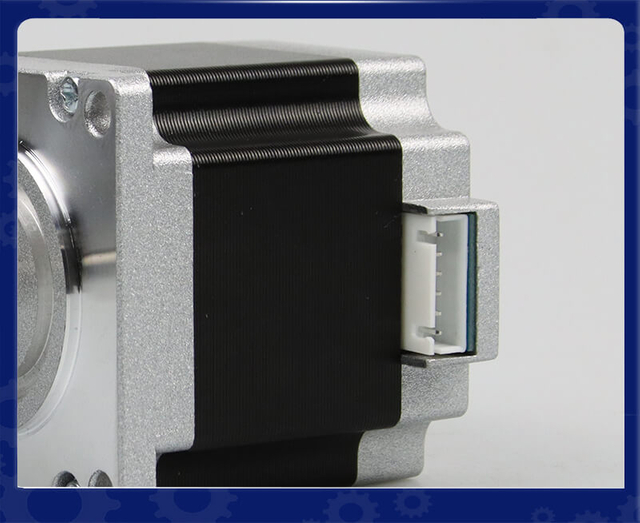
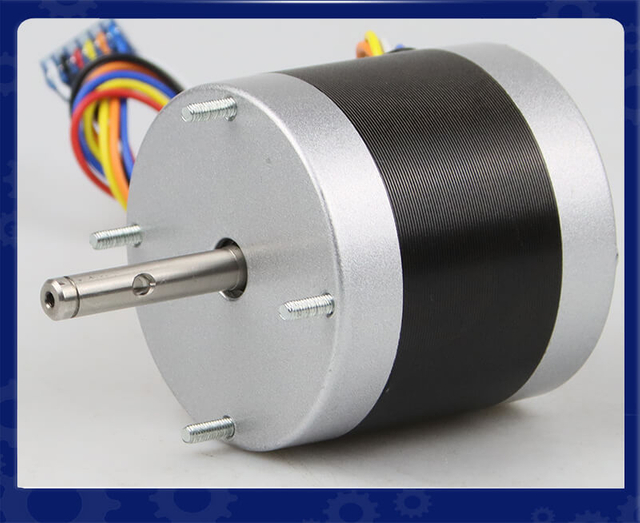
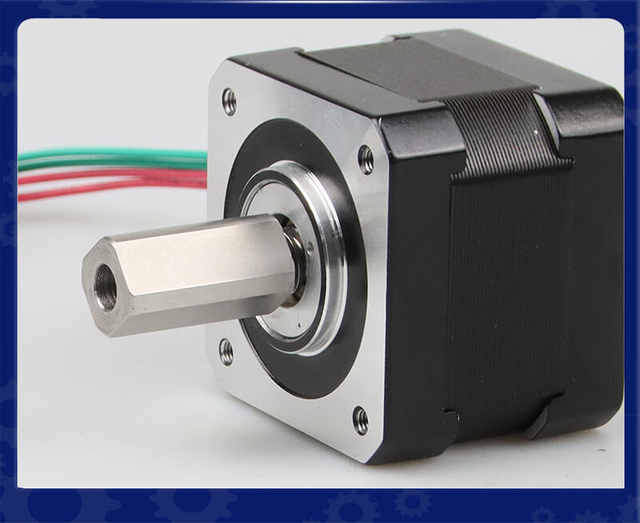
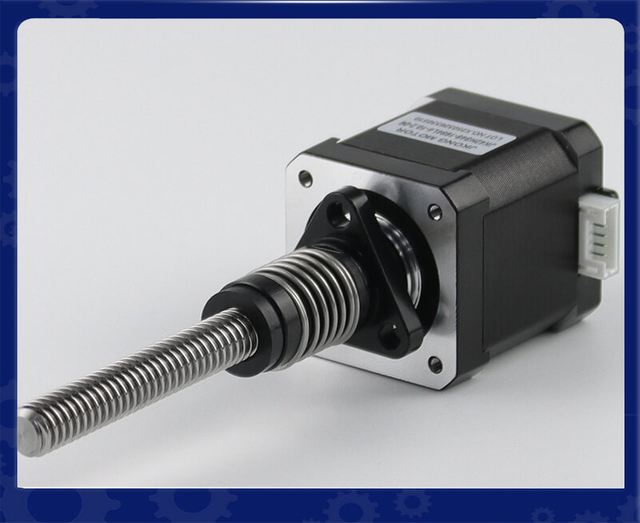
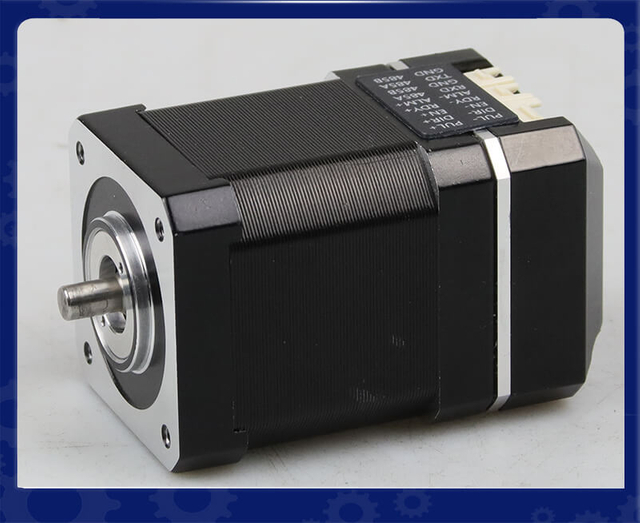
An integrated DC servo motor is a compact motion-control unit that combines a DC motor, encoder, servo driver/controller, and control electronics into one integrated assembly. Instead of installing the motor, encoder, and drive as separate components, these functions are built into or directly attached to the motor system.
The main purpose is to provide precise speed, position, and torque control while reducing wiring, cabinet space, and overall system complexity.
How Does an Integrated DC Servo Motor Work?
A typical integrated DC servo motor operates as a closed-loop system:
DC motor – Converts electrical energy into mechanical rotation.
Encoder – Detects the motor's position and speed.
Integrated driver – Regulates current and voltage supplied to the motor.
Controller/communication interface – Receives motion commands from the machine controller.
Feedback loop – Continuously compares the commanded motion with the actual motor position and adjusts operation.
This feedback mechanism allows the motor to maintain accurate motion even when the load or operating conditions change.
Key Features
An integrated DC servo motor may provide:
Closed-loop position control
Precise speed regulation
High dynamic response
Integrated encoder feedback
Built-in servo drive electronics
Compact mechanical design
Reduced external wiring
Digital communication interfaces
Overcurrent and overvoltage protection
Flexible OEM customization
Depending on the manufacturer and model, the motor can use different encoder technologies, communication protocols, gearboxes, and control methods.
Integrated DC Servo Motor vs. Conventional DC Motor
A conventional DC motor generally requires external electronics for precise motion control. An integrated DC servo motor combines these functions into one package.
Feature
Conventional DC Motor
Integrated DC Servo Motor
Motor
Yes
Yes
Encoder
Usually external/optional
Typically integrated
Driver
External
Integrated
Closed-loop control
Requires additional system
Built into the servo system
Wiring
More components and cables
Simplified
Installation
More complex
Easier
Position control
Limited without feedback
High precision
Cabinet space
Higher
Lower
Where Are Integrated DC Servo Motors Used?
Integrated DC servo motors are particularly useful in compact automation and precision motion applications, including:
Robotics
Medical equipment
Laboratory automation
AGVs and mobile robots
Packaging machinery
Semiconductor equipment
Inspection machines
Small CNC equipment
Pick-and-place systems
Linear actuators
Automated dispensing equipment
They are especially attractive for OEM equipment where limited installation space, precise positioning, simplified wiring, and decentralized motion control are important. LEANMOTORIntegrated DC servo MotorsProducts
Top 15 Integrated DC Servo Motor Manufacturers in Korea
1. LEANMOTOR
Company Profile
LeanMotor is a professional manufacturer and supplier specializing in DC servo motors, integrated DC servo motors, BLDC motors, and intelligent motion-control solutions for industrial automation and OEM applications.
Main Products
Integrated DC Servo Motors
Brushless DC motors
Integrated motor and controller systems
Encoders
Motor Controllers & Drivers
Motion controllers
Customized Motion Solutions
Advantages
The company focuses on developing compact, efficient, and customizable motor systems that combine reliable motor technology with advanced feedback and control capabilities. Its solutions are designed for applications requiring precise positioning, stable speed regulation, high torque density, and compact mechanical integration.
JKONGMOTOR is a specialized motion-control manufacturer providing stepper motors, integrated stepper servo motors, DC servo motors, geared motors, and intelligent drive solutions for industrial automation and OEM applications. The company focuses on developing compact and reliable motion systems that integrate motor technology with encoders, drivers, controllers, and gearboxes, helping equipment manufacturers achieve precise motion while simplifying machine architecture and wiring.
Main Products
Integrated Servo Motors
Geared Stepper Motors
Servo motors
Servo Motors & Servo Systems
Encoders
Motor Drivers & Controllers
Customized Motion Solutions
Advantages
JKONG MOTOR offers a combination of integrated motion technology, flexible product configurations, and OEM customization capabilities. Its solutions can integrate motors with encoders, drivers, controllers, and planetary or worm gearboxes, helping reduce wiring, installation space, and system complexity. The company provides various motor sizes and configurations to meet different requirements for torque, speed, positioning accuracy, and mechanical integration, making its products suitable for robotics, CNC machines, AGV/AMR systems, laboratory equipment, and other industrial automation applications.
3. BESFOC Motor
Company Profile
BESFOC is a motion-control manufacturer focused on developing integrated stepper servo motors, integrated stepper motors, servo motors, and customized motor solutions for industrial automation and OEM equipment. The company emphasizes the integration of motor, encoder, driver, and control technologies into compact drive units, providing manufacturers with practical solutions for applications requiring precise positioning, reliable motion, compact installation, and simplified system architecture. Its products are designed to support both standardized automation equipment and application-specific motion-control projects.
Main Products
Integrated BLDC servo motors
Integrated stepper motors
Integrated stepper servo motors
Linear stepper motors
Brushless DC motors
Motor drivers
Planetary gearboxes
Encoders
Braked motors
Geared integrated servo motors
Advantages
BESFOC's key advantage lies in its broad integrated motion-control product ecosystem, enabling OEMs to obtain motors, drivers, gearboxes, encoders, linear motion products, and related components from a single supplier. This integrated product structure can simplify sourcing and system integration while providing greater flexibility for customized motion-control solutions. BESFOC serves a wide range of applications, including AGVs, robotics, industrial automation, logistics equipment, medical devices, packaging machinery, textile machines, and semiconductor equipment.
4. MMT Co., Ltd.
Company Profile:
MMT is a Korean motion and motor technology supplier focused on compact motor and automation applications. Its product portfolio is relevant to OEMs looking for customized motion components rather than only standardized servo packages.
Main Products:
DC motors
BLDC motors
Servo motor systems
Gear motors
Motion-control components
Customized motor assemblies
Advantages:
MMT can be attractive for OEM projects requiring compact motor configurations, customized mechanical dimensions, and application-specific motor solutions.
5. KOFORD Co., Ltd.
Company Profile:
KOFORD is associated with Korean automation and motion-control technologies, with an emphasis on motorized systems and precision motion applications.
Main Products:
DC motors
BLDC motors
Servo motors
Motor drivers
Actuators
Motion-control components
Advantages:
Its potential advantage for equipment manufacturers is flexibility in customized motion solutions, especially where a standard catalog motor does not fully satisfy the machine's requirements.
6. MATSUSHITA Korea Motion Suppliers
Company Profile:
Korea has a network of specialized motion-system distributors and engineering suppliers supporting Panasonic and other international motor technologies. These companies serve Korean machinery manufacturers that require compact servo and motion products.
Main Products:
Servo motors
Servo drives
DC motors
BLDC motors
Motion controllers
Encoders
Advantages:
These suppliers provide localized technical support and system integration, which can be valuable for Korean OEMs using imported servo technologies.
7. TPC Mechatronics
Company Profile:
TPC Mechatronics is a Korean automation company with expertise spanning pneumatic, electric, and motion technologies. Its automation portfolio makes it relevant to actuator and servo-based machinery applications.
Main Products:
Electric actuators
Servo systems
Motion-control equipment
Linear actuators
Pneumatic automation
Factory automation components
Advantages:
TPC Mechatronics provides a broad mechatronics platform, allowing machine builders to combine electric motion with pneumatic and other automation technologies.
8. M.C.M. Co., Ltd.
Company Profile:
M.C.M. is among the smaller Korean motor and motion technology suppliers serving specialized industrial applications. Companies in this category are often more focused on customized OEM requirements than mass-market automation.
Main Products:
DC motors
BLDC motors
Geared motors
Servo-related motor systems
Motor controllers
Customized motor assemblies
Advantages:
A major potential advantage is OEM customization, including mechanical interfaces, gear ratios, shaft configurations, and electrical specifications.
9. HANNOVER MESSE Korea Motion Suppliers
Company Profile:
A number of smaller Korean motion-control manufacturers exhibit through Korean industrial automation channels and trade exhibitions rather than maintaining large international marketing operations. These companies commonly specialize in motors, actuators, drives, and precision positioning.
Main Products:
DC servo motors
BLDC motors
Linear actuators
Servo drives
Encoders
Motion-control systems
Advantages:
These specialized suppliers can provide application-specific engineering and smaller-volume OEM support, which can be useful when large automation brands are less flexible.
10. KOREA ELECTRIC TERMINAL Motion Division
Company Profile:
Korean electronic and mechatronic component manufacturers also participate in the motion-control supply chain through motor assemblies, connectors, control components, and integrated electromechanical products.
Main Products:
Motor components
Electrical connectors
Motion-control components
Electromechanical assemblies
Automation components
Advantages:
Their strength generally lies in electrical and electromechanical manufacturing, which can be useful when developing customized motor assemblies requiring specialized connectors and wiring.
11. EOCR / Automation Motor Suppliers
Company Profile:
Specialized Korean industrial electrical manufacturers and automation suppliers support motor-control applications through protection, switching, control, and motor-management products. Although these companies may not be dedicated servo manufacturers, they form part of Korea's wider motor-control ecosystem.
Main Products:
Motor controllers
Motor protection devices
Industrial control equipment
Electrical components
Automation control systems
Advantages:
Their expertise can complement servo motors where motor protection, electrical control, and machine-level integration are important.
12. SMC Korea
Company Profile:
SMC Korea operates within Korea's highly developed factory-automation market and supplies electric actuator and automation technologies. While SMC is primarily recognized for pneumatic and electric automation rather than standalone DC servo motors, its electric motion portfolio is relevant to servo-driven machinery.
Main Products:
Electric actuators
Electric grippers
Motorized linear systems
Controllers
Automation components
Pneumatic systems
Advantages:
SMC's major advantage is its complete factory-automation ecosystem, enabling OEMs to integrate electric motion with pneumatic and robotic equipment.
13. KCC Co., Ltd.
Company Profile:
KCC is a Korean industrial automation and motion-related supplier involved in components and technologies used across manufacturing environments. Its broader automation portfolio can support machine builders requiring coordinated electromechanical systems.
Main Products:
Industrial automation components
Motion-control equipment
Motor-related products
Control systems
Factory-automation components
Advantages:
The company can be considered where localized Korean automation support and component integration are priorities.
14. SEJINIGB
Company Profile:
SEJINIGB is a Korean manufacturer specializing in precision motion and gear technologies. Its products are particularly relevant to machinery requiring controlled rotary motion, reduction, and high mechanical positioning performance.
Main Products:
Gearboxes
Precision reducers
Servo gear systems
Geared motors
Motion-transmission components
Advantages:
Its strongest area is precision mechanical transmission. Combining a servo motor with an appropriate reducer can increase output torque and improve mechanical positioning characteristics.
15. SBB Tech
Company Profile:
SBB Tech is a Korean precision robotics and motion-component manufacturer known particularly for precision reducers and robotic transmission technologies. Its expertise is closely connected with the mechanical side of servo and robotic motion.
Main Products:
Precision reducers
Harmonic-drive-type reducers
Robotic transmission components
Precision motion components
Gear systems
Advantages:
SBB Tech's major strength is precision transmission technology, making it particularly relevant to robotic and servo applications where low backlash, compact dimensions, and accurate torque transmission are important.
How to Choose an Integrated DC Servo Motor Manufacturer in Korea
When comparing suppliers, buyers should look beyond the motor's nominal power rating. An integrated DC servo motor normally combines a motor with electronic control, feedback, and communication functions, so the overall system architecture is just as important as the motor itself.
Key parameters to evaluate include:
1. Motor Type and Rated Voltage
Confirm whether the manufacturer offers brushed DC, brushless DC (BLDC), or DC servo configurations and whether the rated voltage matches the machine's power supply.
2. Encoder Resolution
Encoder resolution directly affects feedback quality and positioning performance. Higher-resolution feedback can be particularly important for precision positioning applications.
3. Continuous and Peak Torque
The motor should provide sufficient continuous torque for normal operation while also handling acceleration, deceleration, and short-duration load peaks.
4. Integrated Electronics
Check whether the drive electronics are built directly into the motor housing. A genuine integrated solution can reduce cabinet space, wiring, connectors, and installation complexity.
5. Communication Interface
Depending on the machine architecture, useful interfaces may include RS-485, CANopen, EtherCAT, Modbus, pulse/direction, or other industrial communication protocols.
6. Customization Capability
OEM projects often require customized shaft dimensions, mounting structures, cables, connectors, encoders, gearboxes, firmware, or communication protocols. A manufacturer's engineering flexibility can therefore be a major purchasing factor.
7. Application Experience
A manufacturer with experience in robotics, medical equipment, semiconductor machinery, packaging, CNC equipment, AGVs, laboratory automation, and precision positioning may be better positioned to support application-specific requirements.
Why Korean Servo Motor Manufacturers Are Attractive to OEMs
Korean servo motor manufacturers are increasingly attractive to OEMs because South Korea combines advanced electronics manufacturing, precision engineering, industrial automation expertise, and strong supply-chain capabilities. For equipment builders, this combination can be particularly valuable when developing machines that require accurate positioning, fast response, compact motor systems, and reliable long-term operation.
1. Strong Electronics and Motion-Control Expertise
South Korea has a highly developed electronics and semiconductor manufacturing sector, which has contributed to strong capabilities in motor control, sensors, encoders, embedded electronics, and industrial communication.
For OEMs, this can make Korean suppliers attractive when a servo motor needs to work as part of a larger intelligent motion system rather than operate as a standalone motor.
2. Advanced Precision Manufacturing
Servo applications often require tight manufacturing tolerances because mechanical accuracy directly affects positioning performance, vibration, noise, and service life. Korean manufacturers have extensive experience producing components for semiconductor equipment, electronics machinery, robotics, automotive systems, and precision automation.
This industrial background supports the development of motors and motion components designed for demanding applications where consistency and repeatability are important.
3. Compact and Integrated Motion Solutions
Modern machinery increasingly requires smaller control cabinets, fewer cables, and simplified installation. Integrated servo motors address these requirements by combining the motor with electronics such as a driver, controller, or feedback system.
For OEMs, an integrated design can reduce:
Control cabinet space
External wiring
Connector requirements
Installation time
System complexity
Individual component count
This is especially useful for robotic equipment, medical devices, laboratory automation, inspection systems, packaging machinery, and compact production equipment.
4. Customized OEM Development
OEM machinery rarely follows a completely standard specification. Depending on the application, manufacturers may need a customized shaft, flange, encoder, cable, connector, gear ratio, voltage, torque range, communication interface, or control configuration.
Korean motion-control suppliers can be attractive when OEMs require application-specific engineering rather than simply purchasing an off-the-shelf motor.
5. Broad Industrial Automation Ecosystem
Korea has a mature ecosystem covering PLCs, servo drives, HMIs, sensors, encoders, industrial networks, robots, actuators, and motors. This allows OEMs to develop complete automation systems around compatible motion-control components.
For example, an integrated servo motor can be combined with an industrial controller and encoder feedback to create a coordinated multi-axis positioning system.
6. Experience in High-Demand Industries
Korean servo and motion technologies are relevant to industries with demanding performance requirements, including:
Semiconductor manufacturing
Display equipment
Electronic assembly
Automotive production
Industrial robotics
Packaging machinery
CNC equipment
Inspection equipment
Medical automation
Factory automation
These applications commonly require high positioning accuracy, repeatable operation, rapid acceleration and deceleration, and reliable communication between motion components.
7. Convenient Supply for Asian OEMs
For OEMs operating in Asia, Korean manufacturers can provide a geographically convenient sourcing option. Korea's established manufacturing infrastructure and international logistics network can support the procurement of motors, drives, actuators, and automation components for equipment manufacturers in different markets.
This can be particularly relevant for companies seeking alternatives to suppliers from Japan, Europe, or North America while maintaining a high level of industrial and engineering capability.
8. Competitive Balance Between Technology and Cost
Korean servo motor manufacturers can offer an attractive balance between precision, electronics integration, customization, and overall system cost. The best supplier choice depends on the application, production volume, required specifications, and level of engineering support, but Korean products can be competitive for OEMs seeking sophisticated motion solutions without unnecessarily increasing system complexity.
9. Strong Robotics and Smart-Factory Capabilities
The growth of collaborative robots, industrial robots, AGVs, AMRs, and smart-factory systems is increasing demand for compact servo and actuator technologies.
Integrated servo motors are particularly suitable for decentralized motion architectures because control electronics and feedback can be located close to the mechanical axis. This can help machine designers develop cleaner and more modular automation systems.
10. Suitable for Long-Term OEM Partnerships
For OEMs, selecting a servo motor supplier is not simply a component purchase. A successful partnership may involve prototype development, engineering validation, sample testing, firmware configuration, mechanical customization, production support, and after-sales service.
Korean manufacturers with established industrial automation capabilities can therefore be attractive partners for companies developing customized machinery and planning long-term production programs.
Overall, Korean servo motor manufacturers are attractive to OEMs because they combine precision manufacturing, advanced electronics, motion-control expertise, customization capabilities, and access to a mature industrial automation ecosystem. For applications requiring an integrated DC servo motor, however, OEMs should carefully verify whether a supplier offers a true integrated motor-drive-feedback configuration or instead provides conventional servo motors and separate drives.
Integrated DC Servo Motor Applications in Korea
Integrated servo motors are increasingly suitable for equipment where space, wiring, positioning accuracy, and decentralized control are important. Typical applications include:
Automated inspection machines
Semiconductor equipment
Electronic assembly equipment
Packaging machines
Labeling systems
Medical automation
Laboratory equipment
Small CNC machines
Robotic systems
AGVs and mobile robots
Pick-and-place machinery
Textile equipment
Conveyor systems
Precision linear actuators
For multi-axis machinery, integrated servo motors can also simplify electrical cabinet design by moving some control electronics closer to the mechanical axis.
Korean Integrated DC Servo Motor Manufacturers: Final Comparison
Manufacturer
Main Strength
Typical Relevance
LS Mecapion
Servo and motion control
Industrial automation
LS ELECTRIC
Automation and servo systems
Factory automation
Autonics
Automation and motion products
OEM machinery
AJINEXTEK
Precision motion control
Semiconductor and electronics
Fastech
Compact motion systems
OEM equipment
HIGEN RNM
Industrial motor technology
Industrial machinery
SPG
Precision geared motors
Compact automation
ROBOTIS
Intelligent actuators
Robotics
SENSOREX
Feedback technology
Servo positioning
M2I
Machine control and HMI
Automation
Techno
Motion-control solutions
Machinery
Hyundai Electric
Industrial motor technology
Industrial systems
Hanwha
Robotics and automation
Robotic applications
Doosan Robotics
Collaborative robotics
Robot automation
Korea-based motion suppliers
Local integration
OEM automation
Conclusion
The Korean market offers a diverse range of companies associated with servo motors, DC/BLDC motors, integrated actuators, motion controllers, drives, robotics, and industrial automation. Companies such as LS Mecapion, LS ELECTRIC, Autonics, AJINEXTEK, Fastech, HIGEN RNM, and SPG are particularly relevant when evaluating Korea's motor and motion-control ecosystem.
For OEM buyers specifically seeking an integrated DC servo motor, the most important step is to verify the manufacturer's exact product architecture rather than relying only on the company name. Motor voltage, continuous torque, peak torque, encoder resolution, integrated driver, communication protocol, protection rating, dimensions, and customization capability should all be compared against the machine's requirements.
A well-selected integrated servo solution can deliver compact installation, reduced wiring, decentralized control, precise positioning, and improved machine integration, making it a valuable option for modern Korean and international automation equipment manufacturers.
FAQs:
Below are 10 SEO-focused FAQs designed for the article and written to address practical questions from OEMs, engineers, and industrial buyers researching Korean integrated DC servo motor suppliers.
1. What are integrated DC servo motors?
An integrated DC servo motor combines the motor with control electronics and feedback components, such as an encoder, within a compact unit. This configuration can reduce external wiring, cabinet space, and system complexity while supporting precise speed, torque, and position control.
2. Which Korean companies manufacture integrated DC servo motors?
Korea has a diverse motion-control industry that includes companies involved in DC motors, BLDC motors, servo motors, servo drives, actuators, encoders, and integrated motion systems. The article highlights 15 companies and suppliers associated with Korea's servo and motion-control ecosystem, including LS Mecapion, LS ELECTRIC, Autonics, AJINEXTEK, Fastech, HIGEN RNM, SPG, and other specialized companies.
3. Why choose a Korean integrated DC servo motor manufacturer?
Korean manufacturers benefit from strong capabilities in precision manufacturing, electronics, robotics, semiconductor equipment, and industrial automation. For OEMs, this can translate into competitive motion solutions, engineering support, customization options, and integration with modern automation systems.
4. What should OEMs consider when selecting a Korean servo motor supplier?
OEMs should evaluate rated voltage, continuous torque, peak torque, motor speed, encoder resolution, control method, communication interface, dimensions, IP rating, gearbox options, customization capability, production capacity, and technical support. The supplier's experience with the intended machine application should also be considered.
5. What is the difference between an integrated DC servo motor and a conventional servo motor?
A conventional servo system generally uses a separate motor, drive, and feedback components. An integrated DC servo motor incorporates some or all of these functions into the motor assembly. This can simplify wiring and installation and may reduce the space required inside an electrical cabinet.
6. Are Korean servo motors suitable for robotics and automation equipment?
Yes. Korean motion-control technologies are widely relevant to robotics, factory automation, semiconductor equipment, electronic assembly, inspection machines, packaging systems, and precision machinery. Integrated servo solutions are particularly useful where compact dimensions, accurate positioning, and decentralized motion control are required.
7. Can Korean servo motor manufacturers provide customized OEM solutions?
Many Korean motor and motion-control suppliers support OEM customization, although the available options vary by manufacturer. Depending on the supplier, customization may include shaft dimensions, mounting configuration, encoder selection, cables and connectors, voltage, torque, gearbox, communication protocol, and control parameters.
8. What communication interfaces can integrated servo motors support?
The available interface depends on the specific motor and integrated drive. Common options in industrial motion systems include RS-485, CANopen, Modbus, EtherCAT, pulse/direction, and other industrial communication protocols. OEMs should confirm protocol compatibility before selecting a specific motor.
9. Which industries use integrated DC servo motors?
Integrated DC servo motors can be used in robotics, medical equipment, laboratory automation, semiconductor machinery, electronic assembly equipment, packaging machines, inspection systems, AGVs, AMRs, small CNC equipment, and other precision automation applications.
10. How can OEMs compare integrated DC servo motor manufacturers in Korea?
OEMs should compare suppliers based on motor performance, integrated electronics, encoder resolution, control capability, mechanical configuration, communication protocols, customization, reliability, application experience, production capability, and technical support. It is also important to verify whether a supplier offers a true integrated DC servo motor or a conventional servo motor with a separate drive.