Home » News » How Do Geared BLDC Motors Help Achieve Precise End-Effector Positioning?
How Do Geared BLDC Motors Help Achieve Precise End-Effector Positioning?
Views: 0 Author: Site Editor Publish Time: 2026-06-09 Origin: Site
Geared BLDC motors improve end-effector positioning by combining high torque, low-speed control, encoder feedback, and low-backlash gear reduction. They deliver accurate, repeatable, and reliable motion for robotics, automation, medical devices, and precision industrial equipment.
In modern automation systems, precise end-effector positioning is one of the most critical requirements for achieving high productivity, repeatability, and operational efficiency. Whether in collaborative robots, industrial robotic arms, medical devices, autonomous mobile robots, packaging equipment, or semiconductor manufacturing systems, positioning accuracy directly impacts product quality and system performance.
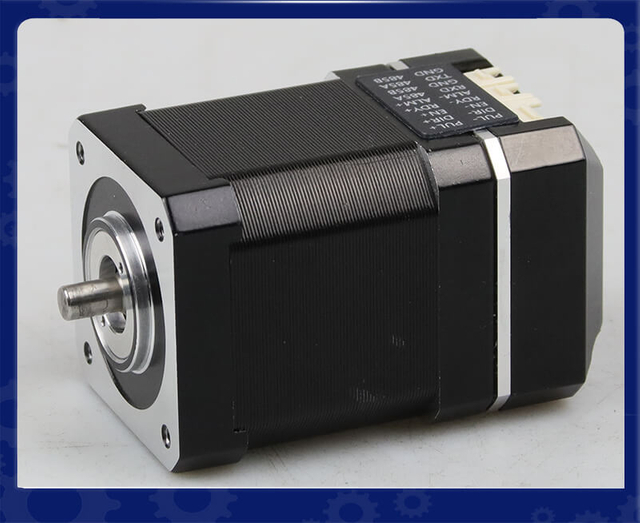
Among the various motion control solutions available today, Geared BLDC Motors (Geared Brushless DC Motors) have emerged as one of the most effective technologies for delivering accurate, stable, and highly controllable motion. By combining the efficiency of brushless motor technology with the mechanical advantages of precision gearboxes, these systems provide superior torque control, reduced speed, improved resolution, and exceptional positioning performance.
The end-effector is the component located at the end of a robotic arm or automated system that interacts directly with objects or performs specific tasks. Examples include:
Robotic grippers
Vacuum suction tools
Welding torches
Pick-and-place mechanisms
Surgical instruments
Inspection cameras
Dispensing systems
For these devices to perform accurately, the motion system must provide:
High positional accuracy
Repeatable movement
Smooth speed control
Minimal backlash
Fast response time
Stable holding torque
Low vibration
Even minor positioning errors can lead to assembly defects, product damage, process failures, or reduced operational efficiency.
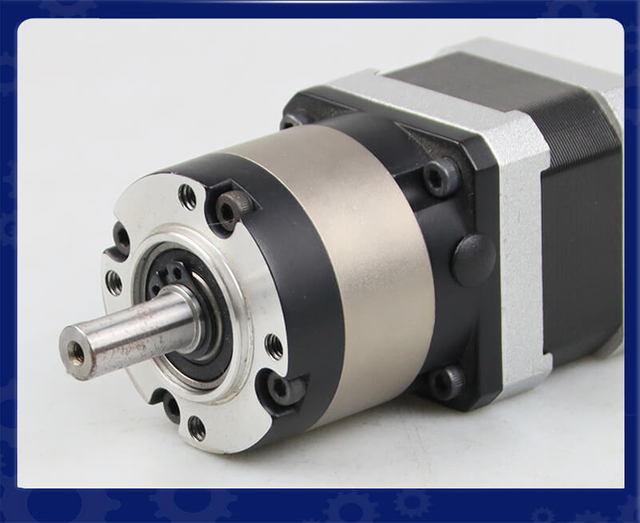
A geared BLDC motor combines two critical components:
Brushless DC Motor (BLDC Motor)
Precision Gearbox
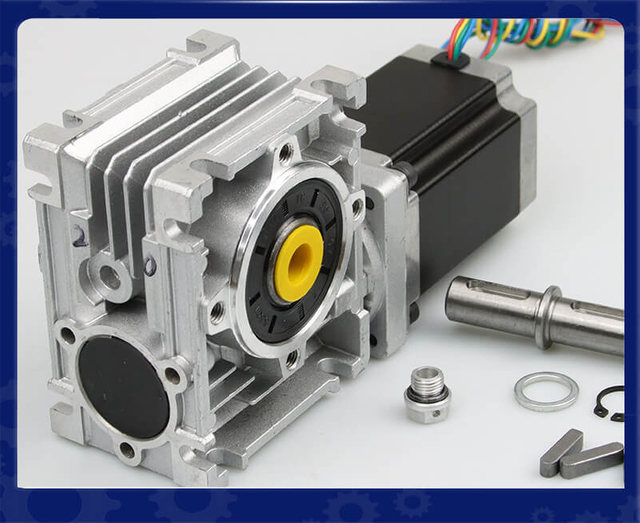
The BLDC motor generates rotational power with high efficiency and precise electronic commutation. The gearbox reduces output speed while multiplying torque and improving motion resolution.
Common gearbox types include:
Planetary gearboxes
Spur gearboxes
Helical gearboxes
Harmonic gear systems
Worm gear reducers
Together, they create a compact and powerful motion solution capable of meeting demanding positioning requirements.
How Gear Reduction Improves Positioning Resolution
One of the primary reasons geared BLDC motors enhance end-effector positioning is the improvement in motion resolution.
Without gearing, a motor shaft rotates directly according to encoder feedback and control commands. Small positioning movements may require extremely high encoder resolutions and sophisticated control algorithms.
When a gearbox is introduced, every output shaft rotation corresponds to multiple motor rotations.
Example:
A motor equipped with:
Encoder resolution: 4096 counts per revolution
Gear ratio: 20:1
Effective output resolution becomes:
4096 × 20 = 81,920 counts per output revolution
This dramatically increases positioning granularity.
Benefits include:
Smaller incremental movements
Higher motion precision
Better trajectory control
More accurate robotic positioning
For end-effectors performing delicate operations, this enhanced resolution is essential.
Increased Torque Enables Precise Motion Under Load
Positioning accuracy is not determined solely by encoder resolution. The motion system must also maintain accuracy while carrying loads.
Robotic end-effectors often handle:
Components
Tools
Medical instruments
Packages
Electronic assemblies
As payload increases, maintaining precise positioning becomes more difficult.
A geared BLDC motor addresses this challenge by multiplying output torque.
Torque multiplication formula:
Output Torque = Motor Torque × Gear Ratio × Gear Efficiency
For example:
Motor torque: 0.5 Nm
Gear ratio: 30:1
Gear efficiency: 90%
Output torque:
0.5 × 30 × 0.9 = 13.5 Nm
Higher torque allows:
Better load handling
Reduced positioning errors
Improved acceleration control
Stable operation under dynamic conditions
This enables robotic systems to maintain precise positioning even when payloads vary.
Reducing Speed for Greater Control Accuracy
One of the most significant advantages of a geared BLDC motor is its ability to reduce output speed while improving motion controllability. In robotic and automation applications, end-effectors often require smooth, precise movements rather than high rotational speeds. Direct-drive motors typically operate at high RPMs, making it challenging to achieve fine positioning without complex control strategies.
By incorporating a precision gearbox, the motor's rotational speed is reduced to a more manageable level, allowing the controller to make smaller and more accurate adjustments to the end-effector position.
Key Benefits of Speed Reduction
1. Improved Positioning Precision
Lower output speeds enable finer motion increments, making it easier to position robotic arms, grippers, and tools with high accuracy.
2. Smoother Motion Profiles
Gear reduction helps eliminate abrupt movements and jerky starts or stops, resulting in smoother operation and better trajectory control.
3. Reduced Overshoot
When approaching a target position, slower output speeds allow the control system to decelerate more effectively, minimizing overshoot and positioning errors.
4. Enhanced Low-Speed Stability
Many automation tasks require sustained operation at very low speeds. Geared BLDC motors provide stable torque output and smooth rotation even during slow movements.
5. Better Repeatability
Controlled speed reduction allows the end-effector to consistently return to the same position cycle after cycle, improving process reliability and product quality.
Example of Speed Reduction
Parameter
Direct Motor
With 20:1 Gearbox
Motor Speed
3000 RPM
3000 RPM
Output Speed
3000 RPM
150 RPM
Output Torque
1 Nm
Approximately 20 Nm*
Positioning Control
Moderate
High
Actual output torque depends on gearbox efficiency.
Why It Matters for End-Effector Positioning
Applications such as robotic assembly, medical robotics, semiconductor handling, packaging automation, and collaborative robots often require precise movements within millimeters or even microns. By reducing speed and increasing controllability, geared BLDC motors enable end-effectors to reach target positions accurately while maintaining smooth, stable, and repeatable motion.
Summary
Gear reduction transforms the high-speed output of a BLDC motor into a slower, more controllable motion profile. This improved speed management enhances positioning accuracy, minimizes overshoot, increases repeatability, and delivers the precise movement required for advanced robotic and automation applications.
Enhanced Repeatability in Automated Systems
Repeatability is often more important than absolute accuracy in industrial automation.
A robot may perform thousands of identical cycles every day. The ability to return to the same position repeatedly determines process consistency.
Geared BLDC motors contribute to repeatability through:
Stable electronic commutation
Consistent torque output
Precision gearbox design
Closed-loop feedback systems
Reduced speed fluctuations
High-quality planetary gearboxes can achieve excellent repeatability performance, making them ideal for:
Pick-and-place robots
CNC automation
Inspection equipment
Laboratory automation systems
Consistent positioning translates directly into higher production quality.
Encoder Feedback Improves Closed-Loop Positioning
Modern geared BLDC motor systems typically integrate advanced feedback devices such as:
Incremental encoders
Absolute encoders
Magnetic encoders
Optical encoders
These sensors continuously monitor motor position and speed.
The controller compares:
Commanded position
Actual position
Then automatically corrects any deviation.
This closed-loop architecture provides:
Precise position control
Real-time error correction
Improved dynamic response
Greater system stability
When combined with gear reduction, encoder feedback enables extremely accurate end-effector positioning across a wide operating range.
Minimizing Positioning Errors Through Precision Gearboxes
These features reduce mechanical errors that can affect end-effector accuracy.
Important gearbox characteristics include:
Parameter
Impact on Positioning
Backlash
Affects positioning precision
Gear stiffness
Influences load stability
Efficiency
Impacts torque transmission
Bearing quality
Improves alignment
Concentricity
Enhances rotational accuracy
Choosing a precision gearbox ensures that motor performance is translated accurately to the end-effector.
Low Backlash Technology for High-Precision Robotics
Backlash refers to the small amount of free movement between gear teeth.
Excessive backlash can cause:
Positioning inaccuracies
Delayed response
Oscillation
Reduced repeatability
Modern geared BLDC motors often utilize low-backlash planetary gearboxes with backlash values as low as:
<10 arc-minutes
<5 arc-minutes
<3 arc-minutes in premium systems
Low backlash is particularly important in:
Surgical robotics
Semiconductor equipment
Precision assembly
Collaborative robots
Vision-guided automation
Reducing backlash improves overall motion quality and positioning consistency.
Superior Dynamic Response for Complex Motion Profiles
Advanced robotic applications require rapid acceleration and deceleration while maintaining precise positioning.
Examples include:
High-speed sorting
Electronics assembly
Packaging automation
Autonomous robotics
Geared BLDC motors provide:
High torque density
Fast acceleration capability
Responsive speed control
Accurate deceleration
This dynamic performance enables the end-effector to follow complex motion trajectories accurately without sacrificing productivity.
Improved Energy Efficiency During Precision Motion
Traditional brushed motors often experience efficiency losses due to brush friction and wear.
BLDC motors eliminate these issues through electronic commutation.
Benefits include:
Higher efficiency
Reduced heat generation
Lower energy consumption
Longer operating life
Stable performance
When paired with efficient planetary gearboxes, the system delivers precision positioning with minimal power loss.
This is especially valuable for:
Mobile robots
Battery-powered systems
Medical devices
Autonomous platforms
Compact Design Enables Precision in Space-Constrained Systems
Modern robotic and automation equipment increasingly demands motion solutions that deliver high precision, high torque, and compact dimensions. In applications where installation space is limited, the size and weight of the drive system can directly affect overall machine performance. Geared BLDC motors address this challenge by combining a high-efficiency brushless motor with a compact gearbox, creating a powerful and space-saving motion control solution.
Their high power density allows engineers to achieve precise end-effector positioning without sacrificing valuable space within the machine or robotic structure.
Benefits of a Compact Geared BLDC Motor Design
1. Higher Torque Density
Geared BLDC motors can generate substantial output torque from a relatively small package. The gearbox multiplies motor torque, enabling compact motors to perform tasks that would otherwise require larger drive systems.
2. Reduced System Footprint
By integrating the motor and gearbox into a single compact assembly, overall system dimensions can be significantly reduced. This is particularly beneficial for robotic joints, mobile robots, and automated equipment with strict space constraints.
3. Improved End-Effector Responsiveness
Installing the drive system closer to the end-effector reduces the need for long mechanical transmissions, belts, or linkages. This minimizes mechanical losses and improves motion responsiveness and positioning accuracy.
4. Lower Moving Mass
A compact motor system helps reduce the weight of moving components, especially in robotic arms and collaborative robots. Lower inertia enables faster acceleration, smoother motion control, and more precise positioning.
5. Greater Design Flexibility
Engineers can more easily integrate compact geared BLDC motors into complex machine architectures, allowing for innovative designs without compromising performance.
Applications That Benefit from Compact Motion Systems
Compact geared BLDC motors are widely used in applications where space is limited but precision remains critical, including:
Collaborative Robots (Cobots)
Service and Delivery Robots
Medical and Surgical Equipment
Laboratory Automation Systems
Semiconductor Manufacturing Equipment
Automated Guided Vehicles (AGVs)
Autonomous Mobile Robots (AMRs)
Inspection and Vision Systems
Packaging and Material Handling Equipment
In these applications, maximizing performance within a restricted installation envelope is often a key design requirement.
How Compact Design Improves Positioning Accuracy
A smaller and more integrated drive system can improve overall positioning performance by:
Reducing mechanical transmission complexity
Minimizing backlash from external drive components
Lowering structural deflection and vibration
Improving system stiffness
Enhancing control responsiveness
These factors help ensure that the end-effector reaches its target position more accurately and consistently.
Example: Robotic Arm Joint Design
In a robotic arm, space inside each joint is often limited. A compact geared BLDC motor allows the actuator to fit directly within the joint structure while still providing the torque needed to move and hold the arm under load. This integrated approach reduces system weight, improves dynamic performance, and enhances positioning precision throughout the robot's operating range.
Summary
The compact design of geared BLDC motors enables engineers to achieve high levels of precision, torque, and efficiency within limited installation spaces. By reducing system size, lowering moving mass, and simplifying mechanical transmission paths, these motors help improve end-effector positioning accuracy while supporting the development of smaller, lighter, and more capable robotic and automation systems.
Geared BLDC motors are widely used in applications where precision is essential.
Industrial Robotics
Assembly operations
Material handling
Welding systems
Machine tending
Collaborative Robots (Cobots)
Human-machine interaction
Precision assembly
Flexible manufacturing
Medical Equipment
Surgical robots
Diagnostic devices
Rehabilitation systems
Semiconductor Manufacturing
Wafer handling
Inspection stages
Precision transport systems
Logistics Automation
Sorting robots
Picking systems
Warehouse automation
Laboratory Automation
Sample handling
Liquid dispensing
Analytical instrumentation
In each application, accurate end-effector positioning directly improves process quality and operational efficiency.
Key Selection Factors for Precision Positioning Applications
Selecting the rightgeared BLDC motor is essential for achieving accurate, repeatable end-effector positioning. Several key factors directly influence motion performance and system reliability.
1. Output Torque Requirements
The motor and gearbox must provide sufficient torque to move and hold the load without sacrificing positioning accuracy.
2. Gear Ratio Selection
A suitable gear ratio balances speed, torque, and positioning resolution. Higher ratios improve torque and control precision but reduce output speed.
3. Backlash Performance
Low-backlash gearboxes help minimize positioning errors and improve repeatability, especially in robotics and precision automation.
4. Encoder Resolution
High-resolution encoders provide more accurate position feedback, enabling finer motion control and better closed-loop performance.
5. Control System Compatibility
The motor should support the required control methods and communication protocols to ensure precise positioning and smooth operation.
6. Size and Integration Requirements
Compact motor designs are often preferred for robotic joints and space-constrained equipment, where high performance must fit within limited installation space.
Summary
For precision positioning applications, engineers should focus on torque, gear ratio, backlash, encoder resolution, control compatibility, and motor size. Properly matching these factors ensures accurate, stable, and repeatable end-effector positioning.
Conclusion
Geared BLDC motors play a critical role in achieving precise end-effector positioning by combining high-efficiency brushless motor technology with the torque multiplication and resolution enhancement provided by precision gearboxes. Their ability to increase positioning accuracy, improve repeatability, reduce speed, deliver higher torque, minimize backlash, and support advanced closed-loop control makes them an ideal choice for modern robotics and automation systems.
As robotic applications continue demanding greater precision, reliability, and efficiency, geared BLDC motors remain one of the most effective motion control solutions for delivering accurate and repeatable end-effector positioning across a wide range of industrial, medical, laboratory, and autonomous applications.
FAQs
1. Why are geared BLDC motors preferred for precise end-effector positioning?
LeanMotor Answer: Geared BLDC motors combine the efficiency and controllability of brushless DC motors with the torque multiplication and speed reduction benefits of precision gearboxes. This combination enables smoother motion, higher positioning accuracy, better repeatability, and improved load handling, making them ideal for robotic end-effectors and precision automation systems.
2. How does a gearbox improve positioning accuracy in a BLDC motor system?
LeanMotor Answer: A gearbox increases the effective output resolution by reducing motor speed and multiplying encoder counts at the output shaft. This allows smaller movement increments and finer control of the end-effector position, resulting in higher positioning precision.
3. What role does torque multiplication play in end-effector positioning?
LeanMotor Answer: Torque multiplication enables the motor to maintain accurate positioning under varying loads. Higher output torque improves control stability, reduces the risk of position drift, and allows robotic systems to handle heavier payloads while maintaining precision.
4. Why is low-speed control important for robotic end-effectors?
LeanMotor Answer: Many robotic applications require slow, controlled movements when approaching target positions. Geared BLDC motors reduce output speed, enabling smoother acceleration and deceleration, minimizing overshoot, and improving positioning accuracy.
5. How does encoder feedback enhance positioning performance?
LeanMotor Answer: Encoders continuously monitor motor position and speed, allowing the controller to compare actual movement with commanded movement. This closed-loop feedback system automatically corrects errors and helps achieve highly accurate and repeatable positioning.
6. What is backlash, and why does it matter in precision positioning?
LeanMotor Answer: Backlash is the small amount of free movement between meshing gear teeth. Excessive backlash can cause positioning errors and reduced repeatability. LeanMotor's precision geared BLDC solutions utilize low-backlash gearboxes to improve motion accuracy and system responsiveness.
7. How do geared BLDC motors improve repeatability?
LeanMotor Answer: The combination of precise electronic control, consistent torque output, encoder feedback, and precision gear reduction enables geared BLDC motors to repeatedly return to the same position with minimal deviation, ensuring consistent process quality.
8. Are geared BLDC motors suitable for collaborative robots and service robots?
LeanMotor Answer: Yes. Geared BLDC motors offer compact size, high torque density, smooth operation, and precise control, making them widely used in collaborative robots, service robots, delivery robots, and autonomous mobile platforms.
9. How does a compact motor design contribute to positioning precision?
LeanMotor Answer: Compact geared BLDC motors can be installed closer to robotic joints and end-effectors, reducing mechanical transmission components and associated losses. This improves system stiffness, reduces vibration, and enhances overall positioning accuracy.
10. What should engineers consider when selecting a geared BLDC motor for precision positioning?
LeanMotor Answer: Engineers should evaluate torque requirements, gear ratio, backlash level, encoder resolution, control compatibility, operating environment, and installation space. Proper motor and gearbox selection ensures optimal positioning performance and long-term reliability.